A Timeless Tradition BY ELIZABETH BRIGNAC The holiday season is the perfect time of year to gather with friends and family and enjoy a formal afternoon tea, where hotels or restaurants…
BY KYLE MARIE McMAHON The holiday season is here, and towns across the Triangle are sparkling! From spectacular light shows to festive parades and jubilant performances, there’s something for everyone…
BY ELIZABETH BRIGNAC | PHOTOS COURTESY OF THE RALEIGH LITTLE THEATRE Attending a performance of “Cinderella” at Raleigh Little Theatre (RLT) is like going to see “The Nutcracker” for some…
Voting has begun for the 2025 BEST OF RALEIGH and BEST OF WESTERN WAKE Diamond Awards!
Click here to vote for the Best of Raleigh 2025
Click here to vote for the…
Sassool's Sisters Turn Their Mediterranean Restaurant into a Labor of Love
BY KURT DUSTERBERG
When Noelle Saleh and Simone Lawson swap stories from their childhood, they touch on all the same themes:…
PICTURED ABOVE: This illustration depicts a confrontation between juvenile tyrannosaurs and adult Triceratops, a possible scenario experienced by the Dueling Dinosaurs 67 million years ago. Dueling Dinosaurs illustration courtesy of…
PICTURED ABOVE: Biltmore’s Village Social restaurant offers a colorful array of dishes, ingredients for which are sourced from the estate’s farms. Photo courtesy of the Biltmore Company.
Top of the Food…
PICTURED ABOVE: Freedom Park commemorates Black Americans’ struggle for freedom and equality. Quotes from famous Black North Carolinians are etched on the stone wallways, and the Beacon of Freedom sculpture…
PICTURED ABOVE: The Gatekeeper’s Cottage will function as Dorothea Dix Park’s first visitor’s center. Dorothea Dix Park builds on its legacy to enhance its offerings and connect with the community.…
PICTURED ABOVE: Beach homes in popular Outer Banks vacation spot, Avon, NC. Photo by stock.adobe.com - Kyle.
Beach Fun Back in the Day: NC Seaside Vacations a Century Ago.
BY ERIC MEDLIN
This…
By Eric Medlin
In our upcoming July/August issue, we include an article called Beach Fun Back in the Day that covers how people enjoyed vacations at North Carolina beaches a century…
2024 Outdoor Movies in Wake County BY Elizabeth Brignac Raleigh, Western Wake, and other areas in Wake County offer many outdoor venues where you can enjoy a picnic dinner, spread…
BY KYLE MARIE McMAHON | PHOTOS COURTESY OF KYLE MARIE McMAHON
The Fine Arts League of Cary (FALC) uplifted and supported emerging artists on May 18 when they hosted their annual…
Artistic Technique in “Sails” BY CHARLOTTE RUSSELL For Chapel Hill–based painter Paul Hrusovsky, each new work poses a fresh challenge. Laying out the composition in his mind, he intuitively applies…
BY SOFIA LUJAN AND LAUREN DOYLE | PHOTOS BY JESSICA BRATTON All clothing items available at Villa 19 Boutique. Shop in-store or online at villanineteen.com. In keeping with this issue’s…
From an art and memorabilia collection to a winery, a mini spa and a petting zoo—to, yes, a distillery—Cape Fear Distillery offers visitors an eclectic, multifaceted experience.
BY DAVE DROSCHAK
An affinity…
North Carolina plays a leading role in film and television content production.
BY MARIO BOUCHER
North Carolina may not be Hollywood East, but film and television production here contributes significantly to the…
You name it and James Beard Award–Nominated Chef Cheetie Kumar has probably done it.
BY ELLIOT ACOSTA
Between her time as an critically acclaimed chef, a restaurant owner, an entrepreneur, an independent…
Umstead Park’s ruins tell a story of North Carolina’s rural history.
BY ERIC MEDLIN
William B. Umstead State Park is one of the most-visited state parks in North Carolina. According to the…
PICTURED ABOVE: Guests can enjoy craft cocktails, wine and beer, and charcuterie and other treats in the parlor at Raleigh’s Heights House Hotel. It’s the details that set apart…
The holiday season is the perfect time of year to gather with friends and family and enjoy a formal afternoon tea, where hotels or restaurants serve quality tea in individual teapots next to delicate china cups. Visitors are served delectable food items on three-tier tea stands: a savory course with tea sandwiches; a scones course with cream and jam; and a desserts course with small cakes, tarts and other treats. The whole affair invites patrons to focus on details—the beauty of the china and elegant presentation of the food; the delicious nuances of the tea and the intricate flavors of the sandwiches and treats.
During the holiday season, venues go all-out in creating a warm, festive atmosphere that fits well with the afternoon tea tradition. Wake County offers several opportunities for people who want to enjoy holiday afternoon tea. Each venue takes a unique approach to integrating the beauty and flavors of the holiday season into its tea experience.
Please note that the venues described here require reservations, and many fill up weeks in advance. If you would like to partake, don’t wait too long to get in touch.
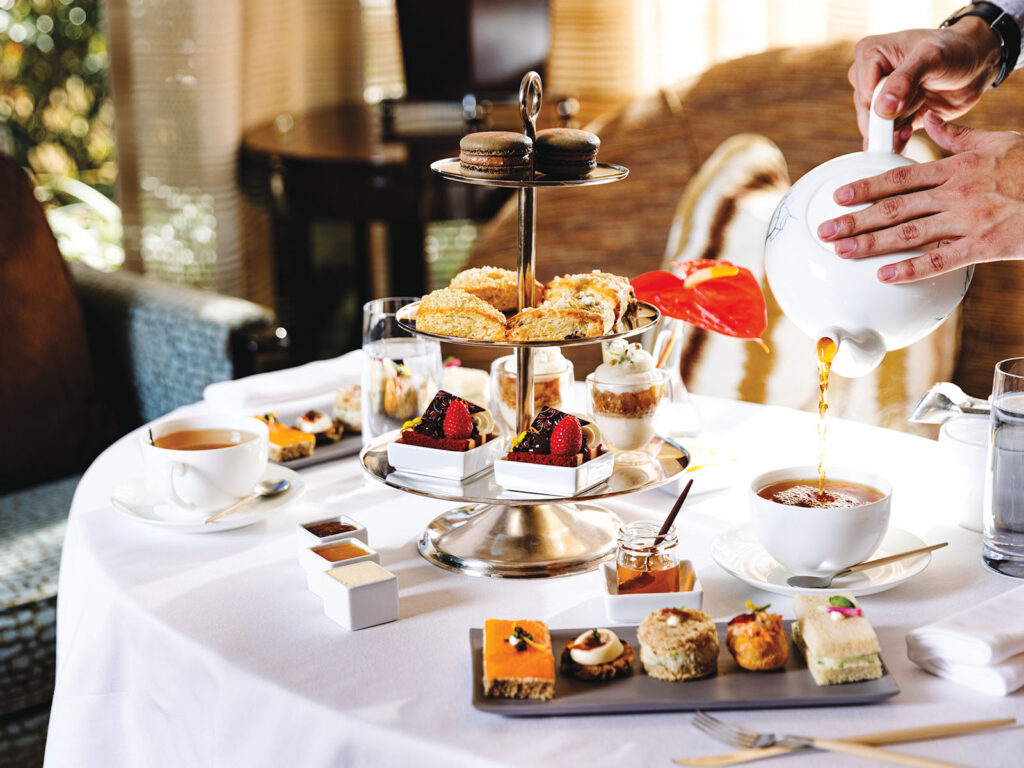
ABOVE: The Umstead Hotel and Spa offers daily afternoon teas during this time of year, with seasonally flavored and decorated treats, and musicians playing seasonal music. Kids are invited to Tea with Santa, a special holiday event they can share with their families. Photos courtesy of The Umstead Hotel and Spa.
The Umstead Hotel and Spa Afternoon Tea & Tea with Santa
Afternoon Tea is held daily during the holiday season. Tea with Santa is held on Saturdays and Sundays during December.
The Umstead Hotel prides itself on its beautiful holiday decorations. Each year, it brings in several Christmas trees decorated in a classical style and garnishes the furniture with magnolia leaf garlands and other seasonal ornamentation. “People come to The Umstead specifically for the holiday decor,” says Lori Grow, who manages Herons restaurant at The Umstead and has run the hotel’s afternoon teas for the past few years.
Starting after Thanksgiving, a musician plays holiday music on the harp or piano during afternoon tea. Desserts are flavored and decorated with seasonal flourishes, and the entire atmosphere takes on a special warmth and beauty. When added to The Umstead’s specially patterned teacups and teapots and Herons’ exquisite cuisine, holiday teas at The Umstead become works of art in themselves.
Tea with Santa takes place 12 times per season, including one event designated specifically for local Boys and Girls Clubs. At these family events, adults accompany their children as they enjoy child-friendly treats and meet Santa. Families let Santa in on special details about the kids’ lives—their pets and favorite teachers, for example—that Santa can discuss with the children at the event, adding to the magic. Children receive cups of cocoa, along with additions like marshmallows and chocolate shavings they can add to their cups. (Adults are given cocoa as well, with optional Grand Marnier). This event is designed to be a special tradition for the entire family.
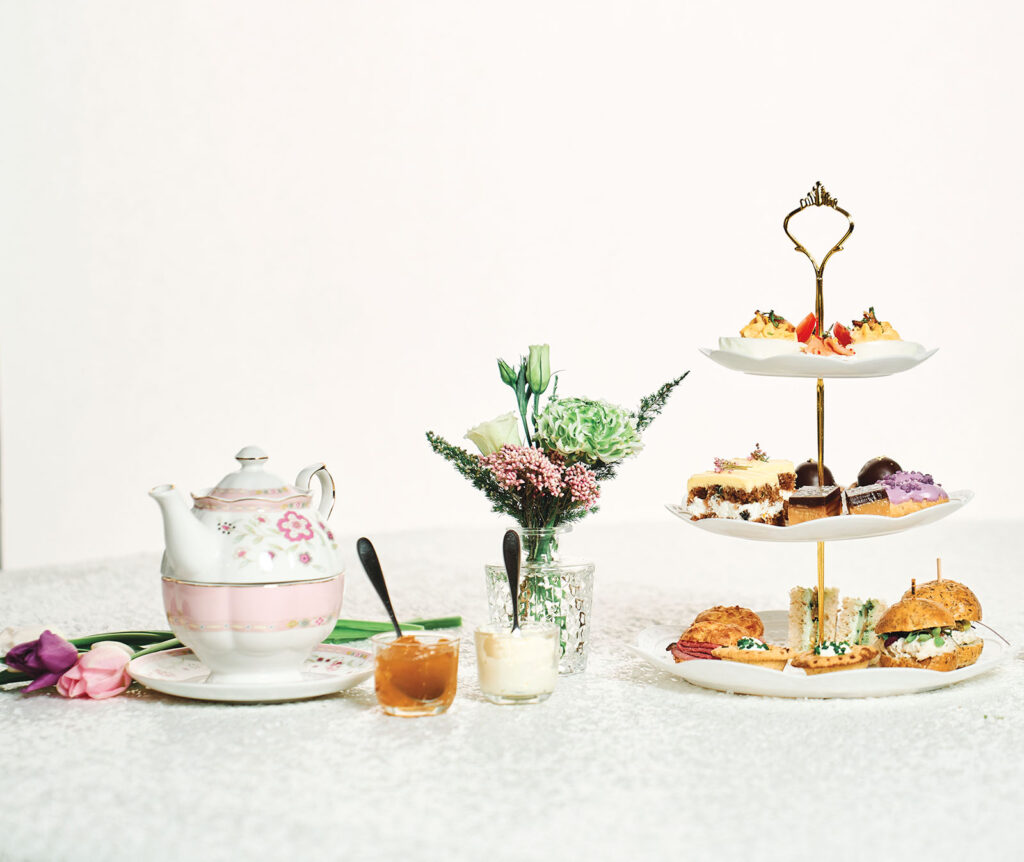
ABOVE: The North Carolina Museum of Art Gingerbread Tea offers warm, seasonal treats during the holiday season. The tea includes an opportunity to vote in a gingerbread house decorating contest. The museum also offers autumn teas and other seasonal tea events throughout the year. Photos courtesy of NCMA.
North Carolina Museum of Art (NCMA) Gingerbread Tea
December 8, 15, 20–22.
The NCMA offers several teas during the year, including Gingerbread Tea during the holiday season. Jill Santa Lucia, president and culinary director of Catering Works, which provides food onsite, loves doing formal tea. “It’s kind of my baby,” she says. “I keep adding to it.”
The Gingerbread Tea does emphasize holiday flavors—“There will be notes of pumpkin and gingerbread; cranberries and everything Christmas,” says Santa Lucia—but it is called Gingerbread Tea because they showcase a gingerbread house decorating contest held by the Catering Works staff. About 20 people have participated in previous years. Guests can enjoy the gingerbread houses and vote on their favorites. The event also includes cookie decorating—ostensibly for the kids, but adults are often enthusiastic participants.
Mrs. Ruth’s Jams, a local jam producer, creates unique, seasonal jams for the tea’s scones course. Santa Lucia uses an eclectic variety of cups and saucers in her decor, 3-tiered tea stands, and other details that add to the unique look of each table. Her goal is elegance and cohesion, with a touch of playfulness. “One thing that is fun about tea,” she says: “There’s a whimsy to it.”
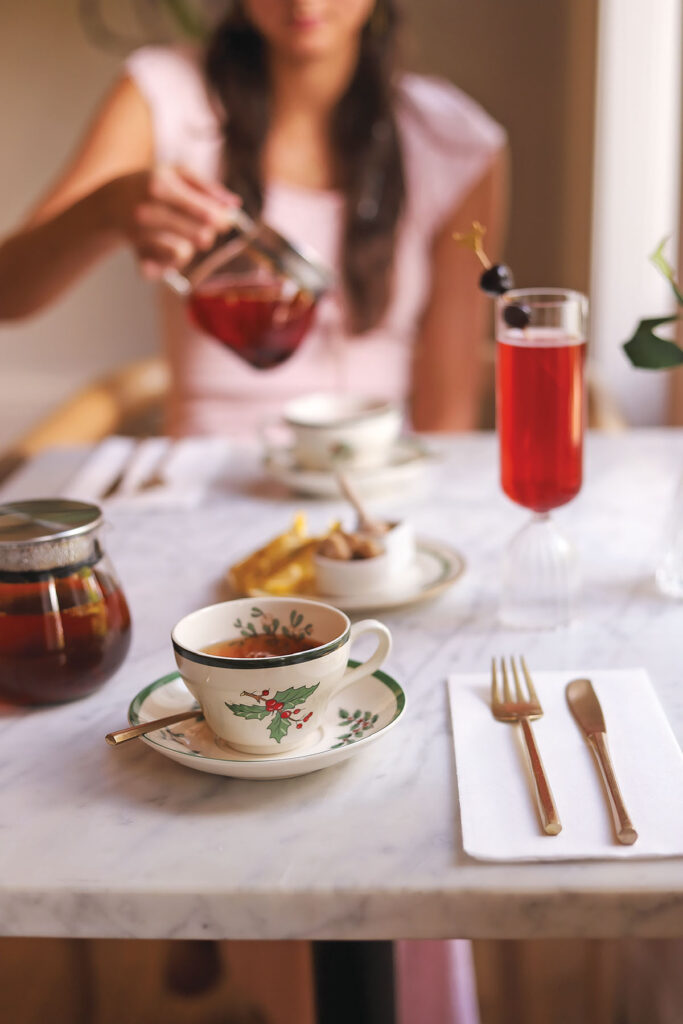
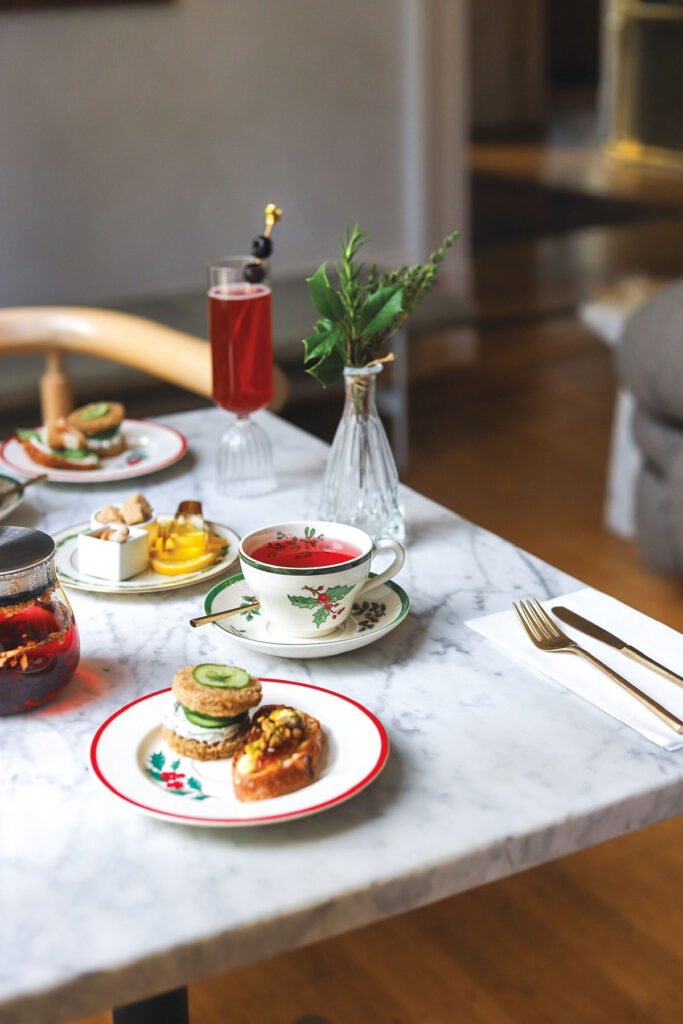
ABOVE: Heights House Hotel prides itself on its attention to detail. Every piece of its eclectic collection of vintage Christmas china is hand-selected. The seasonal sandwiches and confections are designed for both taste and beauty, down to the last garnish. Photos courtesy of Heights House Hotel.
Heights House Hotel Afternoon Tea
Dates and times vary.
Heights House Hotel sets itself apart through its commitment to detail. Each decorative item and piece of china is hand-selected, usually by co-owner Sarah Shepherd. “She has a real eye for it, and she also just loves shopping for vintage stuff,” says Anna Forno, Heights House’s in-house events coordinator.
Heights House afternoon teas are popular throughout the year, but especially during the holiday season. “For the whole month of December, all of our afternoon teas are Christmas themed. So we have all Christmas china for that, and that’s really fun,” says Forno. She adds that the china the hotel uses for its holiday teas is “vintage Christmas china, handpicked from various shops and sources across Raleigh. The mismatched china adds a charming and festive touch to the experience.”
During December, the historic house is decorated with a large holiday tree, garlands and other seasonal decor. “We like playing classic Christmas songs to create a cozy, nostalgic atmosphere,” says Forno. People visiting for the tea can add holiday cocktails from the Parlor to their tea experience, and can stay afterward to enjoy drinks and other items from the Parlor menu.
Examples of holiday foods offered this year include buttery almond shortbread tarts filled with bourbon pecan pie custard, assorted nuts and candied fruits, “fruitcake” tarts, and cream puffs filled with eggnog custard. The tea options include seasonal flavors. “Last year, we served three specialty holiday teas from Rishi Tea: pumpkin spice, cocoa mint and cinnamon plum. This year, we plan to offer holiday teas again, [including] any new seasonal blends that Rishi introduces,” says Forno.
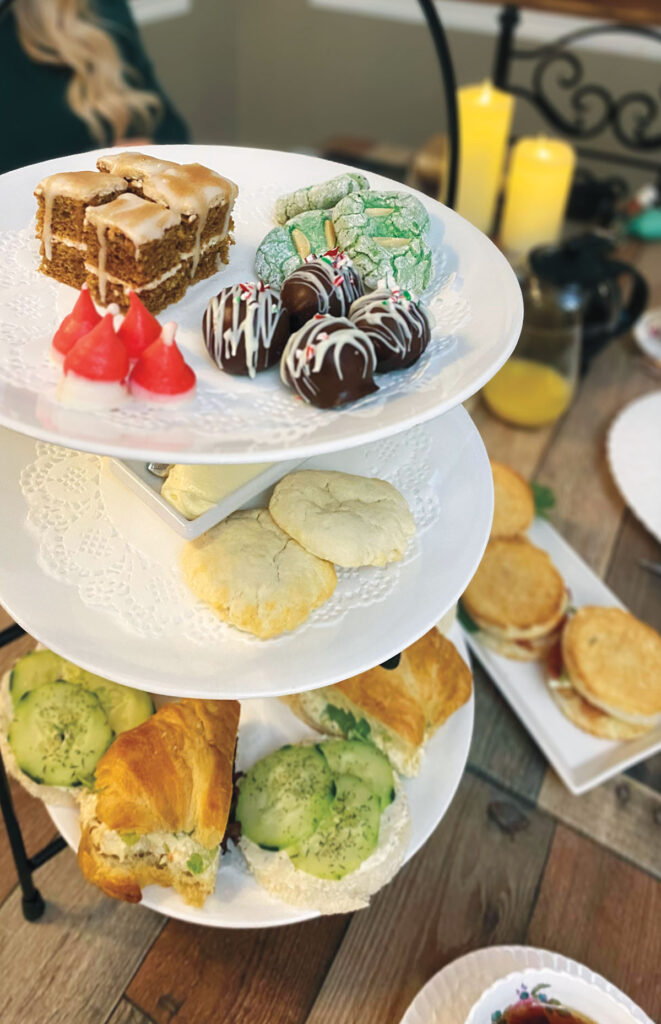
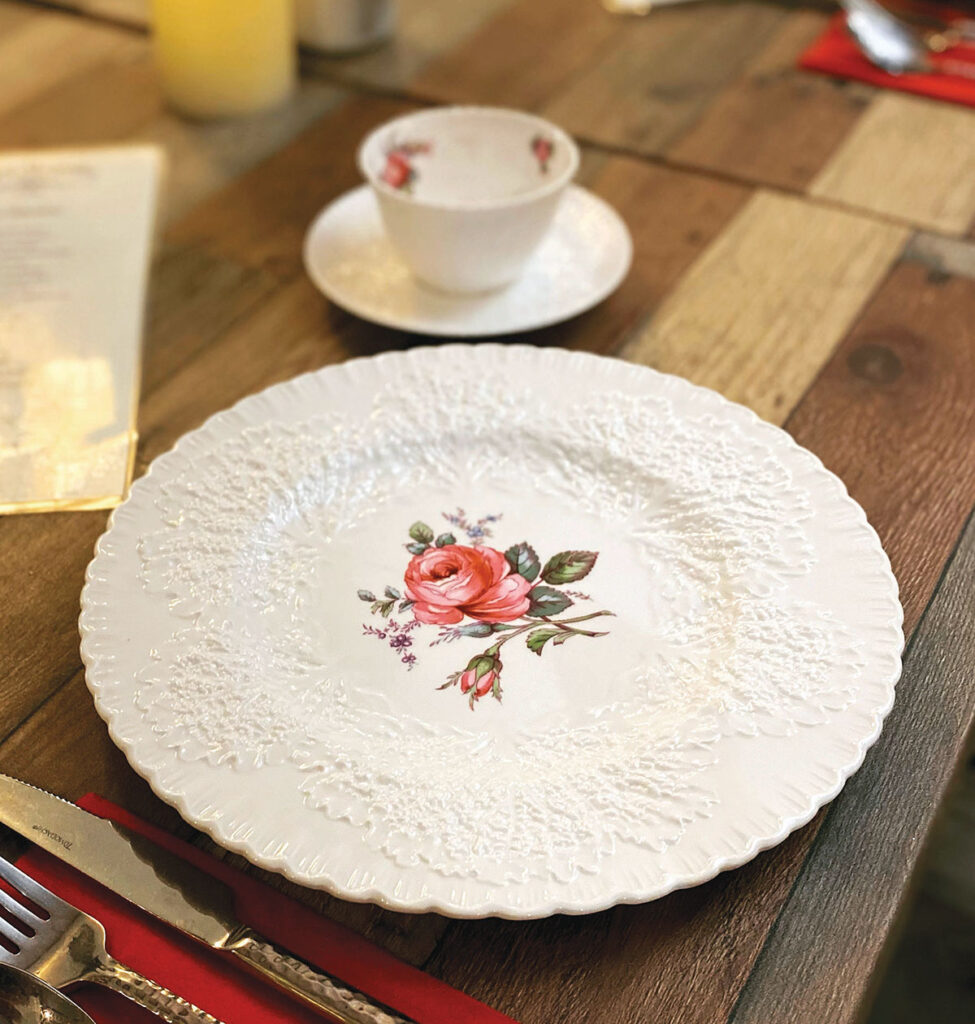
ABOVE: Sugar Magnolia Café offers different styles of afternoon tea to accommodate different ages and appetites. BOTTOM: The Spode Bridal Rose china shown here was donated to Sugar Magnolia by a china enthusiast whose children did not share her interest. She wanted it to go to a good home. Photos courtesy of Sugar Magnolia Café.
Sugar Magnolia Café Tea
Afternoon tea offered daily, Tuesday–Saturday.
Variety characterizes the afternoon tea at Sugar Magnolia Café. “We really try to make it an experience for everyone,” says owner Amy Stephens. Sugar Magnolia offers variations on the traditional afternoon tea courses. The full tea service offers a salad as part of the savory course—an unusual addition—and patrons do not need to order a full tea if they prefer a lighter experience. They might limit the order to a single sandwich and desserts, for example, or order the scone and desserts without the savory course. Visitors may also substitute coffee or espresso drinks for tea.
The cafe offers two children’s tea services. Both include either hot cocoa or lavender lemonade with edible glitter—both served, naturally, in elegant teacups. (Younger children may use fancy paper teacups and saucers if their families prefer.) The children’s tea includes simple desserts like chocolate chip cookies and brownies. One variation offers kid‑friendly sandwiches as well. Kids’ teas include take-home tiaras and wands for girls, and toy cars for boys.
The china at Sugar Magnolia connects visitors to the community. “I never imagined that people would donate fine china to us because they wanted it to go to a good home,” says Stephens, but much of the cafe’s china has come through donations, including Stephens’ favorite: Spode Bridal Rose. This detail adds to the community feel of tea at Sugar Magnolia.
During the holiday season, Sugar Magnolia Café enters into the downtown Wake Forest holiday excitement. “The town almost looks like a little Hallmark town during the holiday season. Everybody decorates their windows. Our cafe is fully decked out end-to-end with Christmas decorations,” says Stephens. “Our pastry chef will focus on seasonal treats that will put anyone in the holiday spirit,” she adds, including desserts like peppermint brownie truffles and gingerbread petit fours. The menu offers holiday spiced tea, and customers may add holiday-themed prosecco drinks like the Poinsettia, which includes cranberry and orange juices along with swirls of edible glitter.