Students were recognized for design excellence, competitive play, sportsmanship By Mario Boucher Three local high school robotics teams are headed to the FIRST Robotics Championship on April 16–19, 2025, at…
Grand Coda BY KRISTEN SCHRUM Legendary choreographer Martha Graham once said, “Great dancers are not great because of their technique; they are great because of their passion.” For decades, Carolina…
Burning Coal Theatre's KidsWrite program brings young people's work to the stage
By Elizabeth Brignac
Playwrights may persevere for years before they have the chance to see a theater company perform their…
By ELIZABETH BRIGNAC
Durham’s Rissi Palmer is one of only eight Black women ever to hit the Billboard Hot Country Songs chart, which she did with her song “Country Girl” in…
By Dathan Kazsuk
Sometimes, we adults need a night to let loose. You know that feeling when you take the kids to a museum or fun park and they’re running wild—jumping…
All photos courtesy of Hum Sub. Hum Sub opened a series of quarter-century celebrations with a rich Kathak dance performance. By Elizabeth Brignac Hum Sub, a Triangle organization dedicated to…
A New Beat BY ELIZABETH BRIGNAC PHOTOS COURTESY OF MISSY LANE'S ASSEMBLY ROOM AND CHRIS CHARLES PHOTOGRAPHY Missy Lane’s Assembly Room is approaching its one-year anniversary. The Durham-based music venue and…
By ELIZABETH BRIGNAC
Ira David Wood III has played an integral part in the growth of Raleigh’s theater scene during his 52-year career as executive director of Theatre in the Park.…
Above: Ira David Wood III as Sir Walter Raleigh and Lynda Clark as Queen Elizabeth I in Raleigh. Photo courtesy of Theatre in the Park. David Wood Wants People to…
BY KATELYN RUTT
Nestled on Lassiter Mill Road with its signature purple door, Quail Ridge Books is much more than a bookstore. It’s a cultural hub, a third‑place haven and a…
Above photo shows a scene from "World War I: Just One Day More." All photos courtesy of Burning Coal Theatre. At Oakwood Cemetery, Burning Coal performs plays about the lives…
Above photo was taken during the CAM Art of Fashion dress rehearsal. Photo courtesy of Rich Crank Photography. All photos of the event are courtesy of Sofia Lujan. The Runway…
Theatre Raleigh's "Bull Durham: A New Musical" offers viewers a chance to see a locally focused musical on the rise.
By Elizabeth Brignac. All photos by Jennifer Robertson Photography.
Lauren…
The above picture features the band “the Wind” on the City Plaza stage during the 2024 Hopscotch Music Festival. All photos courtesy of Kyle Marie McMahon. The city’s annual underground…
BY ELIZABETH BRIGNAC Don’t expect a relaxing evening at the theater at a production by The Justice Theater Project. It will engage you. It will entertain you. But your role…
BY DATHAN KAZSUK
Sean Yseult, the bassist whose thunderous rhythms anchored White Zombie’s meteoric rise in the 1990s, remains an enduring icon of alternative metal and underground culture.
As one of the…
Above photo features the Lazy Daze Arts & Crafts Festival crowd through Debi Dwyer Designs stained glass. All photos courtesy of Elizabeth Brignac. Meet the Seven Artists Who Won Jerry…
Welcome to The Community Music School of Raleigh
BY CAITLIN WHEELER
Amazing,” says jazz artist Marcus Anderson, a Grammy-nominated saxophonist with 13 albums and shows across the world. Anderson isn’t referring…
DPAC's Josh Anderson: 23 Years of Broadway, Concerts and Comedy
BY DATHAN KAZSUK
In his 23 years in the entertainment industry, the Durham Performing Arts Center’s (DPAC) director of production, Josh Anderson, has…
2024 Outdoor Movies in Wake County BY Elizabeth Brignac Raleigh, Western Wake, and other areas in Wake County offer many outdoor venues where you can enjoy a picnic dinner, spread…
Students were recognized for design excellence, competitive play, sportsmanship
By Mario Boucher
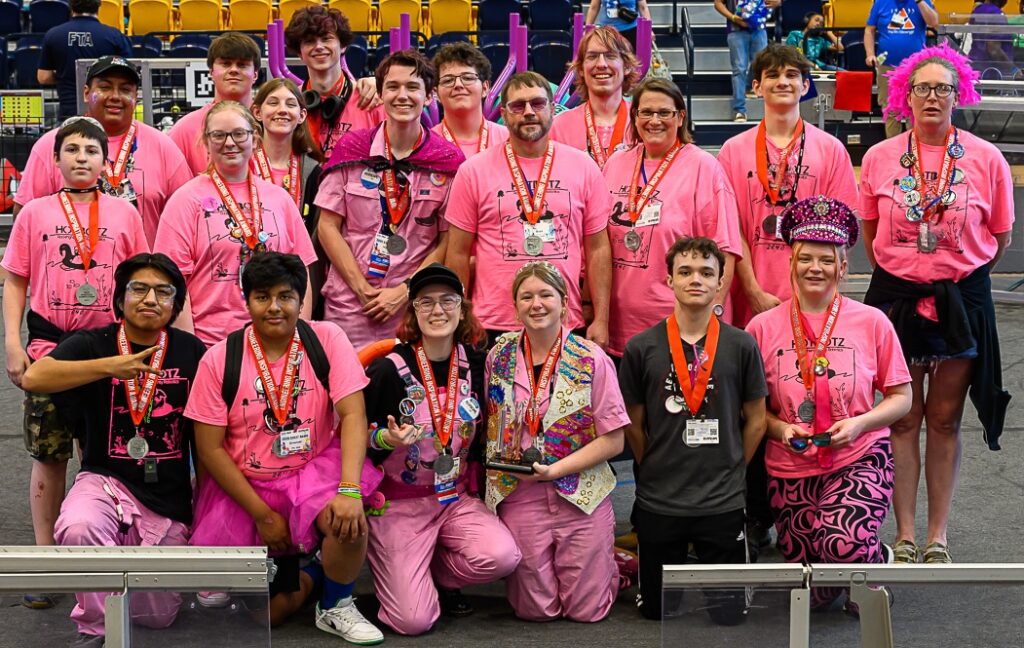
Three local high school robotics teams are headed to the FIRST Robotics Championship on April 16–19, 2025, at the George R. Brown Convention Center in Houston, Texas.
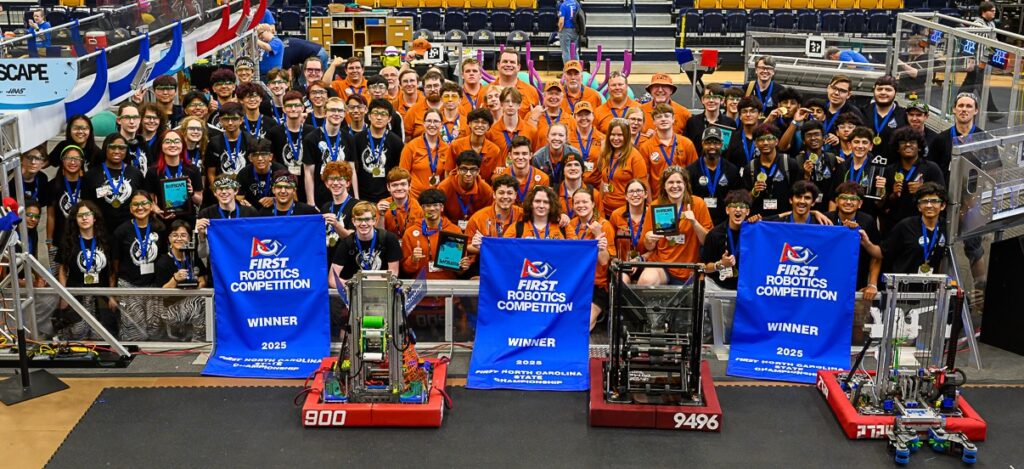
Team PyroTech #3459 from Cary won the Engineering Inspiration Award at the FIRST North Carolina State Championship, held April 5–6 at UNC Greensboro. Two other teams also advanced after placing in the top 10 in state rankings: Slice #8739 from Fuquay-Varina placed fifth and RoboWhales #9032 from Cary placed eighth.
The initial robotics competition, held March 15–16 at Rolesville High School in Wake County, featured 32 high school teams competing to advance to the state championship. Students showcased custom-built robots and were judged based on design excellence, competitive play, sportsmanship, and building partnerships between schools, businesses, and communities. They learn problem-solving and teamwork while designing and building an original robot with the help of engineering and technical mentors.
Students had to demonstrate their skills in science, technology, engineering, and math (STEM). Limited by time, they had to show collaboration and ingenuity in designing a robot that solves a problem, measuring the effectiveness of each robot. The three local teams will compete with 13 other teams at the international championship.
“We are preparing the future workforce of North Carolina,” said Marie Hopper, president of FIRST North Carolina. “These students are learning the skills needed to be highly successful in a competitive workplace, both filling and creating the next wave of high-tech jobs in our state. They are the kinds of employees every company dreams of hiring with their strong team-working skills and adaptability.”
FIRSTis a robotics community helping young people via inclusive, team-based robotics programs for ages 4–18 (PreK–12) in school or structured after-school programs. The students are expected to follow the programs’ core values to conduct research, fundraise, design, build, and showcase their achievements during annual challenges.
Founded by inventor Dean Kamen in 1989 and supported by volunteers, educators, and sponsors worldwide—including over 200 Fortune 500 companies—FIRST is an international not-for-profit organization.
Students and alumni of the programs benefit from education on STEM learning and skill-building, career opportunities, and connections to exclusive scholarships and employers. Students interested in learning about FIRST programs can visit firstinspires.org for more information.