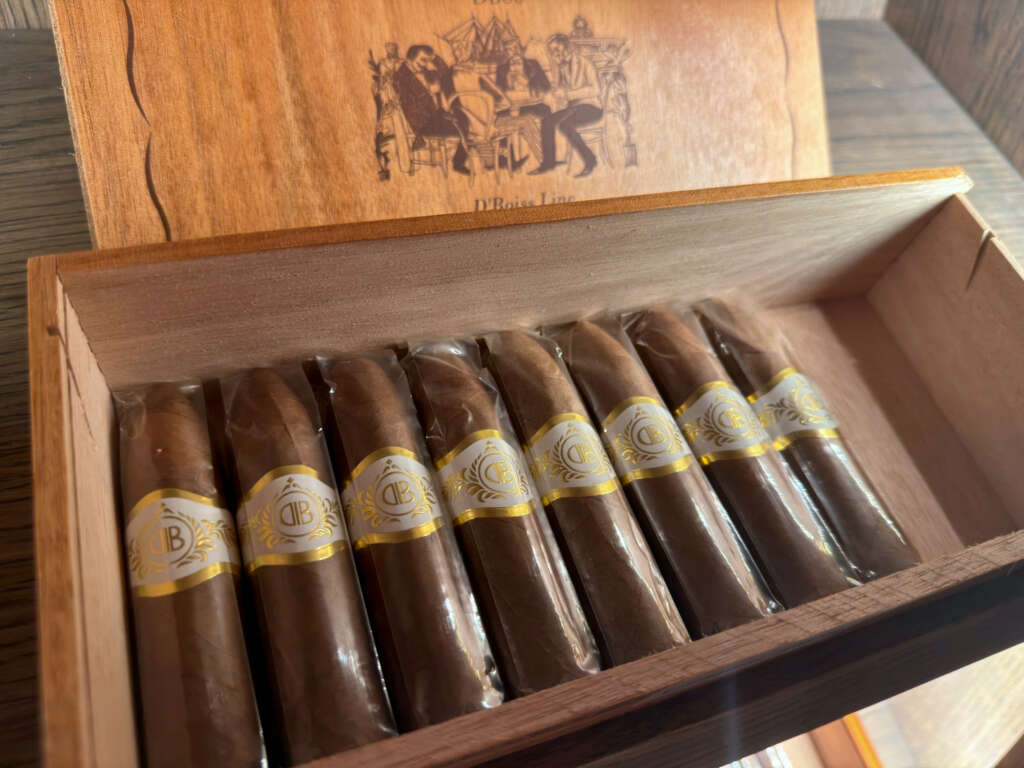
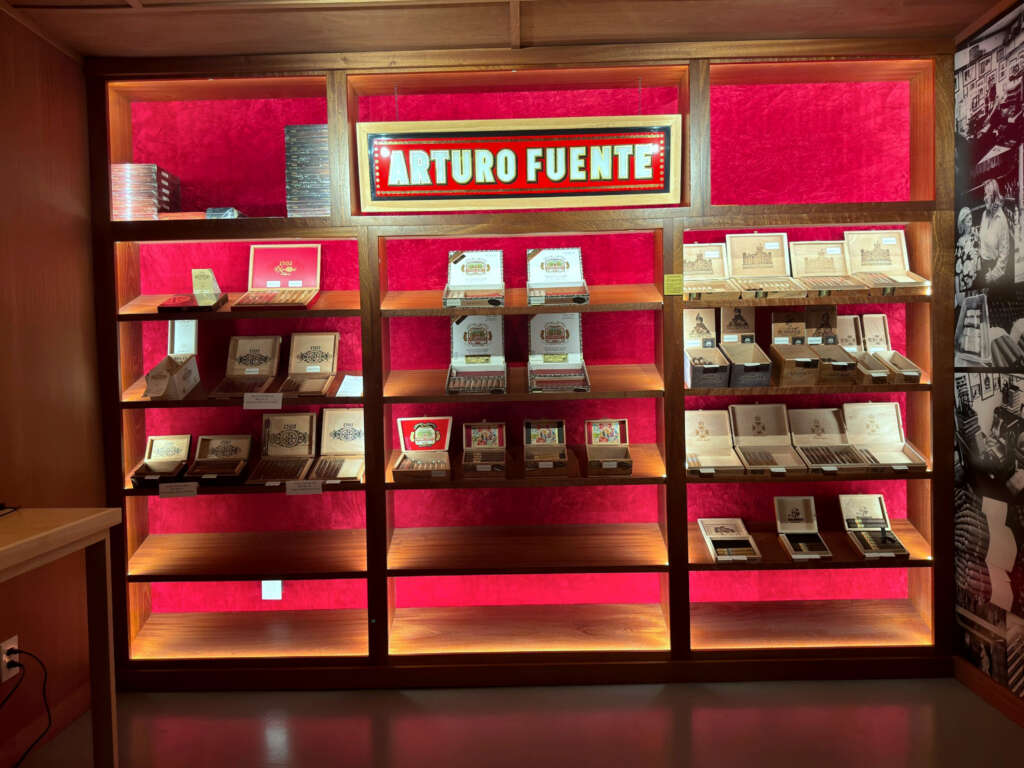
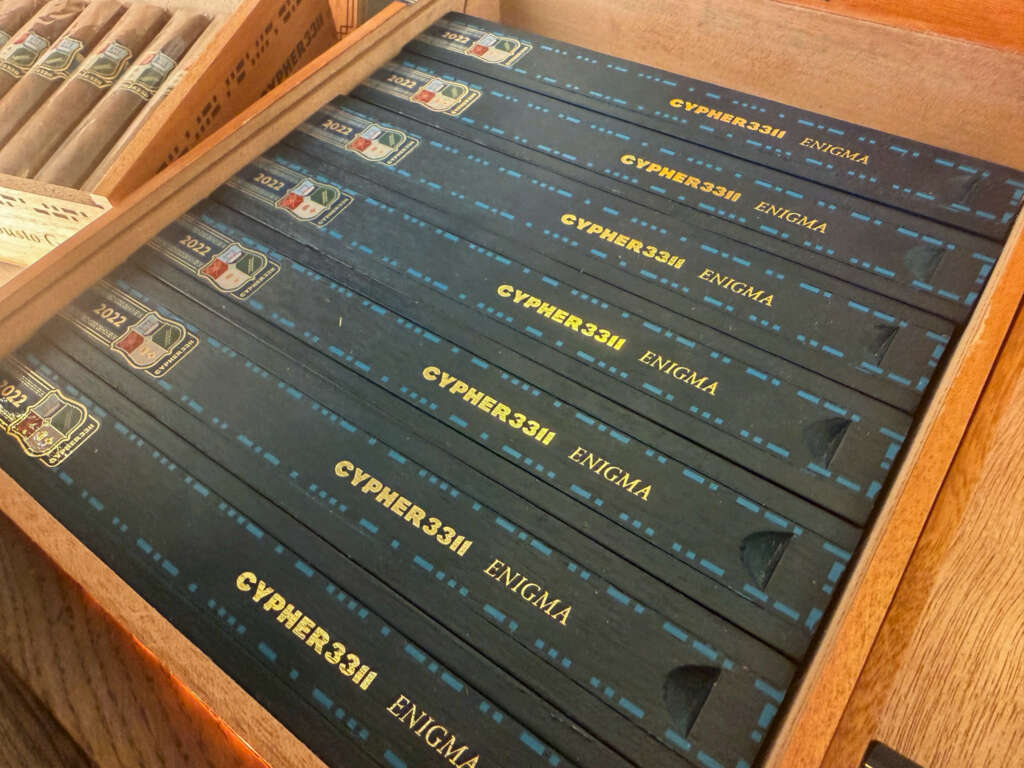
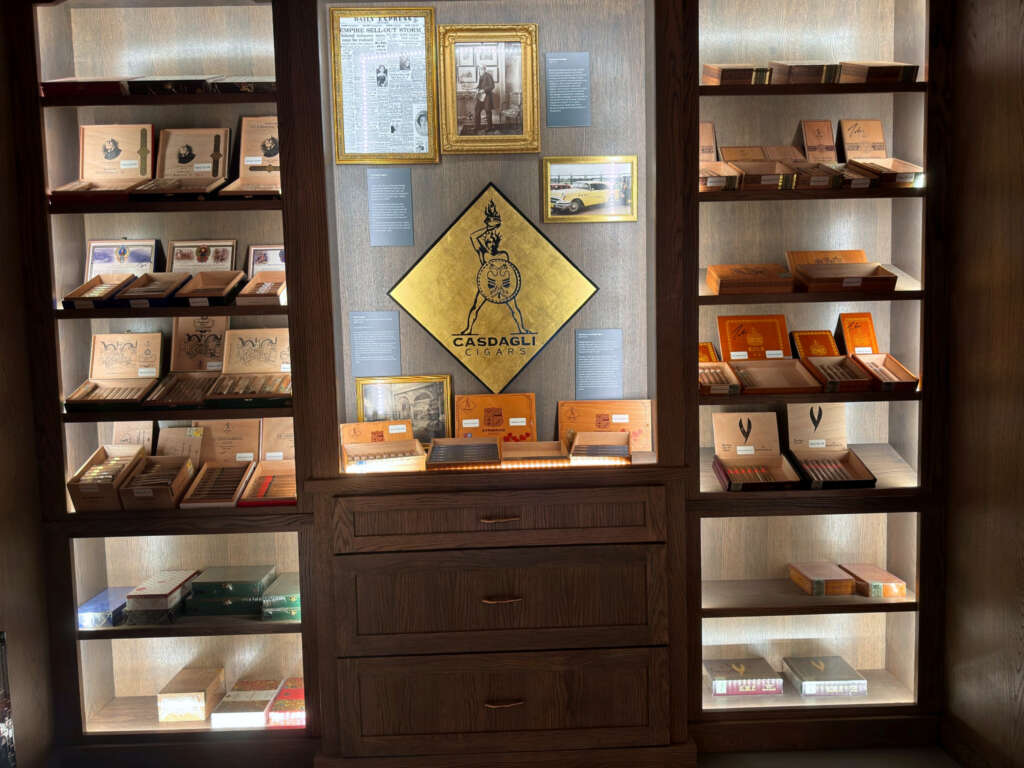
Walking through the humidor, Stegall can tell you who owns many of the companies, where their cigars are produced and, in some cases, who blended them.
Among the boutique brands he pointed out during our visit were Warped, Avowed, Foundation and Valacari, alongside producers such as Plasencia.
That’s part of an industry, Stegall says, that has become increasingly entrepreneurial.
Instead of cigar making being dominated solely by a handful of legacy companies, smaller brand owners are traveling to Nicaragua, the Dominican Republic and other tobacco-growing regions, working with established factories and master blenders to create their own products.
“People have figured out how to do it,” Stegall says. “People are now going, ‘Who is their blender? Where are they getting their leaves?'”
It is not that different, he says, from what consumers have already experienced with wine, beer and spirits. Interest eventually moves beyond the recognizable label toward the people making the product and how it was made.
That same curiosity is also influencing what Wendell Cigar Co. puts on its shelves.
Cigars Made for Wendell
The shop has begun developing what Stegall calls “shop exclusive” cigars by partnering directly with cigar makers on special releases available specifically through Wendell Cigar Co.
The first collaboration launches Sept. 26 with Valacari Cigars and will feature the company’s Astronomia and Lumineer blends in an exclusive Corona Gorda size measuring 5.5 inches by a 46 ring gauge.
“We’ve started developing ‘shop exclusive’ cigars by partnering directly with cigar makers on special releases created specifically for Wendell Cigar Co.,” Stegall says.
The shop will debut the Valacari exclusives Sept. 26 from 5 to 9 p.m., with Valacari owner and master blender Nimmer Ahmad scheduled to attend. The event will also feature cigar specials, raffles and a hot honey brisket food truck.
Events like that are becoming a regular part of the business.
Wendell Cigar Co. hosts monthly community gatherings featuring different craft cigar brands, giving customers an opportunity to meet owners, blenders and representatives and learn more about what they’re smoking.
“When we do this once a month, for cigar people, it’s like your time to get in front of him,” Stegall says. “You can meet the owner, ask him questions about his brands.”
The shop is also preparing to launch an online store later this month at WendellCigarCo.com.
Walking through the humidor, Stegall can tell you who owns many of the companies, where they produce their cigars and, in some cases, who blends them.
Among the boutique brands he pointed out during our visit were Warped, Avowed, Foundation and Valacari, alongside producers such as Plasencia.
That’s part of an industry, Stegall says, that has become increasingly entrepreneurial.
Instead of cigar making being dominated solely by a handful of legacy companies, smaller brand owners are traveling to Nicaragua, the Dominican Republic and other tobacco-growing regions, working with established factories and master blenders to create their own products.
“People have figured out how to do it,” Stegall says. “People are now going, ‘Who is their blender? Where are they getting their leaves?'”
It is not that different, he says, from what consumers have already experienced with wine, beer and spirits. Interest eventually moves beyond the recognizable label toward the people making the product and how it was made.
That same curiosity is also influencing what Wendell Cigar Co. puts on its shelves.
The shop has begun developing what Stegall calls “shop exclusive” cigars by partnering directly with cigar makers on special releases available specifically through Wendell Cigar Co.
The first collaboration launches Sept. 26 with Valacari Cigars and will feature the company’s Astronomia and Lumineer blends in an exclusive Corona Gorda size measuring 5.5 inches by a 46 ring gauge.
“We’ve started developing ‘shop exclusive’ cigars by partnering directly with cigar makers on special releases created specifically for Wendell Cigar Co.,” Stegall says.
The shop will debut the Valacari exclusives Sept. 26 from 5 to 9 p.m., with Valacari owner and master blender Nimmer Ahmad scheduled to attend. The event will also feature cigar specials, raffles and a hot honey brisket food truck.
Events like that are becoming a regular part of the business.
Wendell Cigar Co. hosts monthly community gatherings featuring different craft cigar brands, giving customers an opportunity to meet owners, blenders and representatives and learn more about what they’re smoking.
“When we do this once a month, for cigar people, it’s like your time to get in front of him,” Stegall says. “You can meet the owner, ask him questions about his brands.”
More Than Picking a Label
For Stegall, education matters because premium cigars can be intimidating to someone unfamiliar with the industry.
A cigar isn’t simply one tobacco leaf rolled into a cylinder. Different leaves play different roles in flavor, strength, and combustion, and a blender adjusts the recipe until it performs the way it should.
“A lot of people misunderstand cigars,” Stegall says. “They think it’s just one leaf rolled up. It’s actually a blend of a lot of different leaves for combustion, for flavor, for all kinds of different things.”
That’s why having knowledgeable tobacconists inside the shop matters.
Someone looking for something mild may receive an entirely different recommendation from someone seeking a bold Nicaraguan cigar. Some cigars may improve after additional time in proper storage, while others are blended to be smoked relatively young.
“You kind of have to know,” Stegall says. “And that’s where tobacconists like us come in to kind of educate.”
Hobbie plays a major role in creating that approachable experience, working directly with customers while also helping develop the shop’s community events.
That educational philosophy is now extending well beyond Wendell.
Stegall is developing what he’s calling the Wendell Cigar Co. “Tobacco Project/Expedition Series,” an effort that will work directly with factories and tobacco growers in cigar-producing regions worldwide.
The project begins in the Dominican Republic and could eventually include Nicaragua, Honduras, Mexico, Ecuador, and Peru.
The idea is to learn from the people growing and working with tobacco, build relationships with farms and factories, and use those experiences to create small-batch cigars featuring carefully selected tobaccos.
“We’re excited to give our community an opportunity to experience unique cigars while also learning more about where the tobacco comes from and the craftsmanship behind each one,” Stegall says.
The first Dominican Republic releases are expected this winter, followed by additional small-batch projects throughout 2027.
It’s essentially the craft-beer comparison, taken another step further.
One of the shop’s more unusual projects, however, begins much closer to home.
Wendell Cigar Co. has been experimenting with locally grown Wake County flue-cured tobacco, harvested by hand and cured using older methods, before sending it to the Dominican Republic for fermentation and experimentation in a cigar blend.
Stegall readily acknowledges that flue-cured tobacco isn’t traditionally used as cigar tobacco, making the effort as much experiment as product development.
“We thought it’d be cool to do something with a local farmer,” he says.
That project also connects Wendell Cigar Co. to something larger than what’s inside its humidor.
The shop occupies a building tied to Wendell’s tobacco history, in a town where the leaf once helped power the local economy.
“We’ve got to do something to pay respect to the tobacco history,” Stegall says.
At Wendell Cigar Co., that respect comes with a modern twist.
Small cigar brands are gaining attention. Customers want to know who made what they’re smoking. Shops are working directly with blenders on exclusives. And Stegall and Hobbie are building a place where someone can walk in knowing very little about cigars and walk out understanding considerably more.
In that sense, maybe Stegall’s craft-beer comparison isn’t much of a stretch.
The next era of cigar culture may be less about simply recognizing a label and more about knowing the people, places, and stories behind it.