Tri Pointe Homes Raleigh’s Martha Bader talks about inventory, affordability, buyer priorities, and why waiting until the holidays could narrow your options.
By Deanna Martinez | Wake Forest Coffee Company occupies a two-story building built in 1919 that previously housed a grocery store, an upholstery shop, and an auto parts…
By Dathan Kazsuk | NCRLA President Allen Thomas talks about the Chef Showdown, his North Carolina roots, and what comes next for the state’s hospitality industry.
Burning Coal Theatre presents Tom Stoppard’s Travesties, bringing together James Joyce, Vladimir Lenin, and Tristan Tzara in a comedy set in Zurich in 1917.
By Kristen Schrum | Icelandair’s nonstop flight from RDU puts Reykjavík, the Golden Circle, geothermal lagoons and Iceland’s dramatic South Coast just six hours from home.
By Dathan Kazsuk | Wendell Cigar Co. pairs boutique cigars, rare finds, and local tobacco history inside a historic Third Street building in downtown Wendell.
By Grace Barker | The incredible thing about habits is that they aren’t built in a day or a single decision, but through regular rhythm and repetition.
By Dathan Kazsuk | Owner Claire Calvin brings East of Texas and its mix of smoked brisket, Texas Twinkies, Tex-Mex, and margaritas to Durham’s American Tobacco Campus.
By Dathan Kazsuk | Greenville chef Luke Owens reflects on the NCRLA Chef Showdown, Eastern North Carolina cuisine, and why the state’s food story extends beyond its cities.
By Jennifer Primrose | With more than 200 wineries and vineyards across the state, North Carolina has built a wine industry you can’t overlook—one of those being the…
Thin Mints have company. Girl Scouts just revealed two new additions for the 2027 cookie season—including a first that may have your dog begging for a box.
By Dathan Kazsuk | From steaks and wine lockers to celebrity sightings and personal touches, Sullivan’s has spent decades becoming a Raleigh dining staple.
By Dathan Kazsuk | Midtown magazine teams up with Jeff’s Bagel Run in Raleigh to create two fall bagels: The Heat Check and a sweet blueberry-banana creation.
By Samantha Carson | Step inside The Newsagent’s, a downtown Raleigh coffee shop and vintage media emporium built around culture, community and slowing down.
Everyone sang as 2-year-old Gwen giggled, spinning around in the lobby of our downtown Raleigh condominium in her pointy paper birthday hat that sat perched atop a mass of blonde, sweaty curls.
Gwen is not my granddaughter. In fact, I’m not related to her in any way, nor is anyone else in our building with the exception of her parents. But she is the youngest member of our community, and it felt fitting for all of us to celebrate her birthday.
I remember when I first moved downtown from the suburban Cary neighborhood where I raised my children. People would ask me, “Aren’t you worried about losing your connection to your community?” The truth is, I was a little concerned. We had raised our family in a cul-de-sac where neighbors watched out for each other. We gathered to celebrate holidays. Our children grew up playing together in the stream behind our houses, building forts in the woods, and dangling from a tire swing. But my kids are grown now. We are empty nesters and ready for a change.
I knew that my Cary friends would always be in my life no matter where I lived, but I also embraced the opportunity to build a new community, one forged in the shared experiences of urban living, which is more elusive in side-by-side homes where it’s easy to silo ourselves.
What I quickly learned when we moved into our building, which is home to 20-somethings just starting out in life up to 70-somethings enjoying the fruits of retirement and nearby grandchildren, is that your neighbors define your community no matter where you live.
Stock.Adobe.com/Marco v.d. Merwe.
I got involved with the social committee, where I helped arrange everything from the twice-monthly social gatherings with themes ranging from game night to charcuterie making, to the summer cookout and the winter holiday party. But more than just gathering socially, we have a thread where neighbors in the 56 apartments share concerns (a water leak), needs (a vacant parking spot or help moving a piece of furniture), and items (books they are donating to the community). The speed at which neighbors step up to help other neighbors in need here is unprecedented. Whether someone needs a tape measure, an egg for a recipe, or an Advil, the request is met with multiple replies of: “I’ll leave it by your door.”
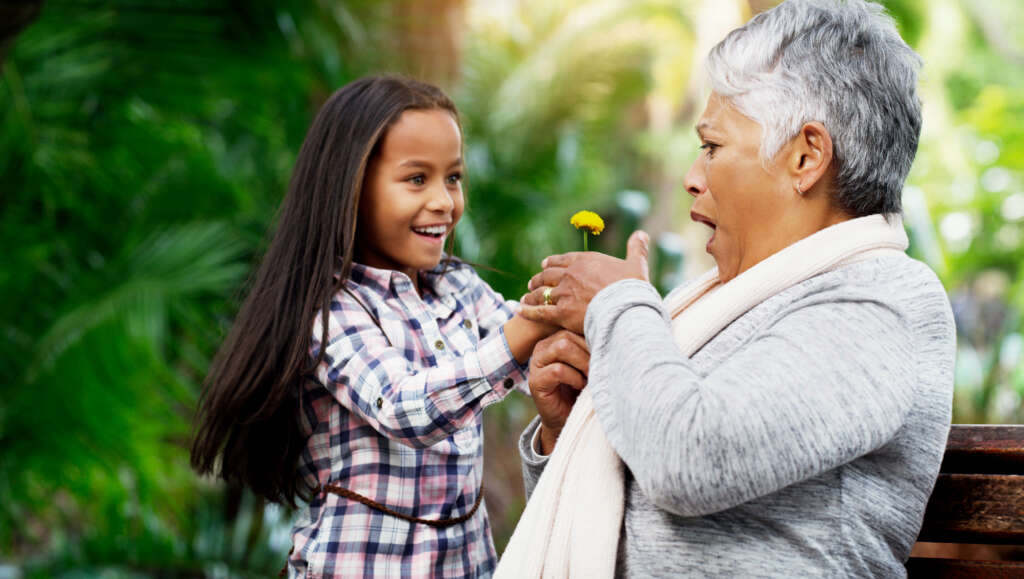
Currently, we only have two children in the building. We got to know Gwen during the inclement weather this past winter when we would meet in the lobby for impromptu breakfasts and hot cocoa. She would run around, interact with all of us, and laugh out loud as she careened in her half-on, half-off snowsuit from one surrogate grandparent to another. Her parents thanked us profusely for giving her some attention and activity during the cabin fever we were all experiencing.
As I watched her, I found myself thinking about children who grow up in New York City. People often lament the lack of a yard to play in. Thankfully, we have a great deal of green space on our property and plenty of parks nearby. But I realized that for a child to grow, for any of us to grow, we don’t just need green space. We need the sustenance that comes from our human connections. Like fertilizer, community feeds us in unseen ways that nourish our souls.
I would argue it’s just as important as the air we breathe.
Amanda Lamb is an award-winning journalist, author, and podcast host best known for her decades covering crime and courts in North Carolina. A longtime reporter at WRAL-TV, she has written 13 books and now focuses on storytelling through podcasts, public speaking, and her media company, Stage Might Communications. Follow her at facebook.com/stagemight or visit alambauthor.com.