By Kyle Marie McMahon | For over three decades, Craven Allen Gallery has served as a vital bridge between the vibrant North Carolina art scene and the homes of…
By Charlotte Russell | Chieko Murasugi is an abstract and mixed-media artist born in Tokyo, raised in Toronto, and now living in Chapel Hill after two decades in…
| By Charlotte Russell | Asheville-based photographer Evan Kafka draws upon over 25 years of experience in commercial photography, where he primarily focuses on capturing human subjects, to create…
By KYLE MARIE McMAHON Every summer, the Fine Arts League of Cary's Annual Juried Exhibition offers a glimpse into the vibrant creative energy flowing through the Triangle’s studios, living rooms,…
Capturing the Natural Moment
BY CHARLOTTE RUSSELL
Raleigh-based artist Nicole White Kennedy creates realistic oil paintings that capture the everyday moments of people living their lives. In her recent work, Summer BFF,…
Students were recognized for design excellence, competitive play, sportsmanship By Mario Boucher Three local high school robotics teams are headed to the FIRST Robotics Championship on April 16–19, 2025, at…
By Dathan Kazsuk
Sometimes, we adults need a night to let loose. You know that feeling when you take the kids to a museum or fun park and they’re running wild—jumping…
All photos courtesy of Hum Sub. Hum Sub opened a series of quarter-century celebrations with a rich Kathak dance performance. By Elizabeth Brignac Hum Sub, a Triangle organization dedicated to…
Above: Ira David Wood III as Sir Walter Raleigh and Lynda Clark as Queen Elizabeth I in Raleigh. Photo courtesy of Theatre in the Park. David Wood Wants People to…
BY DATHAN KAZSUK
Sean Yseult, the bassist whose thunderous rhythms anchored White Zombie’s meteoric rise in the 1990s, remains an enduring icon of alternative metal and underground culture.
As one of the…
Artistic Technique in “Sails” BY CHARLOTTE RUSSELL For Chapel Hill–based painter Paul Hrusovsky, each new work poses a fresh challenge. Laying out the composition in his mind, he intuitively applies…
BY CHARLOTTE RUSSELL Clarence Heyward, William Paul Thomas and Charles Edward Williams are three artists at the forefront of a new generation of Black painters. They are featured in “Triple…
ABOVE: Patrick Dougherty’s “Out of the Box” (2009) sculpture at the North Carolina Museum of Art in Raleigh took three weeks to complete. Photo by Bruce DeBoer. Intertwining Instincts Patrick Dougherty…
KALEIDOSCOPE: Marina Bosetti BY CHARLOTTE RUSSELL Sculptured Garden Delights Raleigh-based ceramic tile artist Marina Bosetti takes a painterly approach to clay. The painters, sculptors and drawing instruction she…
A Mesmerizing Juxtaposition
BY CHARLOTTE RUSSELL
For his painting “Harpa,” John Gaitenby was mesmerized by the modern angular lines of The Icelandic Opera housed in Harpa, a concert hall and conference center…
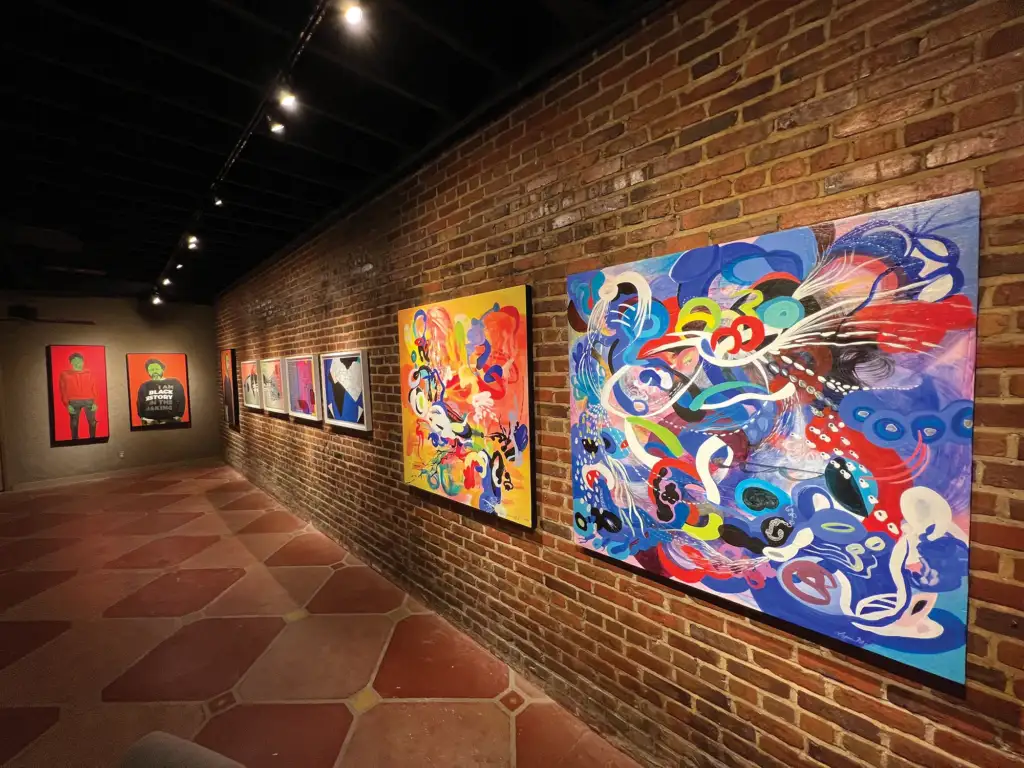
ABOVE: Craven Allen Gallery’s main space, with its original brick walls and warm, intimate lighting, feels unpretentious and welcoming. Sixteen-month-old Jasper is the official gallery dog and a highlight of every visit. Part of an eclectic district that once served Watts Hospital and now the NC School of Science and Math, the gallery is just next door to the iconic Green Room pool hall, made famous in Bull Durham. Photos courtesy of Craven Allen Gallery.
By Kyle Marie McMahon
In spring, many of us find ourselves looking at our walls with fresh eyes.
We rearrange furniture, declutter corners, and seek out ways to make our homes feel more like a sanctuary. While paint colors and fabrics certainly set the stage, it is often the art we choose that provides the soul of a room.
A well-placed painting or a carefully framed heirloom does more than just fill a void; it anchors a space, sparks conversation, and reflects the evolution of our own personal narratives.
For over three decades, Craven Allen Gallery has served as a vital bridge between the vibrant North Carolina art scene and the homes of our community. Tucked away in an intimate, unpretentious space on Durham’s Broad Street, the gallery—and its renowned custom framing house—has built a reputation on the belief that art should be accessible, meaningful, and deeply personal.
Owners John Craven Bloedorn and Keith Allen Wenger have witnessed firsthand how a piece moves from a gallery wall to a living room, transforming from a creative expression into part of a family’s daily life. We sat down with Bloedorn to discuss the gallery’s long-standing history, the importance of nurturing local talent like Beverly McIver and Damian Stamer, and how the right frame can protect a treasure for generations to come.
Owner Bloedorn descibes the space as “intimate, accessible, and unpretentious.”
Craven Allen has been a staple on Broad Street for years. How has the gallery evolved over time, and what is it about this specific space that makes it the right environment for showcasing North Carolina art?
When Keith and I took over what was then House of Frames in 1992, framing was the foundation of the business and the gallery existed alongside it. That balance shifted gradually, shaped by the artists we worked with and the conversations happening on our walls. Framing taught us how people live with art—how it becomes part of daily life—and that understanding ultimately defined the kind of gallery we wanted to be.
A turning point came with Beverly McIver’s first exhibition here. Her work brought an emotional directness and narrative depth that fundamentally changed how people experienced the gallery. The response to that show helped clarify our direction and expanded our audience. Beverly has national recognition, in major museums like the National Gallery of Art and the National Portrait Gallery, and is now represented by a New York gallery that has continued to welcome collaboration with us.
The Broad Street space has always supported that approach. It’s intimate, accessible, and unpretentious—designed for engagement rather than spectacle. People feel comfortable spending time here, which allows the work to speak in a more personal way. That atmosphere has been essential to presenting art that is thoughtful, challenging, and rooted in this region.
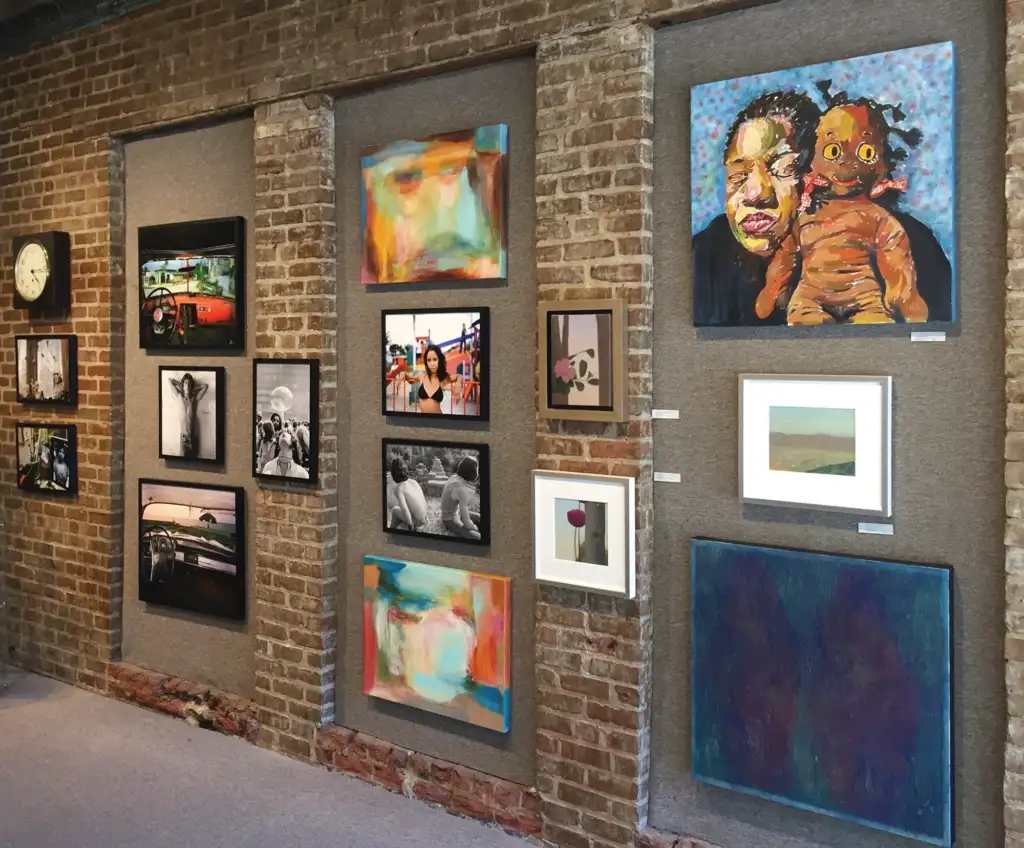
Each exhibit is a masterclass in local talent. The craftsmanship of their custom framing options ensures that every piece is preserved with the polished finish it deserves.
You work with a mix of local and nationally known artists. When curating an exhibition, what tells you a piece belongs at Craven Allen?
I look for authenticity and commitment. The work has to feel purposeful—like the artist is fully invested in what they’re exploring.
Artists such as Beverly McIver exemplify that level of honesty. Her work addresses family, identity, and lived experience with clarity and courage, and it continues to resonate strongly with our audience.
John Beerman recently made a transition from landscapes to large-scale abstractions, which were warmly embraced by collectors. Clarence Heyward has a major museum exhibition opening soon, and will have a show here this fall. He is one of the most exciting artists working in North Carolina today.
One of the most rewarding aspects of this work has been supporting artists over the long term. We first encountered Damian Stamer when he was still in high school. Watching his work develop—from early promise to inclusion in major private collections and museum exhibitions—has been a powerful reminder of the importance of patience, mentorship, and belief in an artist’s trajectory. Those long arcs matter to us.
Craven Allen is also known as a premier custom framer. How does framing shape the experience of a work of art?
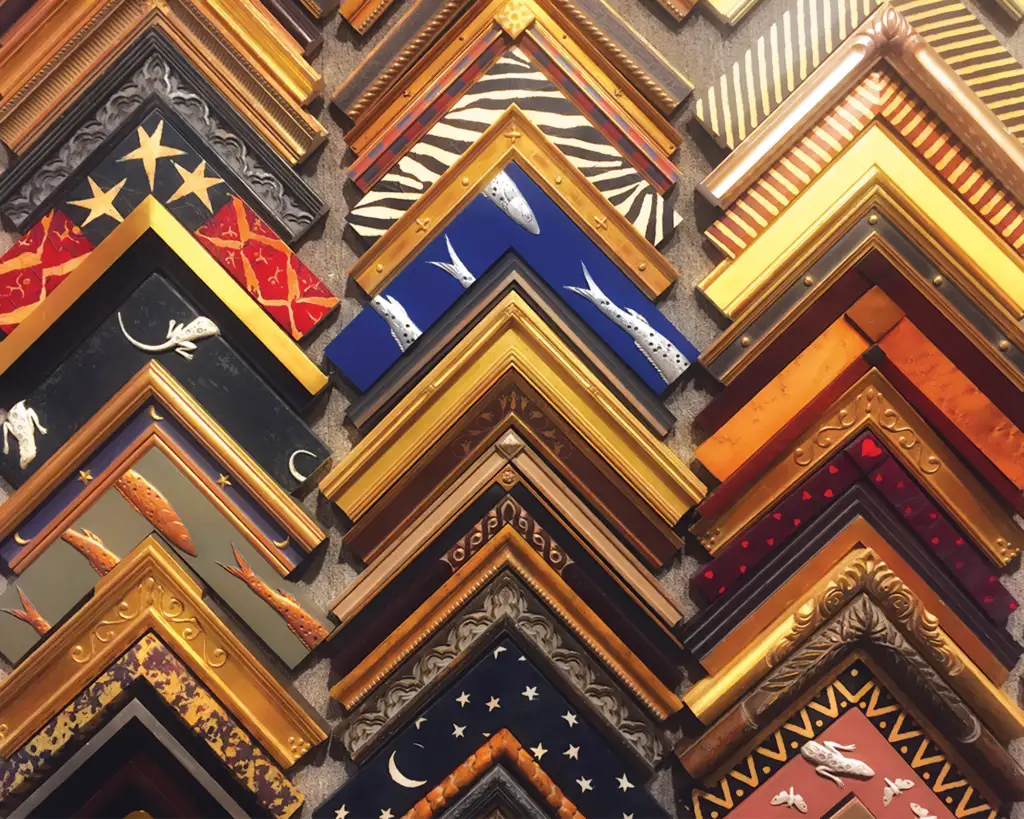
Framing is never a secondary detail for us—it’s part of how art speaks in a space. The right frame can elevate the artwork’s presence; it can clarify intent and protect the piece for generations. That’s why, even as we’ve grown the gallery program, we’ve maintained framing as a core part of who we are.
Our process is always collaborative: We start by listening—not just about the work itself but about how the client lives and what they want the work to be in their home. Materials matter— from conservation glass to archival mats—but visual harmony matters just as much. Over a 30-plus-year history on Broad Street, helping people protect heirlooms, family portraits, and significant artworks has been as rewarding as bringing new art into their lives.
Each exhibit is a masterclass in local talent. The craftsmanship of their custom framing options ensures that every piece is preserved with the polished finish it deserves. Photos courtesy of Craven Allen Gallery.
For readers looking to refresh their homes, what advice do you offer to someone starting a collection or searching for a piece to anchor a room?
Start with what resonates personally. Art should do more than fill a wall—it should create a feeling, spark curiosity, or invite reflection. If a piece keeps pulling you back to it, that’s usually a good sign.
When anchoring a room, think about presence rather than just size. A strong work sets the emotional tone of a space and often guides everything else around it. Take your time, ask questions, and learn about the artist’s process. Understanding where a piece comes from often deepens your connection to it.
A collection doesn’t have to be built all at once. The most meaningful ones grow slowly and intentionally.
What do you find most rewarding about the gallery’s relationship with the Durham community?
What’s kept us going all these years is people—artists, collectors, neighbors, and especially our staff. We’re incredibly lucky to have employees who stay with us for years, sometimes decades. That kind of continuity creates trust, and it shows in how we work with artists and clients alike.
One of the most formative influences on the gallery was our original gallery director, Paul Hrusovsky. An artist himself, he helped us understand the gallery from the artist’s point of view—what artists want, what they need, and what they expect from a gallery relationship. That perspective shaped everything from how we communicate to how we install shows, and it’s still part of our DNA.
When the work stops being an object on a wall and becomes part of someone’s daily life … that’s the mission, really—to help art find its place in the world.