

By KYLE MARIE McMAHON
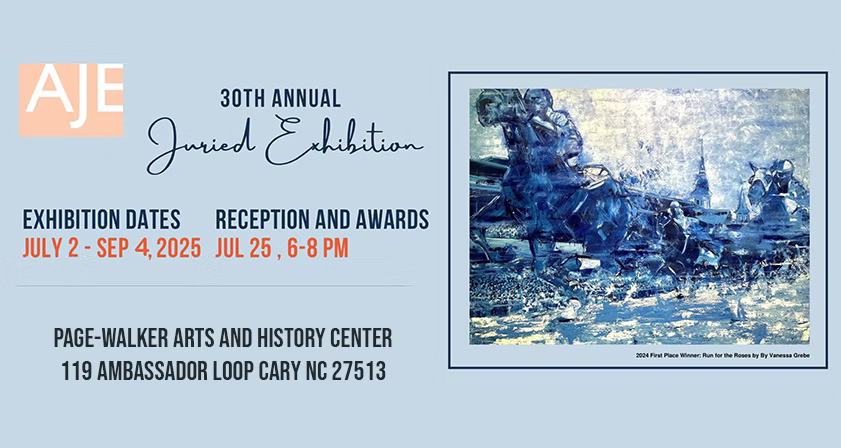
Every summer, the Fine Arts League of Cary’s Annual Juried Exhibition offers a glimpse into the vibrant creative energy flowing through the Triangle’s studios, living rooms, and workshops. For its 30th year, the show drew more than 650 submissions, ultimately showcasing 70 standout works selected by guest juror Adam Cave—a longtime figure in the Triangle’s art scene and former downtown Raleigh gallery owner. We sat down with Cave to learn more about what makes this year’s exhibition special, what he looks for when judging a show, and why local art still matters in an increasingly digital world.
Can you tell us a bit about your background in the arts and what brought you to serve as a judge for this year’s exhibition?
I grew up the son of two artists (my father, Joseph Cave, is a professional painter), and art was part of my life from the very beginning. The career path I followed was a very natural choice.
I double majored in fine art and art history and began my gallery career in Santa Fe, New Mexico in 1992 and later spent over ten years as the director of Gallery C in Raleigh. I’ve served on the City of Raleigh Public Art and Design Board, the Town of Cary Public Art Advisory Board, as well as lectured at North Carolina State University, the Visual Art Exchange, and the Fine Arts League of Cary.
But it was my time as a gallery director and owner in Raleigh that really brought me into contact with the entire Triangle art community and which is how I was recommended to FALC to be this year’s judge. As I am now working outside of the artworld, it has been a real pleasure to step back in and put on that hat again.
How would you describe the overall range and quality of submissions in this year’s show? Were there any noticeable trends or themes among the artists?
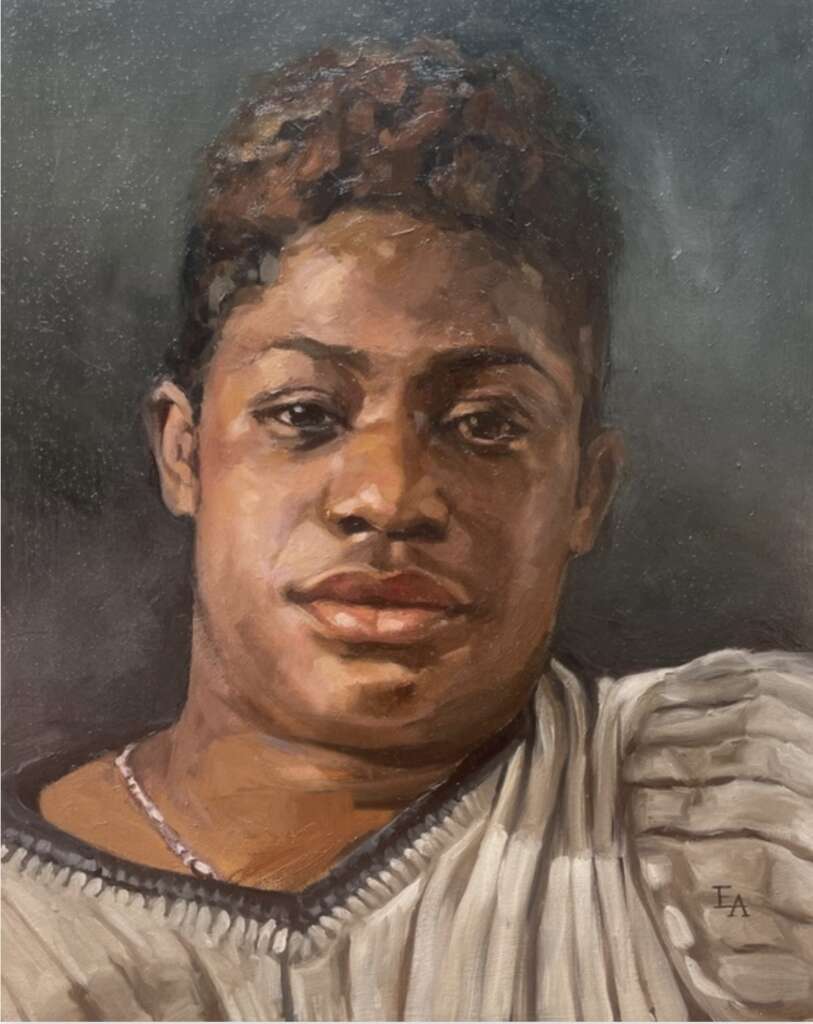
There were over 650 submissions for this 30th annual exhibit and I was tasked with choosing 70 works, or roughly one out of ten. The range of work was very wide with many different styles and mediums represented. There was also a range of work from artists who are starting out to those with a lot of design and technical expertise. This all made the judging process both challenging and exciting at the same time.
What specific criteria do you look for when judging a piece of art in a juried show like this?
I tend to approach curating a show like this with three ideas that I try to keep very clearly in my head. First, I don’t want to pick favorites just because they are creating work in a style that I personally am drawn to. Each piece needs to be considered on all of its merits.
Second, I try not to compare artists with each other but instead try to figure out what they are trying to do with their work and determine whether I feel it was successful. This helps me also include artists who may not be as technically proficient as others but are still “saying something” with their work.
Lastly, does it “say something” or, better yet, do I feel something when I look at it. If I connect emotionally, then it doesn’t matter if it is a landscape, or a figure study, impressionistic or realistic.
Is there a particular medium or style that stood out to you in this year’s entries?
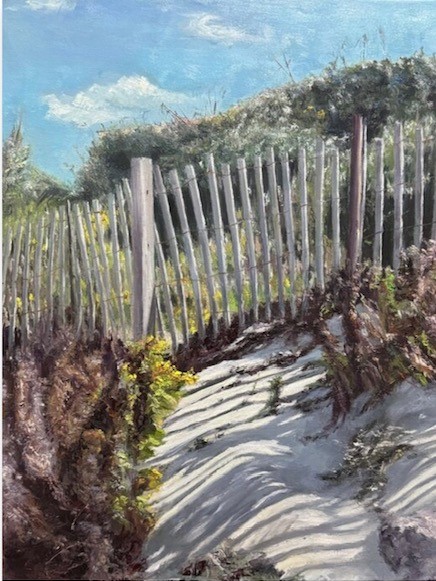
Painting was without a doubt the most prominent medium and, somewhat to be expected, there were a lot of landscapes (some very good). I did see more surreal subject matter than I have seen lately and that was exciting. I also included some works that were tremendously expressive.
What makes judging a community-based exhibition like this one different from other shows you’ve worked with?
As a commercial gallery owner, I often was tasked with not only curating a show but selling the work as well. This required some balance. I wanted to pick work that I honestly responded too but also had to keep my audience in mind as well. In an invitational show like this one, I am less concerned with whether the audience agrees with my choices. Instead, I can freely choose work that I respond to and I hope my choices create a reaction on those that see them … good or bad. If art can get a reaction or create a conversation, I think there is real value in that type of visual communication.
Can you share a moment during the judging process that surprised or moved you?
There were lots of surprises along the way and work that clearly came from the heart. One of the interesting aspects of this is that I was asked not to include more than one piece per artist. There were a few times where I was very taken with 2–3 pieces and then realized that they were all by the same artist and I was going to have to choose between them. I was glad for the artist but sad for the pieces I was not able to include.
Why do you think juried exhibitions like this are important for both emerging and established artists in the region?
I think it is important to define what you mean by artist here. For professional artists, there are phases in a career. It is hard to get noticed, to stay confident, to push through until you are selling work and maybe even making a living. Juried exhibits are an opportunity to be seen, build up a resume, and develop a following, all of which is very important for emerging artists.
For non-professional artists, juried exhibits are an opportunity to share one’s creativity with the community. This alone can be tremendously fulfilling. Making art can often be a pretty solitary pursuit and it really helps to get out of the studio, see how people respond to what you do, meet fellow artists, and get inspired to go back and create more.

What do you hope visitors will take away from this exhibition—either about the art or the Triangle’s creative community as a whole?
I think visitors will be impressed with the wide variety of artwork that is being done in this area. So many ideas and approaches, so many different styles. The Triangle has an amazing creative community that I have had the privilege to be a part of for almost 30 years. I think some of that is represented well in this show.
How does participating in or viewing local exhibitions like this one benefit the broader community?
Soapbox time. As society moves increasingly towards a digital reality, we are growing more and more satisfied with experiencing life as a digital reproduction on our phone or tablet. But experiencing a physical work of art in person is a really valuable experience that we need to nurture and support. And while you can experience art in a museum, the artist is more often than not out of reach. Local exhibits let you experience original art as it was meant to be seen by artists living in the same community and having similar life experiences to your own. This is the creative side of your own community. Get out and see what it is all about!
Any advice for artists considering submitting their work to juried shows in the future?
Just do it. Don’t be afraid to share your vision. But also, don’t be angry or take it personally if your work is not accepted. Art is both objective and subjective and not everyone is going to see what you see or value it in the same way. And if you do submit, remember how much a juror like me doesn’t know about you and your work. We are often making decisions based on digital images alone so make them good ones. High quality photos and clear descriptions go a long way to helping us see what you are all about.
Whether you’re an art lover, a casual admirer, or simply looking for a fresh way to connect with your community, the Fine Arts League of Cary’s 30th Annual Juried Exhibition is worth a visit. Featuring a wide range of styles and perspectives from both emerging and experienced local artists, the show captures the creative spirit of the Triangle in a truly personal way. Stop by, see something new, and experience the power of original art—right in your own backyard. For more information, visit fineartsleagueofcary.org.