

By Kurt Dusterberg
When the Athletes Unlimited Softball League (AUSL) announced in January that it was placing a franchise in the Triangle, the idea made immediate sense. With prominent college programs like Duke University and the University of North Carolina already on the landscape, Carolina Blaze felt like a natural fit.
The Blaze will join the Chicago Bandits, Oklahoma City Spark, Portland Cascade, Texas Volts, and Utah Talons in the six-team league, and will play at Smith Family Stadium, Duke’s home field. The 25-game season begins Tuesday, June 9, at home against Portland and runs through July 20.
“It’s the combination of this sport, which has been on the rise in the last decade, merging with the investment of the people who are there in Durham,” says head coach Kara Dill. “Durham just feels like such a great place to make that happen.”
The league is in its second season, but 2026 will be its first with city-based teams. As a four-team league in 2025, the AUSL played under a touring format, visiting 10 cities. With the more traditional home-city model, each team can build a community identity. In the case of the Blaze, that starts with former Duke pitcher Jala Wright, who graduated in 2024. Since then, she has won two championships playing for the Atlanta Smoke in Women’s Professional Fastpitch. And she’s already found her way back to her former home field after becoming the Blue Devils’ pitching coach in 2026.
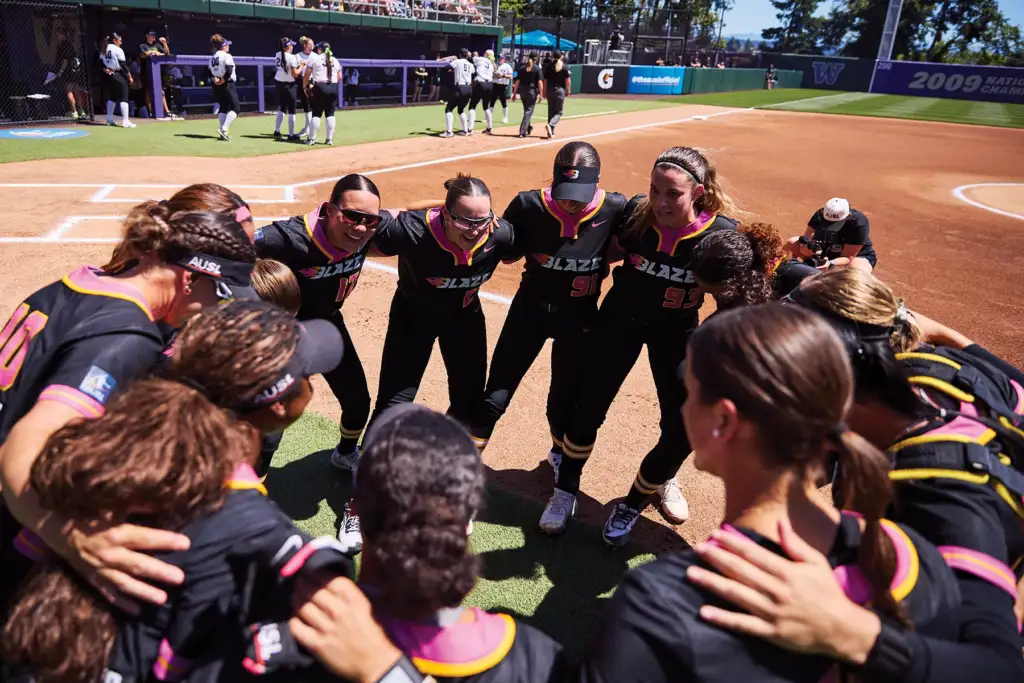
“Sometimes I have to take a deep breath, because I get overwhelmed by it all,” Wright says. “I have to pinch myself that, okay, this is my dream and I’m right where I need to be. I can only give thanks to God. I’m just so grateful to be where I am.”
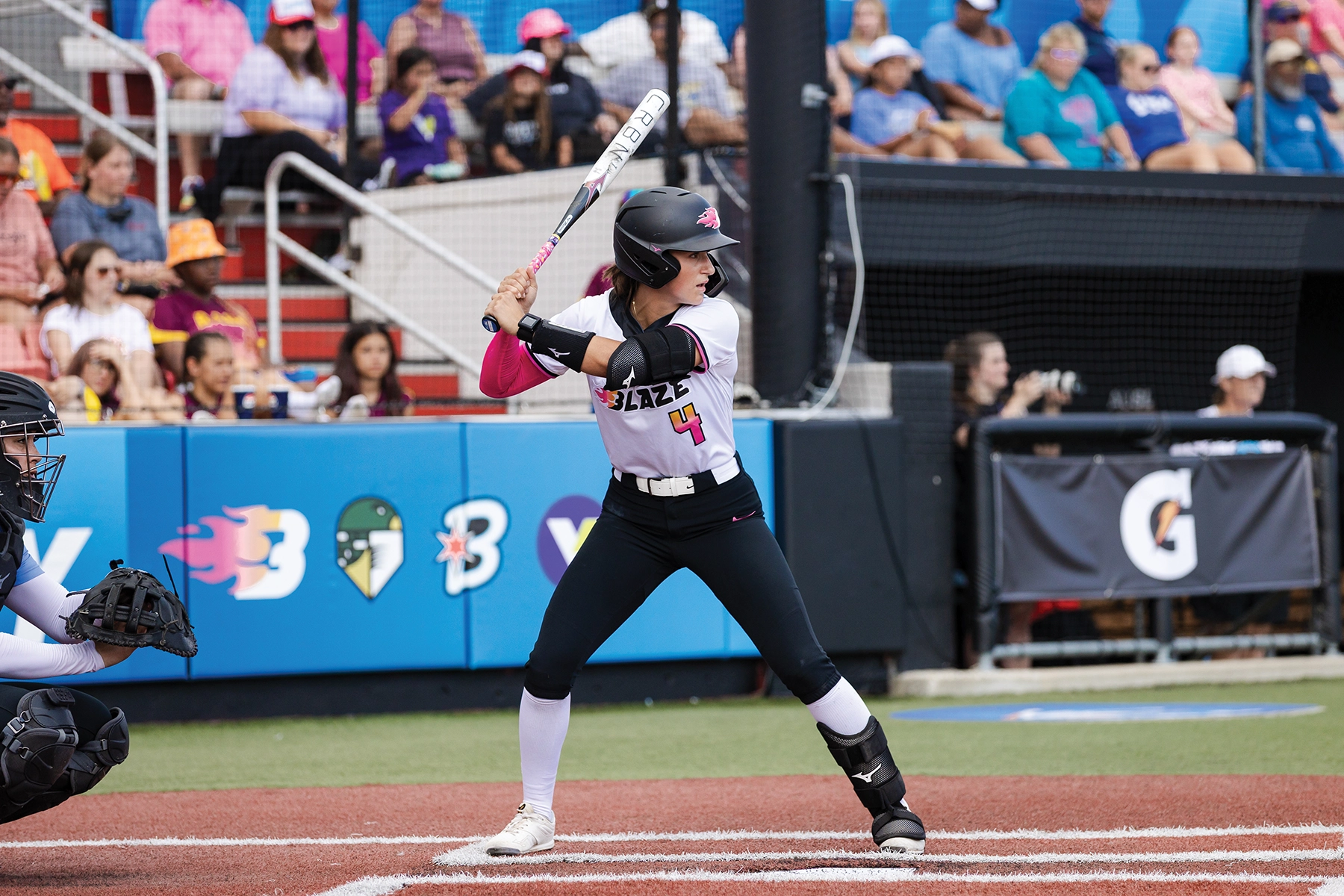
The Blaze will feature another Duke alum, Ana Gold, who graduated in 2025. The infielder was the AUSL rookie of the year last season with the Blaze, finishing seventh in the league with a .373 batting average.
“I think that’s going to be really fun,” Gold says. “Holding home field advantage is a real thing, being comfortable playing and having your fans rooting for you. It’s being able to play for not just yourself and your team, but also the community and the fan base.”
Her coach is hoping Gold’s second season will be even better than her first. “She’s an incredible athlete,” Dill says. “She played a little bit of third base, a little bit of shortstop, and offensively she was so consistent. When you look back at her career at Duke, you see that in her stats. I’m definitely expecting her to be a big part of what we do this year.”
The Blaze is not the first professional softball team to call the Bull City home. The Durham Dragons played at Durham Athletic Park from 1997–1999. The game has grown remarkably since then, with youth travel softball paving the way for high school and college programs.
“The talent has evolved immensely,” Wright says. “Pitchers are already hitting 70 mph at 15 years old. I could only dream about that growing up. There’s got to be something propelling the game, and I honestly think it’s just our passion. The ladies that have been playing this game long before I have, they want to grow this game and they want to leave a lasting impression. That started with travel ball, then college, and now we have this league that simulates MLB (Major League Baseball).”
Durham will count on the game’s growth to help solidify the Blaze and further the city’s own investment in women’s sports. The city and university hosted the North Carolina High School Athletic Association Softball Championships last year on Duke’s home field, as well as the 2025 NCAA Division I Field Hockey Championship.
“Durham has been strategic and intentional in highlighting girls and women in sports,” says Marcus Manning, executive director of the Durham Sports Commission. “Durham continues to grow as a sports destination, and the AUSL and Carolina Blaze add to the Triangle region’s already thriving sports ecosystem. The Blaze provides unique opportunities for participation, fan engagement, and awareness.”
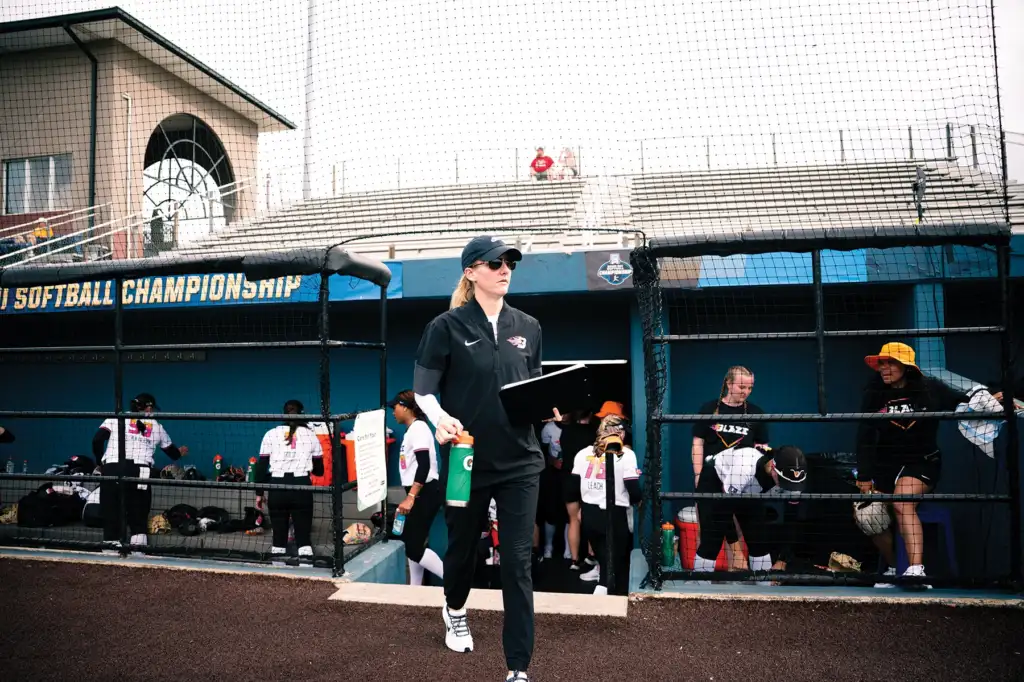
Dill has a unique perspective on the improvement of softball talent in recent years. She is the head coach at the University of Texas at Arlington, a Division I program. She has seen the game change dramatically since she played at the University of Kentucky, where she graduated in 2013. “The data and analytics were significantly behind 10 years ago, compared to where baseball was,” Dill says. “We’re catching up to them now. That has been a big development, so it’s just making our athletes more intelligent. When you’re able to get a pitching machine that can simulate what you’re going to face for the upcoming weekend, you can prepare your hitters. That’s a huge bonus.”
And once the Blaze players put their high-level skills on display, the AUSL might become the first pro softball league with real staying power. “This is the MLB for softball,” Gold says. “Softball is very high-paced, it’s fun to watch, and the league has done a really good job with fan engagement during the games.”
And if the AUSL can continue to grow, Triangle sports fans might soon be tracking another group of pro athletes. “It hasn’t been a valid option in the past,” Dill says. “It’s been something to do in the summer if you’re not really ready to hang up your cleats yet. Now, this could really be a thing for them. They can get paid as professional athletes. It is such a cool thing that we are able to offer this opportunity.”
Making a living playing softball would be a substantial step for the players in the league, but blazing a path for future players would mean a lot, too. “We are women and pioneers in this sport,” Wright says. “And I’m grateful to be one of those players to etch the game in history.”