
Skip to content Skip to sidebar Skip to footer

Veteran hurler makes up for lost time with the Durham Bulls

Cam Booser Durham Bulls Pitcher

By Kurt Dusterberg

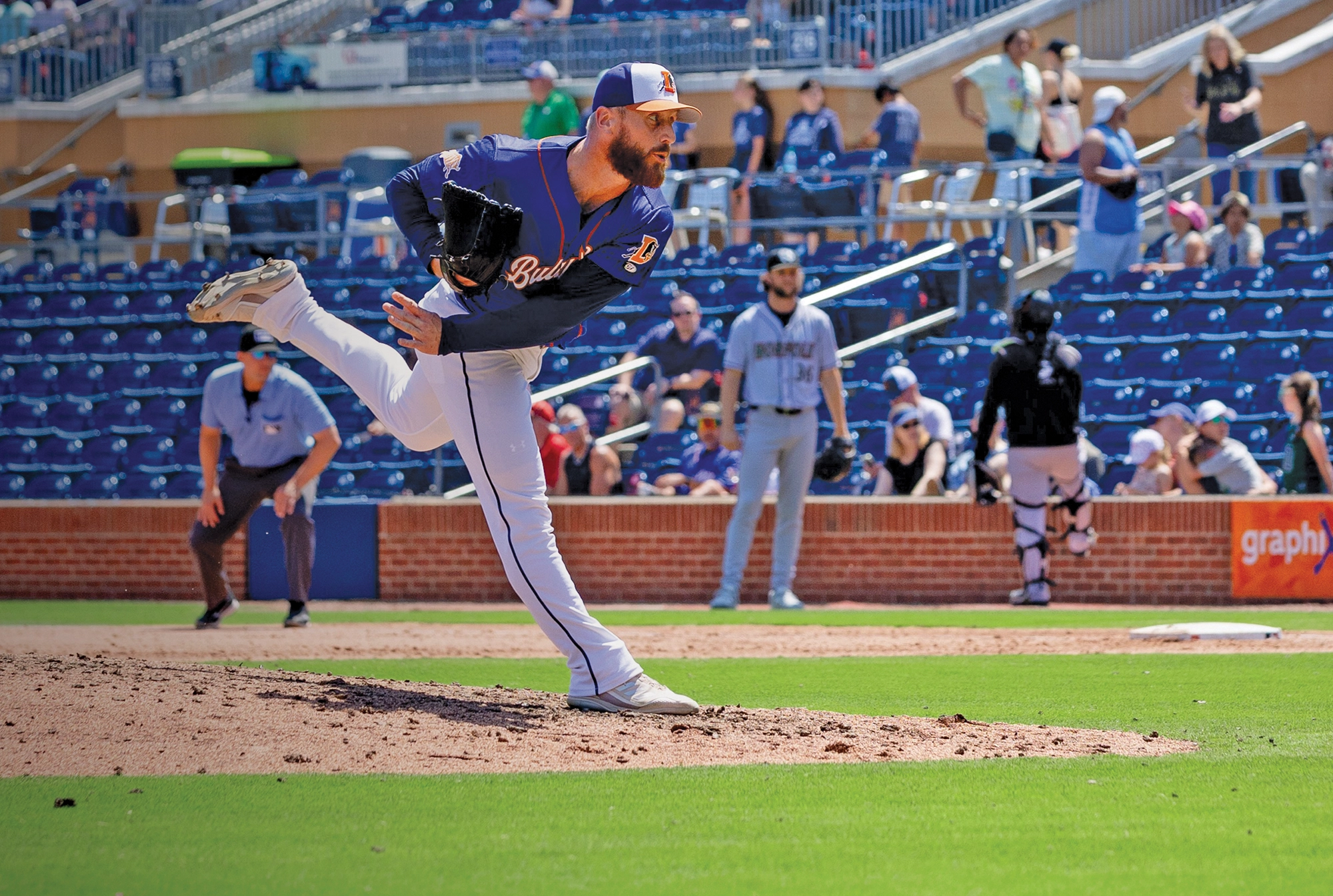
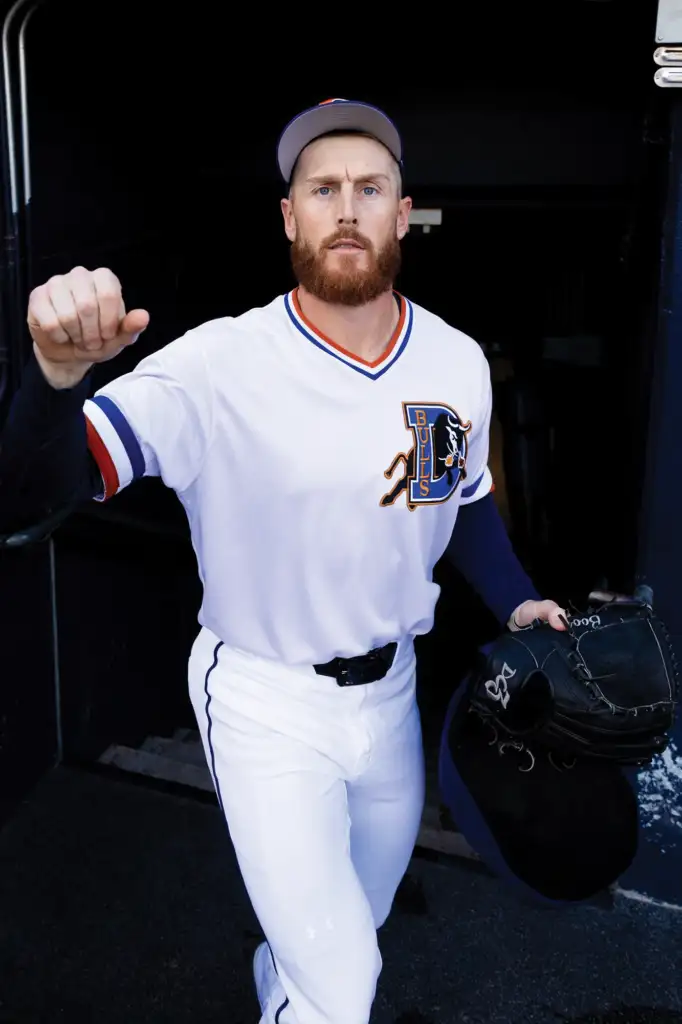
Like every minor leaguer who is assigned to the Durham Bulls each summer, Cam Booser is on the doorstep to Major League Baseball. The path to Triple-A varies, but the 34-year-old pitcher is taking a winding one. So when he strolls into the lobby of the Durham Bulls Athletic Park several hours before a recent game, he settles into a comfortable chair to begin his explanation.
 
“We all have a story, and we all face demons in life,” he says. “Some of us don’t handle it well.” 
 
With that admission as a backdrop, Booser believes he has moved past his most difficult days, ones that were marred by injuries, bad choices, and emotional struggles. For the veteran pitcher, the game of baseball is merely the context for his journey. “I think I’m here to use my platform to talk about how God saved my life,” he says. “That’s where the uplift came from. That’s the only reason I’m here. Not just playing baseball—it’s why I’m alive.”
 
Booser grew up in Seattle, enduring an injury-plagued high school career. He pitched briefly at Oregon State, but his college career ended when he underwent Tommy John surgery to reconstruct his throwing elbow. Still, the Minnesota Twins gave the hard-throwing left-hander a spot in the minors. But two years later, he suffered another setback when he was struck by a car.
In 2017, he was suspended after testing positive for marijuana, leading to his retirement at the end of the season. With nothing to fall back on, he headed home to Washington, where his father helped him get a job installing acoustic tiles. The work kept Booser engaged, but little else. “The busy was good, because it was numbing in a sense for a while,” Booser says. “I had depression even before I started that job. A lot of the alcoholism that I had my last couple of years with the Twins led to that depression, so it was a constant battle with that.”
 
Booser worked long hours in his construction job, spending his 45-minute commute each day second-guessing his life outside of baseball. “I had this overwhelming feeling that I just wasn’t doing what I was supposed to be doing,” he says. Finally one night, he sent a text to his father: “Dad, I love you. I thank you for the opportunity, but I’ve got to go back and try to play ball.” At the same time, Booser was giving pitching lessons to local kids, slowly rebuilding his enthusiasm for the game. He started throwing into a net at the training facility, and soon his fastball was clocked at 97 miles per hour.
 
The road back began in an independent professional league in 2021, which led to a minor league contract with the Arizona Diamondbacks in 2022 and two seasons in the Boston Red Sox organization. He made his major league debut early in the 2024 season, pitching the ninth inning of an 8-1 win against the Pittsburgh Pirates.  
 
“It’s like the culmination of a lifetime of work,” Booser says. “But it’s also kind of a celebration of the moment. It’s a sense of euphoria, and it’s the ultimate battle. You can either be the best version of yourself, or you’re not. It gets very dramatic. You kind of block out 30 or 40 thousand people in the stands and have the singular focus right on that catcher. It’s an ultimate dream come true. It’s awesome.”
 
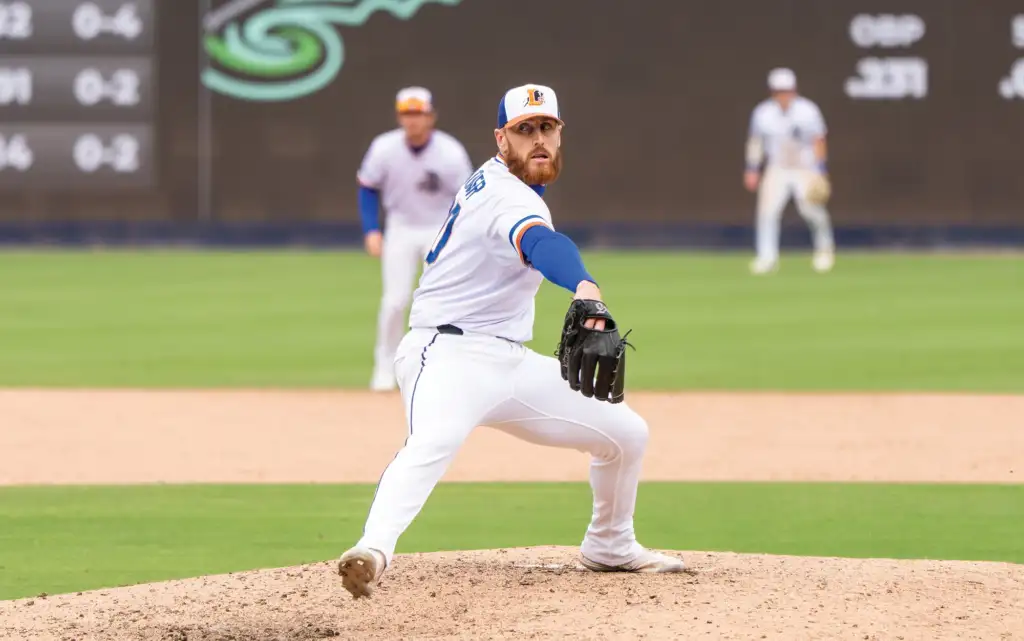
Last year, Booser signed with the Chicago White Sox and pitched in 39 major league games, but his performance didn’t match his previous season with Boston. Now in Durham, he is hoping for another call-up to the Tampa Bay Rays—but not at the expense of staying in the moment.
“Your mind becomes a blender if you try to think, I might be there tomorrow or next week,” he says. “Just be wherever your feet are. I’ve gone out and played golf in Durham, and I’ve tried to see as much of the place as I can. I love it here. Some of the twilight hours, driving through the back roads of Chapel Hill, it’s been beautiful.”
 
That sort of patience was in short supply in his early days in the minors. No one knows that better than the Bulls’ bullpen coach, Henry Bonilla. He coached Booser in the Twins organization and remembers a player who had a hard time letting go of bad outings. “The ability for him to forget about the negative and not dwell on it, it’s completely different now,” Bonilla says. “Those days were few and far between back then. And his relationship with the Lord has let him understand that failure is not who he is. Now, when he has a bad day, the next day is back to work, smiling.”
 
As he chases another call-up, Booser can’t help thinking of the other players who faced their own adversities. “I wish I would have spoken up when I needed help. I never did,” he says. “I think it could help us if more guys talked about stuff while they were playing. I played with so many guys who retired at the age I did, when it gets tough.”
 
Booser’s story of baseball redemption is not fully written yet, even at an age where most pitchers’ careers are winding down. “I’m aware of it, but physically I feel like I’m 27,” he says. “I don’t see any reason I can’t pitch for another five or six years, especially considering where I was. That would be the ultimate success, to come back at 30 and put 10 years in. That’s my goal now, to provide for my wife and I until I’m 40. But right now, it’s a blessing to be here.” 

© 2008-2025 Midtown magazine, LLC. All rights reserved. Copyright applies to all pages on this website. | Privacy Policy

By Kurt Dusterberg

Like every minor leaguer who is assigned to the Durham Bulls each summer, Cam Booser is on the doorstep to Major League Baseball. The path to Triple-A varies, but the 34-year-old pitcher is taking a winding one. So when he strolls into the lobby of the Durham Bulls Athletic Park several hours before a recent game, he settles into a comfortable chair to begin his explanation.
 
“We all have a story, and we all face demons in life,” he says. “Some of us don’t handle it well.” 
 
With that admission as a backdrop, Booser believes he has moved past his most difficult days, ones that were marred by injuries, bad choices, and emotional struggles. For the veteran pitcher, the game of baseball is merely the context for his journey. “I think I’m here to use my platform to talk about how God saved my life,” he says. “That’s where the uplift came from. That’s the only reason I’m here. Not just playing baseball—it’s why I’m alive.”
 
Booser grew up in Seattle, enduring an injury-plagued high school career. He pitched briefly at Oregon State, but his college career ended when he underwent Tommy John surgery to reconstruct his throwing elbow. Still, the Minnesota Twins gave the hard-throwing left-hander a spot in the minors. But two years later, he suffered another setback when he was struck by a car.
In 2017, he was suspended after testing positive for marijuana, leading to his retirement at the end of the season. With nothing to fall back on, he headed home to Washington, where his father helped him get a job installing acoustic tiles. The work kept Booser engaged, but little else. “The busy was good, because it was numbing in a sense for a while,” Booser says. “I had depression even before I started that job. A lot of the alcoholism that I had my last couple of years with the Twins led to that depression, so it was a constant battle with that.”
 
Booser worked long hours in his construction job, spending his 45-minute commute each day second-guessing his life outside of baseball. “I had this overwhelming feeling that I just wasn’t doing what I was supposed to be doing,” he says. Finally one night, he sent a text to his father: “Dad, I love you. I thank you for the opportunity, but I’ve got to go back and try to play ball.” At the same time, Booser was giving pitching lessons to local kids, slowly rebuilding his enthusiasm for the game. He started throwing into a net at the training facility, and soon his fastball was clocked at 97 miles per hour.
 
The road back began in an independent professional league in 2021, which led to a minor league contract with the Arizona Diamondbacks in 2022 and two seasons in the Boston Red Sox organization. He made his major league debut early in the 2024 season, pitching the ninth inning of an 8-1 win against the Pittsburgh Pirates.  
 
“It’s like the culmination of a lifetime of work,” Booser says. “But it’s also kind of a celebration of the moment. It’s a sense of euphoria, and it’s the ultimate battle. You can either be the best version of yourself, or you’re not. It gets very dramatic. You kind of block out 30 or 40 thousand people in the stands and have the singular focus right on that catcher. It’s an ultimate dream come true. It’s awesome.”
 
Last year, Booser signed with the Chicago White Sox and pitched in 39 major league games, but his performance didn’t match his previous season with Boston. Now in Durham, he is hoping for another call-up to the Tampa Bay Rays—but not at the expense of staying in the moment.
“Your mind becomes a blender if you try to think, I might be there tomorrow or next week,” he says. “Just be wherever your feet are. I’ve gone out and played golf in Durham, and I’ve tried to see as much of the place as I can. I love it here. Some of the twilight hours, driving through the back roads of Chapel Hill, it’s been beautiful.”
 
That sort of patience was in short supply in his early days in the minors. No one knows that better than the Bulls’ bullpen coach, Henry Bonilla. He coached Booser in the Twins organization and remembers a player who had a hard time letting go of bad outings. “The ability for him to forget about the negative and not dwell on it, it’s completely different now,” Bonilla says. “Those days were few and far between back then. And his relationship with the Lord has let him understand that failure is not who he is. Now, when he has a bad day, the next day is back to work, smiling.”
 
As he chases another call-up, Booser can’t help thinking of the other players who faced their own adversities. “I wish I would have spoken up when I needed help. I never did,” he says. “I think it could help us if more guys talked about stuff while they were playing. I played with so many guys who retired at the age I did, when it gets tough.”
 
Booser’s story of baseball redemption is not fully written yet, even at an age where most pitchers’ careers are winding down. “I’m aware of it, but physically I feel like I’m 27,” he says. “I don’t see any reason I can’t pitch for another five or six years, especially considering where I was. That would be the ultimate success, to come back at 30 and put 10 years in. That’s my goal now, to provide for my wife and I until I’m 40. But right now, it’s a blessing to be here.” 
This Pop-up Is Included in the Theme
Best Choice for Creatives
Purchase Now