

By Dathan Kazsuk
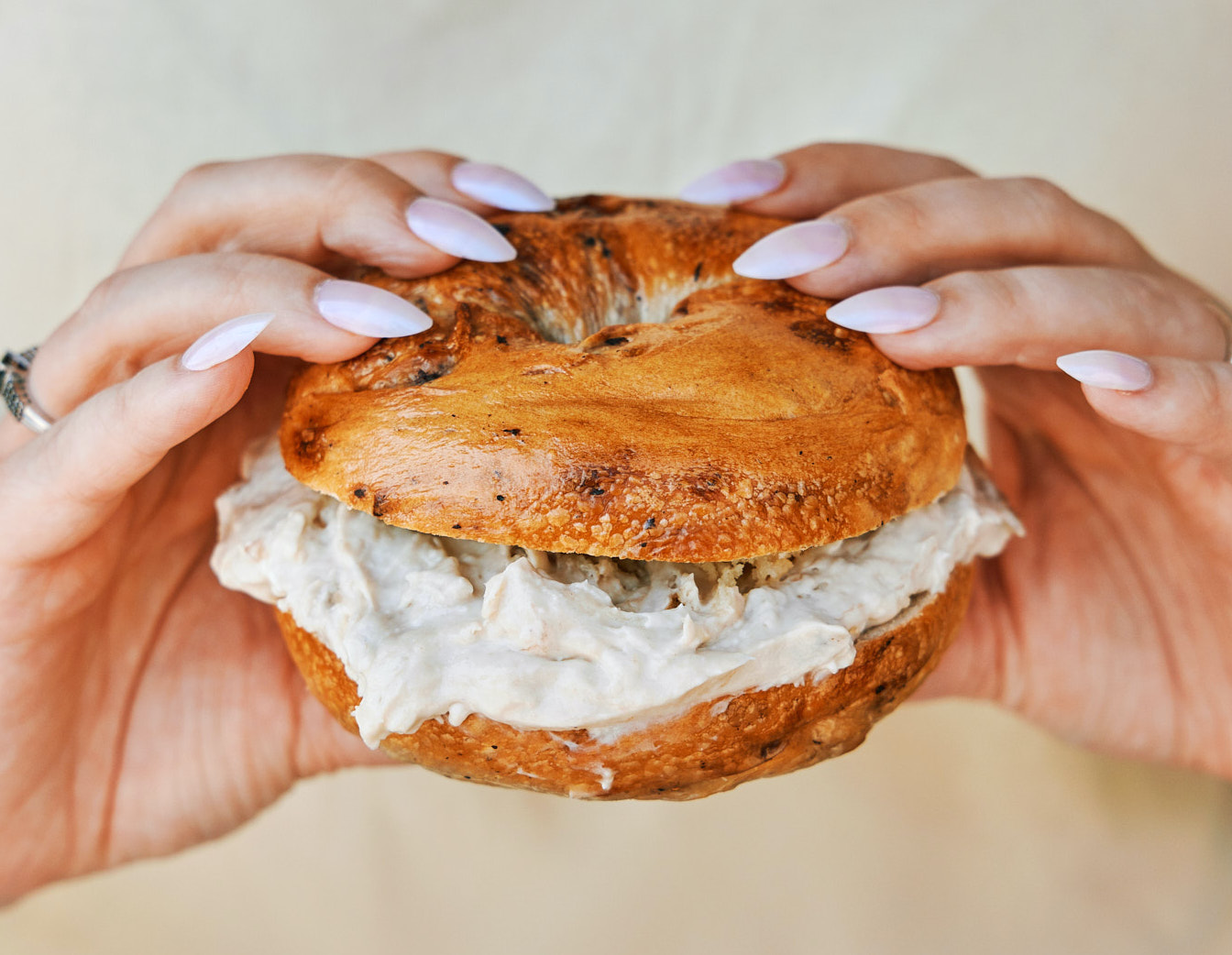
There was a time when finding a decent bagel in the Triangle felt like a scavenger hunt, particularly if you were a Northeastern transplant with very specific opinions about chew, crust, and the appropriate amount of cream cheese. Yours truly tends to side with the lighter the schmear, the better.
Across the Triangle, established local favorites are expanding, out-of-state brands are moving in, and more storefronts are on the way. But that raises an obvious question: Just how many bagel shops can one market support?
A Region on a Roll
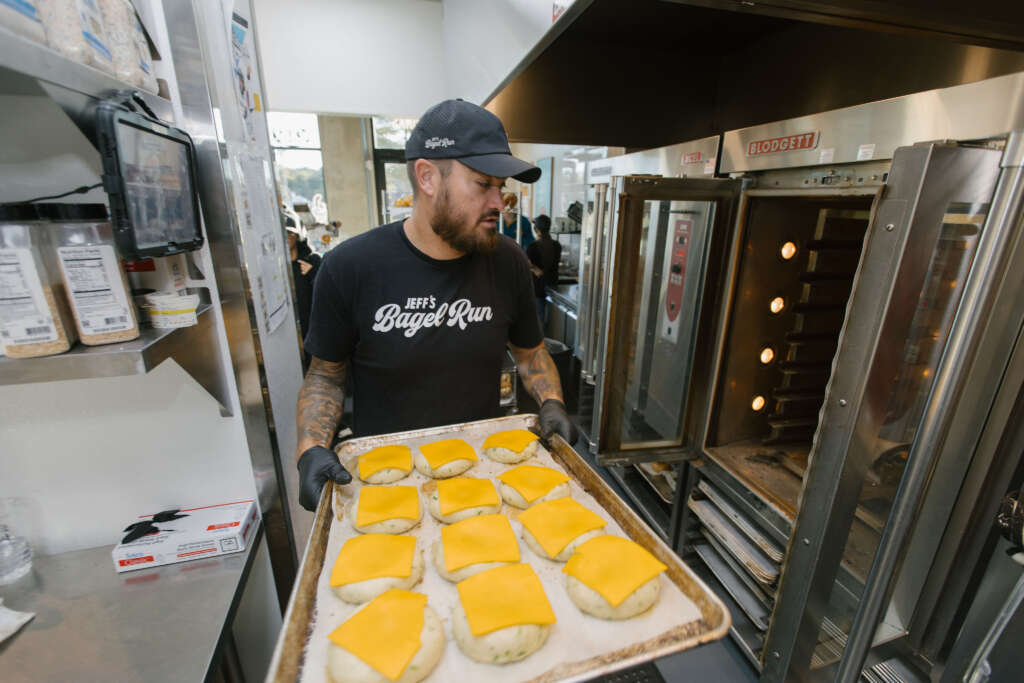
Consider the recent activity. Jeff’s Bagel Run, a Florida-born brand, now has three Triangle locations operated by franchisee Ryan McEvoy: Wake Forest, Rolesville, and Raleigh near Crabtree Valley Mall.
Raleigh-born Benchwarmers Bagels has also grown to three locations, with its original Transfer Co. Food Hall shop joined by locations near Dorothea Dix Park and in the North Hills Innovation District.
Meanwhile, New York institution H&H Bagels opened in Chapel Hill in January and lists a Cary location at Waverly Place as coming soon. PopUp Bagels, a chain known for its dip-friendly approach, has leased space in Raleigh’s Village District, while coastal North Carolina business Bagel Dock Express is reportedly bound for Six Forks Road.
Not all of those planned stores are open, but together they suggest that operators see opportunity in a breakfast market that’s getting increasingly crowded.
McEvoy believes part of the explanation is who’s moving here.
“The Triangle keeps growing, and a lot of the people moving here come from places where a good bagel shop is part of their routine,” he says. “They’re looking for that here.”
It’s easy to imagine the transplanted New Yorker searching for a familiar breakfast, but McEvoy sees a customer base that goes well beyond nostalgia. McEvoy says that a bagel can work anytime of the day—a quick weekend breakfast, a family treat on a Saturday morning, or a Friday staff meeting.
It’s Not Just Breakfast Anymore
Bagel shops aren’t only competing for the person stopping by before work. They’re feeding classrooms, offices, sports teams, and anyone tasked with finding something to satisfy a roomful of hungry people, McEvoy says.
The repeat business matters just as much. Unlike a restaurant that needs customers to plan an evening out, a bagel shop can become part of an ordinary morning.
“How loyal they are,” he says when asked what surprised him most about Triangle customers. “Once people find their order and their store, they come back again and again, and they notice the little things.”

That loyalty may also explain why very different bagel concepts can coexist.
Benchwarmers, for example, doesn’t claim to be a New York bagel shop. Its bagels are made with heirloom grains and long fermentation, boiled in honey water and finished in a wood-fired oven. H&H, by contrast, leans into its classic New York identity. And Jeff’s emphasizes scratch-made spreads and bagels, baked fresh throughout the day.
Growth Comes With a Reality Check
The enthusiasm isn’t limited to the Triangle. BagelUp, the organization behind New York BagelFest, is hosting its second Growth Lab in November, bringing emerging bagel entrepreneurs together for guidance on financing, equipment, operations, and opening a shop. A new year-round partner program aims to continue that education beyond the event.
It’s a useful reminder that making a good bagel and running a profitable bagel business aren’t necessarily the same skill.
For McEvoy, the toughest part of running three shops has little to do with flour or fermentation.
“People. Hiring, training, and keeping a great team is the whole game,” he says. “The bagels have to be right every single morning, and it’s our team that makes that happen and makes every guest feel welcome.”
Labor and food costs add pressure, especially as more players compete for workers and customers. And while a grand-opening line is encouraging, it doesn’t tell you much about how a business will perform six months later.
McEvoy remains optimistic
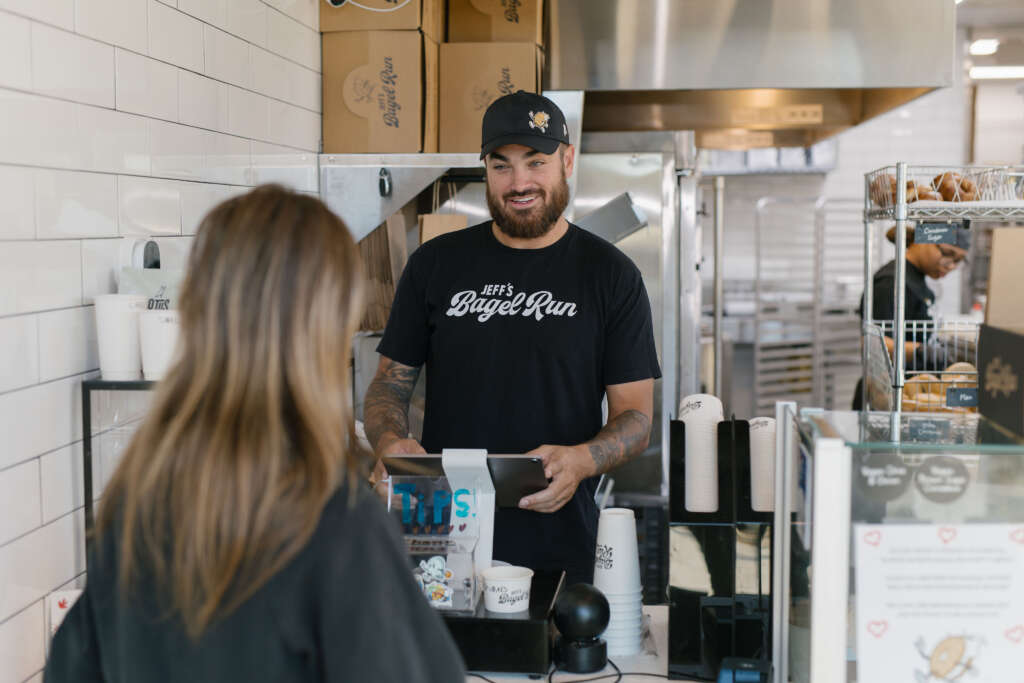
“We run three stores, in Wake Forest, Rolesville, and Raleigh near Crabtree, and each one has its own customers,” he says. “The demand is real, especially on weekend mornings and for office catering.”
So is the Triangle approaching peak bagel? Maybe. But a crowded field isn’t necessarily a bad thing for customers, particularly when it pushes shops to be better rather than merely bigger.
“I think the shops that win will be the ones that are consistent every day and become part of their neighborhood,” McEvoy says. “There’s room for good operators.”
In other words, there might be room for another bagel shop after all. Just don’t forget the cream cheese.