Skip to content Skip to sidebar Skip to footer

Inside The Newsagent’s, Raleigh’s New Third Place

Newsagent records store books Raleigh

By Samantha Carson

Some shops invite you to browse. The Newsagent’s invites you to linger.

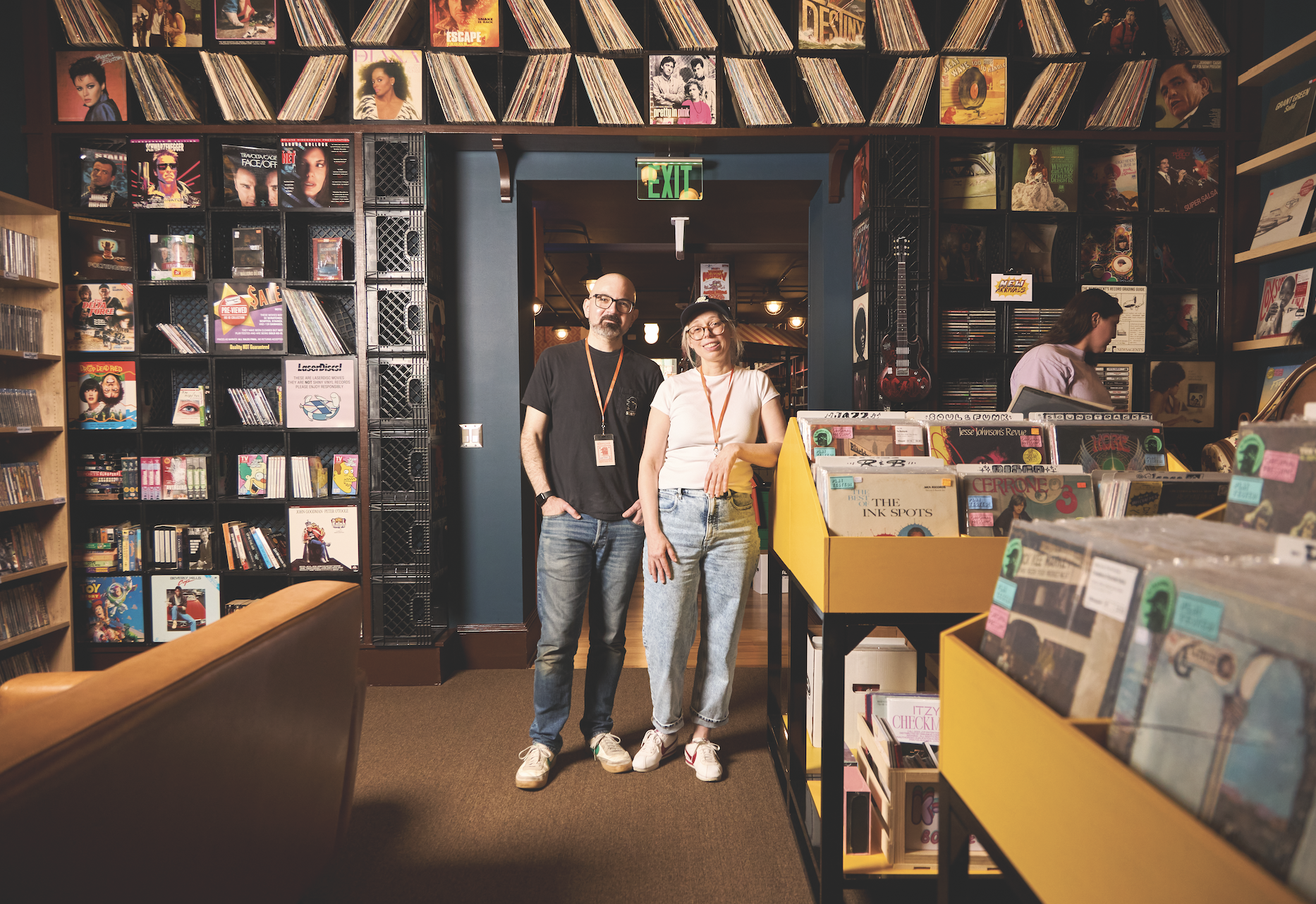
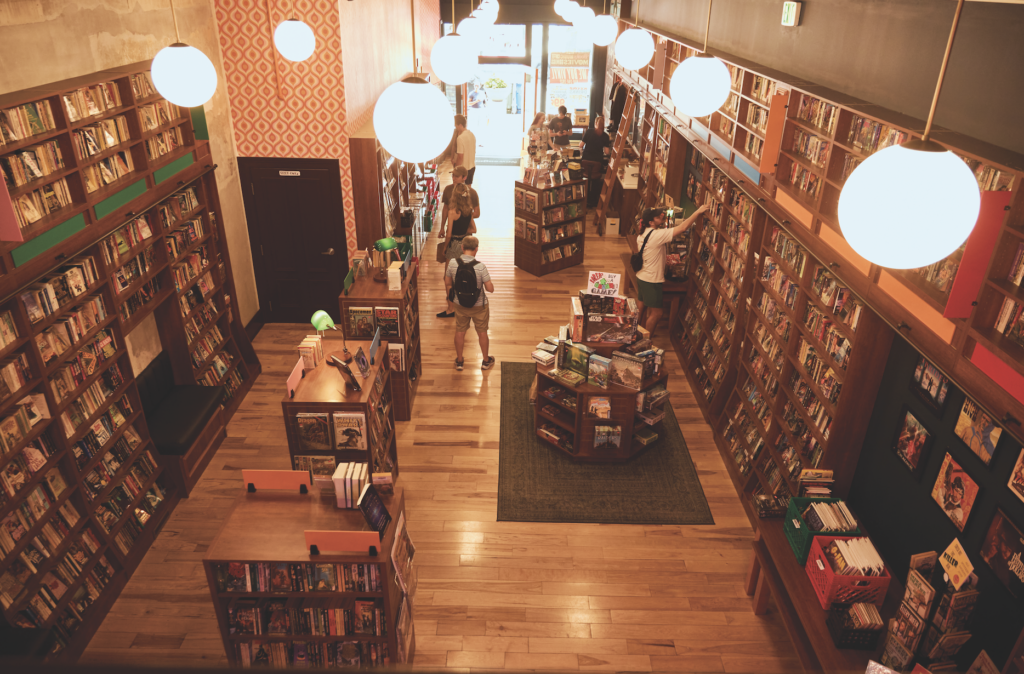
Located in the historic Mahler Building on Fayetteville Street, it’s part coffee shop, part vintage media emporium. It’s the kind of place where you stop for a latte and leave an hour later with a stack of paperbacks, a vinyl record you forgot you loved, and a renewed appreciation for the joy of discovering something offline. Shelves brim with comics, magazines, toys, books, movies, and music that appeals to multiple generations. There’s also a coffee cart, as well as vintage sodas and nostalgic treats like Moon Pies and Charleston Chews.

Of equal importance are the spaces throughout the store where customers can sit and simply enjoy being present. You don’t have to make a purchase right away; you’re free to sample a record at a listening station, cue up a VHS tape, or curl up with a book or two.

Built in 1876, the Mahler Building is one of Raleigh’s oldest surviving stores and is marked as both a Raleigh Historic Landmark and a landmark in the National Register of Historic Places. It originally housed a jewelry shop before becoming a dime store with a lunch counter where Civil Rights sit-ins reached Raleigh in 1960, following the movement that began in Greensboro. The building was later a department store, an office building, and most recently, an art gallery.

Since opening in February 2026, the Newsagent’s has become a haven for analog enthusiasts.

“We’re two blocks from the State Capitol, a place steeped with history,” says co-owner Neetzan Zimmerman. “We wanted a deeply human place. Buildings can be easily forgotten and left to fall into disuse and disrepair, and that would be really too bad because it’s such an important tether to our shared history. And that’s a deeply human thing. So I think we can really help to bring some renewed attention and overall excitement to downtown.”
Newsagent's books records Raleigh

Along with his wife and business partner Yulia Shamis, he set out to create a third place in downtown Raleigh where people can gather and connect. The term “third place,” coined by sociologist Ray Oldenburg in his 1989 book “The Great Good Place,” describes a place people can go outside of the home (the first place) and the workplace (the second place) to form community, have meaningful conversations, and build relationships.

At The Newsagent’s (not to be confused with The Third Place Coffee Shop in Five Points), the intent is for people to bond over a shared interest in preserving culture via physical media.

“I feel like culture has kind of shifted over the decades from being something very active or proactive to being much more passive. We receive the influencer’s guidance on culture and sort of act on it, unthinkingly in many instances, whether that is buying a product or consuming culture, watching a TV show, whatever it happens to be,” Zimmerman says.

“And then once we’ve consumed it, there really is no outlet to engage with other humans, face to face, about that piece of culture. I think that starts us on a slippery slope to where people are in echo chambers or culture bubbles.”

That’s where The Newsagent’s comes in. Zimmerman and Shamis have rolled out “a new kind of newsstand” that prioritizes “human‑first curation, creativity, and community” in defiance of the digital algorithms that, by serving us only what we want to hear, actually steal our ability to choose. If we don’t know a piece of media exists, we can’t choose to consume it—or not.
Newsagent's book records Raleigh
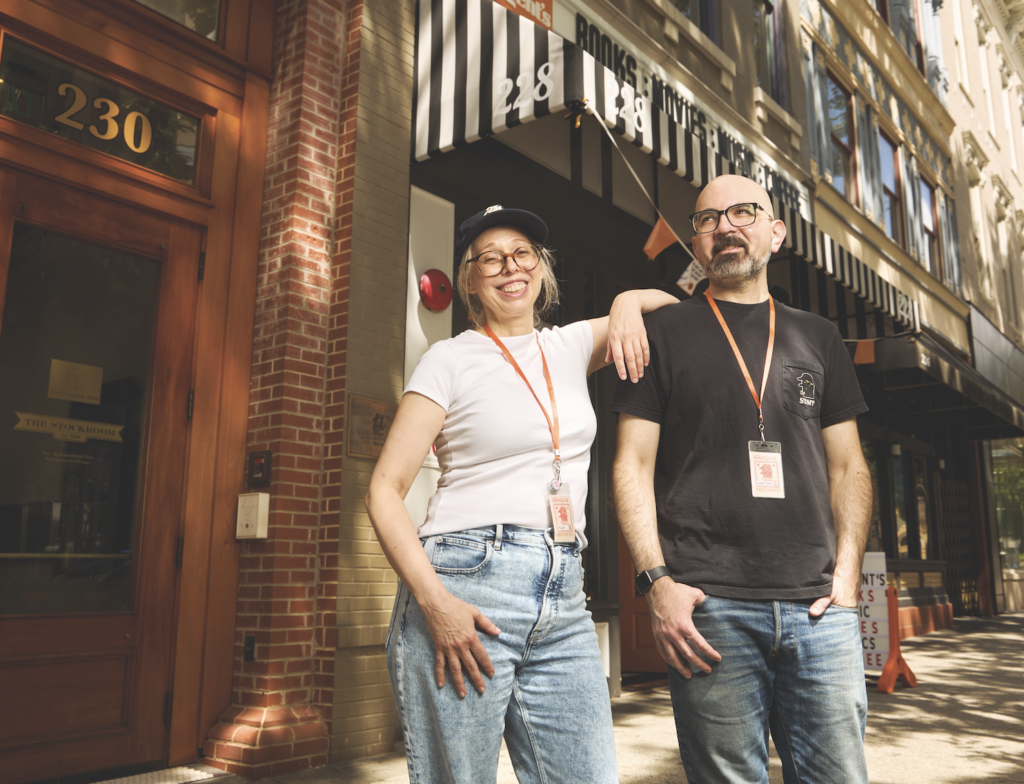
Neetzan Zimmerman and Yulia Shamis, partners in business and life, opened The Newsagent’s in downtown Raleigh in February 2026.

“There are many choices being made for you [about your media] that are invisible or not necessarily in your ability to discern, and that usually comes in the form of what is omitted—what is not available to you,” Zimmerman says. “If there are only certain things that you can choose from, then someone else is dictating your actions because they’re limiting what those actions can be.”

Like any physical shop, space is limited, so The Newsagent’s doesn’t promise endless options. But that’s what makes it special: the freedom to discover something unexpected and decide it’s yours.

“Everything should be accessible, and that’s kind of at the heart of the stores—what do we make accessible, and what don’t we make accessible as a society?” Zimmerman says. “Who decides what people should be allowed to access and when and for how long?”

Zimmerman and Shamis remain committed to preserving the history of the building—so much so that they commissioned a painted timeline mural at the entrance tracing its past. For Zimmerman, that sense of continuity connects to something more essential.

“It’s just having a place where you can disconnect, a place where you can just be and decompress and unplug,” he says. “At the end of the day, it really is about having a space to rest, whether mentally or physically.”
© 2008-2025 Midtown magazine, LLC. All rights reserved. Copyright applies to all pages on this website. | Privacy Policy

By Samantha Carson

Some shops invite you to browse. The Newsagent’s invites you to linger.

Located in the historic Mahler Building on Fayetteville Street, it’s part coffee shop, part vintage media emporium. It’s the kind of place where you stop for a latte and leave an hour later with a stack of paperbacks, a vinyl record you forgot you loved, and a renewed appreciation for the joy of discovering something offline. Shelves brim with comics, magazines, toys, books, movies, and music that appeals to multiple generations. There’s also a coffee cart, as well as vintage sodas and nostalgic treats like Moon Pies and Charleston Chews.

Of equal importance are the spaces throughout the store where customers can sit and simply enjoy being present. You don’t have to make a purchase right away; you’re free to sample a record at a listening station, cue up a VHS tape, or curl up with a book or two.

Built in 1876, the Mahler Building is one of Raleigh’s oldest surviving stores and is marked as both a Raleigh Historic Landmark and a landmark in the National Register of Historic Places. It originally housed a jewelry shop before becoming a dime store with a lunch counter where Civil Rights sit-ins reached Raleigh in 1960, following the movement that began in Greensboro. The building was later a department store, an office building, and most recently, an art gallery.

Since opening in February 2026, the Newsagent’s has become a haven for analog enthusiasts.

“We’re two blocks from the State Capitol, a place steeped with history,” says co-owner Neetzan Zimmerman. “We wanted a deeply human place. Buildings can be easily forgotten and left to fall into disuse and disrepair, and that would be really too bad because it’s such an important tether to our shared history. And that’s a deeply human thing. So I think we can really help to bring some renewed attention and overall excitement to downtown.”

Newsagent's books records Raleigh

Along with his wife and business partner Yulia Shamis, he set out to create a third place in downtown Raleigh where people can gather and connect. The term “third place,” coined by sociologist Ray Oldenburg in his 1989 book “The Great Good Place,” describes a place people can go outside of the home (the first place) and the workplace (the second place) to form community, have meaningful conversations, and build relationships.

At The Newsagent’s (not to be confused with The Third Place Coffee Shop in Five Points), the intent is for people to bond over a shared interest in preserving culture via physical media.

“I feel like culture has kind of shifted over the decades from being something very active or proactive to being much more passive. We receive the influencer’s guidance on culture and sort of act on it, unthinkingly in many instances, whether that is buying a product or consuming culture, watching a TV show, whatever it happens to be,” Zimmerman says.

“And then once we’ve consumed it, there really is no outlet to engage with other humans, face to face, about that piece of culture. I think that starts us on a slippery slope to where people are in echo chambers or culture bubbles.”

That’s where The Newsagent’s comes in. Zimmerman and Shamis have rolled out “a new kind of newsstand” that prioritizes “human‑first curation, creativity, and community” in defiance of the digital algorithms that, by serving us only what we want to hear, actually steal our ability to choose. If we don’t know a piece of media exists, we can’t choose to consume it—or not.

Newsagent's book records Raleigh
Neetzan Zimmerman and Yulia Shamis, partners in business and life, opened The Newsagent’s in downtown Raleigh in February 2026.

“There are many choices being made for you [about your media] that are invisible or not necessarily in your ability to discern, and that usually comes in the form of what is omitted—what is not available to you,” Zimmerman says. “If there are only certain things that you can choose from, then someone else is dictating your actions because they’re limiting what those actions can be.”

Like any physical shop, space is limited, so The Newsagent’s doesn’t promise endless options. But that’s what makes it special: the freedom to discover something unexpected and decide it’s yours.

“Everything should be accessible, and that’s kind of at the heart of the stores—what do we make accessible, and what don’t we make accessible as a society?” Zimmerman says. “Who decides what people should be allowed to access and when and for how long?”

Zimmerman and Shamis remain committed to preserving the history of the building—so much so that they commissioned a painted timeline mural at the entrance tracing its past. For Zimmerman, that sense of continuity connects to something more essential.

“It’s just having a place where you can disconnect, a place where you can just be and decompress and unplug,” he says. “At the end of the day, it really is about having a space to rest, whether mentally or physically.”
This Pop-up Is Included in the Theme
Best Choice for Creatives
Purchase Now