

By Grace Barker
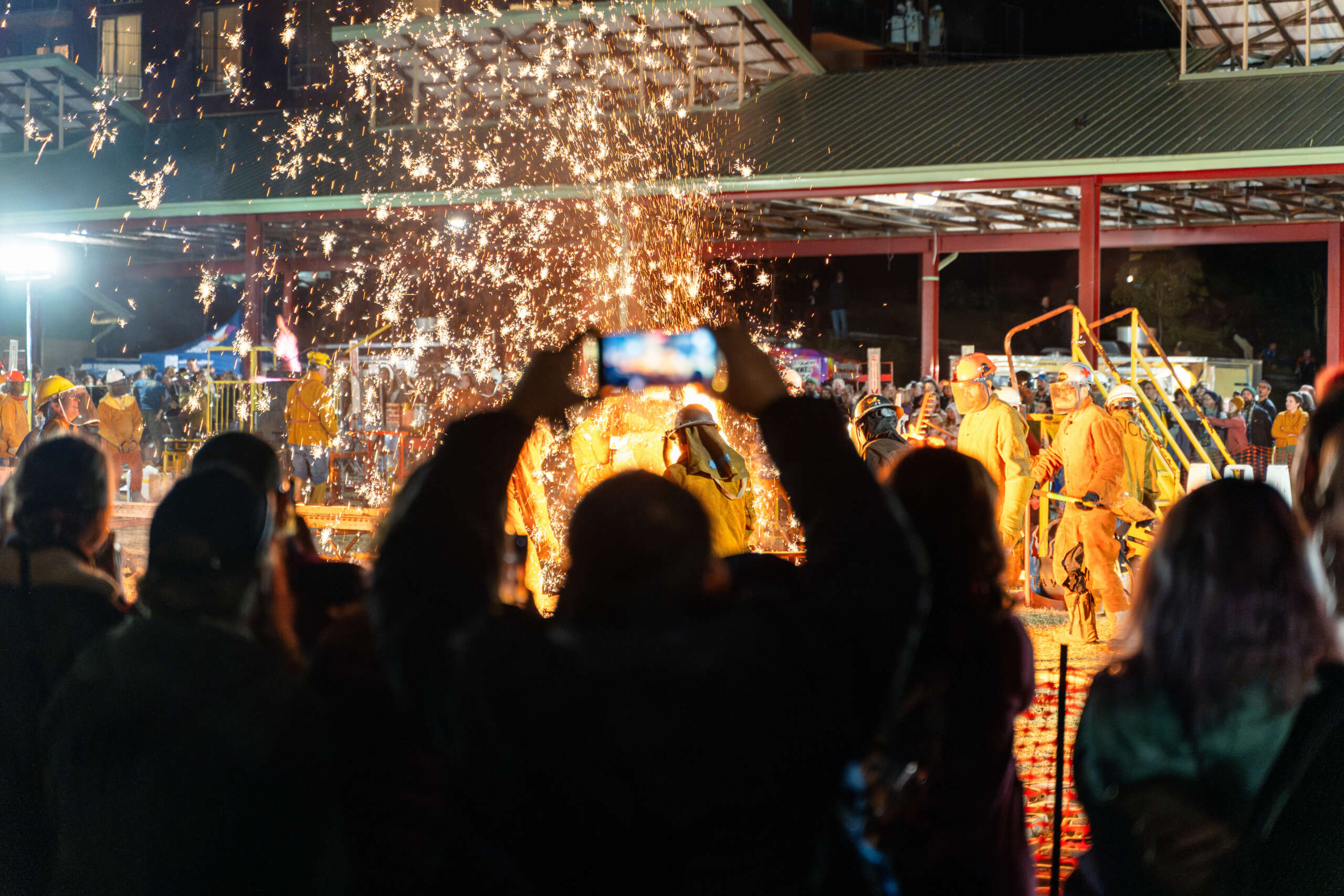
Downtown Durham isn’t exactly where you expect to see an old bathtub transformed into a piece of art. But that’s part of the appeal of Liberty Arts’ annual Iron Pour, where discarded metal gets a second life amid roaring furnaces, flying sparks, and a crowd that now numbers in the thousands.
On Saturday, November 14, the free festival returns to Durham Central Park from 4–9 p.m. for its 10th anniversary. The festival features food, music, and an arts market, but the molten iron remains the main attraction.
Pourmaster Tripp Jarvis describes it as “an interplay of light and shadow and the rumble of thunder.”
It’s also a far cry from where it began.
From 100 Spectators to Thousands
The story goes back to a furnace Jarvis built while studying at East Carolina University. After graduate school, he took his iron-casting skills to universities and arts organizations across North Carolina and Tennessee. He then joined Durham’s Liberty Arts collective.
“The iron pour was my idea,” Jarvis says, quick to credit the people who helped bring it to life.
The first event in 2016 took place behind Liberty Arts’ former Cordova building, where perhaps 100 people watched. Then-executive director Nick Verna approached Durham Central Park about hosting a bigger event.
“I never imagined that the city would go for it,” Jarvis recalls. “But they did.”
Liberty Arts co-founder Mike Waller, whom Jarvis knew from their undergraduate days at ECU, helped turn the demonstration into a full-fledged festival. Waller and other artists introduced elements including a sculpture exhibition and education tent. What started with one artist’s furnace gradually became a signature downtown gathering.
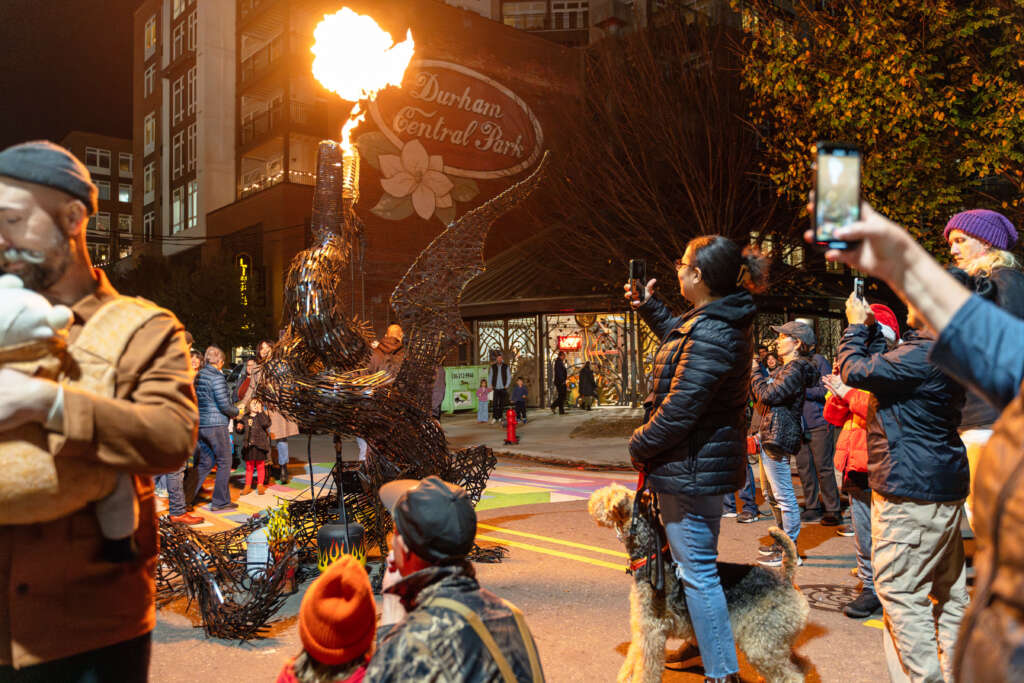
Making Art From What Others Throw Away
There’s something satisfying about the raw material behind all those sparks: old sinks, cast-iron bathtubs, radiators and pipes that might otherwise be discarded.
Jarvis says homeowners sometimes call Liberty Arts during bathroom renovations to offer unwanted fixtures. Acme Plumbing has also donated pipe, including a substantial contribution this year. Volunteers break the iron with sledgehammers until the pieces are small enough to feed the furnace.
At the event, trained crews work together to handle the extreme heat and direct the liquid metal into prepared molds. Some molds become sculptures by professional artists. Others turn into keepsake tiles created by people who took Liberty Arts’ scratch-block workshops, carving designs into sand blocks before the pour.
The anniversary schedule includes more than metal casting: glassblowing, blacksmithing and woodworking demonstrations, interactive fire sculptures, Batalá Durham drumming, food trucks and an Iron Night Market with more than 25 craft vendors.
“It will be something dazzling that hasn’t been seen before,” Jarvis says.
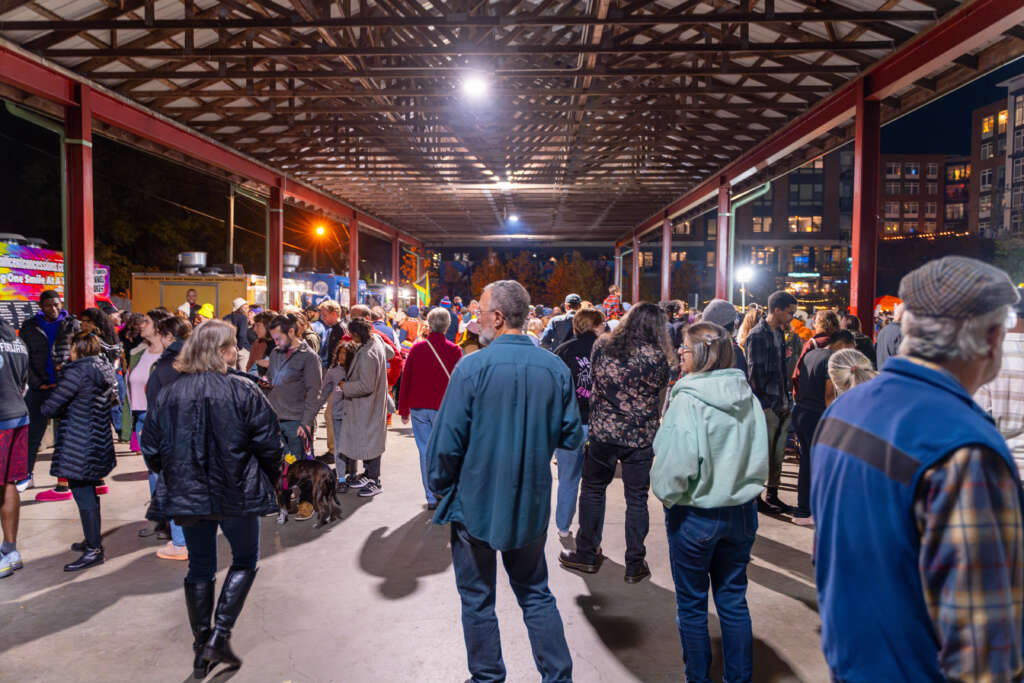
A Community Forged in Fire
For Jarvis, the spectacle is only half the story. He remembers the first time he watched an iron pour and felt drawn into something he didn’t yet understand.
“It gave me belonging,” he says.
That experience eventually shaped Iron Heroes, a Liberty Arts program Jarvis created to connect veterans and young people from underserved communities through metal casting. The free nine-week course offers more than art instruction. Participants work together, build trust, and find a place within a creative group.
Jarvis knows personally how meaningful that sense of connection can be. He says art and iron casting helped him navigate difficult periods in his own life and inspired him to offer that same opportunity to others.
“The iron community is a family that accepts anyone who wants to approach the fire,” he says.
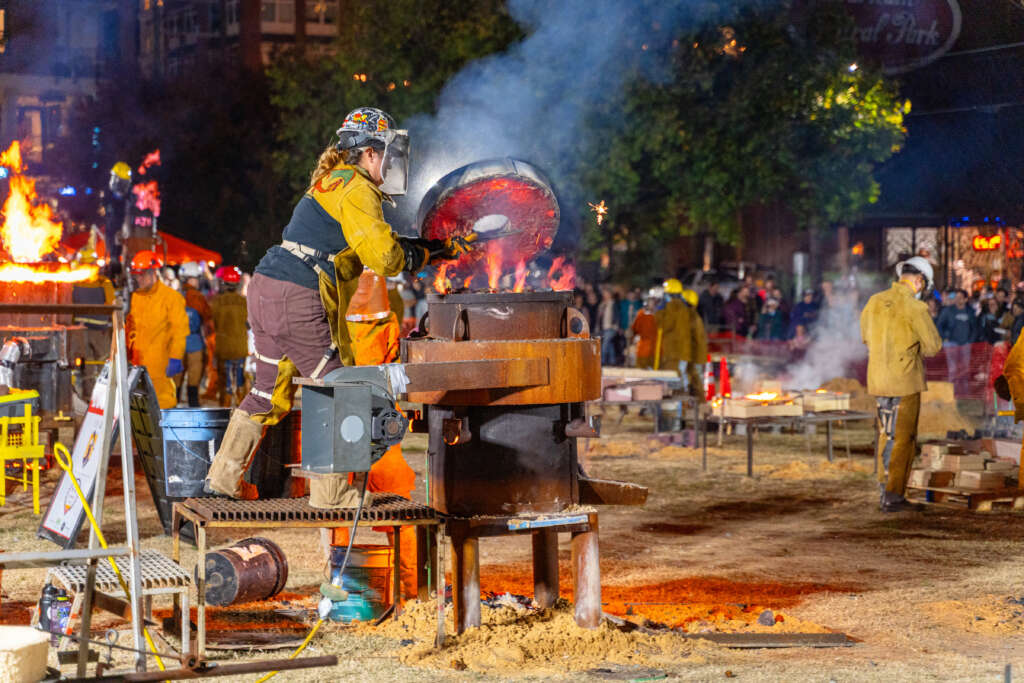
More Than a Birthday Celebration
One of Jarvis’ favorite memories came when a crowd of about 4,000 sang “Happy Birthday” to his former ECU professor Carl Billingsley on his 80th birthday. Billingsley taught many of the artists who have helped make Durham’s Iron Pour possible—a reminder that the event is as much about the people as the fire.
Looking ahead, Jarvis hopes to bring international artists and students to Durham and take Liberty Arts initiatives such as Iron Heroes abroad. But the mission at home hasn’t changed.
“My goal with the iron pour has always been to uplift the Durham community,” he says.
After a decade, perhaps that’s the real magic of the Iron Pour: transforming scrap into sculpture while giving thousands of people something to experience together.