BY ANITA B. STONE
This is the story of two men whose partnership during segregated times would change history forever, transforming America and leaving an impact on the lives of…
BY DATHAN KAZSUK
Calling all fashionistas and luxury aficionados! A slice of Miami Beach has just landed in the form of Bal Harbour Shops Access Pop-Up in Raleigh—and it's only here…
Scrooge Takes a Final Bow
Ira David Wood III prepares to hang up his top hat after 50 remarkable years
BY MELISSA WISTEHUFF. PHOTOS BY BRIAN MULLINS.
Few landmarks, fixtures and traditions have…
Ingenuity led to success for Raleigh native,
aka “Lady Edison”
BY MARILYN JONES
Everyone knows what a hair curler is, that some doll eyes open and close, and that sewing machines can make…
BY ELIZABETH BRIGNAC When a guest appeared at her office door, Kathy Johnson, director of Oak City Cares, was busy. “Ms. Kathy, may I speak to you a moment?” asked…
The Neuse: This state treasure originates in Durham and flows into the Pamlico Sound BY ANITA B. STONE The Neuse River originates in western Durham County and is one of…
'Like I hit the Lottery'
BY KURT DUSTERBERG
When Erin Matson led UNC–Chapel Hill to the NCAA field hockey national championship last November, it was the finishing touch on one of the…
ABOVE: The Matthews House in Cary offers a beautiful outdoor space for couples who are interested in a more intimate wedding ceremony. Photo courtesy of Morgan Caddell Photography. Discovering the Microwedding…
PICTURED ABOVE, CLOCKWISE FROM TOP LEFT: Aarti Sequeira of the Food Network. Photo by Bruce DeBoer | Jenna Cooper Hudson. Photo by Glynnis Christensen Photography | Joy Caracciolo of Joy…
BY DATHAN KAZSUK
For Whit Baker and Andy Schnitzer, it all started back in 2016 when the two of them, along with Jeremy and Jay Bond, opened Bond Brothers Beer…
‘Radio’s Sweetheart’ is an open book—and proud of it
BY MELISSA WISTEHUFF | PHOTOS BY BRIAN MULLINS
When you think of the Triangle, majestic oaks, tall pines, Tobacco Road rivalries and Carolina…
North Carolina sets the scene for Hollywood family fun
BY MELISSA WISTEHUFF
The Tar Heel State has lured many Hollywood location scouts in search of the perfect setting for bringing their director’s…
Photo by Lelia_milaya - stock.adobe.com
BY JANICE LEWINE
Salute the red, white and blue as Independence Day celebrations and fireworks light up the Triangle. Here's our round-up of Fourth of July…
BY JANICE LEWINE
Summer is a great time to enjoy a movie—outdoors or indoors. From rom-coms to blockbusters to family-friendly classics, there’s something for everyone.
Outdoor Movies
The Triangle…
BY MELISSA WISTEHUFF
There’s no business like show business! Durham Performing Arts Center’s Triangle Rising Stars program annually celebrates outstanding achievements in high school musical theater as part of the National High…
BY SAMANTHA GRATTON On Monday evenings after school, boys and girls excitedly trickle through the doors of the Church of the Good Shepherd on Hillsborough Street in downtown Raleigh. This…
BY MELISSA WISTEHUFF | PHOTOS BY JOSH MANNING
It doesn’t take much to make Jean Martin happy. The owner of NOFO @ the Pig says searching for unique items to sell…
BY MARILYN JONES
Hundreds of museums and historical sites are scattered across this nation, ready to educate you about America’s incredible history. Let’s tour 10 of these destinations—which also offer engaging attractions,…
BY FRANCES DEESE
Thoughts of enrolling your dog in obedience school might, quite literally, bring visions of a room full of puppy dog eyes to mind. Or, upon hearing about…
BY ANITA B. STONE
Not a day goes by without a fire, automobile crash, chemical spill or other emergency involving firefighter intervention. Not one hour passes without someone needing urgent…
This is the story of two men whose partnership during segregated times would change history forever, transforming America and leaving an impact on the lives of thousands of African American children and adults. The good work these men accomplished shaped generations, the historical remnants of which continue to exist in Wake County today.
This story begins in 1911 when Julius Rosenwald, a Chicago philanthropist and progressive who had succeeded Richard Warren Sears as president of Sears, Roebuck and Company in 1910, met Booker T. Washington, a man who had emerged from slavery to become a teacher and founder of the Tuskegee Institute in 1881 in Alabama.
While training prospective teachers in a one-room shanty that would become the Tuskegee Institute, Washington also searched for philanthropic assistance to meet the educational needs of African American children. As the institute’s president, Washington managed to raise money for what would later become one of the greatest institutions of higher education for African Americans.
Washington and Rosenwald met during a prearranged luncheon and discovered they had similar goals to educate children in the South who were receiving little or no education. Rosenwald soon became one of Washington’s benefactors, and Washington offered Rosenwald a place on the Tuskegee Institute board. Rosenwald read Washington’s “Up From Slavery” book, which sparked his interest in charitable works and, primarily, his desire to improve the lack of higher education for Black students.
With no land, buildings or teachers, Washington and Rosenwald had only state legislation authorizing schools to meet this challenge. On the occasion of Rosenwald’s 50th birthday, he presented Washington with $25,000 to aid Black colleges and preparatory academies.
Washington then asked Rosenwald if he could use a small amount of the money for elementary education. By 1912, Rosenwald and Washington had launched a pilot program and the Rosenwald Fund was created to continue and expand Rosenwald’s charitable activities. This marked the beginning of a plan that would result in building more than 5,000 schools for children across the South. The concept of the Rosenwald School was born.
Communities Unite
The first phase of creating Rosenwald schools consisted of plans for six schools in Alabama. But there was one requirement: Each community would need to donate the land and raise matching funds for erecting their school. From 1914–1916, Rosenwald funded several hundred more schools, and in 1917, the Rosenwald Fund was incorporated in Chicago with support from the Tuskegee Institute. The fund moved to Nashville, Tennessee in 1920 when it grew too large for the Tuskegee Institute to manage it.
The construction of Rosenwald schools brought communities together. They became centers of small rural settlements. Such Black communities were an important characteristic of the rural landscape in the first half of the 20th century. The idea of building schools for impoverished children uplifted many families, and Rosenwald schools completed the interlocking array of philanthropies Washington helped assemble to improve Black education.
Rallies were held to raise money and collect supplies. In many communities, hogs and chickens were raised and sold to help provide funds for school-building. Citizens donated thousands of feet of lumber cut from their own lands, hauled by their own teams to a sawmill, and then laid down on a lot purchased with their funds.
These exciting times sparked $4.7 million in contributions from Black communities. In some North Carolina counties, Black farmers won grants to build schools and local governments spent $18.1 million with private local white contributions making up any difference in construction costs. Wake County contributed more than $866,000 toward Rosenwald buildings.
Everyone came on board to work together. Rosenwald schools began to pop up across North Carolina and other parts of the South. According to NCPedia, at one time North Carolina had at least 800 Rosenwald schools—more than any other state.
A Legacy Partnership
The Rosenwald-Washington partnership became a pillar of the Civil Rights Movement and was a major contribution to ending segregation in the Jim Crow South, leaving a legacy that would reverse years of inequality in education because of slavery.
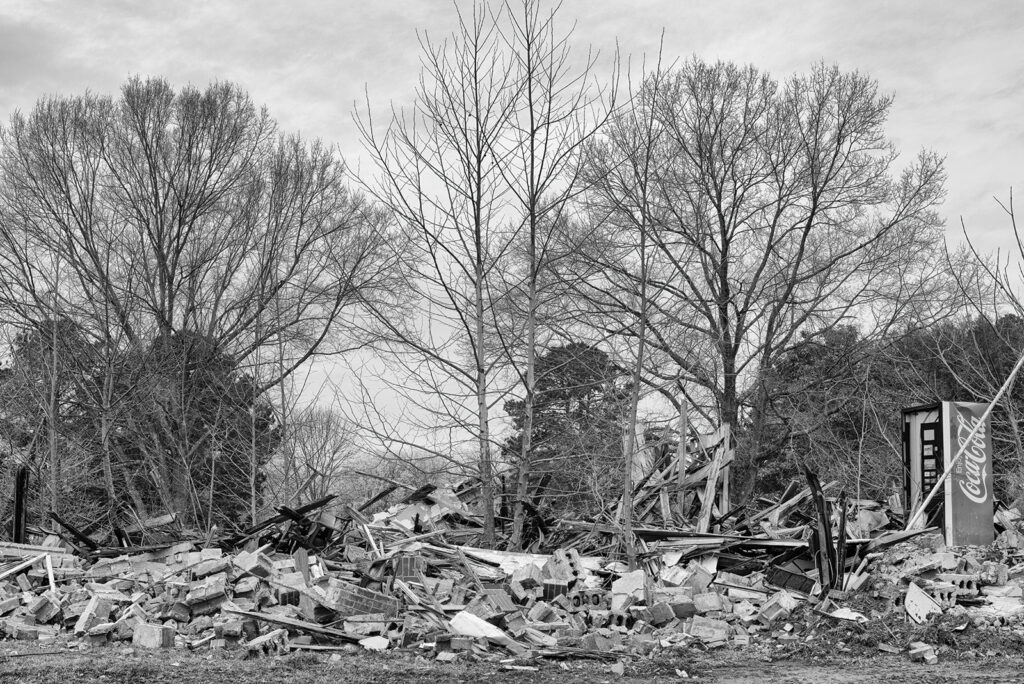
Rosenwald died in 1932 at the age of 69, but the schools he funded helped stabilize industrial and social conditions by encouraging Black people to own and build their own homes near the schools. On May 17, 1954 the U.S. Supreme Court ruled segregation as unconstitutional, and the schools were slowly phased out. Many closed, some were torn down and others were left standing for various uses.
Having died at the young age of 59 in 1915, Washington never got to witness the full impact of his educational endeavors. Today, the Tuskegee Institute he founded is known as Tuskegee University, where more than 2,100 students are registered on the 5,000-acre campus that accommodates 150 buildings.
Washington’s legacy became an historic one. His monument, located on the Tuskegee University campus, was dedicated in 1922. The inscription reads, “He lifted the veil of ignorance from his people and pointed this way to progress through education and industry.”
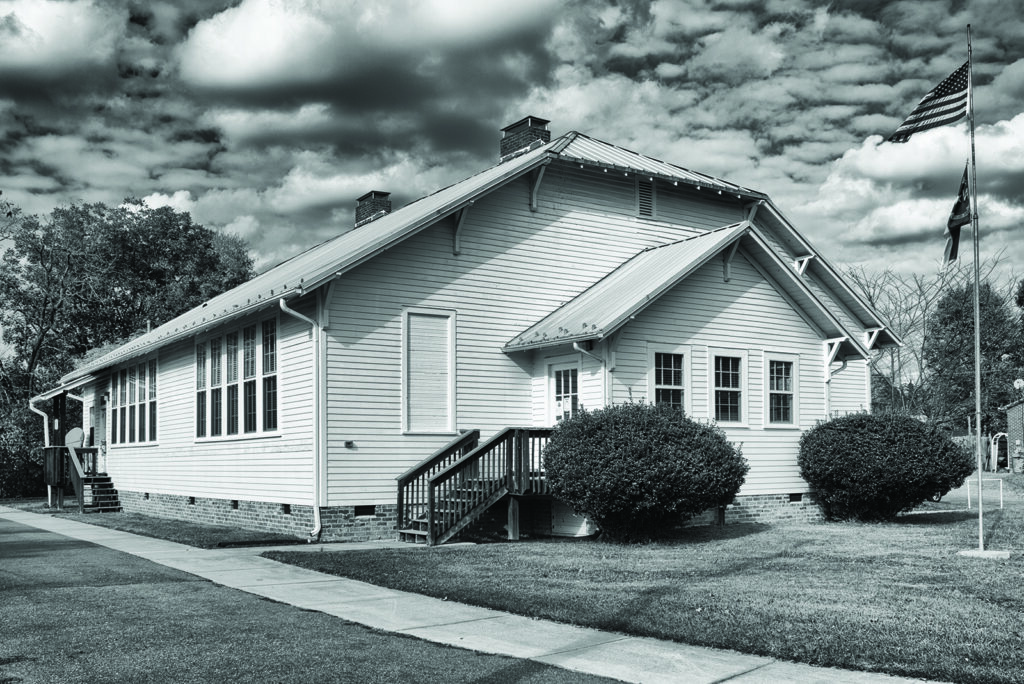
Today, the Rosenwald school buildings that still survive in Wake County stand as a testament to African Americans’ tenacious pursuit of education. Prominent leaders such as poet Maya Angelou, late Georgia congressman John Lewis and civil rights activist Medgar Wiley Evers were products of the Rosenwald era.
The October 1988 edition of the North Carolina Historical Review published these words about Rosenwald schools, written by Thomas W. Hanchett, who was a UNC–Chapel Hill doctoral student at that time: “Today the structures stand forgotten, scattered across the North Carolina countryside.
Some are houses, businesses or barns. Others, those that stand next to churches as community halls, still retain the large windows that mark them as school buildings. These are Rosenwald Fund schools, landmarks in the history of Afro-American education.”