By Jennifer Primrose | Long before NASCAR was televised coast to coast, stock car racing was a local affair, dusty and loud, shaped by survival in the southern Appalachians.
Long before NASCAR was televised coast to coast, stock car racing was a local affair, dusty and loud, shaped by survival in the southern Appalachians. In Wilkes County, racing didn’t begin as entertainment. It began as a necessity.
At the Wilkes Heritage Museum, where an entire section is devoted to moonshine and motorsports, the story is laid out plainly: The term moonshine derives from distilling spirits by moonlight to avoid detection. The method was used across rural America, but nowhere was it more refined than in the mountains of North Carolina.
By the mid-20th century, Wilkes County had earned a reputation as the Moonshine Capital of the World. Farming was unreliable. Factory jobs were scarce. For hundreds of families, illicit distilling and hauling—known locally as “tripping”—was one of the few dependable ways to make money.
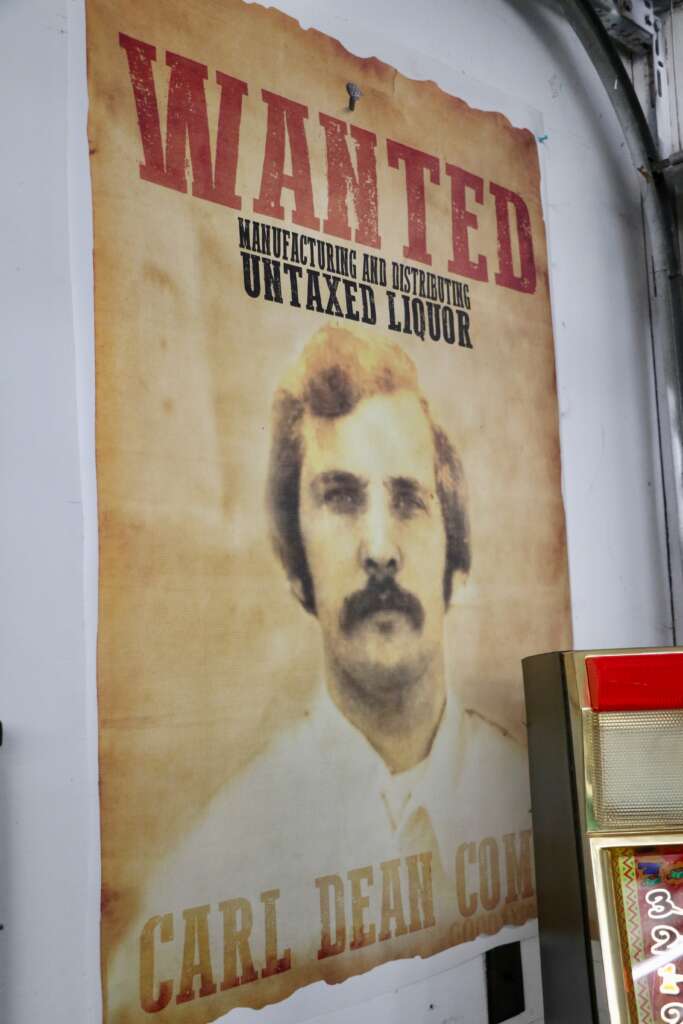
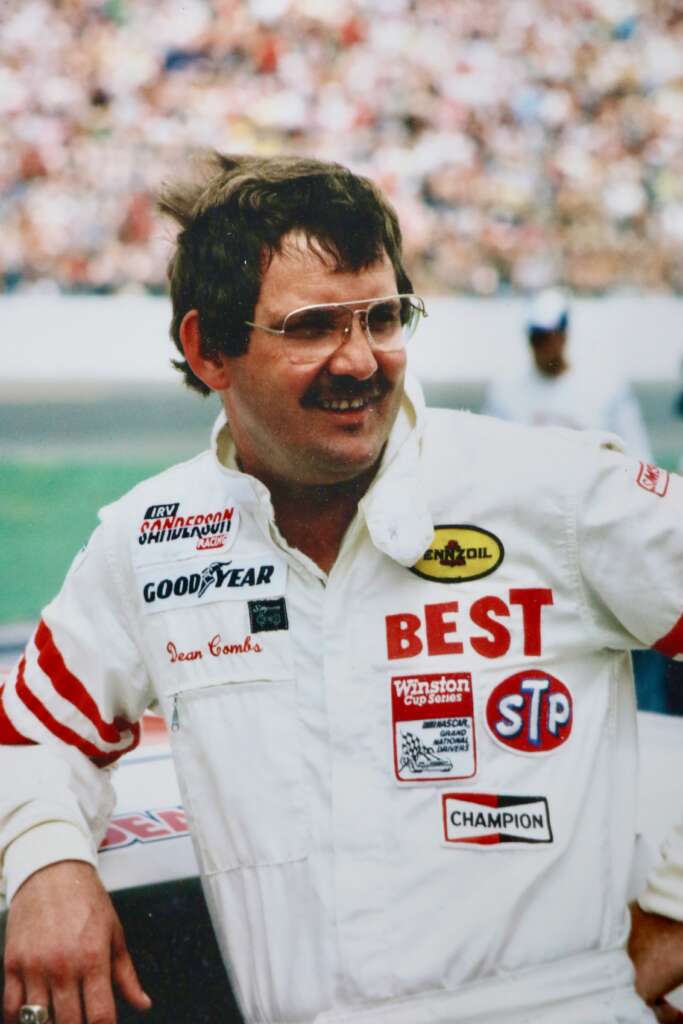
Dean Combs was born into that world. “I was just born and raised in it,” Combs says. “My mom’s brothers were big moonshiners, and I was just kind of around it all my life.” He grew up less than 300 yards from the North Wilkesboro Speedway, in a house his family moved into when he was three days old. “I’ve been in the same place for 74 years,” he says.
Moonshine and racing weren’t separate influences—they were part of the same landscape. The museum also preserves the other side of the story: the revenuers—law enforcement officers tasked with stopping moonshiners. In 1930, federal prohibition enforcement shifted from the Internal Revenue Service to the Department of Justice, and North Carolina’s Middle District offices moved from Raleigh to Greensboro.
Wilkes County became easier to reach, and raids became more frequent. By October 1931 alone, 40 to 50 arrests for prohibition violations were made in Wilkes County. When a still was discovered, revenuer teams didn’t just make arrests. They destroyed operations outright—often with axes, shotguns, and even dynamite.
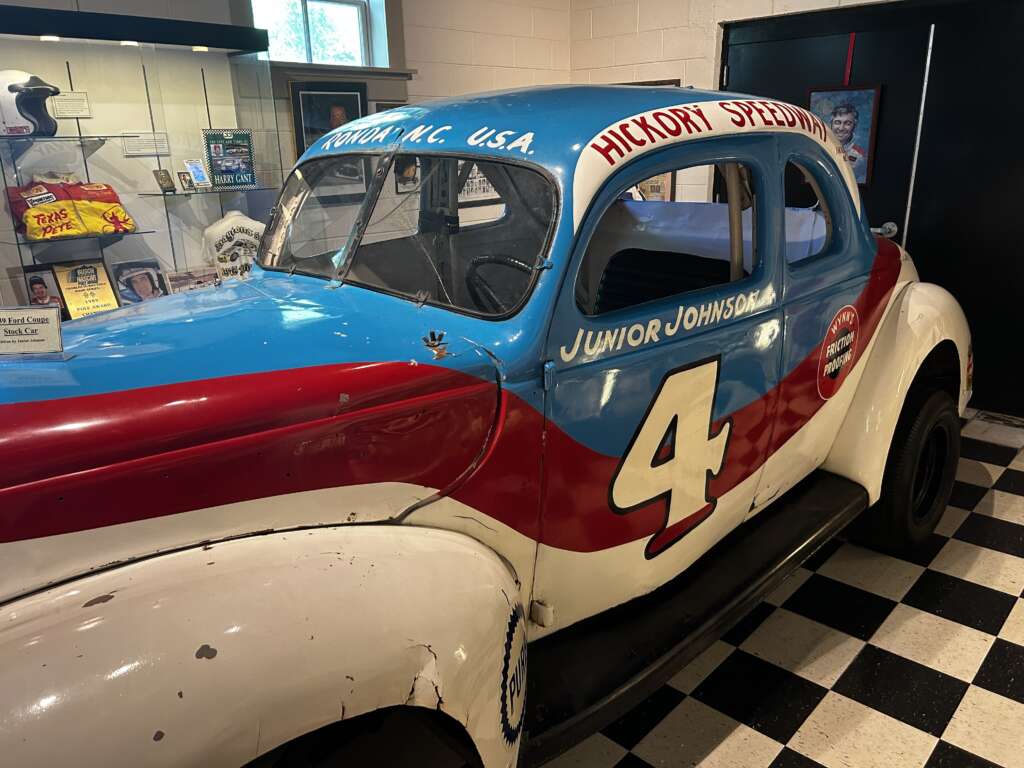
The Wilkes Heritage Museum in Wilkesboro features a NASCAR display, featuring a car driven by legend, Junior Johnson. Photo by Dathan Kazsuk.
CARS BUILT FOR SURVIVAL
To outrun the law, moonshiners turned ordinary cars into something else entirely. Engines were rebuilt. Suspensions reinforced. Trunks modified to haul heavy loads without drawing attention. These weren’t race cars—they were survival machines. That distinction mattered. Racing was optional. Running liquor was not. Combs never set out to be a racer.
“The moonshine came first,” he says. “I never even thought about racing much, even though I lived right there.” That changed when a friend bought a race car and asked him to drive it. Combs finished second in his first outing. The next ace, he won. “That got me hooked,” he says. “But I had to supply for it. That’s where the moonshine came in.”
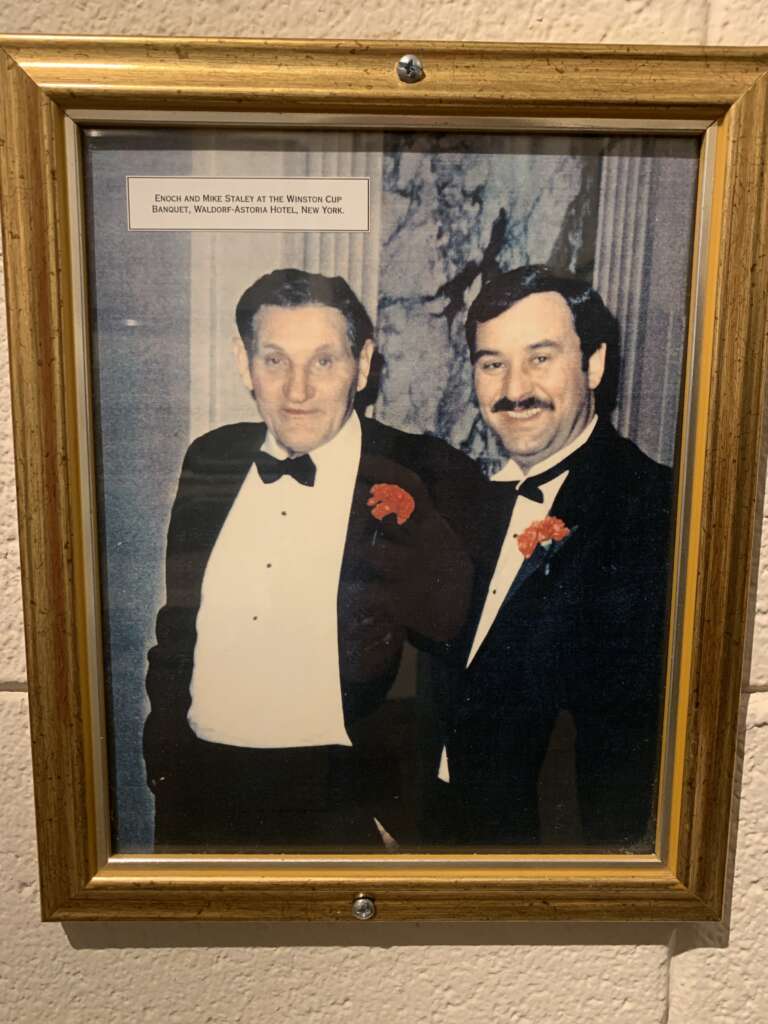
For Mike Staley, the connection between moonshine and racing ran through family. His father, Enoch Staley, was one of the founding owners of the North Wilkesboro Speedway and served as its president for 50 years.
“When the track first started, that’s where they got the race cars from—all the moonshiners,” Staley says. “That’s where it really came from.” Staley grew up hearing stories of a time when liquor running and racing were part of the same culture. His father ran a grocery store that included a hidden room upstairs where relatives could hide from the law. “Dad’s place had a secret room upstairs where his brothers would hide,” he says.
Mike Staley, right, along with his father, Enoch, at the Winston Cup Banquet in New York. Photo courtesy of DK Communications.
Moonshine culture didn’t just shape drivers—it shaped the sport’s first rules. “Dad and Charlie Holmes actually helped write the rule book for NASCAR,” Staley says. “That’s where they started checking to make sure everybody was close to being legal.” In 1946, Enoch Staley partnered with John Mastin, Lawson Curry, and Charlie Combs to build a racetrack just outside North Wilkesboro. Money was tight. When funds ran out, so did the bulldozer.
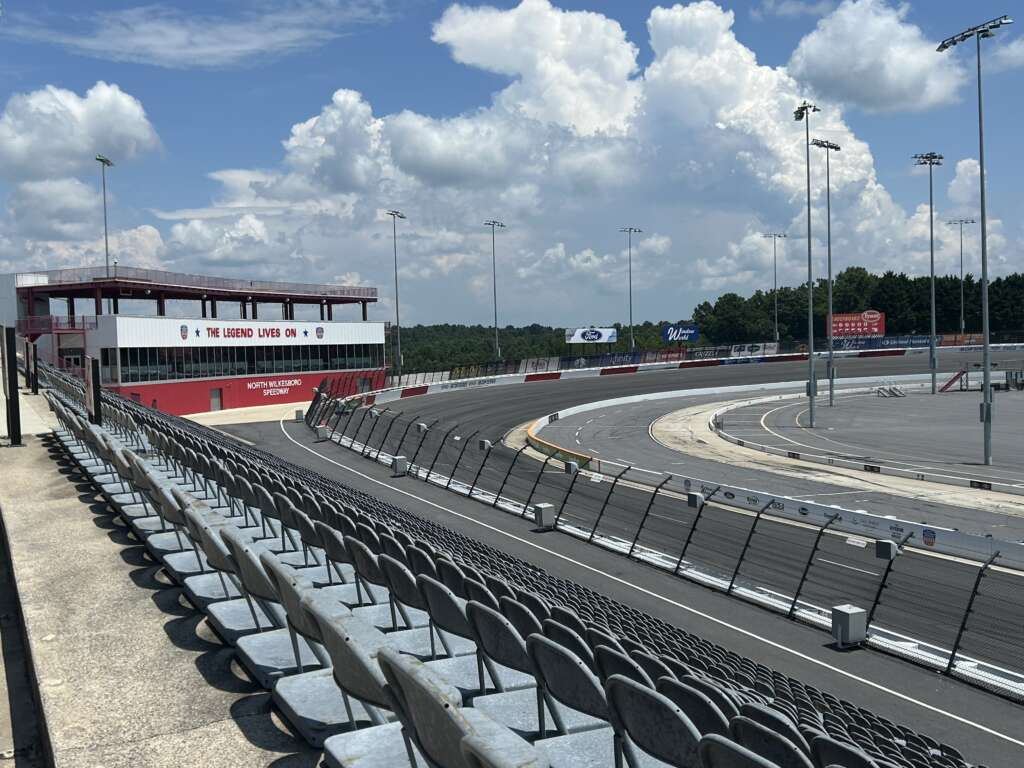
The result was a .625-mile oval carved into the hillside, sloping downhill on the front stretch and uphill on the back—not by design, but by circumstance. When the speedway opened in 1947, fans poured in anyway. The cinder block grandstands officially seated a out 3,500 people. Nearly 10,000 showed up. Red clay coated everything.
Fans climbed trees and perched on hillsides just to catch a glimpse of the action. Many of the drivers weren’t aspiring athletes. They were bootleggers—men who had learned to drive fast because the alternative was prison.
Junior Johnson’s first race on a real track came at North Wilkesboro, where he finished second. Racing gave moonshine runners a legitimate place to test their skills—and, for some, a way out. For Combs, the two worlds overlapped longer than he expected. “I got caught in 1974,” he says.
“Federal prison in Alabama for four months. The day before I left, I won a race.” When he came home, he won again. “I told the boys they’d read about me in the papers,” he says. “When it came out, I won my first ace back.”
Poster in Dean Combs, Sugar Shack, the outbuilding at his home just down the hill from North Wilkesboro Speedway. Photo courtesy of DK Communications.
THE BIRTH OF NASCAR
In December 1947, Bill France Sr. and a group of promoters gathered in Daytona Beach, Florida, to formalize a sanctioning body for stock car racing. NASCAR was born. North Wilkesboro quickly became foundational. In 1949, it hosted the season finale of NASCAR’s new “Strictly Stock” division, making it the oldest continuously operating charter track in what would become the Cup Series.
“My dad was a charter member in the pioneering sport,” Staley says. “He was great friends with Bill France and even worked as his troubleshooter—seeing what worked and what didn’t.” For decades, NASCAR looked like North Wilkesboro—short tracks, local crowds, and drivers forged on backroads rather than in marketing departments. Combs would eventually work alongside Junior Johnson, whose moonshine roots mirrored his own. “My dad and Junior were real close friends,” Combs says.
When Johnson’s crew chief left suddenly, Combs stepped in. “He said, ‘You gonna be our crew chief tonight?’ and that was that,” Combs says. “We wanted two championships that year— and we got them.”
Johnson, Combs believes, shaped NASCAR’s future as much as anyone. “I don’t think NASCAR would be where it is today if it weren’t for Junior,” he says. “He’s the one who brought Winston to NASCAR.”
North Wilkesboro Speedway sits roughly two and a half hours from downtown Raleigh. Photo by Dathan Kazsuk.
WHEN NASCAR GREW UP
Everything changed in 1979. A snowstorm trapped millions of Americans indoors along the East Coast. With nothing else to watch, they turned on CBS and found the Daytona 500—broadcast live, from start to finish, for the first time. Corporate sponsorship followed.
Big money arrived. Calendars shifted toward larger markets and modern facilities. North Wilkesboro tried to keep up—paving the track, expanding seating, modernizing where it could—but it refused to abandon its roots. When Enoch Staley died in 1995, the last personal bridge between NASCAR’s founding values and its modern business direction collapsed.
Within a year, ownership changes and boardroom maneuvering removed North Wilkesboro’s two Cup dates—one sent to Texas, the other to New Hampshire. After nearly 50 years, major-league stock car racing in Wilkes County was over. “My family owned half the speedway,” Staley says. “A week after Dad died, they came to me and said they were thinking about selling. Once that happened, there was no way to fight it.”
Dean Combs was both a NASCAR drive and a moonshiner. Photo courtesy of DK Communications.
WHAT REMAINS
Today, NASCAR is a global enterprise—broadcast in more than 150 countries and fueled by billion-dollar media contracts and corporate sponsorships. And yet, at the Wilkes Heritage Museum, the sport’s origins are preserved not in balance sheets or TV ratings, but in moonshine jars, battered cars, and stories passed down from both sides of the law. After closing in 1996, the track sat silent for nearly three decades.
Then, in 2023, the roar returned. NASCAR brought the All-Star Race back to Wilkes County, marking the first Cup level event there in almost 30 years. Since then, the track has hosted Craftsman Truck Series races, CARS Tour races, and national short-track showcases.
In 2026, North Wilkesboro is scheduled to host its first points-paying NASCAR Cup Series race since the Clinton administration—a symbolic return to the calendar that once left it behind. But without moonshine, without runners and revenuers, and without a crooked little track carved into a Wilkes County hillside, NASCAR as we know it would not exist.