

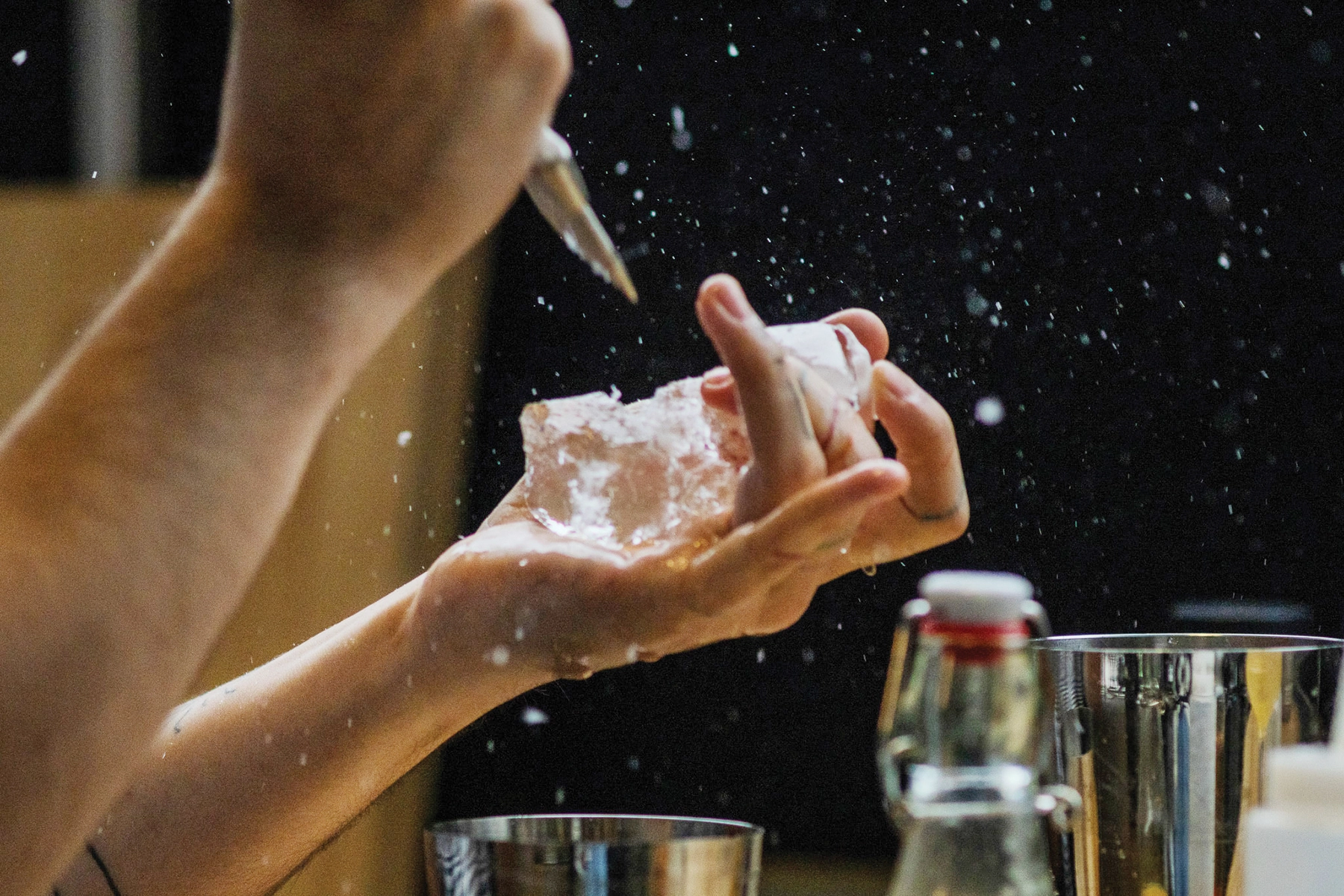
By Dathan Kazsuk
By the time I met Meg Paradise and Charlie Blue Arm for coffee in downtown Raleigh, there was already a low hum of anticipation around what they’re building next. Maybe it was the way they talked—like hospitality and cocktails aren’t just service, but choreography.
Or maybe it was the concept itself: Songbird, a daylight-to-dusk spot set to open June 2026 at East End Market, built to move from morning ritual to candlelit evening with the same level of intention all the way through.
This isn’t a “coffee place that also has cocktails” or a bar that begrudgingly keeps a couple of mocktails on the menu for the designated driver. Songbird’s whole point is that coffee, zero-proof, low-ABV, and full-strength drinks all get treated like the main event—no hierarchy, no consolation prizes.
And in a city that’s watched the definition of a “night out” get rewritten in real time, Songbird feels like the next logical step.
The Umbrella years
If Songbird has a prequel, it’s Umbrella Dry Bar, Paradise’s alcohol-free cocktail project that’s evolved through pop-ups, tastings, partnerships, and a bottle shop presence inside The Self Care Marketplace in downtown Raleigh.
Paradise didn’t come to this from some long-plotted “I always wanted to open a bar” dream. She came to it sideways, during Covid, while working remotely on a corporate track after 12 years at Whole Foods and quietly experimenting with what life looked like without drinking.
“I was kind of going through my own personal journey with not drinking,” Paradise says, describing the stretch where she was reading Quit Like a Woman in tiny increments—“like, two pages a night”—because life with young kids doesn’t exactly come with leisurely reading hours. In the book, she hit a line that landed hard: “Wouldn’t it be nice if there were more spaces with nonalcoholic options?”
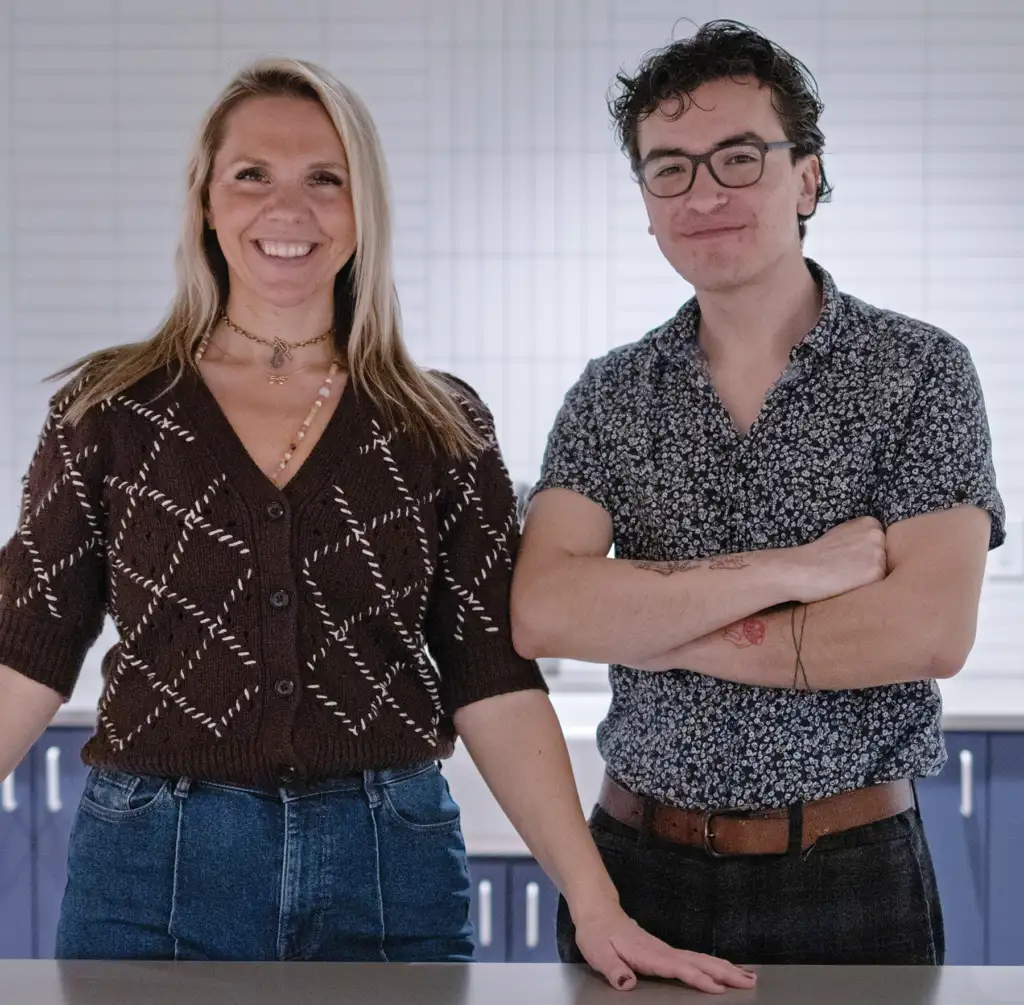
“I was just thinking, yeah, I would love to have that,” Paradise says. Not because she wanted a lecture on sobriety, but because she still loved the ritual: getting dressed, making a plan, stepping into a bar, and ordering something that felt like it belonged there.
Then came the part that surprised even her. “I had a lucid dream at three o’clock in the morning about what this space would look like,” she says.
“And at that point, I’d never run a bar or anything like that.” The idea stuck. In September 2021, she journaled it. In October 2021, she formed the LLC. “I don’t know where this path is going,” she remembers thinking, “but I’m gonna try it and see where it leads.”
Umbrella built momentum the way many modern hospitality brands do: pop-ups, relationships with producers, and showing up where the audience already gathers. Paradise talked about early tastings and events, including the kind of “safe” first pop-up at her yoga studio—familiar faces, familiar space, then a step outward. “Dry January was popping off,” she says, and the inbound requests started piling up.
She took a three-month sabbatical to see if it was viable. “It wasn’t yet,” she recollects, “but I still quit my job.”
That leap led to more experimentation, including an arrangement at Norwood Gardens where she converted a utilitarian shed into a functioning bar—an imperfect, scrappy proof-of-concept. Later came a short-term space downtown that taught them what worked, what didn’t, and what Raleigh was ready for.
“It was really hard to step back at the end of it,” Paradise says of winding that down, “but at the same time, there are so many lessons.” A co-creator with a science brain Blue Arm’s path into all of this reads like a résumé that took a hard left turn toward flavor.
He studied chemistry and physics at Amherst College but spent years working in cafés and bartending, drawn to the craft side of food and drink. “My family’s Palestinian. Food is really important for culture,” he says, describing how cooking was part heritage, part instinct.
When he moved to Raleigh—around the same time Umbrella’s downtown experiment was taking shape—he came onboard as food and beverage director, running the drinks and helping guide what Umbrella could be operationally, not just ideologically.
The pairing makes sense. Paradise is vision-first—ritual, feeling, the “what if this existed” question. Blue Arm is technique-forward—systems, equipment, process, the nerdy joy of dialing something in until it’s exact.
That tension is what Songbird is built on.Songbird is designed to run on a daily rhythm: Open at 8 a.m. for espresso, juices, and smoothies, then reopen at 4 p.m. for cocktails and shared plates.
Blue Arm lights up when he starts talking about the morning program. Smoothies and juices, yes—but anchored in seasonality rather than the predictable tropical template. “We’re gonna be leaning more on some local fruits,” he says, calling out strawberries and local greens as examples, and framing it as a way to make the morning feel grounded in North Carolina rather than imported from a generic smoothie bar playbook.
Then he mentions the espresso machine—a vintage model they tracked down and are restoring with help from Steam Punks Espresso Repair, a local company known for servicing and selling espresso equipment. “It’s totally random,” he says, laughing a little at how these projects find you. But the romance is the point: a machine with a history, tuned for classic shots, feeding a morning ritual that feels built, not purchased.
The evening program is where Songbird starts to separate itself from the pack. The menu is structured around six “North Carolina seasons,” rotating roughly every two months—a framework calibrated to the reality of local harvest cycles, not the tidy four-season version most of us grew up with.
And unlike many places that treat nonalcoholic drinks as an afterthought, Songbird plans to build the cocktail list around three lanes—zero-proof, low-ABV, and full-strength—while clearly labeling ABV for transparency. Blue Arm’s bigger point wasn’t just “we’ll have options.” It was craft.
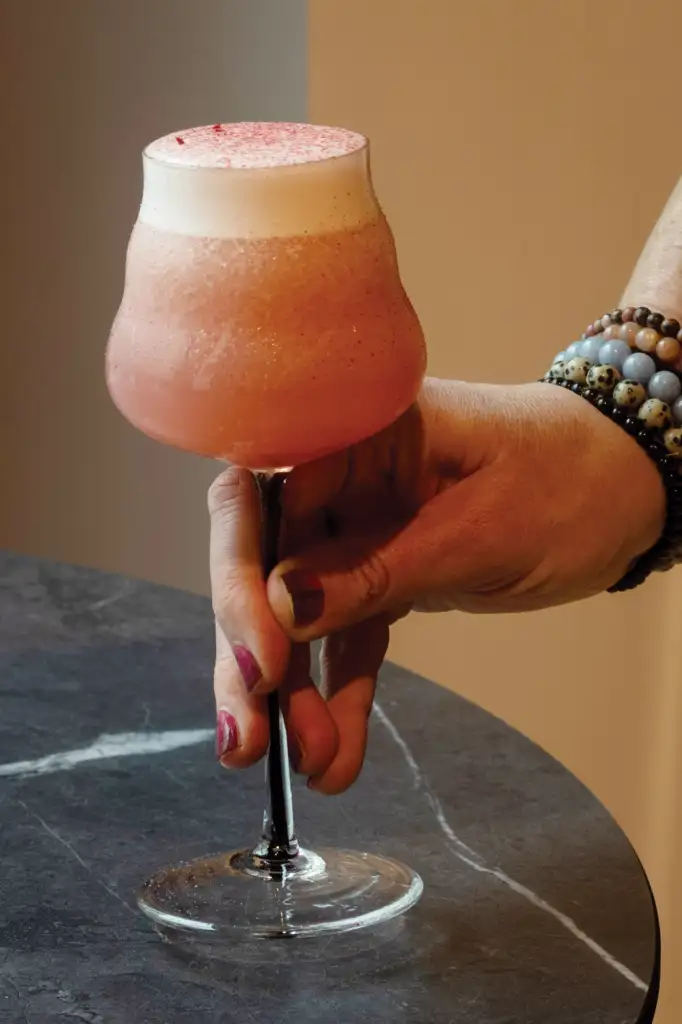
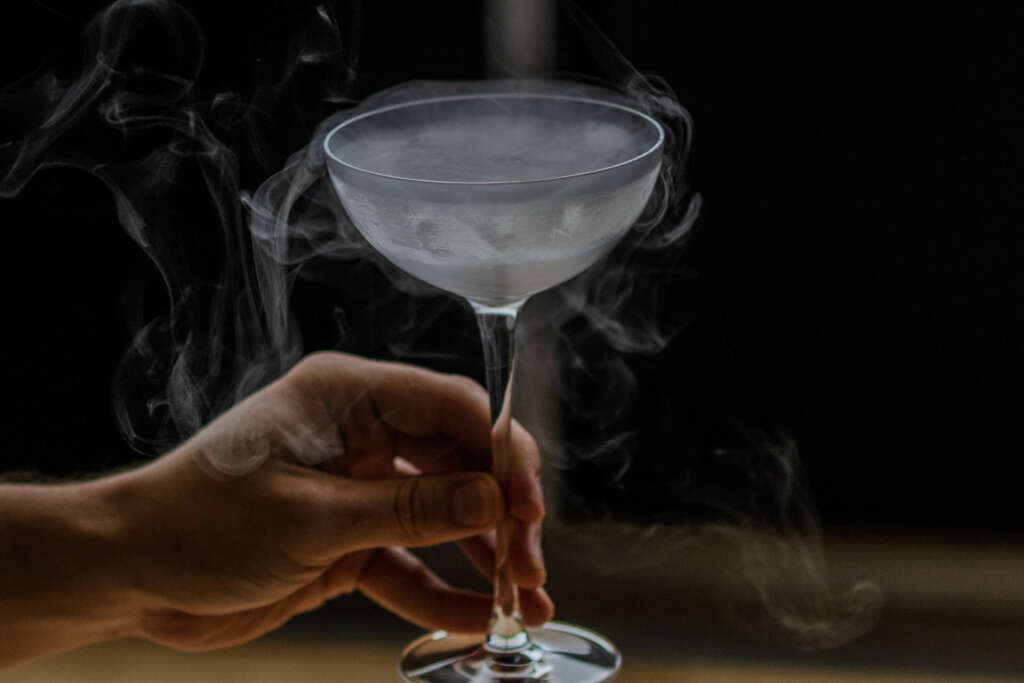
“We’re doing a lot of foams. We just bought a rotary evaporator,” Blue Arm says, describing equipment that allows a team to distill and manipulate flavors in ways most bars simply don’t bother with. He talked about creating drinks that feel like a cocktail, whether they contain alcohol or not—because the person ordering zero-proof deserves more than a dressed-up soda.
Built by hands for the future
One thread kept coming up, even when we drifted into tangents: They want Songbird to feel like it couldn’t exist anywhere else.
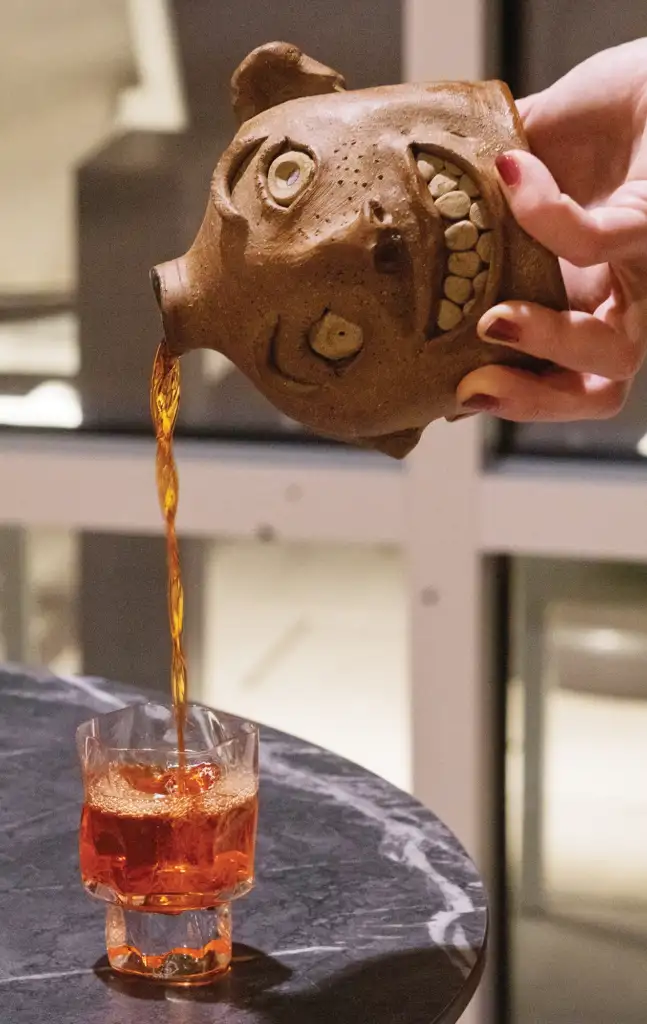
They talked about working with local potters—like Piedmont ClayWorks in Durham—and building relationships with producers so the objects in your hand carry a story, not just an aesthetic.
Blue Arm describes it as stewardship. Meeting the people behind the ingredients. Knowing what’s viable, what’s fleeting, what’s worth preserving and carrying forward through fermentation, jams, and other methods so a season doesn’t just disappear when the weather flips.
“You have to love it to do it,” he says when I asked what it takes to open something in a city where new spots seem to appear weekly. For both Paradise and Blue Arm, it’s not a trend line; it’s people—hospitality folks who are obsessive enough to build something with depth.
Songbird opens in June on E. Whitaker Mill Road in Raleigh, and if they pull off what they’re describing—this careful slide from espresso to candles, from zero-proof to full-proof, from ingredient to story—it won’t just be another new place on the Raleigh list. It’ll be a place you can return to in different versions of yourself, on different kinds of nights, and still feel like the drink in your hand matters.
👉 Explore more Raleigh food and drink stories in our Sip & Savor section here.