A 1904 carriage house tied to J.C. Raulston, community history, and a near-lost downtown chapter—revived through the owner’s vision
Story by Dathan Kazsuk | Photos by Jessica Bratton
Some houses feel like they were built to impress. Then there are houses that feel like they have survived the city, several decades of bad ideas, a tornado, and just about everything else short of a direct hit from Armageddon.
This one, the one I visited this past April, tucked off East Davie Street in downtown Raleigh, belongs firmly in the second category.
Long before it became the home of Alan McDonald, before it became associated with famed horticulturist J.C. Raulston, and before anyone had the bright idea to turn an old utility building into a dramatic place to live, the structure began life in 1904 as a working carriage house and storage building for the city. Over the years, it lived several different lives, including stints as a machine shop, storage space, and even, somehow, a barbershop.
Then came J.C. Raulston.
Raulston was no ordinary homeowner. He was the horticulturist at North Carolina State University who founded the arboretum that now bears his name. He arrived at NC State in 1975, established the arboretum in 1976, and became one of the most important plant ambassadors the region has ever produced. A 2024 City of Raleigh historic context study notes that his renovated warehouse home was large enough to host gatherings tied to the Lavandula and Labiatae Society, the network he organized for gay and lesbian horticulturists and gardeners.
Raulston died in an automobile accident in December 1996, and, after his death, the property eventually passed through the orbit of the Alliance of AIDS Services-Carolina, a nonprofit founded in 1999 to serve people living with and impacted by HIV/AIDS.
And then, as these stories tend to go, along came a man from Canada looking for a loft.
When McDonald first came to Raleigh for work in the railroad industry, he had a vision. In Montreal, loft living was having a moment, and he wanted something open, large, and unlike the usual chopped-up condo conversions. Through a connection, who was then tied to the Alliance, McDonald found this downtown property and saw possibility where most sane people would have seen a warning label.

“So my first impression when I walked in was, holy crap,” he told me. “I mean, the place was empty … it smelled like animal urine …” And still, somehow, he saw it. Getting it, though, was another matter.
McDonald had to return to Canada to sort out his papers after 9/11—hardly ideal timing for an international move. By the time he returned to Raleigh, the property was already under contract. Most people would have cursed their luck and moved on. But a colleague told him that “under contract” did not mean “sold,” only that there was still a way in if he could resolve whatever was holding up the deal. He did just that.
McDonald’s professional life had been built in the railroad business. Music had once been part of the picture—he played trumpet in Canada’s National Youth Orchestra—but practicality won out. “I wanted to eat,” he said, which is about as honest a career summary as anyone can offer. He spent 42 years in railroading, moving from conductor and locomotive engineer into leadership and, later, the data and systems side of the industry.
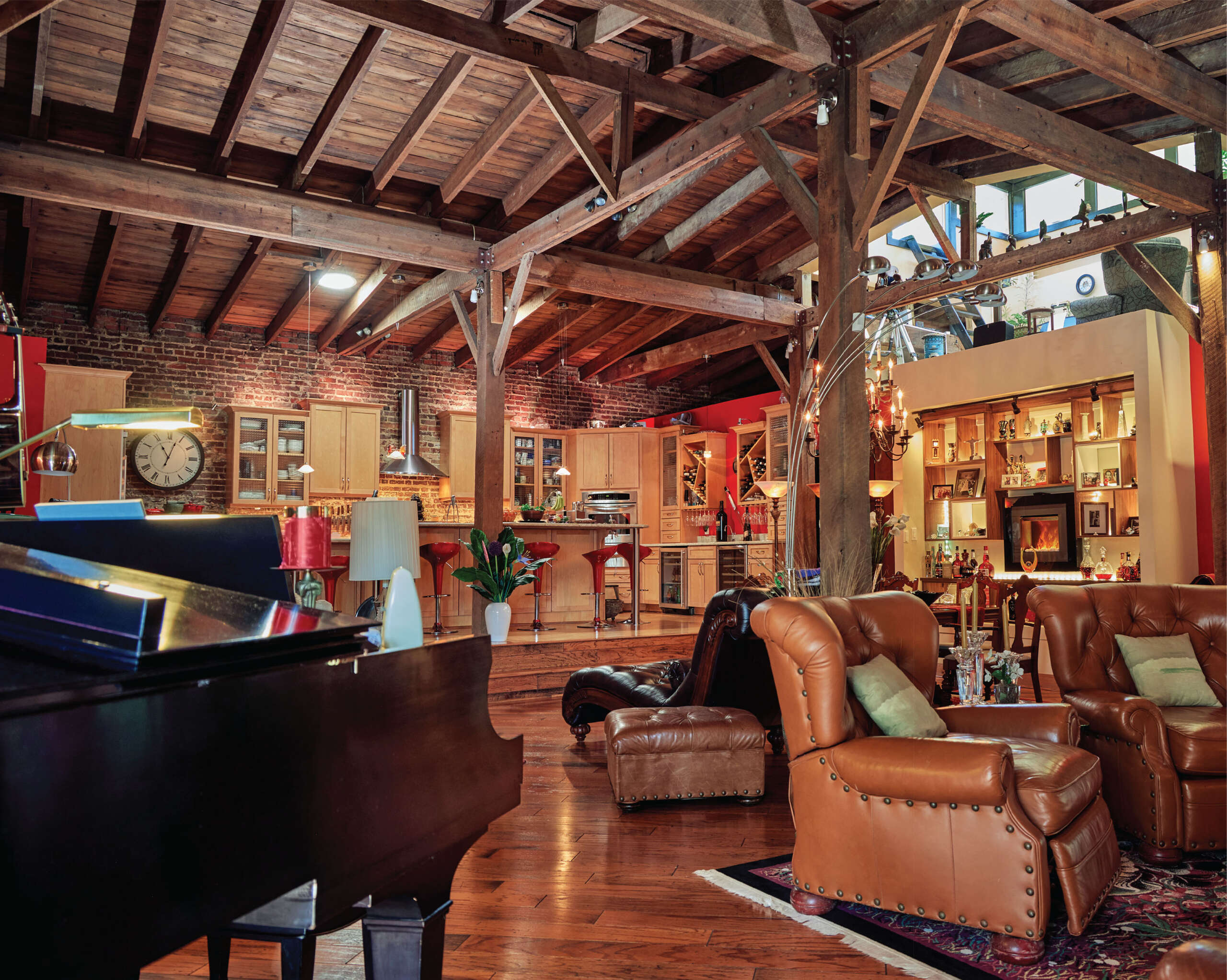
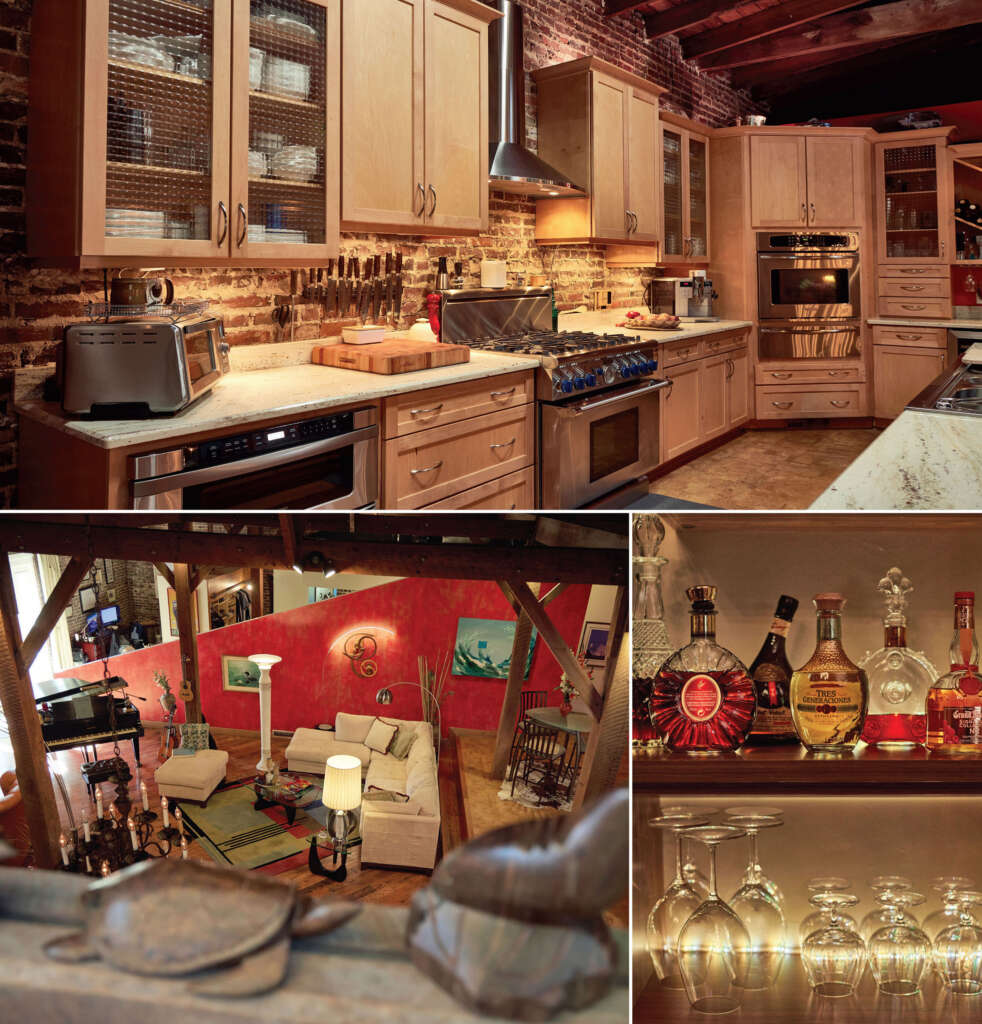
What he bought was not some polished historic gem. It was a mess. The version left behind from the Raulston era had dramatic bones but also black walls, black carpet, and, as McDonald described, a vibe closer to “an ’80s biker bar” than to a warm home.
Architects came through with big ideas, many of them the kind that make owners nervous and preservationists reach for aspirin. One architect wanted to tear out walls and go grand. McDonald was not interested in turning the house into a gimmick. “I like the bones of the place,” he said. “I want to work within it.”
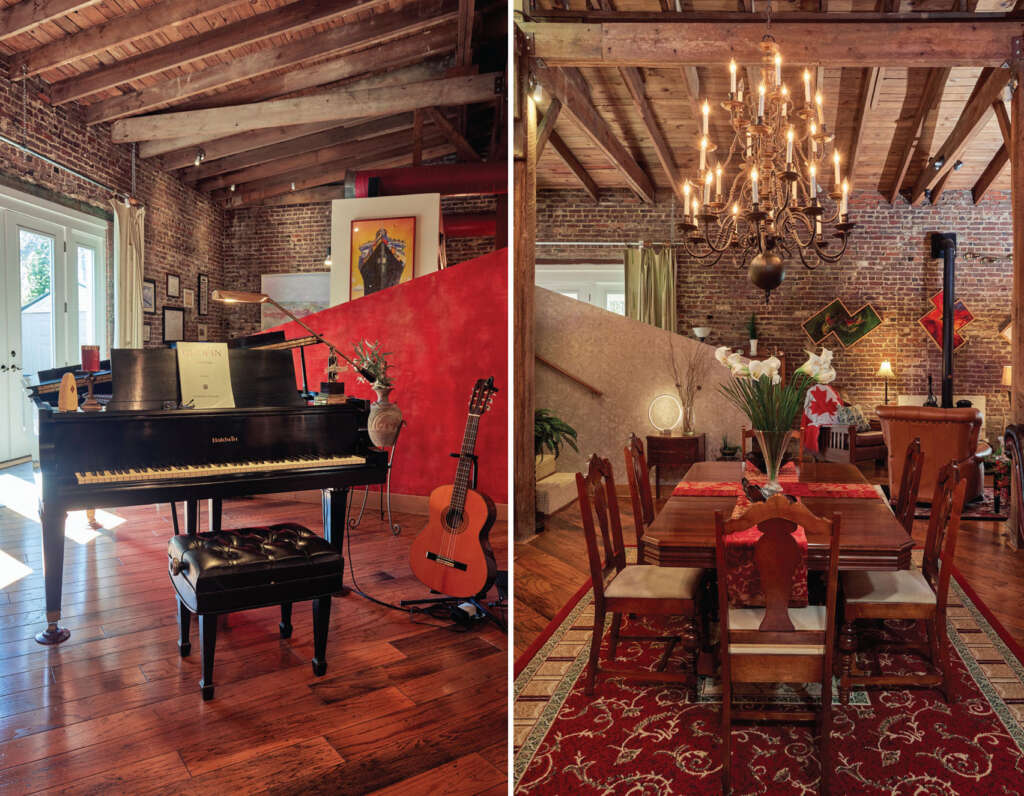
That instinct led him toward designer Gay Eatman and back to the original plans by architect Norma Burns, whose geometric vision helped shape the house in the 1980s. Triangular walls, angled sightlines, shifting shadows, and visual tricks were not accidents. They were designed to pull your eye upward and make the space feel different with every step. McDonald embraced that. What he did not embrace was the idea of painting the brick white. On that point, he and a designer parted ways, which frankly may have saved the soul of the place.
The renovation became a patchwork of persistence, instinct, and collaboration. McDonald worked with contractor Fred Crouch. He hired a kitchen designer, bought the plans, then got ghosted. So he took those plans to Lowe’s and spent evenings with an employee whose name he wishes he could remember, because, as he put it, the man deserves credit. Together, they fine-tuned custom ideas that would never have worked off the shelf.
McDonald says the house was mostly done by the end of 2005, about a year after he took possession, but he also knows better than to call a 120-year-old building finished. “I never finished,” he said. “Not on something like this. There is always something to do.”
That became even more true after a tornado slammed through in 2011, tearing through the rear of the property, crushing part of the roof, taking out HVAC units, and ripping away vines that had covered the home. North Carolina’s April 2011 tornado outbreak caused severe damage across the region, and McDonald’s house was directly in its path.
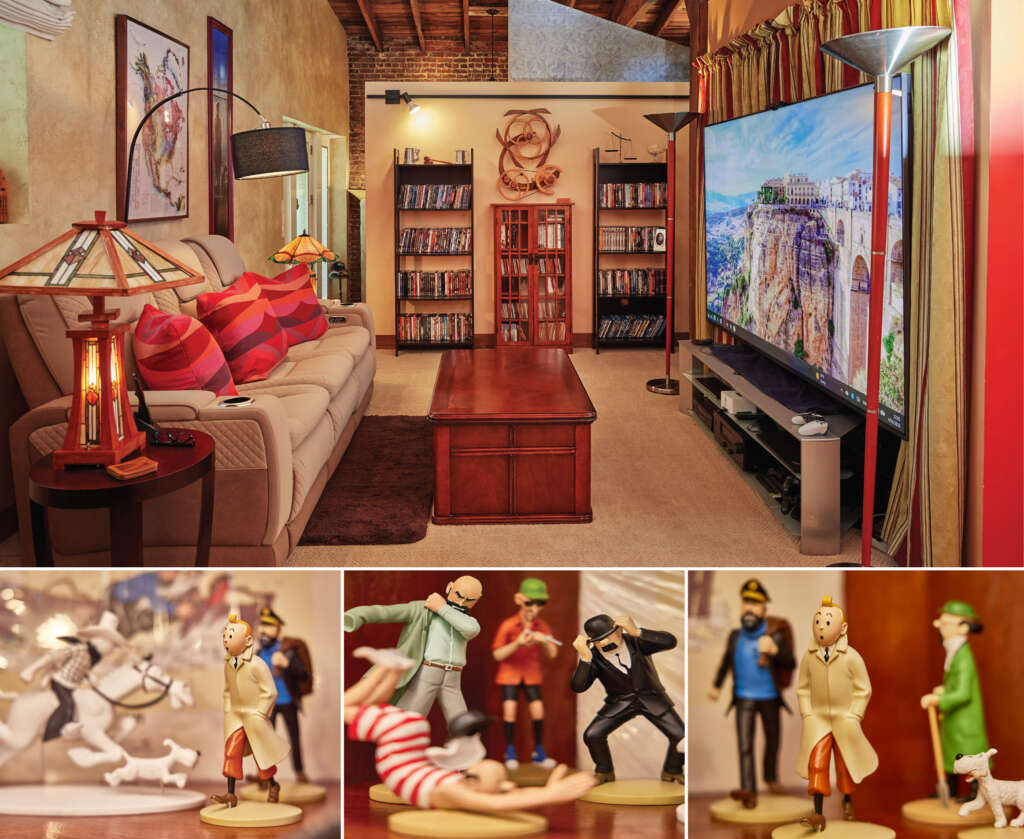
Today, what stands is not really a modernist house, at least not in the strict sense. McDonald calls it eclectic, and that feels right. It mixes eras, materials, and moods. Antiques live alongside contemporary pieces. The original 1904 posts and ceiling remain, while everything around them has been reconsidered, repaired, or rebuilt. The goal, he said, was never allegiance to one style. It was to make the place “comfortable and inviting.”
That may be the best way to understand the house now. It is not a museum piece. It is not frozen in one era or trapped under a label. It is a former carriage house, a former workshop, a former community gathering place, a survivor of neglect, weather, and reinvention. And under McDonald’s watch, it has become something even better: a home with a memory, and a home still willing to evolve.