

By Dathan Kazsuk
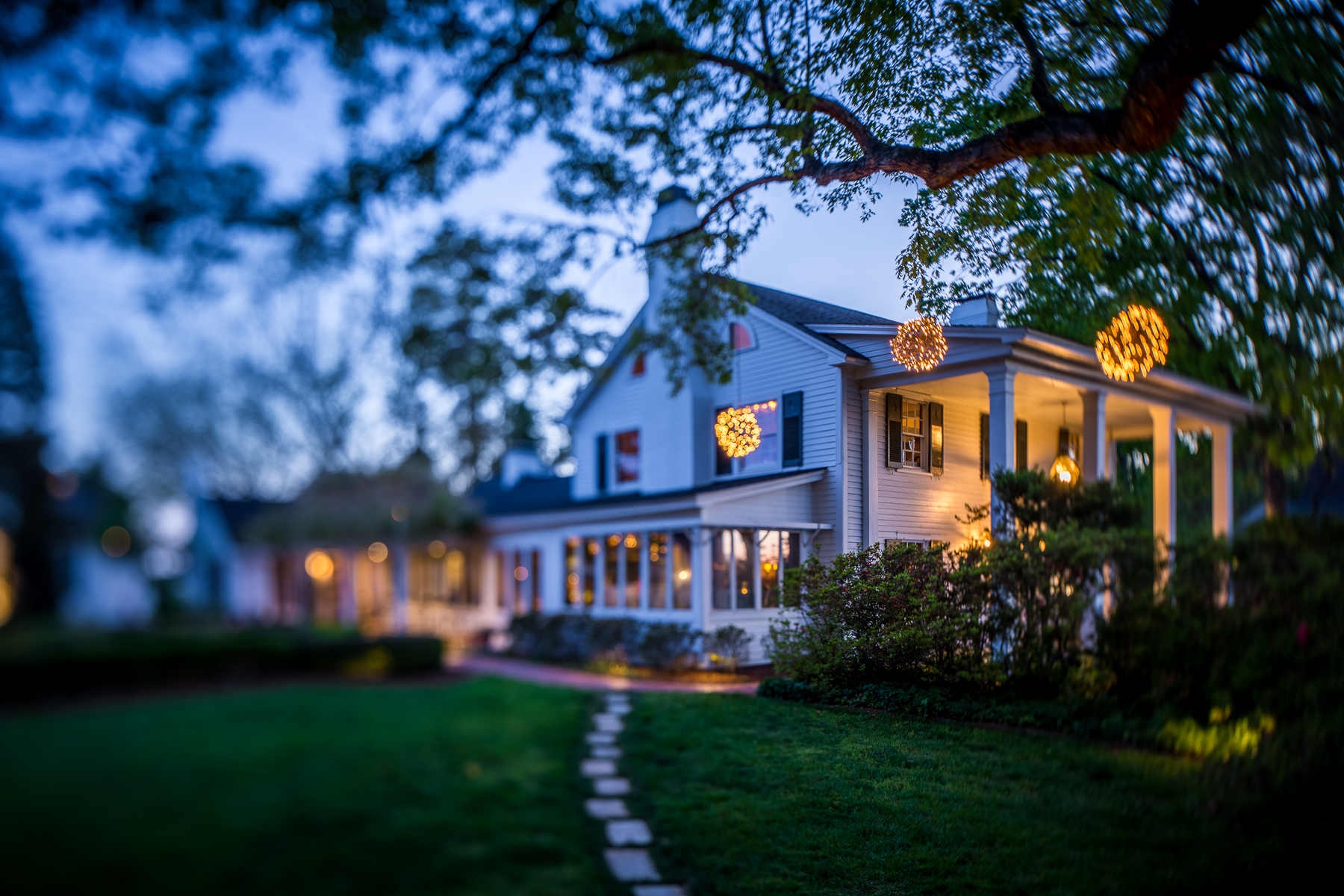
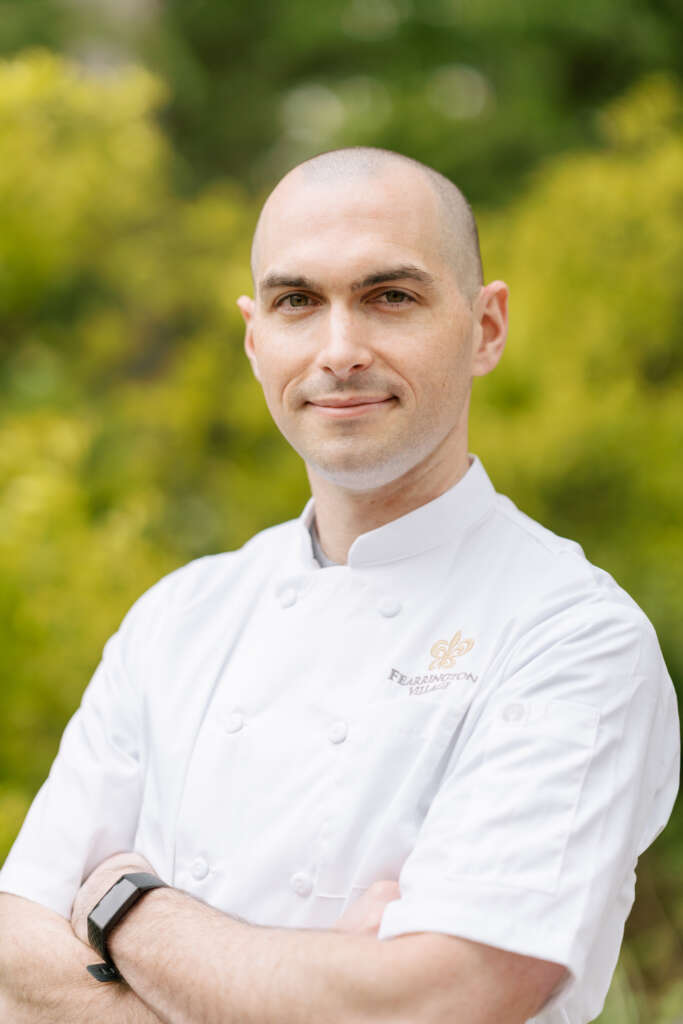
When a restaurant has the history of The Fearrington House, the kitchen can’t just coast on reputation. It has to honor the past while still surprising people. So we decided to reach out to see what’s going on with executive chef Paul Gagne, who has been leading the kitchen at The Fearrington House since 2022.
Gagne is no stranger to the property. A graduate of the New England Culinary Institute, he first staged at Fearrington in 2012, then returned in 2016 to work alongside former chef Colin Bedford as sous chef. Today, he oversees one of the Triangle’s most celebrated dining destinations, a Relais & Châteaux property known for polished hospitality, seasonal tasting menus, afternoon tea, a strong wine program, and its connection to Southern culinary traditions.
But under Gagne, tradition does not mean standing still. “I’ve always interpreted food through the lens of science,” he says. “That’s what defines my cooking—understanding the science and precision that elevate a dish.”
That mindset shows up in how he talks about food now. When asked what ingredient he is currently obsessed with, Gagne points not to a single ingredient, but to nixtamalization—the process used to treat corn for masa. He started with masa and has continued experimenting with the technique in other ways.
That curiosity seems to define much of his cooking. Gagne says he enjoys being playful and taking risks in the kitchen, especially when presenting classic ideas in modern, nontraditional ways. One dish that reflects his current philosophy is the kale gnudi. For first-time visitors he points to the stuffed trout, which he describes as “a good combination of fine dining technique paired with Southern homestyle food.”
That balance is the sweet spot for Fearrington: polished enough for a special occasion, but still connected to the region around it. Gagne says the fried chicken on the bar menu feels most connected to the Triangle community, which makes sense.
Over Gagne’s 10 years at Fearrington, the Triangle dining scene has evolved significantly. One of the biggest changes he has noticed is the rise of high-end Asian cuisine—especially Indian food.
When asked what changes he would like to see the Triangle dining scene embrace, Gagne says he would like to see lighter fare overall, moving away from the idea that bigger always means better. “I prefer smaller portions that are interesting or unique,” he says.
That precision also comes into play when Gagne talks about home cooking. He says the biggest mistake home cooks make when trying to recreate restaurant-level dishes boils down to the use of butter, salt, and building flavors through technique. In other words, it isn’t just the recipe. It’s how you get there.
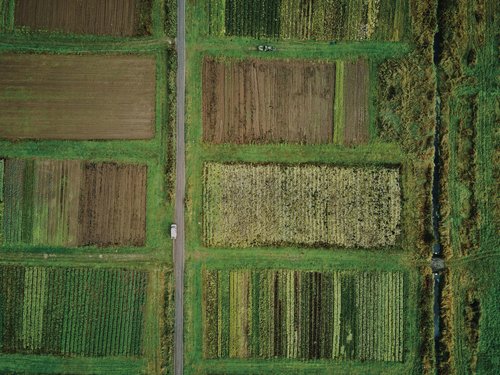
The local connection has also become more important to Gagne over time. He says the area’s growth, along with Relais & Châteaux’s goals, has made him more aware of local fare and more driven to use as much of it as possible. When asked which local businesses he loves to support, his answer is simple: “Local farmers all day, every day.”
Before I left, we briefly broached the subject of AI. Behind the scenes, Gagne says, restaurants are still powered by people. “Everything is people-driven, and with that comes people issues,” he says. “You do everything you can to cover potential issues, but at the end of the day, we’re all human. AI will never be able to do this the way we do, I don’t think.”
At The Fearrington House, that goal continues through Southern ingredients, fine-dining precision, thoughtful risks, and a kitchen that knows exactly where it stands: rooted in history, but not trapped by it.