
Skip to content Skip to sidebar Skip to footer

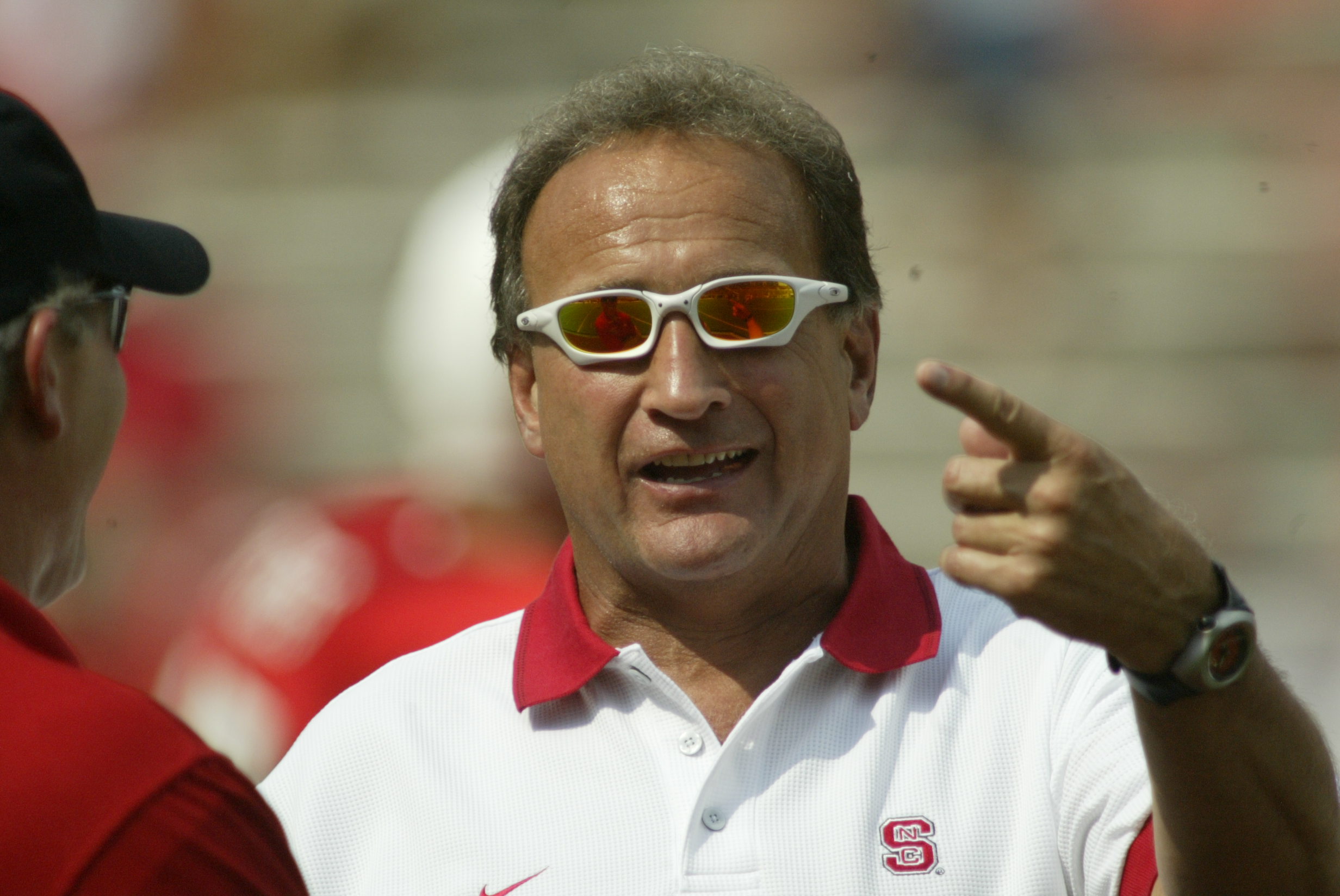
Chuck Amato, Former NC State Football Coach, Dies at 80

NC State Chuck Amato

Chuck Amato, the former NC State linebacker who returned to lead Wolfpack football through one of the program’s most memorable periods, died Monday at age 80, according to multiple reports. Amato had battled throat cancer, undergoing treatment in 2010 and facing a recurrence in recent years.

Known to Wolfpack fans as “Chuck the Chest,” Amato was a larger-than-life presence with an unmistakable raspy voice. But he was not simply a coach who passed through Raleigh. He was a Wolfpack player, assistant coach, defensive coordinator and head coach—and, after retirement, a familiar local presence.

Amato lettered for three seasons in both football and wrestling at NC State. He played linebacker on the Wolfpack’s 1965 ACC co-championship team, captained the defense as a senior in 1967 and originated the famed “White Shoes Defense.” He also won two ACC individual wrestling championships.

After nine seasons coaching at NC State and two at Arizona, Amato joined Bobby Bowden’s staff at Florida State in 1982. During his first 18-season run in Tallahassee, the Seminoles won national championships in 1993 and 1999 along with eight consecutive ACC titles.

NC State hired Amato as its 32nd head football coach in January 2000. His arrival coincided with freshman quarterback Philip Rivers’s. Over the next four seasons, the Wolfpack went 34-17 and reached four consecutive bowl games.
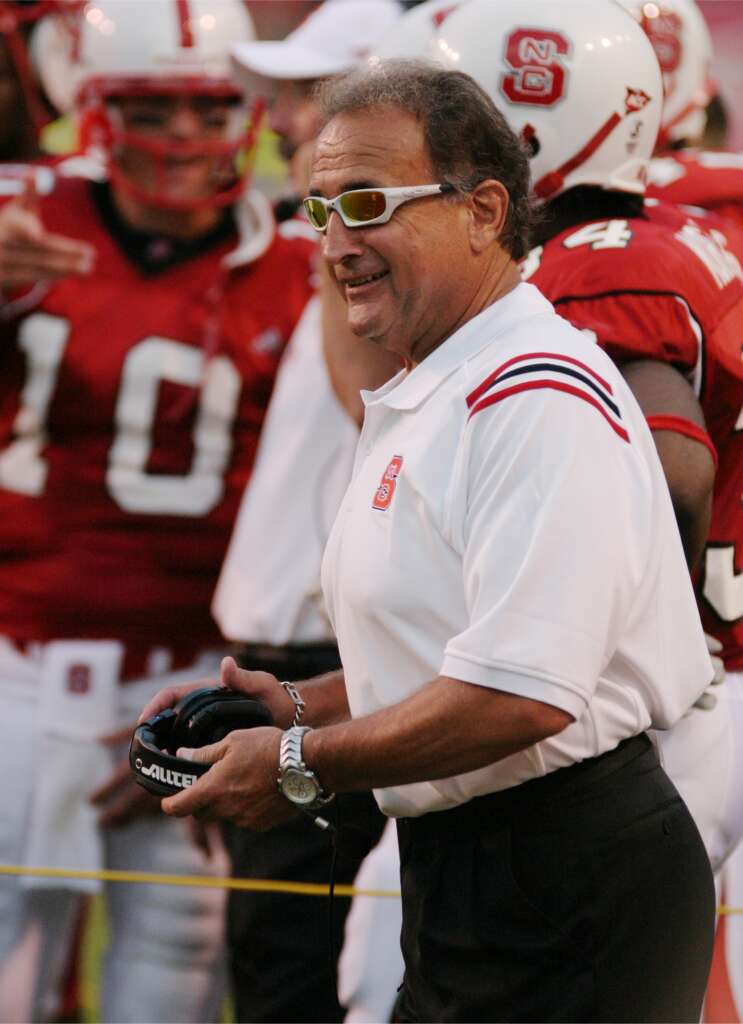
Chuck Amato

The peak came in 2002. NC State finished 11-3, defeated Notre Dame 28-6 in the Gator Bowl, and ended the season ranked No. 12 in the Associated Press poll and No. 11 in the coaches’ poll. It remains the only double-digit-win season in program history.

Across seven seasons, Amato went 49-37 overall and 25-31 in ACC play, taking the Wolfpack to five bowls and winning four. His teams also went 4-3 against Florida State.

Amato’s program sent 22 players to the NFL draft, including five first-round selections. Rivers went fourth overall in 2004. Defensive end Mario Williams became the No. 1 overall selection in 2006, the same draft in which Manny Lawson and John McCargo were taken in the first round. NC State’s 2004 defense led the nation in total defense.

His legacy extends beyond the record book. Amato pushed university leaders to make the facility improvements needed to compete nationally. The 103,254-square-foot Wendell Murphy Football Center opened in 2003 as a centerpiece of the wider Carter-Finley renovation.

Tributes began arriving quickly Monday. Duke coach Manny Diaz, who worked six seasons under Amato at NC State, told reporters, “I wouldn’t be standing here today if it wasn’t for Chuck Amato.”

Amato’s tenure ended after a 3-9 season in 2006, without the ACC championship he wanted. He subsequently returned to Florida State and later spent six seasons at Akron before retiring.

But the final season does not define his Raleigh footprint: an 11-win team, four bowl victories, a pipeline of NFL talent and a transformed Carter-Finley complex.

The man with the raspy voice asked NC State football to think bigger. For a while, it did—and much of what it built stayed.

© 2008-2025 Midtown magazine, LLC. All rights reserved. Copyright applies to all pages on this website. | Privacy Policy

Chuck Amato, the former NC State linebacker who returned to lead Wolfpack football through one of the program’s most memorable periods, died Monday at age 80, according to multiple reports. Amato had battled throat cancer, undergoing treatment in 2010 and facing a recurrence in recent years.

Known to Wolfpack fans as “Chuck the Chest,” Amato was a larger-than-life presence with an unmistakable raspy voice. But he was not simply a coach who passed through Raleigh. He was a Wolfpack player, assistant coach, defensive coordinator and head coach—and, after retirement, a familiar local presence.

Amato lettered for three seasons in both football and wrestling at NC State. He played linebacker on the Wolfpack’s 1965 ACC co-championship team, captained the defense as a senior in 1967 and originated the famed “White Shoes Defense.” He also won two ACC individual wrestling championships.

After nine seasons coaching at NC State and two at Arizona, Amato joined Bobby Bowden’s staff at Florida State in 1982. During his first 18-season run in Tallahassee, the Seminoles won national championships in 1993 and 1999 along with eight consecutive ACC titles.

NC State hired Amato as its 32nd head football coach in January 2000. His arrival coincided with freshman quarterback Philip Rivers’s. Over the next four seasons, the Wolfpack went 34-17 and reached four consecutive bowl games.

Chuck Amato

The peak came in 2002. NC State finished 11-3, defeated Notre Dame 28-6 in the Gator Bowl, and ended the season ranked No. 12 in the Associated Press poll and No. 11 in the coaches’ poll. It remains the only double-digit-win season in program history.

Across seven seasons, Amato went 49-37 overall and 25-31 in ACC play, taking the Wolfpack to five bowls and winning four. His teams also went 4-3 against Florida State.

Amato’s program sent 22 players to the NFL draft, including five first-round selections. Rivers went fourth overall in 2004. Defensive end Mario Williams became the No. 1 overall selection in 2006, the same draft in which Manny Lawson and John McCargo were taken in the first round. NC State’s 2004 defense led the nation in total defense.

His legacy extends beyond the record book. Amato pushed university leaders to make the facility improvements needed to compete nationally. The 103,254-square-foot Wendell Murphy Football Center opened in 2003 as a centerpiece of the wider Carter-Finley renovation.

Tributes began arriving quickly Monday. Duke coach Manny Diaz, who worked six seasons under Amato at NC State, told reporters, “I wouldn’t be standing here today if it wasn’t for Chuck Amato.”

Amato’s tenure ended after a 3-9 season in 2006, without the ACC championship he wanted. He subsequently returned to Florida State and later spent six seasons at Akron before retiring.

But the final season does not define his Raleigh footprint: an 11-win team, four bowl victories, a pipeline of NFL talent and a transformed Carter-Finley complex.

The man with the raspy voice asked NC State football to think bigger. For a while, it did—and much of what it built stayed.

This Pop-up Is Included in the Theme
Best Choice for Creatives
Purchase Now