| By Dathan Kazsuk | The smell of barbecue will once again drift through the Village of Pinehurst this Labor Day weekend as the Pinehurst Barbecue Festival marks its fifth…
Starting August 6, Raleigh pizza lovers will have a new spot to grab their favorite slice. Oakwood Pizza Box is opening a second location at 1842 Wake Forest Road—formerly home…
A quiet force in the kitchen, Chef Chun blends culture, creativity, and care in every dish.
BY KYLE MARIE MCMAHON | PHOTOS COURTESY OF CHEF CHUN
At Brewery Bhavana, the dumplings are…
The owners of Peregrine share the family stories behind their signature dish and cocktail
BY KYLE MARIE McMAHON | PHOTOS COURTESY OF PATRICK SHANAHAN
At Peregrine, the acclaimed new restaurant in Raleigh,…
BY DATHAN KAZSUK
Some nights, everything clicks—the food, the drinks, the vibe. That was us last week at Wong’s Tacos at the GlenLake development in Raleigh, enjoying the bold mix of…
Delivering Deliciousness: 4 Tips for Preparing a Summer Salad That Looks Just as Beautiful as It Tastes
By Grace Barker
It’s the peak of summertime, which means North Carolina heat, summer dinner…
By Dathan Kazsuk
A bold new culinary concept has arrived in Raleigh—one that defies tradition, embraces cultural crossover, and delivers flavor with a wink. Wong’s Tacos, the energetic full-service restaurant known for…
Looking for great barbecue? Tastes and traditions are expanding. BY KURT DUSTERBERG Christopher Prieto is acquainted with all the finer points of the barbecue game. The owner of Prime Barbecue…
Brodeto’s Soft-Serve Gelato Pairs Nostalgia and Italian Flavor By Kyle Marie McMahon When you walk into Brodeto—Scott Crawford’s Adriatic seafood-focused restaurant in Raleigh’s Iron Works—you might expect a wine list to remember…
How Crawford Hospitality’s culinary director went from Michelin-star kitchens to redefining restaurant culture in the Triangle By Kyle Marie McMahon When diners talk about Raleigh’s most beloved restaurants—like Crawford and…
By Dathan Kazsuk
Let me tell you—if you throw “BBQ” and “Bubbly” into the same event title, you better believe I'll be there with an empty stomach and a desire for…
By Dathan Kazsuk
Let’s get this out of the way—brunch is tricky. For me, at least. I’m not the type to start throwing shade, but let’s be honest—most brunch places either coast…
The award-winning pitmaster behind Prime BBQ shares practical grilling tips—and his deeper philosophy on why hospitality matters most By Kyle Marie McMahon As Memorial Day weekend approaches and grills across…
At the annual Roots for Reece picnic, food and community come together in memory, healing and harm reduction By Kyle Marie McMahon. All photos by Stacey Sprenz. It’s easy to…
By Dathan Kazsuk Alright, let’s just address the slippery, oily elephant in the room: tinned fish and beer. Sounds gross, right? Sardines swimming in oil, fermented squid doing god-knows-what in a…
A fresh take on modern Latin-American cuisine with artful dishes and serious corn cred By Kyle Marie McMahon Tucked into a cozy corner of Raleigh’s evolving Gateway Plaza, Mala Pata…
By Dathan Kazsuk It’s back. The event that somehow manages to combine two of my favorite things—brisket and sparkling wines! Oh, and a 90s hip-hop soundtrack. How can that trio go…
By Dathan Kazsuk If you’ve ever had that moment—you know the one—where a restaurant manages to pull off everything it attempts without missing a beat, you’ve probably stumbled into Doc B’s.…
BY JENNIFER PRIMROSE | PHOTOS COURTESY OF FOXCROFT WINE CO.
As a wine lover, I enjoy places where wine is friendly and easy to understand. These settings help build real connections…
BY ELLIOT ACOSTA PHOTOS BY JESSICA BRATTON Throughout his nearly three-decade career as a celebrated chef, Scott Crawford has always trusted his gut. This hasn’t just applied to the flavors…
The smell of barbecue will once again drift through the Village of Pinehurst this Labor Day weekend as the Pinehurst Barbecue Festival marks its fifth anniversary. What started as a daring idea during uncertain times has evolved into one of North Carolina’s premier food festivals, bringing together thousands of hungry patrons and some of the state’s top pitmasters for a 3-day celebration of barbecue, bourbon, and Southern culture.
“It all seems crazy now that we started planning the inaugural Pinehurst Barbecue Festival and then COVID-19 hit,” recalls festival cofounder Dave Droschak. “Since it was an outside festival, we were able to pull off the first one in 2021, and it has been quite a journey building an event that we wanted to be unique, yet still celebrate barbecue in North Carolina.” That vision is alive and well.
Guests who make their way to Pinehurst will find themselves sampling seven different meat and seafood dishes, paired with seven Southern sides, all prepared by seven award-winning pitmasters—a feast that, as Droschak put it, is “something totally unique and a treat for our patrons.”
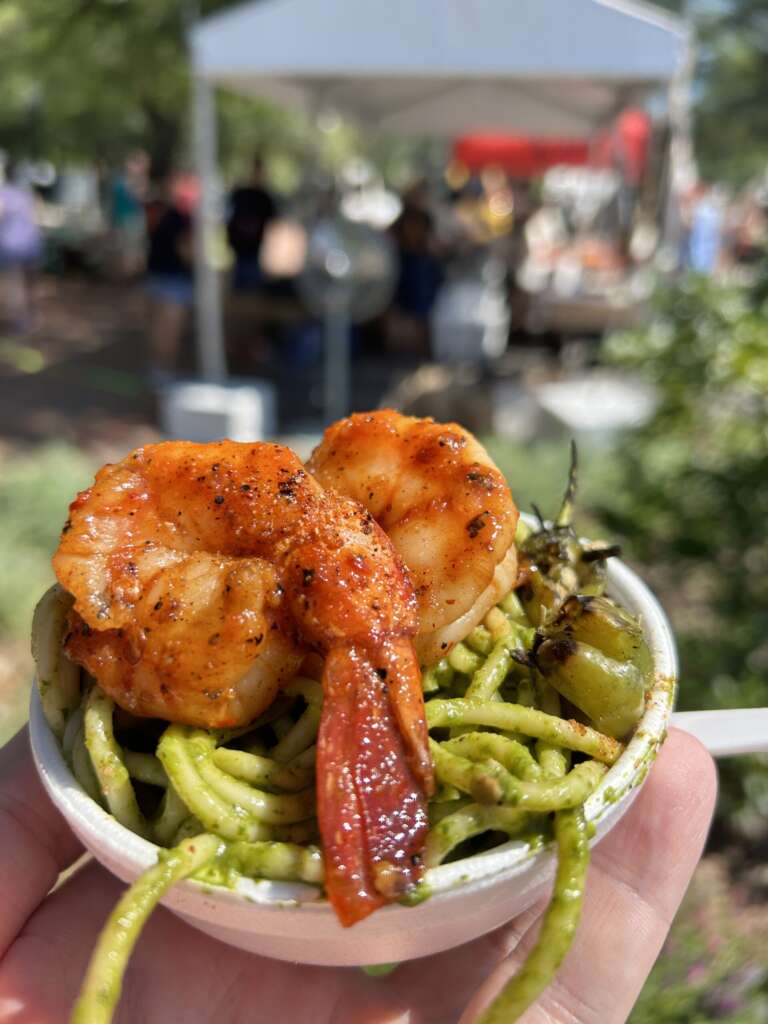
In previous years we've tried barbecue shrimp with pasta. Photo by Dathan Kazsuk.
A big part of the festival’s growth comes from its partnership with pitmaster Christopher Prieto, whose Prime Barbecue in Knightdale has become a destination for both locals and visitors. “I first met Christopher through a mutual client who recommended him as the upcoming mover and shaker in the barbecue world,” Droschak says. “Christopher’s engaging personality and willingness to chat barbecue with all has been a true win for the Pinehurst Barbecue Festival.” Prieto now anchors the festival’s Pitmaster Invitational and leads “Q-School,” a Saturday morning grilling class that gives attendees a front-row seat to his techniques and stories.
Of course, organizing an event of this magnitude doesn’t come without challenges. “After 5 years now, the word has certainly gotten around that this is one of the best, if not the best, places for pitmasters to showcase their true talents,” says Droschak. “It’s also a big undertaking to feed more than 3,000 patrons over a 5-hour period, so it’s a combination of talent and the ability to execute food for a larger group that we look at first when selecting pitmasters. We also look for ambassadors who will help spread the good word that this event is worth attending.”
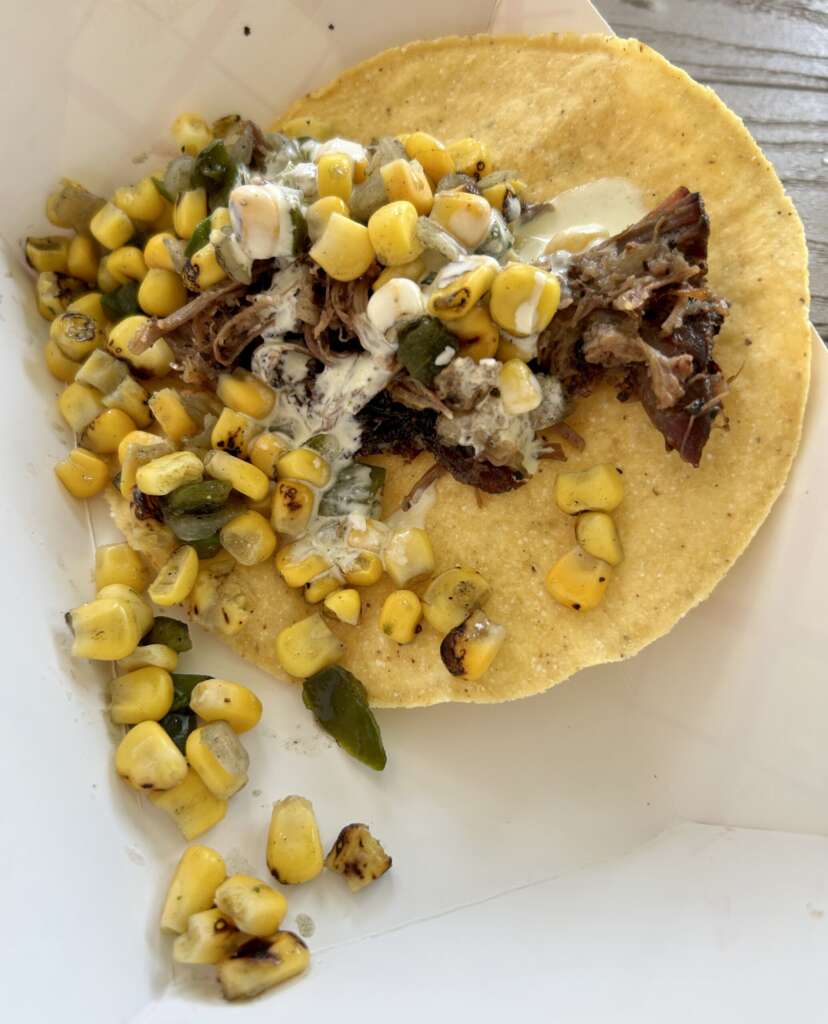
Tacos always seem to be on the menu—and we're not complaining. Photo by Dathan Kazsuk.
That hard work has paid off. A recent study commissioned by the area’s Convention and Visitors Bureau revealed that the Pinehurst Barbecue Festival has generated more than $5 million in economic impact for the community. For a town most often defined by its championship golf courses, the festival has carved out a place as another signature event—one that brings people together over plates of brisket and pulled pork the same way golf might bond a foursome on the fairways. “We hope the Pinehurst Barbecue Festival brings an activity that brings family and friends together in a social and foodie atmosphere,” said Droschak.
This tender pork and bacon potato salad was served up at least year's festival.
The festival weekend is packed with flavors and experiences, beginning Friday with the High on the Hog Gourmet Pitmaster Dinner at Pinehurst’s Fair Barn. Saturday morning turns the spotlight on Prieto’s grilling class at the Village Arboretum’s Timmel Pavilion, followed later that evening by the inventive Barbecue Reimagined dinner at BHAWK. The popular Bourbon & Bites tasting at The Manor has already sold out, but tickets are still available for the other events.
The weekend culminates on Sunday with the Christopher Prieto Pitmaster Invitational, where the streets of Pinehurst fill with music, local vendors, craft beers, and the unmistakable aroma of barbecue as thousands of patrons line up for their share of Southern tradition.
Attending the Barbecue Reimagined gives you an opportunity to try some other creative items from top chefs and pitmasters. Photo by Jennifer Primrose.
And the festival continues to evolve. New this year is a duty-free liquor sampling and an expanded marketplace of Got To Be NC vendors, offering everything from sauces and rubs to local products that can’t be found in your average supermarket. As Droschak sums it up, the goal has always been to grow while staying true to the heart of North Carolina barbecue. Judging by the crowds, the flavors, and the economic impact, the Pinehurst Barbecue Festival has done just that.