Local Restaurants Offering Party-Ready Food Packages for the Game on February 9 By Kyle Marie McMahon Get ready for the big game with a feast worthy of the Super Bowl!…
By Jennifer Primrose If you’re looking for an educational and family-friendly adventure, look no further than the North Carolina Aquarium at Fort Fisher. Nestled on the scenic coast of Kure…
Celebrate the New Year with Local Food, Drinks and Festivities
By Kyle Marie McMahon
Ring in the New Year in style! Whether you're looking to indulge in a multi-course feast, sip craft cocktails…
BY MARILYN JONES
Less than an hour east of Raleigh, rural Johnston County offers excellent sites for North Carolina history lovers. Johnston County is the birthplace of Hollywood legend Ava…
PICTURED ABOVE: This illustration depicts a confrontation between juvenile tyrannosaurs and adult Triceratops, a possible scenario experienced by the Dueling Dinosaurs 67 million years ago. Dueling Dinosaurs illustration courtesy of…
PICTURED ABOVE: Biltmore’s Village Social restaurant offers a colorful array of dishes, ingredients for which are sourced from the estate’s farms. Photo courtesy of the Biltmore Company.
Top of the Food…
PICTURED ABOVE: Freedom Park commemorates Black Americans’ struggle for freedom and equality. Quotes from famous Black North Carolinians are etched on the stone wallways, and the Beacon of Freedom sculpture…
PICTURED ABOVE: The Gatekeeper’s Cottage will function as Dorothea Dix Park’s first visitor’s center. Dorothea Dix Park builds on its legacy to enhance its offerings and connect with the community.…
PICTURED ABOVE: Beach homes in popular Outer Banks vacation spot, Avon, NC. Photo by stock.adobe.com - Kyle.
Beach Fun Back in the Day: NC Seaside Vacations a Century Ago.
BY ERIC MEDLIN
This…
By Eric Medlin
In our upcoming July/August issue, we include an article called Beach Fun Back in the Day that covers how people enjoyed vacations at North Carolina beaches a century…
BY SOFIA LUJAN AND LAUREN DOYLE | PHOTOS BY JESSICA BRATTON All clothing items available at Villa 19 Boutique. Shop in-store or online at villanineteen.com. In keeping with this issue’s…
BY MARILYN JONES
The sky was lightening as I stepped into a outrigger canoe with two guides and three other hotel guests. We were setting out into the Pacific Ocean to…
From an art and memorabilia collection to a winery, a mini spa and a petting zoo—to, yes, a distillery—Cape Fear Distillery offers visitors an eclectic, multifaceted experience.
BY DAVE DROSCHAK
An affinity…
Umstead Park’s ruins tell a story of North Carolina’s rural history.
BY ERIC MEDLIN
William B. Umstead State Park is one of the most-visited state parks in North Carolina. According to the…
PICTURED ABOVE: Guests can enjoy craft cocktails, wine and beer, and charcuterie and other treats in the parlor at Raleigh’s Heights House Hotel. It’s the details that set apart…
BY JENNIFER PRIMROSE | PHOTOS BY DATHAN KAZSUK
The North Carolina Zoo, located in the heart of North Carolina, is a family destination covering 2,600 acres of lush greenery. It is…
BY NAN K. CHASE
Jewels! Jewels! Jewels! And they’re all free.
Blue ones, pink ones, yellow, red, purple—even gaudy white ones. The ephemeral wildflowers of early spring decorate the forest…
How to stay active in North Carolina during winter
BY MELISSA WISTEHUFF
According to Forbes.com, the most common New Year’s resolution is to get in shape. Finding the motivation to stay…
BY MELISSA WISTEHUFF
It’s beginning to look a lot like Christmas! Trade in the normal hustle and bustle of the season for the breathtaking grandeur and fascinating history that only the…
WNC Wonderlands Celebrate the season in McAdenville, Greensboro and Bryson City BY KURT DUSTERBERG Looking for a festive day trip destination this holiday season? Head west to experience Christmas Town…
Local Restaurants Offering Party-Ready Food Packages for the Game on February 9
By Kyle Marie McMahon
Get ready for the big game with a feast worthy of the Super Bowl! Whether you’re cheering for the Philadelphia Eagles, the Kansas City Chiefs, or just here for the commercials and halftime show, local restaurants in the Triangle are making it easy to score with delicious food packages for your home watch party. From wings and barbecue to sliders and charcuterie, these takeout options will keep your guests fueled for all four quarters. Be sure to place your orders early—game day is fast approaching, and these packages are sure to be a hit!
Order by 8 p.m. on February 8. Pickup only. Multiple locations.
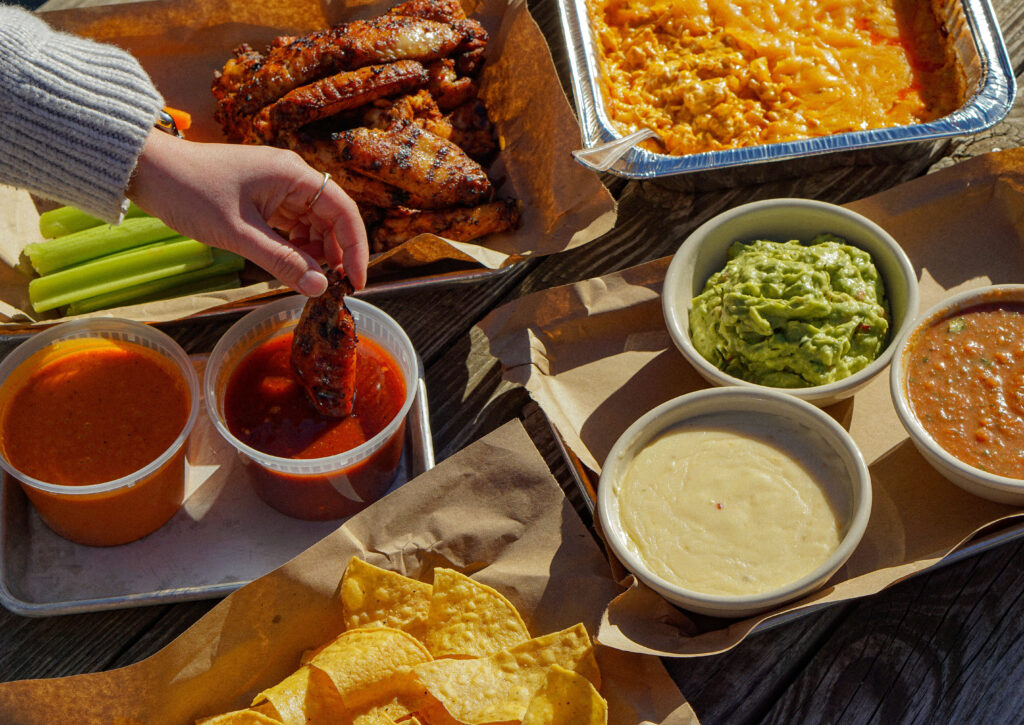
Super Bowl Smokeshow Packages are available to pre-order. Order smoked and grilled wings: 50 ($60), 100 ($110), 250 ($250) or 500 ($500), all tossed in their signature dry rub with your choice of sauce (2 or 4 depending on order size) on the side. Get BBQ by the pound, including pulled chicken, St. Louis ribs and sausage. Eight ounce dips are also available and include classic guacamole and smoked chicken buffalo.
Order from a wide selection of party packs, all customizable for both flavor and amount. Packs include wings, salad, tots, tenders and sliders, which can be upgraded to include bacon or mushrooms.
Order by February 8. Pickup only. Multiple locations.
Grab a Pre-Game Combo Platter for $49.99, which provides a sampling of their Crispy Mozzarella, Shred Heads, Pretzel Bites, Fried Pickles and Chips & Queso. Or just order a platter of flash-fired wings or crispy chicken tenders with sauces on the side.
Order by February 9. Pickup only. 502 W. Lenoir Street, Raleigh
Sam Jones BBQ has multiple packages, depending on your tastes and party size. The Pig Skin Party Pack is $59.99 and includes:
– Two pounds of barbecue – One pint of slaw – One pack of slider buns – Eight ounces pimento cheese – Pork skins – One bottle of Sweet Sauce
Or order Smoked Wing Platters tossed in up to two sauce flavors, which includes four ounces of Ranch or Blue Cheese dressing. A platter of 25 smoked wings costs $39.99, and 50 smoked wings costs $79.99.
Order by February 9. Pickup or delivery (free with code FEB when ordered online). Multiple locations.
City Barbeque’s extensive catering menu is available for your party, including a variety of Game Day Favorites packages. Order up to 50 of their signature rub, smoked, and fried wings for up to $64.99. Other packages include a taco pack for 6 ($29.99) or 12 (59.99) people, which includes your choice of smoked meat and all the fixins. Or go with a classic party pack based on the number of guests. Prices range from $59.99 for 4-6 people up to$199.99 for 20-24 people and includes:
– Choice of meats – Two sides – Buns – Sauce – Plates, napkins and utensils, if needed.
Order by February 7. Pickup only. 328 W. Davie Street, Raleigh
Get the Super Bowl Package for $99, which includes:
– Three pounds chopped barbecue – Two dozen pit-smoked wings – One pint of cole slaw – One pint of potato salad – One pint of mac and cheese – Twelve slider buns
Order by February 6. Pickup or delivery. 5000 Departure Drive, Raleigh
Choose either ready-to-eat or in oven-ready pans (require 30 minutes in the oven) and provide chef-prepared meals to your guests. Three package options are available:
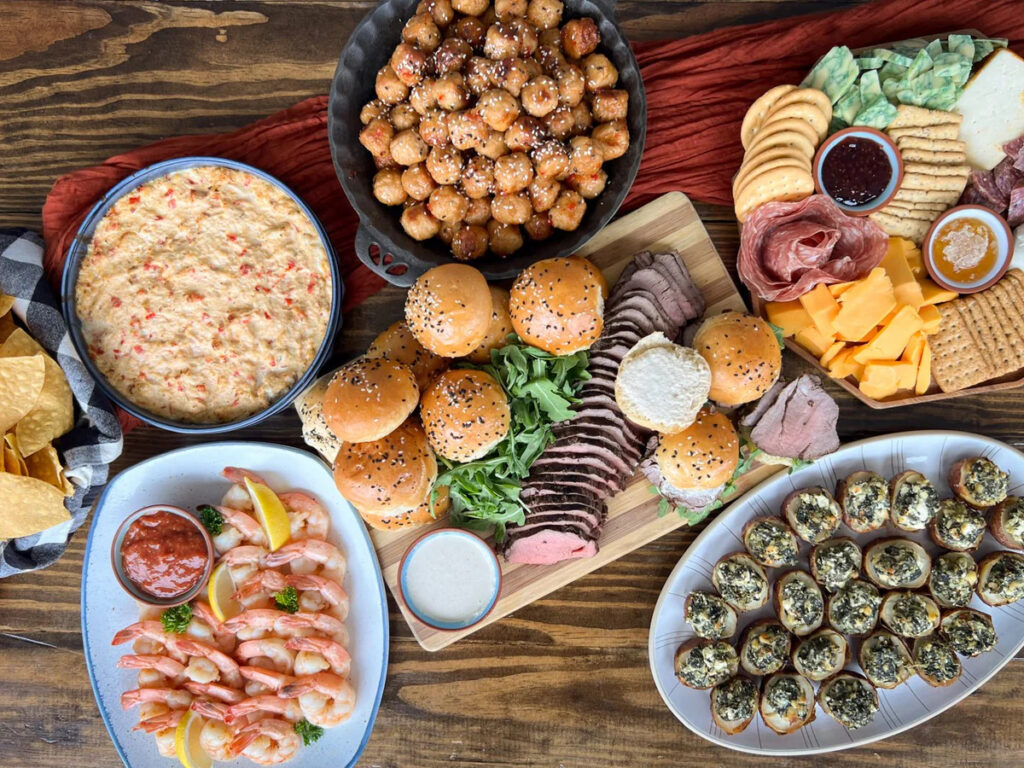
– Super Bowl Appetizers ($99.99): House Smoked Wings, Pulled Pork Sliders, Bacon and Cheddar Potato Skins plus dips and desserts. – Game Day Appetizers ($149.99): House Smoked Wings, Bratwurst Sliders, Philly Cheesesteak Stuffed Baby New Potatoes, Soft Pretzel Sticks with Beer Cheese, plus vegetables, dip and dessert. – Cocktail Party ($649.99): Whole Sliced Tenderloin of Beef, Local Cheese & Charcuterie, Stuffed Baby New Potatoes, Jumbo Lump Crab Dip, Jumbo Shrimp Cocktail, Sweet & Sour Chicken Meatballs and a selection of desserts.
Unlike the others listed here, this is not a local restaurant, but it offers a good package for large groups. Order at least 18 hours in advance. Pickup only. Multiple locations.
This grocery store favorite has a plethora of Game Day platter options, including the Friends and Fans Party pack for $184.19 that serves 12–16 people and includes:
– 30 pieces of Buttermilk boneless Fried Chicken – 16 Ciabatta Sliders – Fruit tray – Meats and cheeses tray – Chips (16 oz.), salsa and guacamole (12 oz each)
Other platters include subs, salads, pizza, cookies and more. Individual tray orders are also available.
Want a more customized option? Consider a local catering company and tailor your menu to fit your specific needs. Call 984-468-5550 to order. Preset options are also available.
Make sure to check out your other favorite local restaurants, as many might not have Super Bowl-specific packages but may still offer takeaway options for the big day.