The North Carolina Executive Mansion
The North Carolina Executive Mansion may be a Queen Anne showpiece with sweeping staircases and handcrafted trim, but some say it still echoes with unfinished business from the very first man who ever lived—and died—inside. Governor Daniel G. Fowle moved into the grand home in 1891 with his four children.
A widower, Fowle commissioned a custom-made bed large enough to share with his youngest son. It was designed for comfort, but would quickly become something else entirely. Fowle died in that very bed just three months later—the first (and only) sitting governor to die inside the mansion. Some say he never left.
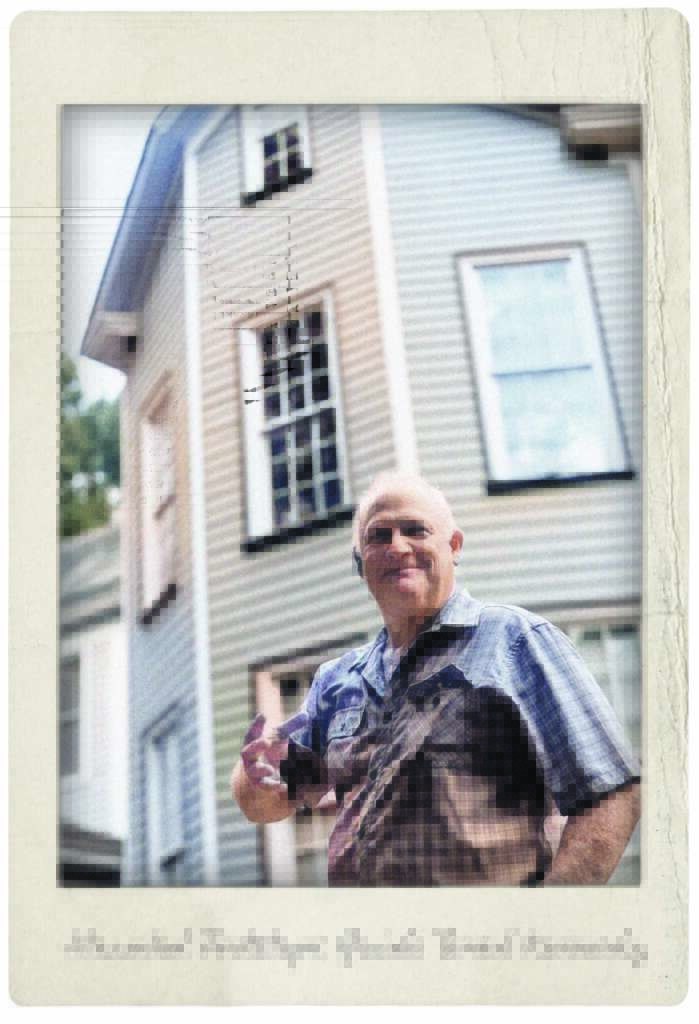
Years later, in 1969, Governor Bob Scott replaced Fowle’s original bed, claiming it was too short for his feet. But soon after the swap, something strange began to happen. “At the right hour of 10 o’clock,” Kennedy told our group, “Scott and his wife would hear a knock—just one, a deep boom—from behind the headboard.”
It wasn’t plumbing. It wasn’t the wind. It happened night after night. Not violent, not threatening—just persistent. Scott eventually named it the knock of Governor Fowle. The only theory that made sense? Fowle wanted his bed back.
And apparently, he got it. Fast-forward to Governor Roy Cooper’s administration. Aware of the legend, Cooper had Fowle’s original bed frame tracked down, restored, and returned to the mansion. Since then, the knocking has stopped. For now, at least. But as Kennedy put it during our tour, “You never really leave the building if you never wanted to.” Especially when your unfinished business is framed in oak, covered in linens, and waiting on the second floor.
The State Capitol
In 1996, a young woman—likely a graduate or law student—was working late in the historic North Carolina State Capitol when she began hearing voices down the hall. It was just after 5 p.m. in February, already dark outside. She assumed it was a late group of tourists getting one last look.
But the voices weren’t casual—they were shouting, arguing. Heated.
She stepped into the hallway and saw them: five men, dressed in 1800s clothing—top hats, beards, long coats—engaged in a full-blown political fight. Their gestures were aggressive, their voices loud, and they were debating something related to the Civil War. She stood frozen, trying to make sense of what she was seeing. As she turned to leave, her bag bumped the door. The arguing stopped.
The men slowly turned toward her—all five of them. Even the three with their backs to her, their heads twisted around 180 degrees, locking eyes with her in dead silence.
She ran. Out the door. Into the night.
Too shaken to return, she contacted the North Carolina State Capitol Police the next morning and agreed to give a full report—under one condition: They record every word. That recording still exists, capturing one of Raleigh’s most unsettling and credible ghost encounters.