By Dathan Kazsuk | |
October isn’t just about pumpkin spice lattes and spooky movies—it’s the month when shadows grow a little longer, music gets a bit louder, and strange…
| By Dathan Kazsuk | Raleigh children’s author Kelly Starling Lyons—known for her Jada Jones books and Ty’s Travels picture books—has a new chapter in her beloved Miles Lewis…
BY KATELYN RUTT
Nestled on Lassiter Mill Road with its signature purple door, Quail Ridge Books is much more than a bookstore. It’s a cultural hub, a third‑place haven and a…
Go on a summer reading adventure with local romance authors BY DOLLY R. SICKLES (Dolly Sickles writes romance novels under the pen name of Becky Moore) PHOTOS BY PEYTON…
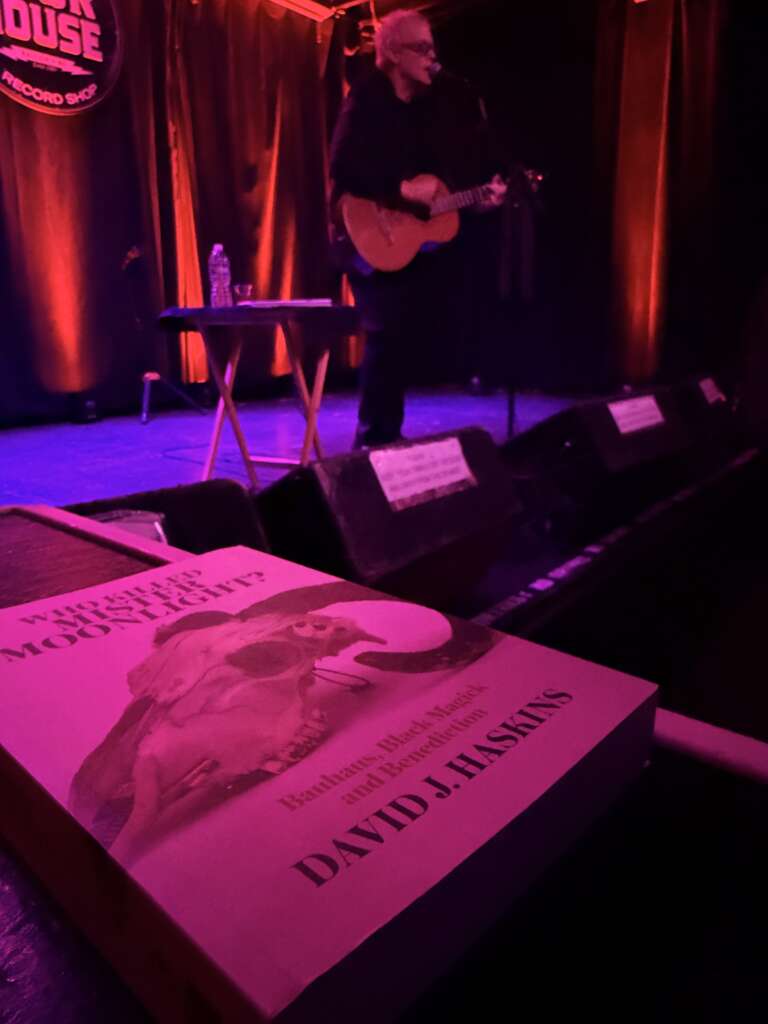
It was one of those rare nights where it felt like you hadn’t just bought a ticket—you’d been personally invited. That’s the energy in the room on December 7 at The Pour House in downtown Raleigh, as the elegant gloom of goth royalty, David J. Haskins, performed for an intimate, spellbound crowd.
It’s not every day you find yourself in the presence of a godfather of goth—a man whose very aura seems to blur the line between mood and music. David J, for those unfamiliar, is best known as the bassist and founding member of Bauhaus, a band whose 1979 debut single Bela Lugosi’s Dead is often cited as the birth cry of gothic rock.
After Bauhaus disbanded, David J, his brother Kevin, and guitarist Daniel Ash formed Love and Rockets, another seminal band that traded in the shadowy edges of goth for a more psychedelic, alternative rock sound that still carried a moody undercurrent.
But this night wasn’t about the high drama of a full band show or a nostalgic replay of past glories. It was David J, a single acoustic guitar, a copy of his book Rhapsody, Threnody & Prayer, a bottle of water, and a glass of bourbon. A minimalist setup for a deeply personal evening.
He opened the set by reading a passage from his book. From there, he wove effortlessly into songs—many of which were unfamiliar to me, and I suspect to others in the room. Some were likely pulled from the pages of Rhapsody, which I haven’t yet read. But that’s what made it so compelling. He wasn’t just playing the hits; he was giving us something new, something raw and unfiltered, performed just feet from the edge of the stage. It felt special.
Despite the brooding atmosphere, there were flashes of sly humor. One standout was a track titled Goth Girls in Southern California, a tongue-in-cheek tune that referenced his longtime creative counterpart Peter Murphy, lead singer of Bauhaus. The song balanced irony and affection in equal parts, a nod to the dark aesthetic they helped shape and the enduring culture it still inspires.
Another emotionally powerful moment came with The Day That David Bowie Died. I remember that day well—waking up to my wife telling me the news as she scrolled her phone. “David Bowie died,” she said. I replied, stunned, “No! David Bowie can’t die.” And yet, he did. The song captured that exact gut- punch moment. David J turned grief into melody, blending spoken reflection with an acoustic riff reminiscent of Lou Reed’s Walk on the Wild Side, a subtle homage to the lineage of glam and art-rock that Bowie and Reed built.
David J performed at The Pour House in downtown Raleigh on Sunday, December 7. Photo by Dathan Kazsuk.
Later in the set, Haskins performed Dead and Lovely, a Tom Waits cover that he introduced with an intriguing aside: In his mind, the song evokes the tragic story of Elizabeth Short, better known as the Black Dahlia—a young woman whose 1947 murder remains one of the most gruesome and infamous unsolved crimes in American history. Whether or not Waits intended it, the lyrics’ noir tone and morbid imagery certainly sync with the Dahlia mythos.
Of course, he didn’t leave without tipping his hat to his past. We were treated to stripped-down versions of Love and Rockets tracks The Dog-End of a Day Gone By and Rain Bird. The latter, a hauntingly beautiful piece, is steeped in imagery and mysticism—an underappreciated gem from the band’s catalog that felt especially resonant in this sparse setting.
As I stepped out into the chilly Raleigh night, I found myself craving more of what I’d just heard—not just the music, but the depth, the stories, the feeling. I went home, pulled out my old Bauhaus and Love and Rockets records, dusted them off, and let them spin in the dark. The way they were always meant to be heard alone, in a quiet room, dressed in black, surrounded by shadows and sound.
“All we ever wanted was everything, all we ever got was cold.”
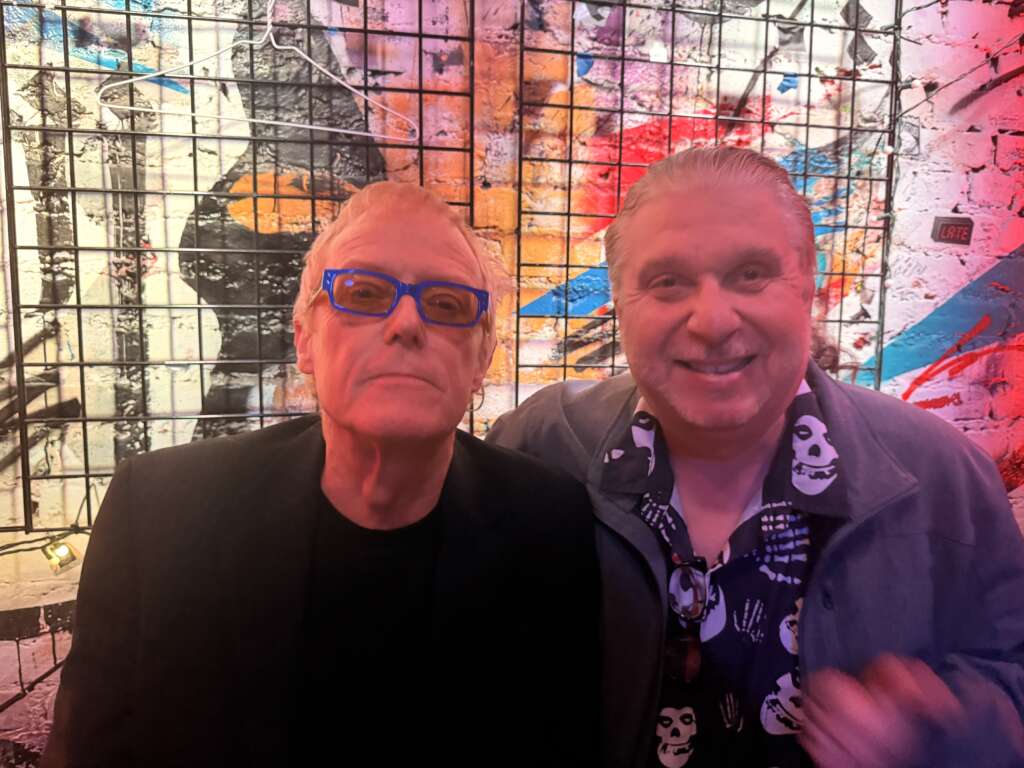
Love and Rockets' bassist/singer David J and Midtown's Content Editor Dathan Kazsuk.