Skip to content Skip to sidebar Skip to footer

A Walk Through 100 Years with Carolina Theatre’s Randy McKay

Carolina Theatre

By Dathan Kazsuk

As the Carolina Theatre of Durham moves through the final months of its centennial year, President & CEO Randy McKay reflects on the building that Durham saved, the community surrounding it, and where the theater goes after 100.

On a cool afternoon inside the Carolina Theatre of Durham, Randy McKay and I were supposed to talk about a century-old theater.

And we eventually did.

But before McKay led me through the lobbies, cinemas, backstage corridors, and historic Fletcher Hall, we discovered something unexpected: We both spent part of our careers in Silicon Valley at the same time.

I was a production artist at the San Jose Mercury News from the mid-1990s into 2001. McKay also spent time in the Valley, including in San Francisco restoring historic theaters.

Suddenly, a conversation about Durham in 2026 had detoured to San Jose in the late 1990s, housing costs, old venues, and the strange ways people end up on the other side of the country.

It made for an appropriate beginning.
Carolina Theatre Durham
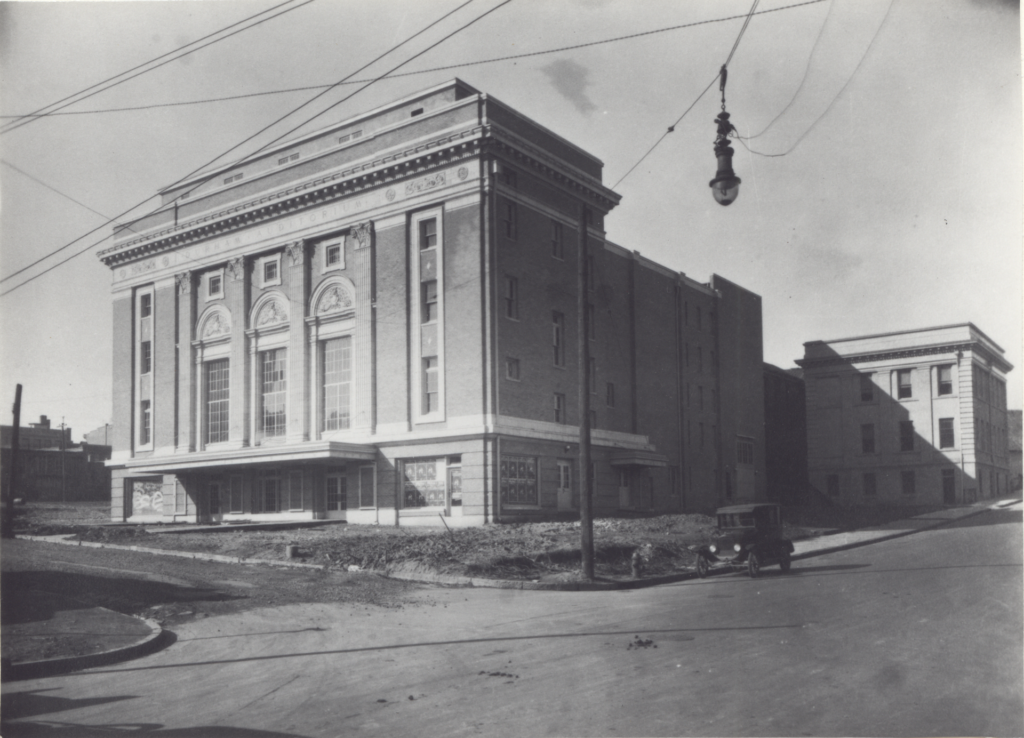
An early photograph of the Carolina Theatre in Durham.

A building that keeps changing

McKay began the tour in one of the theater’s lobby exhibits, where historic photographs trace the building alongside downtown Durham’s changing face.

The venue opened in 1926 as the Durham Auditorium. Three years later, it was renovated and renamed the Carolina Theatre as sound films reshaped the entertainment business.

Its century of history also includes a much more difficult chapter. For more than 37 years, the Carolina Theatre operated as a segregated venue. Durham’s NAACP Youth Chapter began protesting the policy in 1960, and the city desegregated the theater in 1963. Today, the theater addresses that history through its Confronting Change exhibit rather than pushing it aside.

Heading upstairs, McKay shifted easily from a history lesson to his love for the cinema.

The two cinemas added during the theater’s early-1990s restoration remain a major part of the operation. The long-running Retro Film Series brings older films back to the big screen as an event, complete with vintage trailers, introductions, and the kind of extras that make the night about more than simply watching something you could stream at home.

It made me think of that one jingle—Let’s all go to the lobby, to get ourselves a treat.

Backstage, another kind of history covers the walls: signatures from performers who have passed through over the years.
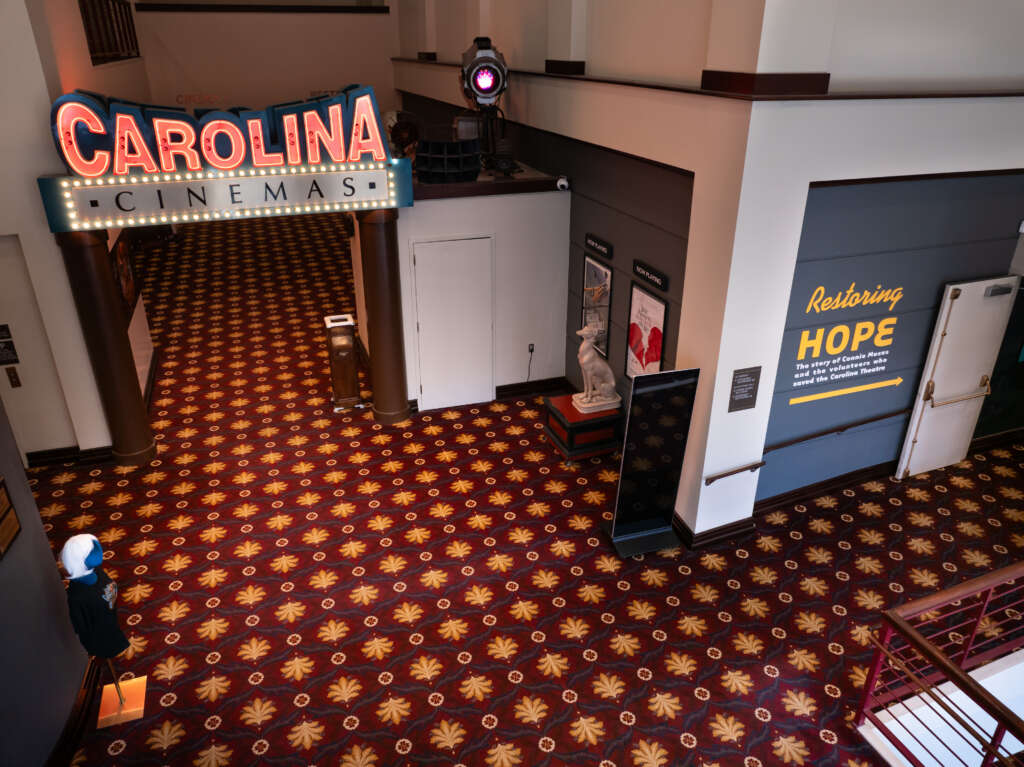
Carolina Theatre Durham
The cinemas inside the Carolina Theatre are one of a few movie theaters in Durham.

Then we stepped into Fletcher Hall.

With just over 1,100 seats, the room feels grand without losing intimacy. McKay pointed out the orchestra pit, which can be lowered to floor level for additional seating or raised to create more stage space.

McKay said the Carolina operates roughly 350 nights a year, supported by about 30 full-time staff members, dozens more working part-time or on call, and what he called an “army” of volunteers.

The theater Durham refused to lose

When we eventually sat down inside the main theater, McKay’s story turned back to the West Coast.

He moved to Durham during the pandemic, joking that he left one closed theater for another. Before arriving, he had spent years working with historic venues around the country and already knew the Carolina Theatre through the League of Historic American Theatres.

What he didn’t know, though, was Durham.

“I am very thankful that I’m here with such an incredible team,” he told me.

That team inherited a building that easily could have disappeared decades ago.
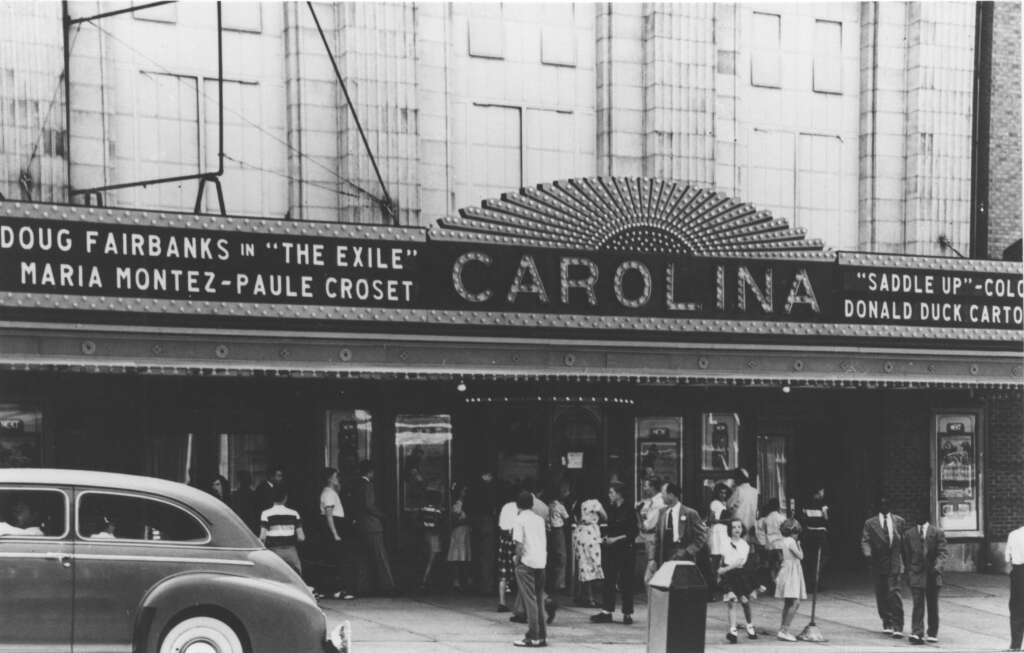
Carolina Theatre Durham.
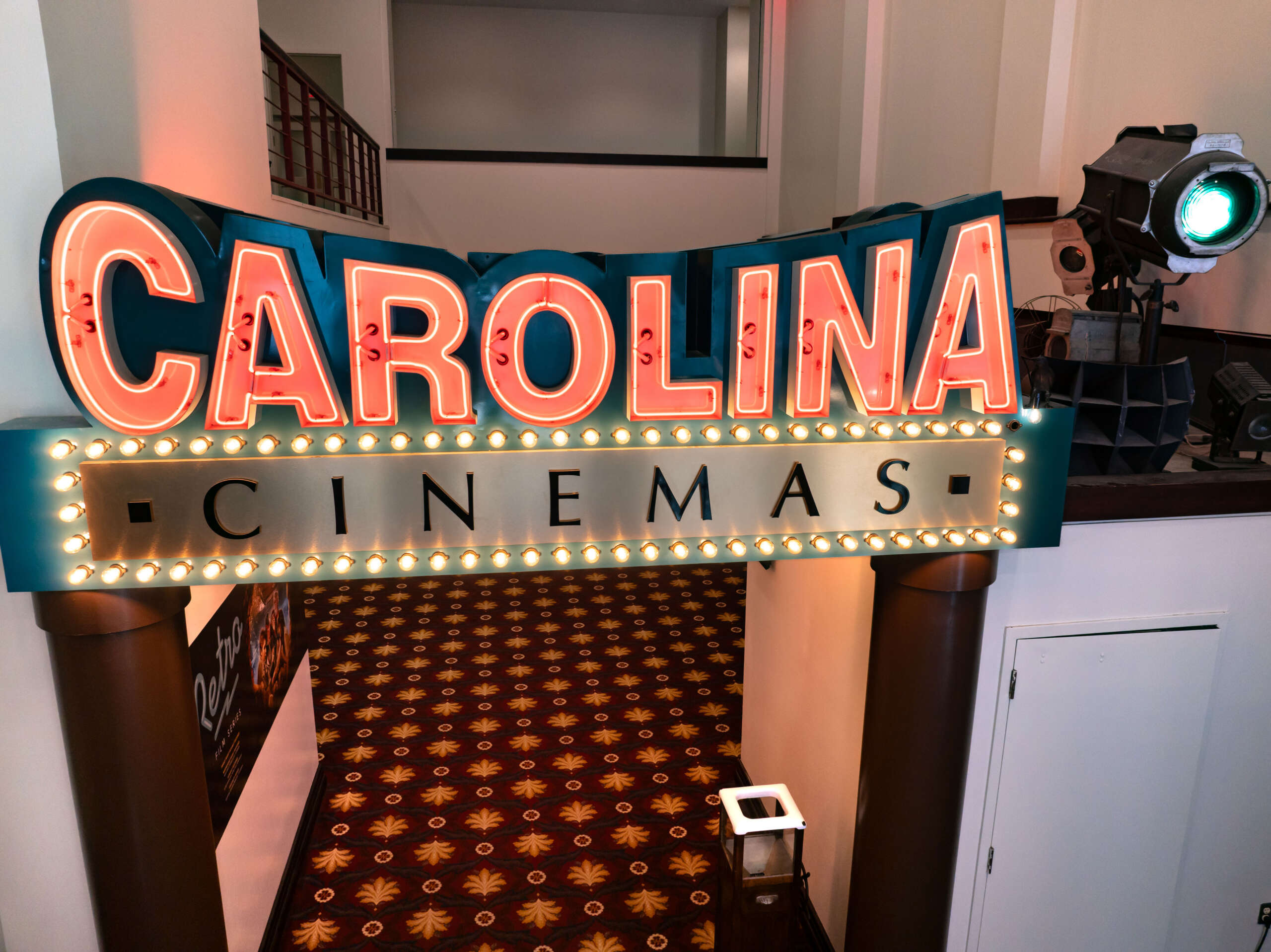
The historical marquee of the Carolina Theatre.

Economic troubles forced the theater to close in the 1970s, and demolition was proposed. Instead, community members rallied around it, volunteering to clean up and preserve a building that had fallen into serious disrepair. McKay described a time when patrons could need an umbrella inside because the roof leaked.

People came anyway.

The community effort helped prove that the Carolina Theatre still had value. The venue was eventually restored, with its cinema wing reopening in the 1990s.

McKay sees that survival as part of a larger Durham story: arts and culture drawing people downtown, followed by restaurants, businesses, redevelopment and other entertainment destinations.

Taking the theater outside the theater

The 100th anniversary has given McKay and his staff a chance to test what the Carolina Theatre might become in its second century.

Some of the most interesting centennial projects are intentionally happening somewhere else.

Cirque Kikasse’s “SANTÉ!” takes a circus built around a food truck into communities around the Triangle in October. Then Durham FRINGE, running October 30 through November 8, will spread more than 50 Durham-based artists across more than 20 locations, with performances and installations in businesses and unexpected spaces rather than inside the Carolina Theatre itself.

That is deliberate.
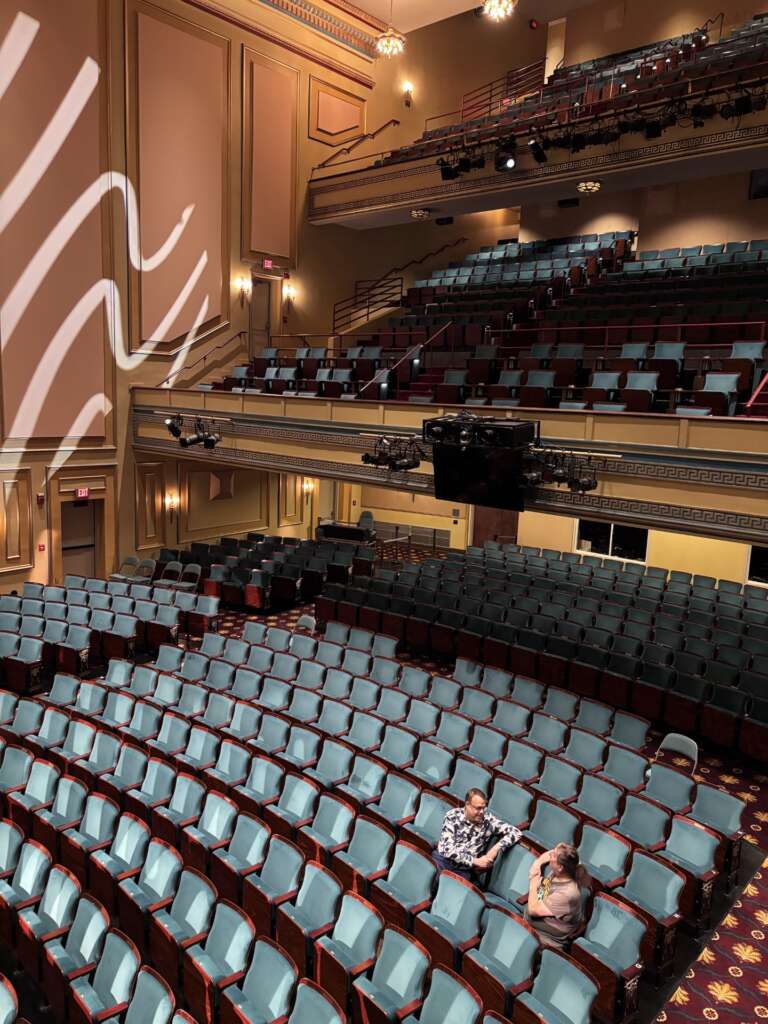
Carolina Theatre Durham.

The building is already busy. If the goal is to reach new audiences, McKay said, sometimes the theater has to leave the theater.

The centennial will close December 31 with a New Year’s Eve Gala, extending the celebration, as McKay put it, “till the absolute last second” of the theater’s 100th year.

From San Jose to Durham

Near the end of our conversation, we somehow found ourselves back in California.

Sitting inside Fletcher Hall reminded me of nights at the Warfield in San Francisco. McKay countered with another Bay Area theater story: he had helped bring San Jose’s old Fox Theatre—now the California Theatre—back to life.

He remembered what happened around it afterward. Foot traffic returned. Restaurants followed. Galleries opened. Festivals found a home nearby.

It sounded familiar.

Different coast. Different theater. Different city. Same idea.

When I asked McKay what he likes most about the job, he came back to the community—the staff, volunteers, and generations of people who have gathered inside this building for movies, concerts, celebrations, and pieces of their own lives.

“There are not very many places that can say that,” he said.

A hundred years is a long time for any building to remain relevant. The more interesting story at the Carolina Theatre, though, may be that the people running it do not seem especially interested in preserving it as a museum piece.

They are still asking what else it can become.

© 2008-2025 Midtown magazine, LLC. All rights reserved. Copyright applies to all pages on this website. | Privacy Policy

By Dathan Kazsuk

As the Carolina Theatre of Durham moves through the final months of its centennial year, President & CEO Randy McKay reflects on the building that Durham saved, the community surrounding it, and where the theater goes after 100.

On a cool afternoon inside the Carolina Theatre of Durham, Randy McKay and I were supposed to talk about a century-old theater.

And we eventually did.

But before McKay led me through the lobbies, cinemas, backstage corridors, and historic Fletcher Hall, we discovered something unexpected: We both spent part of our careers in Silicon Valley at the same time.

I was a production artist at the San Jose Mercury News from the mid-1990s into 2001. McKay also spent time in the Valley, including in San Francisco restoring historic theaters.

Suddenly, a conversation about Durham in 2026 had detoured to San Jose in the late 1990s, housing costs, old venues, and the strange ways people end up on the other side of the country.

It made for an appropriate beginning.

Carolina Theatre Durham
An early photograph of the Carolina Theatre in Durham.

A building that keeps changing

McKay began the tour in one of the theater’s lobby exhibits, where historic photographs trace the building alongside downtown Durham’s changing face.

The venue opened in 1926 as the Durham Auditorium. Three years later, it was renovated and renamed the Carolina Theatre as sound films reshaped the entertainment business.

Its century of history also includes a much more difficult chapter. For more than 37 years, the Carolina Theatre operated as a segregated venue. Durham’s NAACP Youth Chapter began protesting the policy in 1960, and the city desegregated the theater in 1963. Today, the theater addresses that history through its Confronting Change exhibit rather than pushing it aside.

Heading upstairs, McKay shifted easily from a history lesson to his love for the cinema.

The two cinemas added during the theater’s early-1990s restoration remain a major part of the operation. The long-running Retro Film Series brings older films back to the big screen as an event, complete with vintage trailers, introductions, and the kind of extras that make the night about more than simply watching something you could stream at home.

It made me think of that one jingle—Let’s all go to the lobby, to get ourselves a treat.

Backstage, another kind of history covers the walls: signatures from performers who have passed through over the years.

Carolina Theatre Durham
The cinemas inside the Carolina Theatre are one of a few movie theaters in Durham.

Then we stepped into Fletcher Hall.

With just over 1,100 seats, the room feels grand without losing intimacy. McKay pointed out the orchestra pit, which can be lowered to floor level for additional seating or raised to create more stage space.

McKay said the Carolina operates roughly 350 nights a year, supported by about 30 full-time staff members, dozens more working part-time or on call, and what he called an “army” of volunteers.

The theater Durham refused to lose

When we eventually sat down inside the main theater, McKay’s story turned back to the West Coast.

He moved to Durham during the pandemic, joking that he left one closed theater for another. Before arriving, he had spent years working with historic venues around the country and already knew the Carolina Theatre through the League of Historic American Theatres.

What he didn’t know, though, was Durham.

“I am very thankful that I’m here with such an incredible team,” he told me.

That team inherited a building that easily could have disappeared decades ago.

Carolina Theatre Durham.
The historical marquee of the Carolina Theatre.

Economic troubles forced the theater to close in the 1970s, and demolition was proposed. Instead, community members rallied around it, volunteering to clean up and preserve a building that had fallen into serious disrepair. McKay described a time when patrons could need an umbrella inside because the roof leaked.

People came anyway.

The community effort helped prove that the Carolina Theatre still had value. The venue was eventually restored, with its cinema wing reopening in the 1990s.

McKay sees that survival as part of a larger Durham story: arts and culture drawing people downtown, followed by restaurants, businesses, redevelopment and other entertainment destinations.

Taking the theater outside the theater

The 100th anniversary has given McKay and his staff a chance to test what the Carolina Theatre might become in its second century.

Some of the most interesting centennial projects are intentionally happening somewhere else.

Cirque Kikasse’s “SANTÉ!” takes a circus built around a food truck into communities around the Triangle in October. Then Durham FRINGE, running October 30 through November 8, will spread more than 50 Durham-based artists across more than 20 locations, with performances and installations in businesses and unexpected spaces rather than inside the Carolina Theatre itself.

That is deliberate.

Carolina Theatre Durham.

The building is already busy. If the goal is to reach new audiences, McKay said, sometimes the theater has to leave the theater.

The centennial will close December 31 with a New Year’s Eve Gala, extending the celebration, as McKay put it, “till the absolute last second” of the theater’s 100th year.

From San Jose to Durham

Near the end of our conversation, we somehow found ourselves back in California.

Sitting inside Fletcher Hall reminded me of nights at the Warfield in San Francisco. McKay countered with another Bay Area theater story: he had helped bring San Jose’s old Fox Theatre—now the California Theatre—back to life.

He remembered what happened around it afterward. Foot traffic returned. Restaurants followed. Galleries opened. Festivals found a home nearby.

It sounded familiar.

Different coast. Different theater. Different city. Same idea.

When I asked McKay what he likes most about the job, he came back to the community—the staff, volunteers, and generations of people who have gathered inside this building for movies, concerts, celebrations, and pieces of their own lives.

“There are not very many places that can say that,” he said.

A hundred years is a long time for any building to remain relevant. The more interesting story at the Carolina Theatre, though, may be that the people running it do not seem especially interested in preserving it as a museum piece.

They are still asking what else it can become.
This Pop-up Is Included in the Theme
Best Choice for Creatives
Purchase Now