Skip to content Skip to sidebar Skip to footer

From hardcore to headliner: Turnstile takes over Raleigh

Turnstile Raleigh Live

By Shane Snider

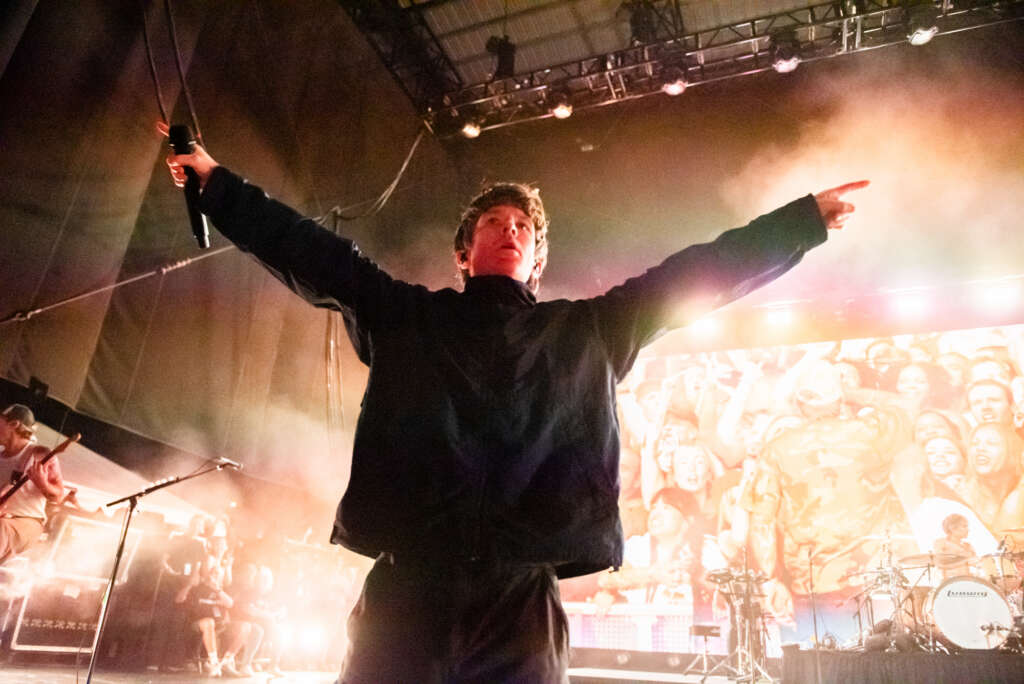
Turnstile tore into Red Hat Amphitheater on Tuesday, September 29, to make a statement. Before the first notes of their usual opening ripper, “Birds,” sent the audience into a frenzy, the chosen supporting acts told the story: This is not your average Grammy-winning stadium rock act.

Turnstile’s roots are firmly planted in hardcore punk, the genre defined by bands like Minor Threat, Black Flag, Gorilla Biscuits and, of course, the first band of the evening, Agnostic Front, who laid the concert’s foundation with tracks from their decades-long tenure as NYC hardcore legends. Baltimore punk/hardcore/power-pop band Angel Du$t—probably the most closely related in style to the main act—continued the fun.

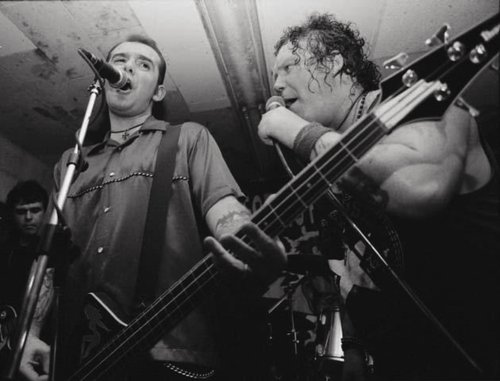
Agnostic Front founding members Roger Miret and Vinnie Stigma anchored a tight, old-school hardcore set, blazing through decades of stomp-inducing bangers.

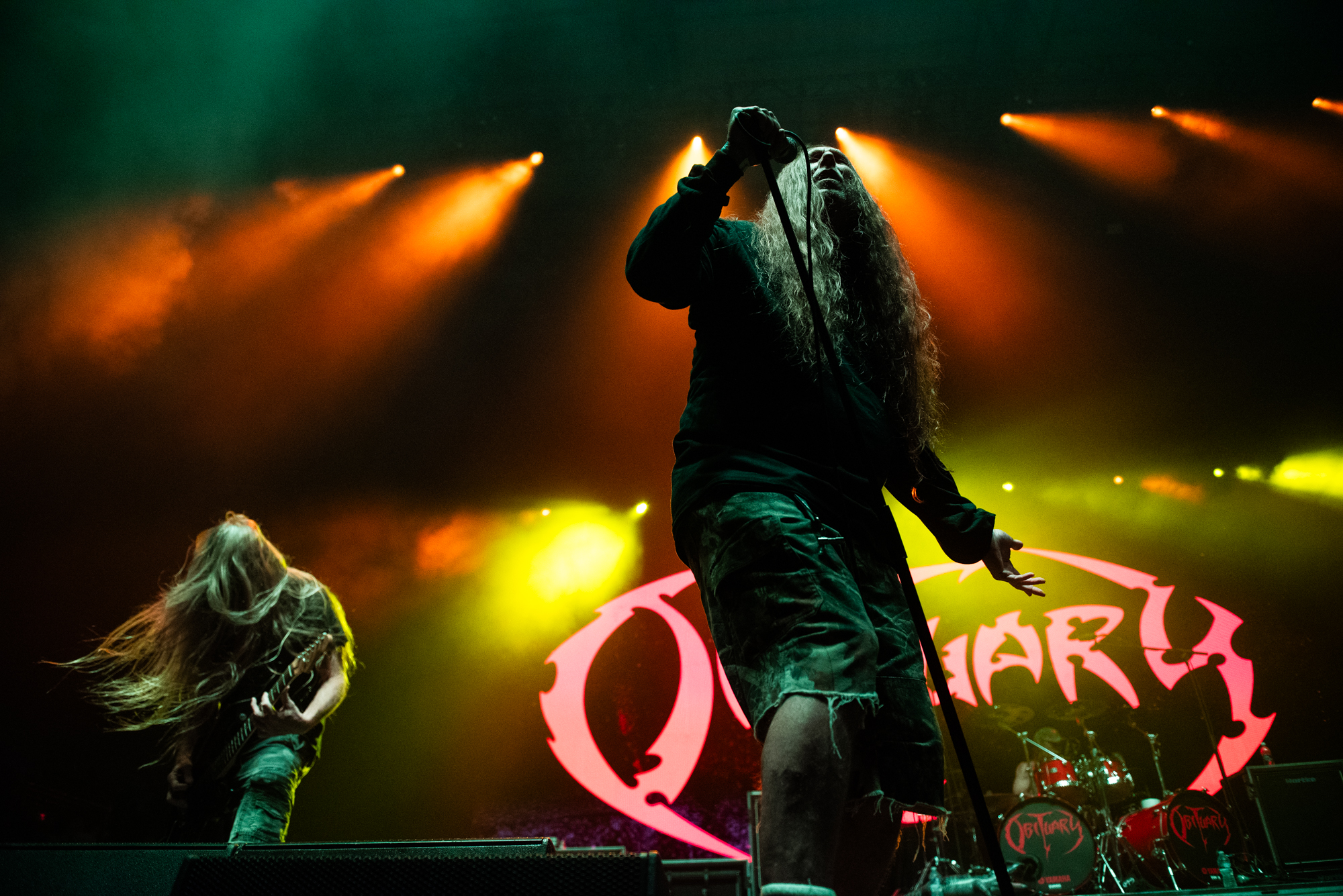
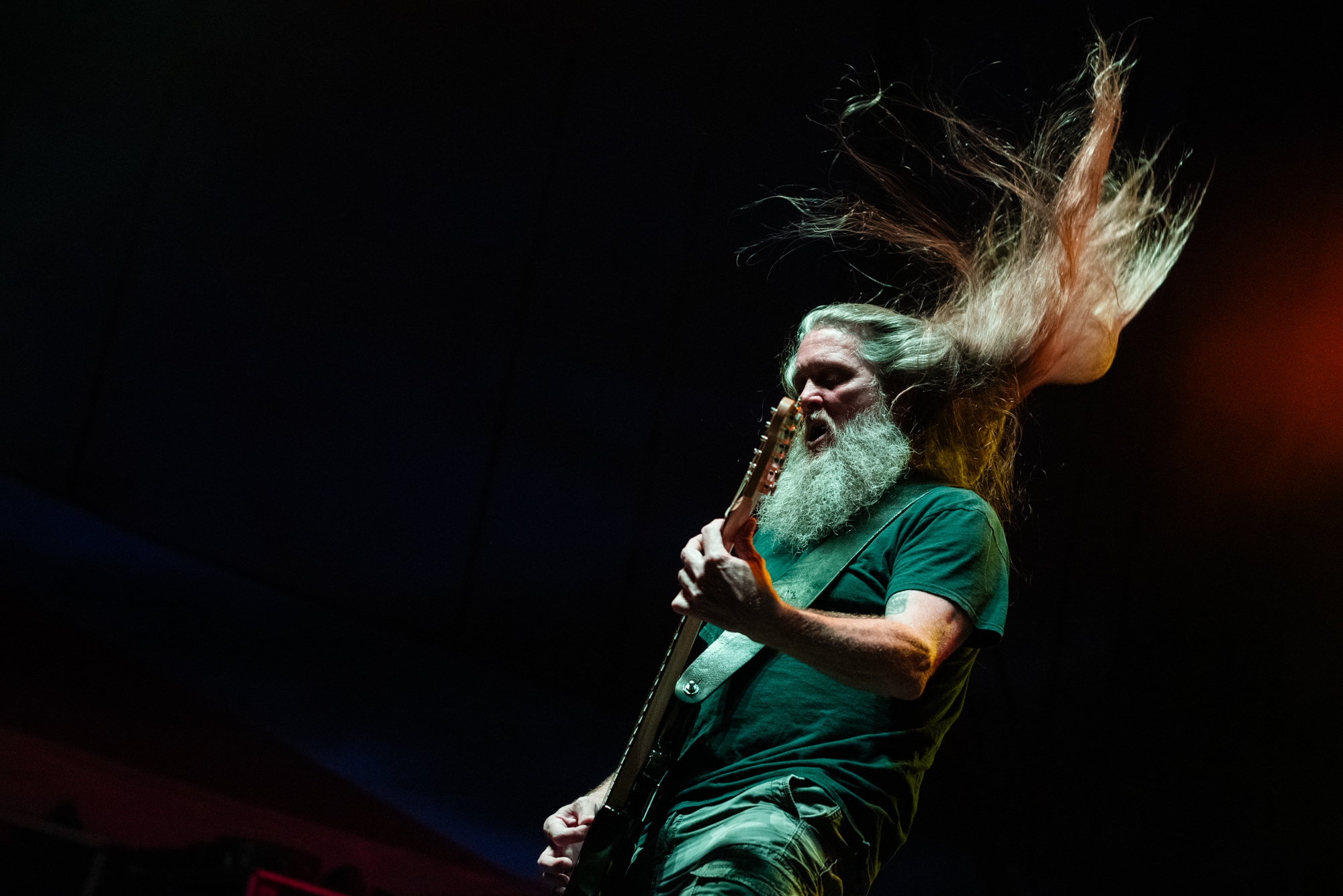
But the real surprise of the evening was the addition of death metal gods Obituary, a legendary band that helped define the genre. Their set was excellent, and singer John Tardy’s scream has not dulled since the band’s debut in 1984. Death metal must be the fountain of youth, and apparently an effective hair-loss prevention tool, as evidenced by the band’s hair-whipping onslaught.
Turnstile Red Hate Raleigh Live

At another mainstream act’s show, Obituary’s presence might have left the crowd scratching its head. This crowd ate it up, and the band undoubtedly picked up some new fans in the process.

That’s one hell of an introduction for Turnstile, a band that recently collaborated with Sir Elton John and Paramore’s Hayley Williams. But it makes sense. While Turnstile’s style has evolved dramatically, mixing everything from synth-pop and R&B to power pop, the band still sprinkles hardcore, metal, and punk roots into the mix.

For decades, that evolution would have been enough to get a punk band accused of selling out. Punk’s original ethos was built around rejecting the machinery of mainstream music – corporate control, commercial ambition, polished production and the idea that success meant becoming acceptable to the masses. Hardcore took that attitude even further: You didn’t need a record deal, a radio hit or a stadium full of people. In some corners of the scene, those things were practically evidence that you had lost the plot.

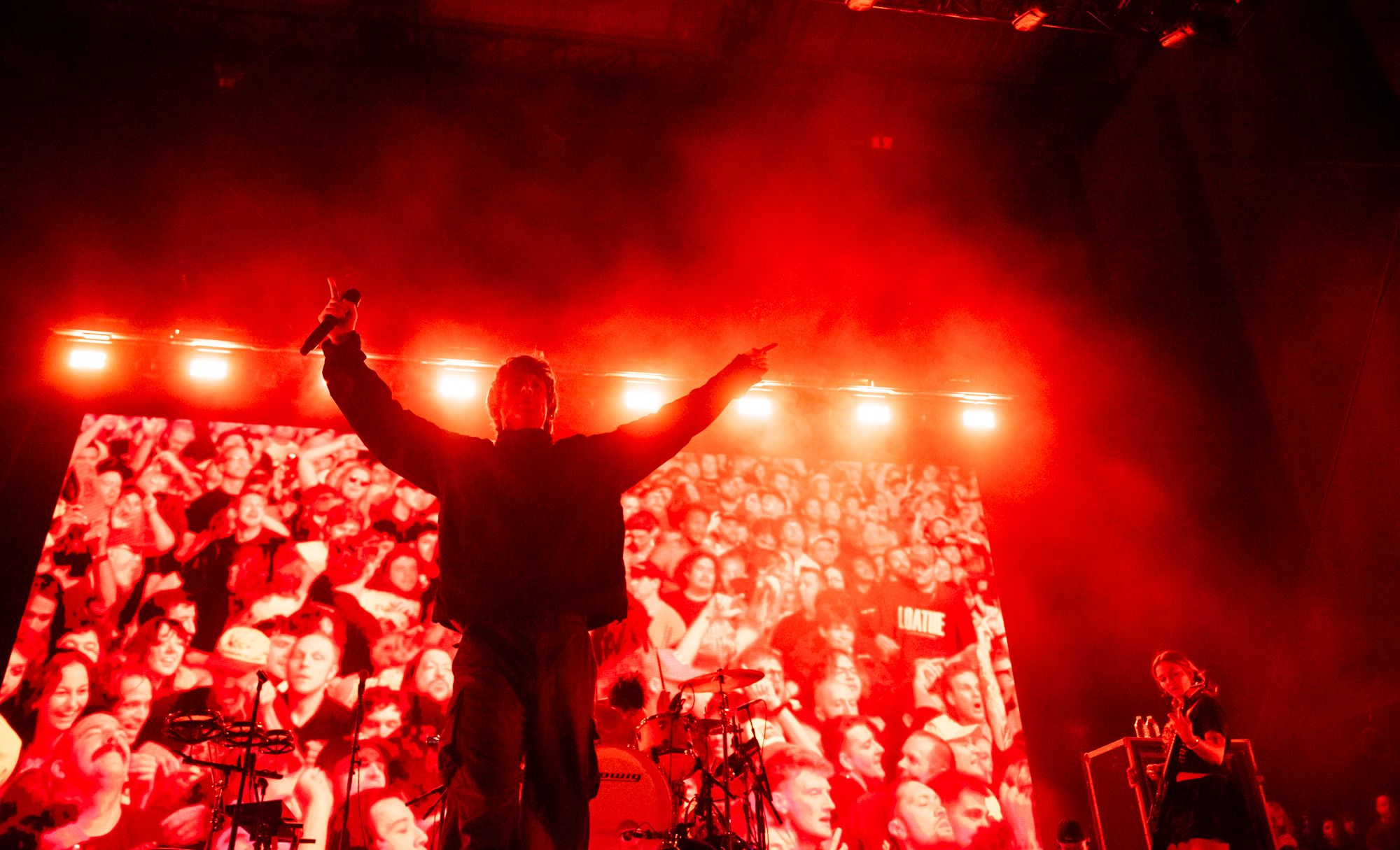
Once Turnstile hit the stage, the argument was over. “Birds” immediately turned the amphitheater into a bouncing, screaming mass, followed by “Endless,” the Police-esque jam “I Care,” and “Drop.” The older hardcore DNA was still there—fast, loud, and physical—but it was wrapped in the bigger, more melodic sound that has made Turnstile one of the most interesting bands to break out of the hardcore scene in years.

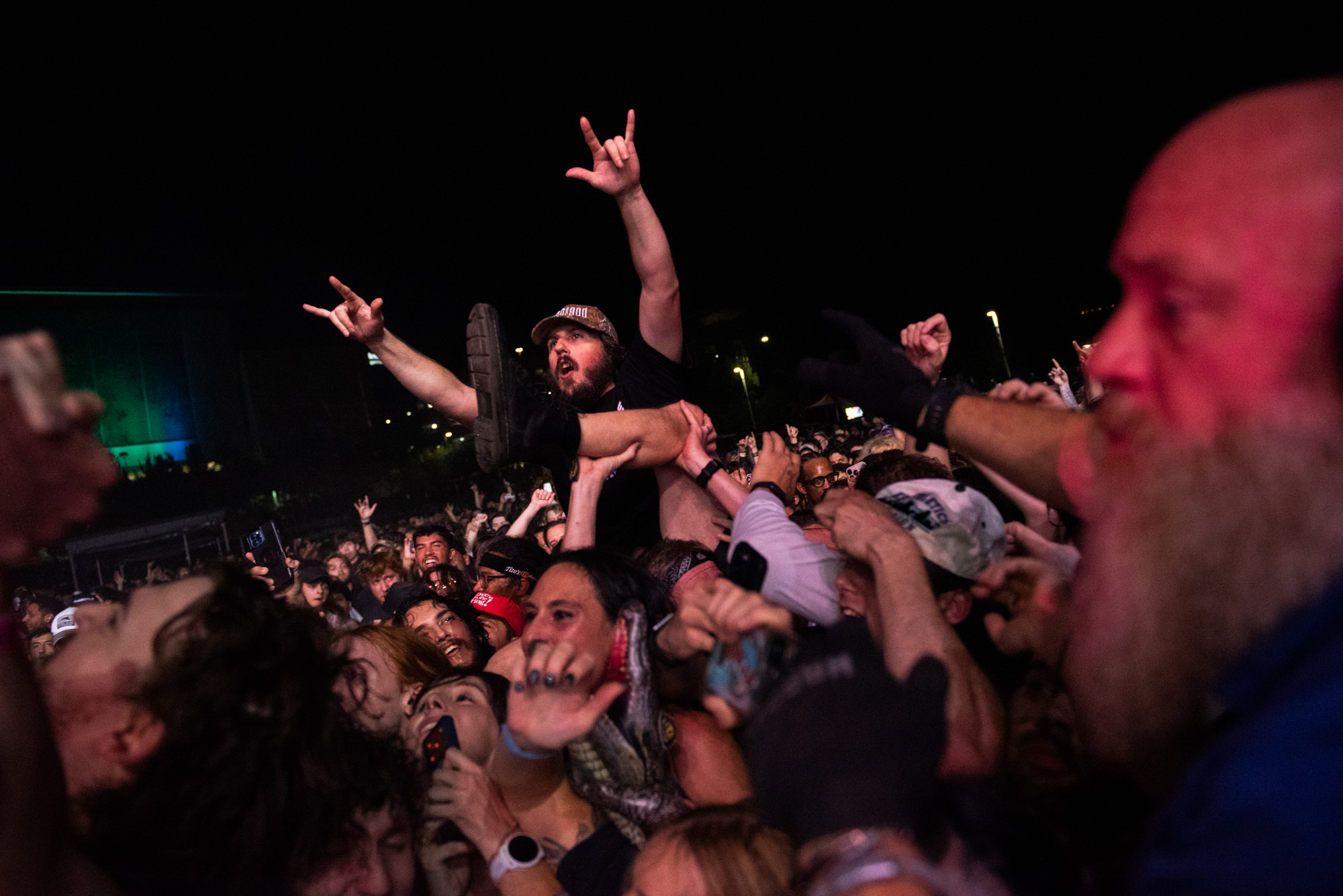
At one point, the band stopped the set to allow security to attend to an injured audience member—an occupational hazard for hardcore attendees who have a decent chance of taking an unintentional crowd-surfing boot to the face.

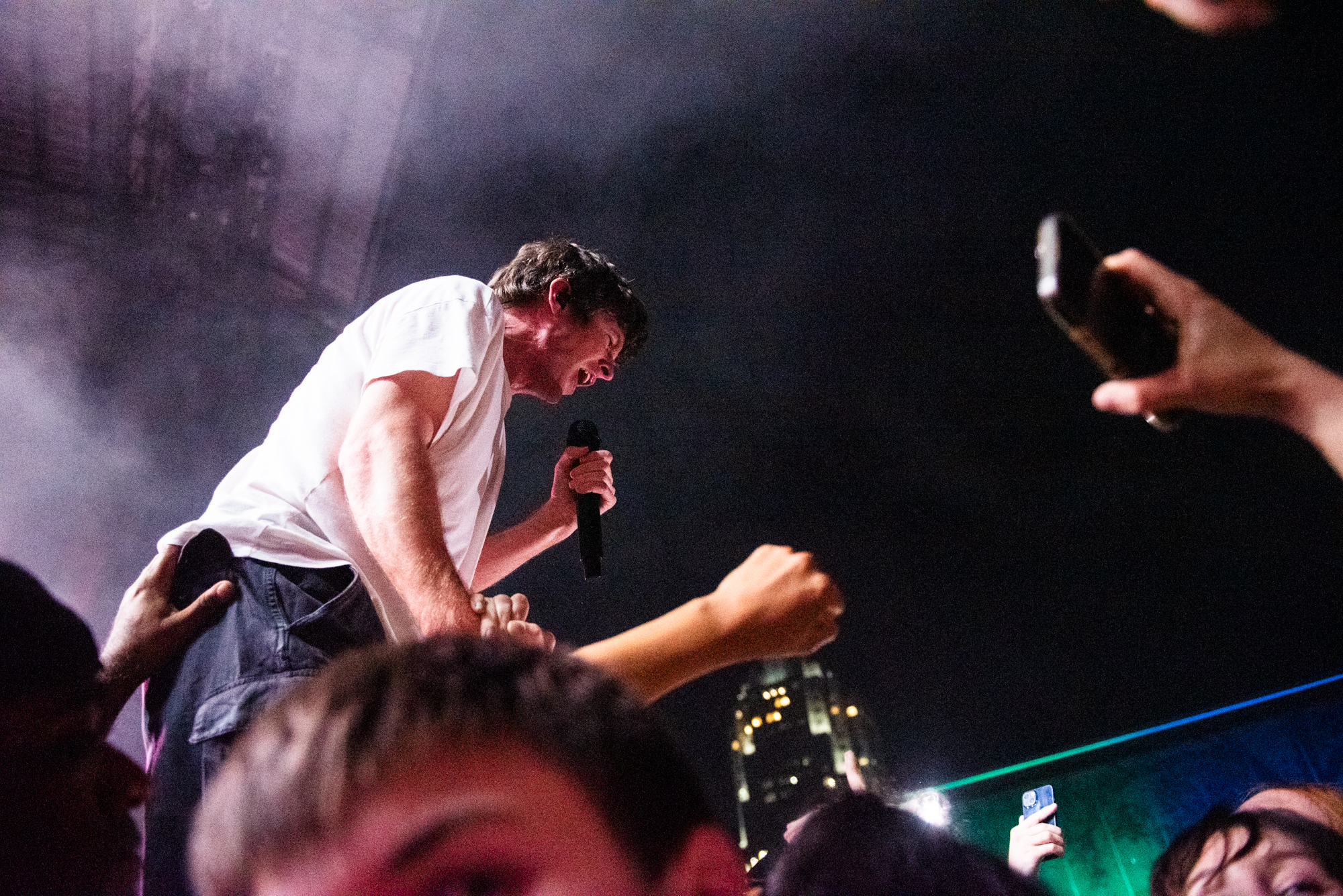
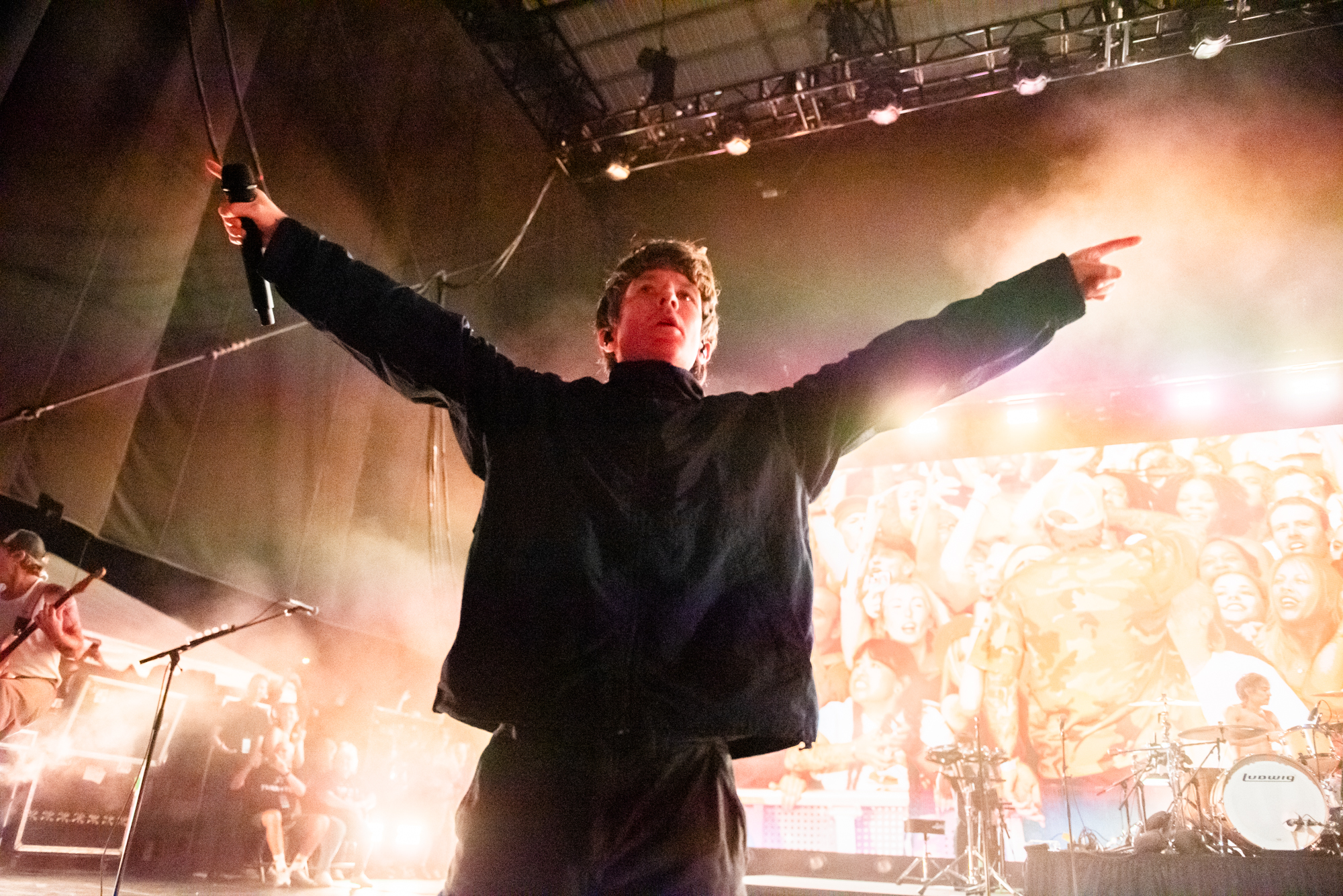
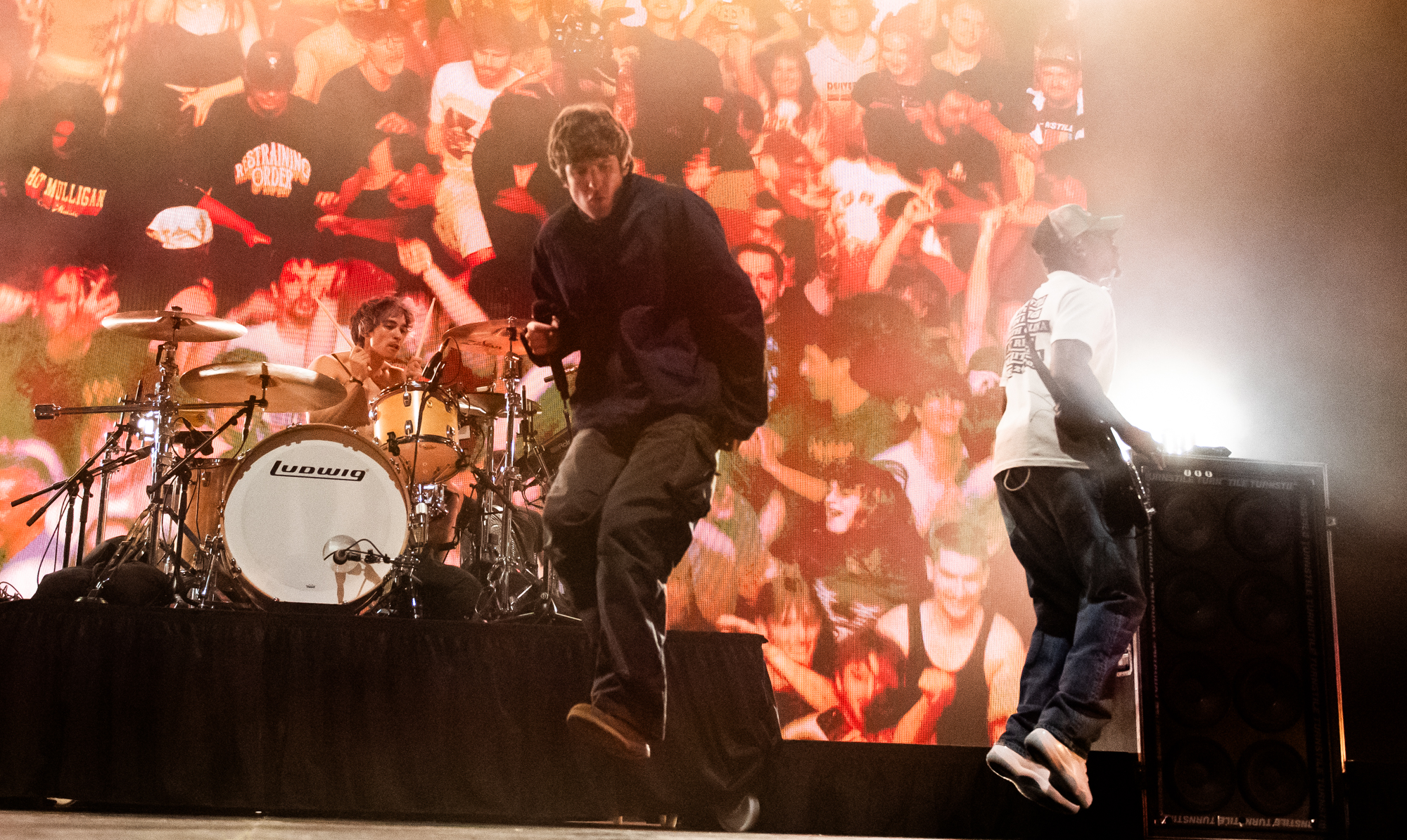
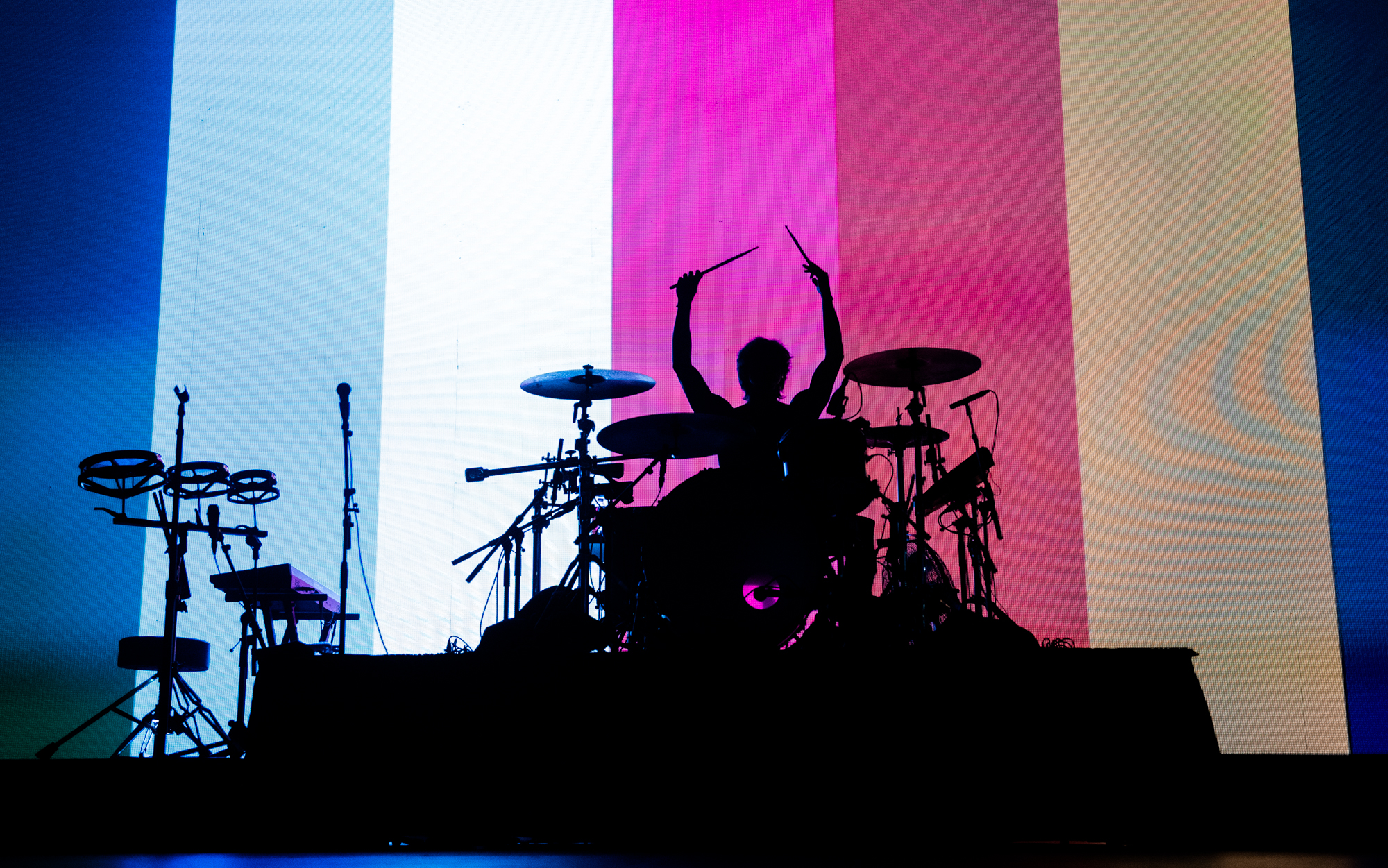
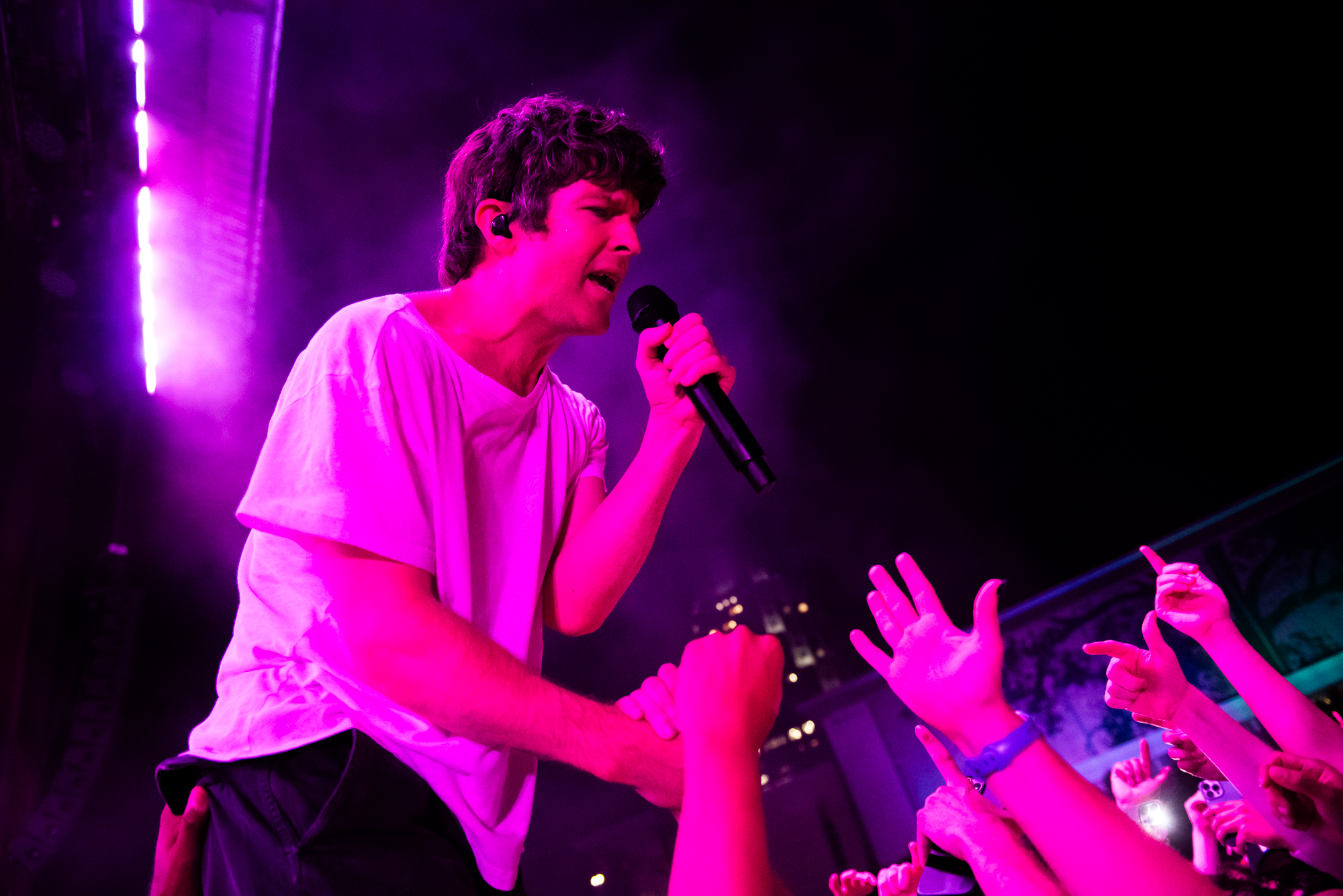
Yates maintained an athletic performance throughout the set, bouncing across the stage and several times jumping down to join the crowd for a sing-along. Guitarists Pat McCrory and Meg Mills and bassist Franz Lyons were equally rambunctious, hopping and spinning throughout the night. Behind them, drummer Daniel “D-Fang” Fang was a machine, moving effortlessly between breakneck tempos and more restrained grooves.

The set moved freely between eras, with the band bouncing from the ferocious “Drop” through “Wild Wrld,” “Mystery,” “Sunshower,” “7,” “Keep It Moving,” and “Canned Heat.” The crowd responded to all of it. No one seemed to be waiting around for the old stuff or tolerating the newer material. It was all Turnstile, and it all worked.
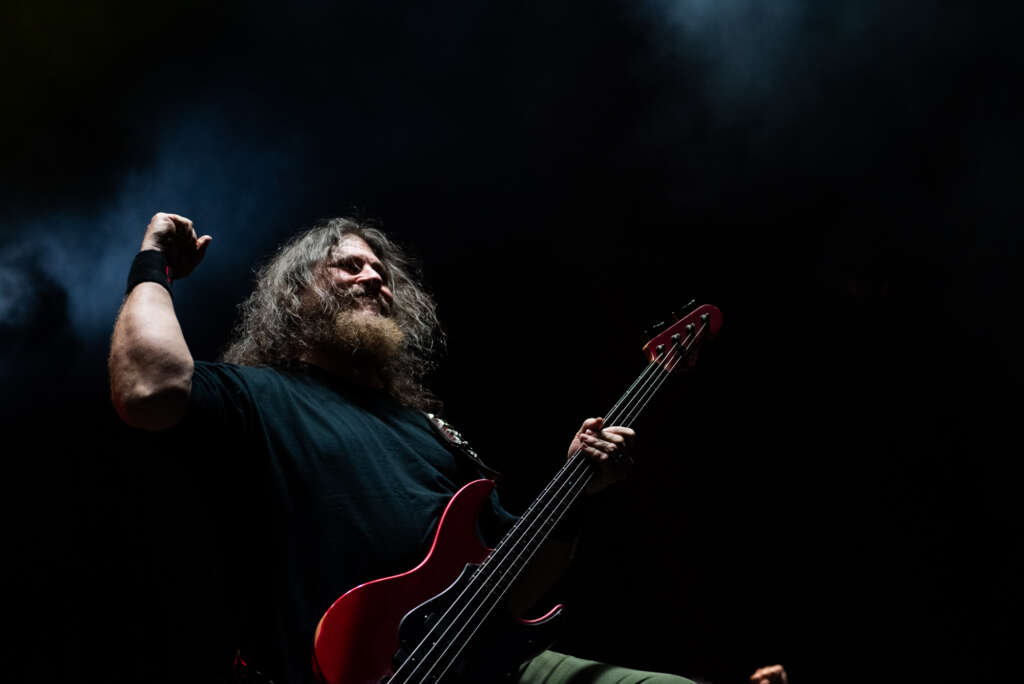
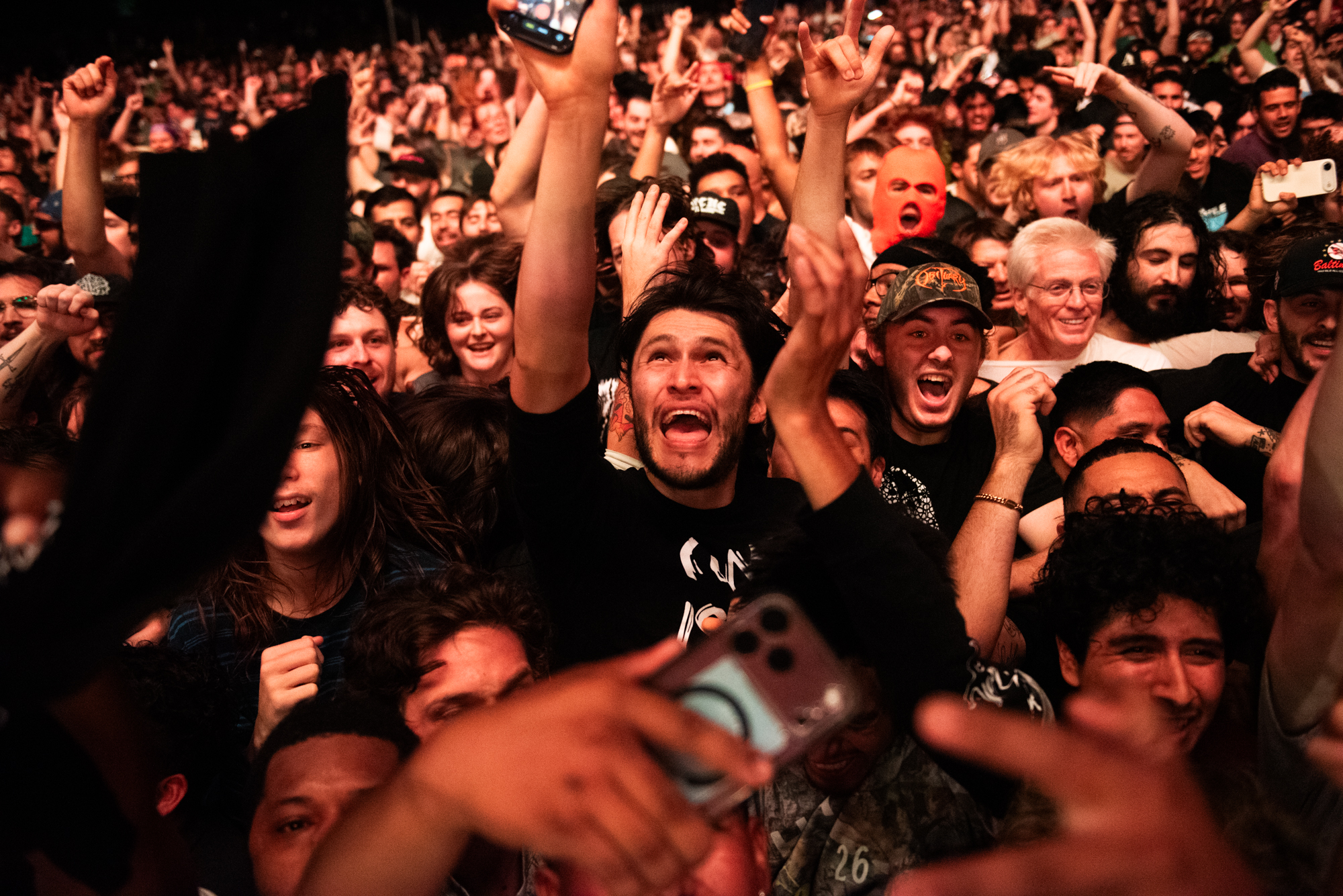
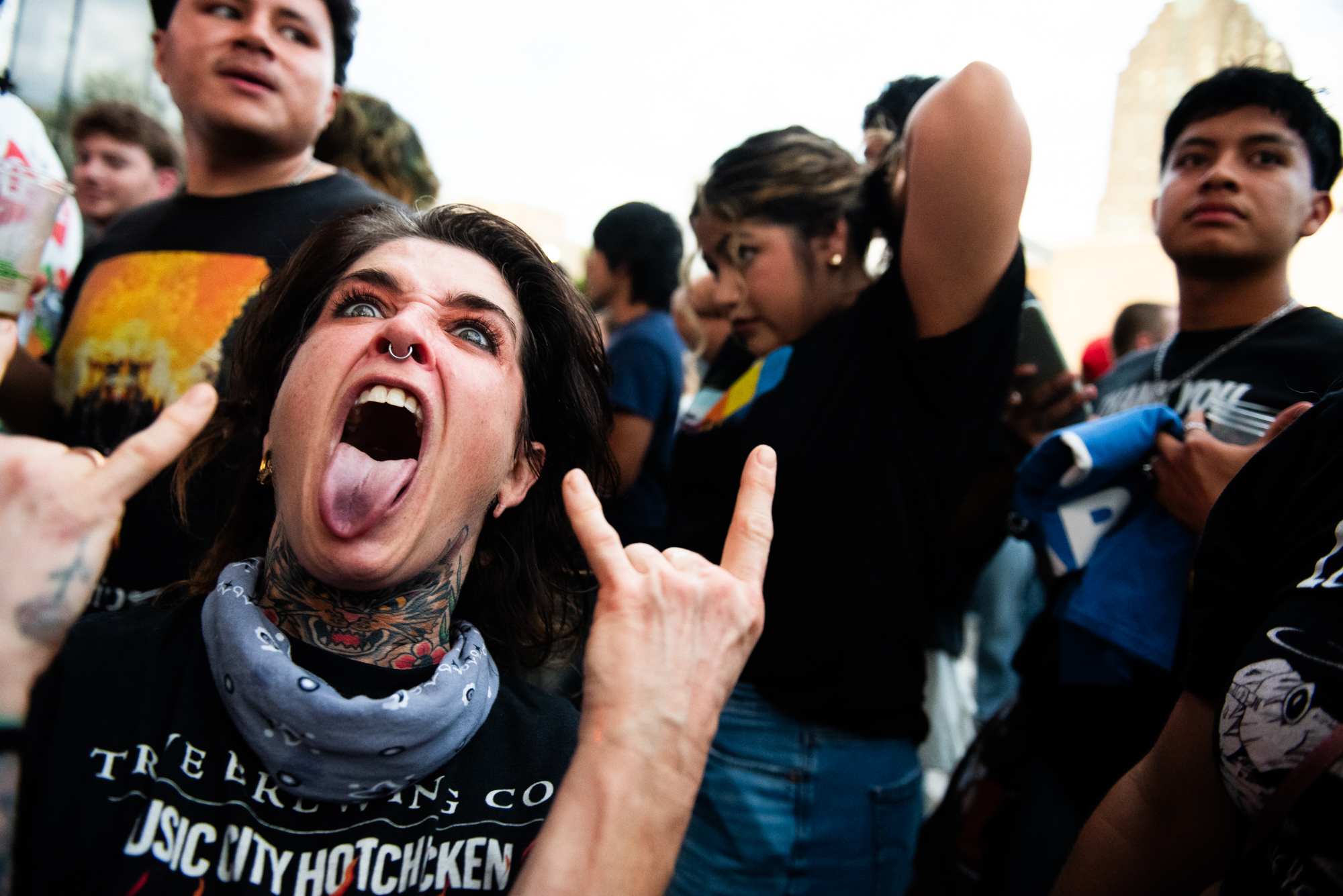
The final three songs drove the point home. “Blackout” kicked the energy back into overdrive before “Never Enough” pushed the crowd even further, and then the band closed with “T.L.C. (Turnstile Love Connection).” By that point, the amphitheater was less a concert venue than one giant, sweaty, bouncing organism. At many points, the crowd singalongs overtook the band’s volume.

Genre-mixing isn’t for every band, and it can lead to some comical disappointments. Turnstile proves you can use your roots to create something new without becoming a derivative homage act. The band is also serving an important function – introducing a new generation to its influences while inviting some of its heroes to share the stage.

As for whether Turnstile sold out, one look at the thousands of happy, bouncing faces in the crowd gives you the answer: Who cares?

© 2008-2025 Midtown magazine, LLC. All rights reserved. Copyright applies to all pages on this website. | Privacy Policy

By Shane Snider

Turnstile tore into Red Hat Amphitheater on Tuesday, September 29, to make a statement. Before the first notes of their usual opening ripper, “Birds,” sent the audience into a frenzy, the chosen supporting acts told the story: This is not your average Grammy-winning stadium rock act.

Turnstile’s roots are firmly planted in hardcore punk, the genre defined by bands like Minor Threat, Black Flag, Gorilla Biscuits and, of course, the first band of the evening, Agnostic Front, who laid the concert’s foundation with tracks from their decades-long tenure as NYC hardcore legends. Baltimore punk/hardcore/power-pop band Angel Du$t—probably the most closely related in style to the main act—continued the fun.

Agnostic Front founding members Roger Miret and Vinnie Stigma anchored a tight, old-school hardcore set, blazing through decades of stomp-inducing bangers.

But the real surprise of the evening was the addition of death metal gods Obituary, a legendary band that helped define the genre. Their set was excellent, and singer John Tardy’s scream has not dulled since the band’s debut in 1984. Death metal must be the fountain of youth, and apparently an effective hair-loss prevention tool, as evidenced by the band’s hair-whipping onslaught.

Turnstile Red Hate Raleigh Live

At another mainstream act’s show, Obituary’s presence might have left the crowd scratching its head. This crowd ate it up, and the band undoubtedly picked up some new fans in the process.

That’s one hell of an introduction for Turnstile, a band that recently collaborated with Sir Elton John and Paramore’s Hayley Williams. But it makes sense. While Turnstile’s style has evolved dramatically, mixing everything from synth-pop and R&B to power pop, the band still sprinkles hardcore, metal, and punk roots into the mix.

For decades, that evolution would have been enough to get a punk band accused of selling out. Punk’s original ethos was built around rejecting the machinery of mainstream music – corporate control, commercial ambition, polished production and the idea that success meant becoming acceptable to the masses. Hardcore took that attitude even further: You didn’t need a record deal, a radio hit or a stadium full of people. In some corners of the scene, those things were practically evidence that you had lost the plot.

Once Turnstile hit the stage, the argument was over. “Birds” immediately turned the amphitheater into a bouncing, screaming mass, followed by “Endless,” the Police-esque jam “I Care,” and “Drop.” The older hardcore DNA was still there—fast, loud, and physical—but it was wrapped in the bigger, more melodic sound that has made Turnstile one of the most interesting bands to break out of the hardcore scene in years.

At one point, the band stopped the set to allow security to attend to an injured audience member—an occupational hazard for hardcore attendees who have a decent chance of taking an unintentional crowd-surfing boot to the face.

Yates maintained an athletic performance throughout the set, bouncing across the stage and several times jumping down to join the crowd for a sing-along. Guitarists Pat McCrory and Meg Mills and bassist Franz Lyons were equally rambunctious, hopping and spinning throughout the night. Behind them, drummer Daniel “D-Fang” Fang was a machine, moving effortlessly between breakneck tempos and more restrained grooves.

The set moved freely between eras, with the band bouncing from the ferocious “Drop” through “Wild Wrld,” “Mystery,” “Sunshower,” “7,” “Keep It Moving,” and “Canned Heat.” The crowd responded to all of it. No one seemed to be waiting around for the old stuff or tolerating the newer material. It was all Turnstile, and it all worked.

The final three songs drove the point home. “Blackout” kicked the energy back into overdrive before “Never Enough” pushed the crowd even further, and then the band closed with “T.L.C. (Turnstile Love Connection).” By that point, the amphitheater was less a concert venue than one giant, sweaty, bouncing organism. At many points, the crowd singalongs overtook the band’s volume.

Genre-mixing isn’t for every band, and it can lead to some comical disappointments. Turnstile proves you can use your roots to create something new without becoming a derivative homage act. The band is also serving an important function – introducing a new generation to its influences while inviting some of its heroes to share the stage.

As for whether Turnstile sold out, one look at the thousands of happy, bouncing faces in the crowd gives you the answer: Who cares?
This Pop-up Is Included in the Theme
Best Choice for Creatives
Purchase Now