

Soul Searching
Story by Kurt Dusterberg | Photos by Jessica Bratton unless otherwise noted
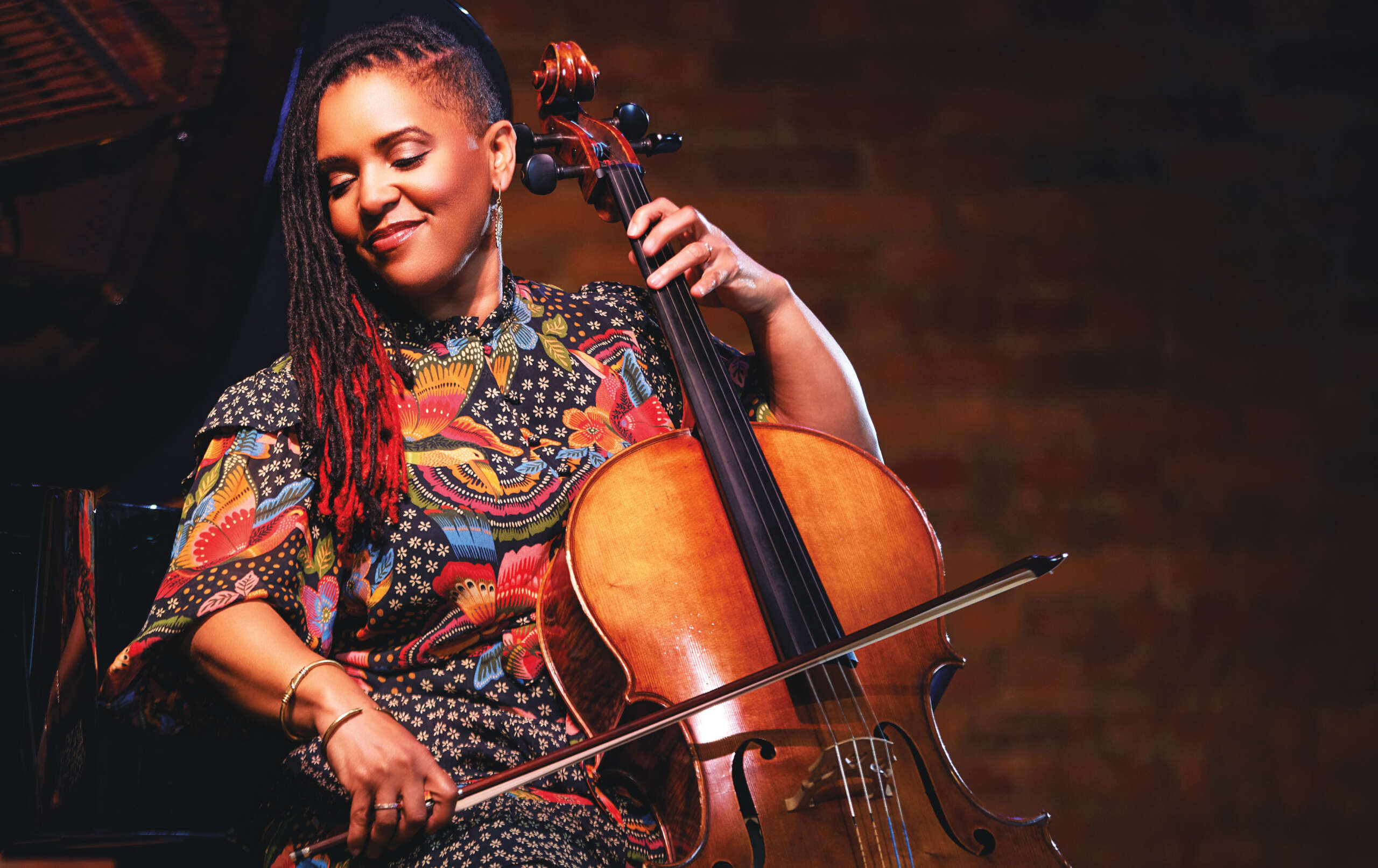
Shana Tucker is a working musician in the truest sense.
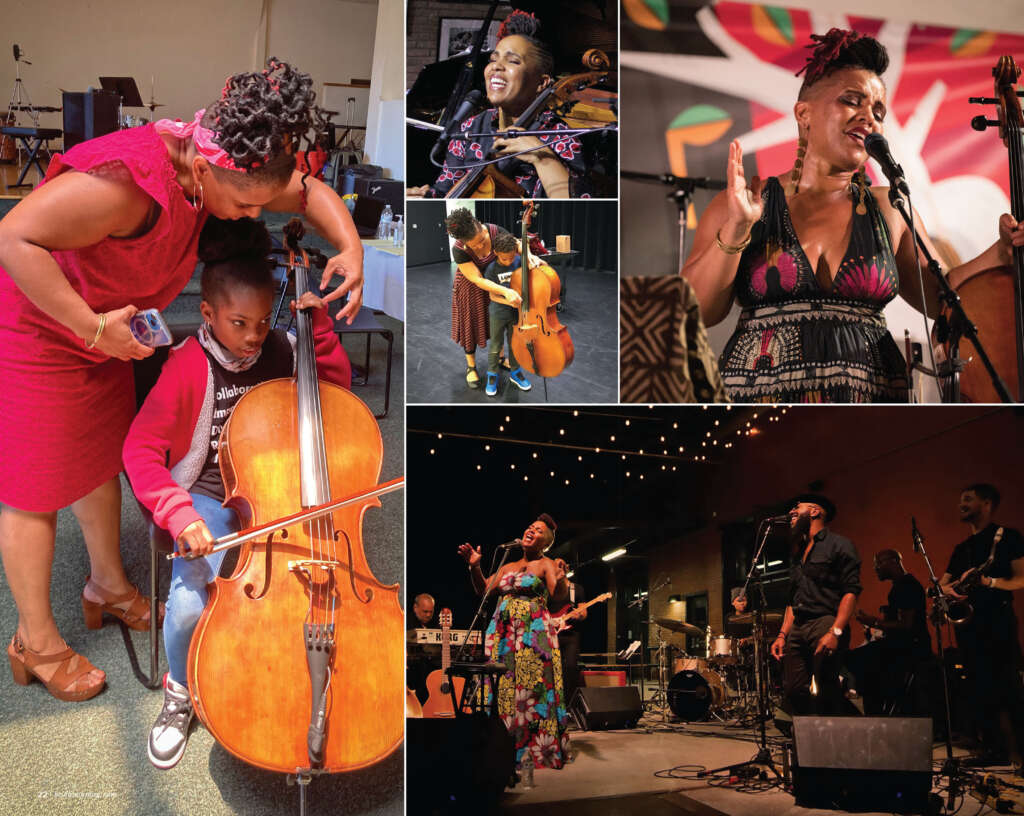
Yes, she is a singer-songwriter, cellist, and recording artist, but on a recent sunny afternoon, she has set up a wagonload of audio equipment at the front of Ms. Bruner’s fifth-grade classroom at Laurel Park Elementary School in Apex. While the curious students watch patiently, she is looping vocal tracks and building something rhythmic. Soon, she is singing a song called “Gazelle,” complete with her own background tracks.
Tucker is a regular presence in local classrooms, offering songwriting and storytelling residencies through United Arts Wake County—“specializing the specials,” as she puts it. Moments after her vocal performance, she has all of the students introduce themselves, exchanging greetings with each of them. Ten minutes later, she has accomplished something remarkable—memorizing the names of all 24 kids. For the next hour, every interaction is personalized. Her voice is gentle and clear: “Madeline, go!” Then it’s, “Lennox, you have a question?”
By the end of the hour, everyone is fully involved. “I can get more done if I take a few minutes to get to know what their names are,” she says. “Everybody’s name is important. Especially kids—they need to feel like they’re not ‘Hey, you!’”
The musical mission is important to Tucker, who grew up in Amityville, New York. “No one came to my school,” she says. “What would my life have looked like if someone had shown up earlier and let me know it was possible to write songs all by myself?” Beyond her teaching role, Tucker is immersed in a life of musicianship. Her albums, Shine and Hiding in the Light, highlight her own niche in the music world—a style she calls “chamber soul.”
The music blends elements of jazz, classical, and acoustic pop to deliver her own take on hits such as Cyndi Lauper’s “Time After Time” and Roberta Flack’s “The First Time Ever I Saw Your Face.”
“It’s not genre related, but it’s definitely got ’70s soul and funk and R & B,” Tucker says. “It’s not exactly pop, but I grew up in the ’80s and became an adult in the ’90s. This is the music that was around me. And jazz is within my DNA—musically, and as a Black person in America. That’s where the soulfulness of it comes from.”
She is at her very best on the Tina Turner classic, “What’s Love Got To Do With It.” Her melodic interpretation and jazzy runs add an unexpected joyfulness to the song. “A lot of the songs I choose to cover, it’s because there is something happening in that song that just won’t let me go,” she says. “So I have to sing it the way I hear it.”
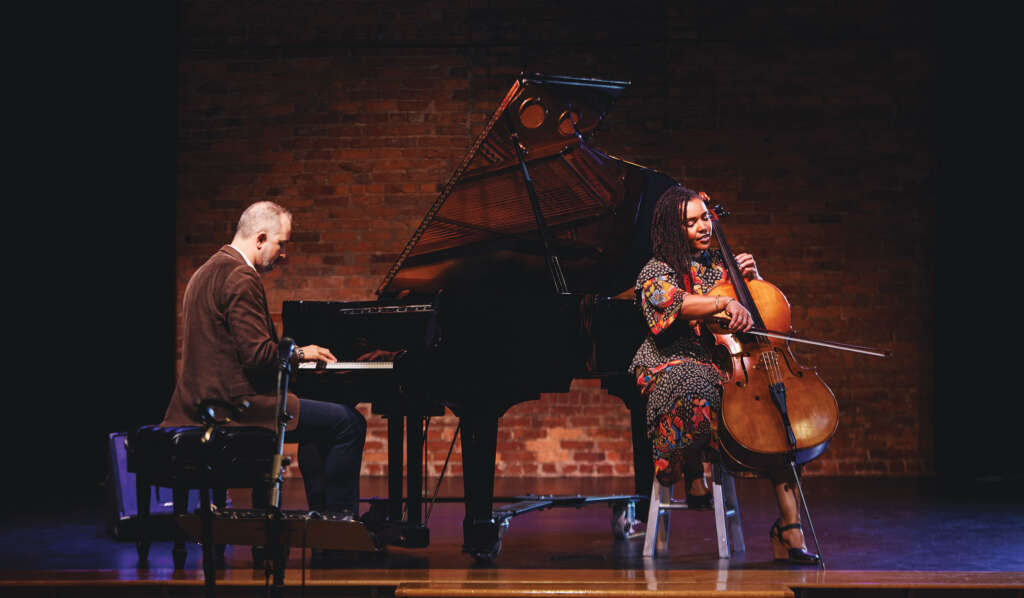
Tucker often performs in ensembles with Apex resident Christian Tamburr, an acclaimed multi-instrumentalist and composer. “Shana is a fantastic storyteller, and she finds a way of connecting her audience with every word of every song as if they’ve all lived the story together,” Tamburr says. “That storytelling, intertwined with dynamic artistry, is unique and rare, and audiences who experience it firsthand can’t wait to come back for more.”
Their concert performances are marked by plenty of ad-libbed conversations that add an extra dimension to the program. “Really special synergy,” Tucker says. “We have a program of songs, but I think people appreciate the fact that we’re not just dialing it in, that it’s not a scripted show.”
Tucker was introduced to the cello in 6th grade, but came to understand the full potential of her instrument at Howard University when the all-Black, all-female Uptown String Quartet came to campus. “I had never seen strings played non-classically, I had never seen jazz played on my instrument,” she says. She later moved on to Brooklyn College, where she received a full scholarship and developed her mastery of the cello.
Tucker, who lives with her husband in Durham, has called North Carolina home since 2003. Maintaining a full-time musical career hasn’t always been easy. She spent five years performing in Las Vegas at the MGM Grand in KÀ by Cirque du Soleil, finding a rare role that called for a vocalist who played cello. “It took a year to get used to doing the same thing for 10 shows a week, getting yourself to play like it was fresh every time,” she says. “The language was not a real one. So you’re learning what I call ‘Cirque de Solanguage.’ I did it for four more years. The money was great, the stability was great. But I felt like I was ready to come back to North Carolina and back to writing and performing.”
Building a following for her own career isn’t easy. Tucker often performs in local arts series around the state and the region. At a recent concert in Wake Forest, she performed for close to 300 people. Securing those gigs requires attending curated showcases to get her name out. “It is a hustle,” she says. “Being self-represented, I have to be on the phone and email. It’s word of mouth.” She often plays to an audience that is hearing her for the first time. “It’s really just people who enjoy live music and a quality show.”
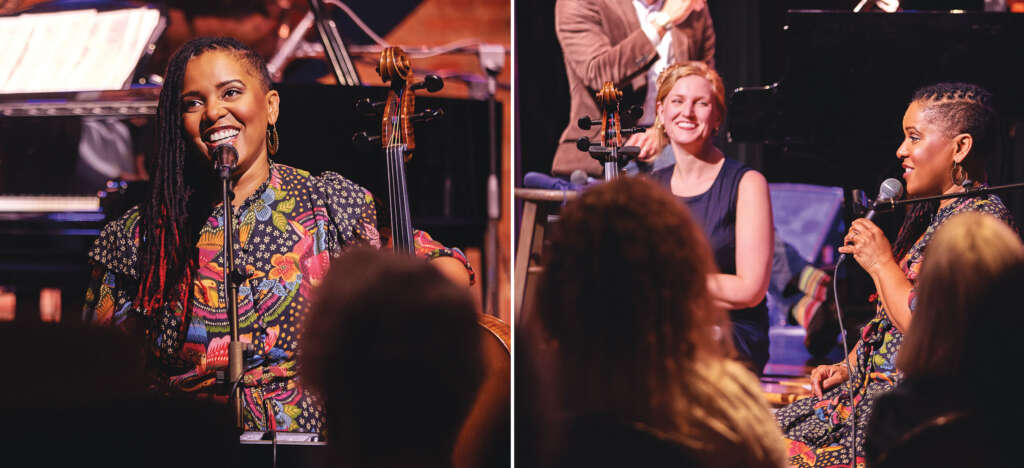
Even beyond the classrooms and the live gigs, Tucker maintains a role in the arts community. She spends part of her time in Asheville, where she is the director of education and engagement at Wortham Center for the Performing Arts. She coordinates class offerings with an eye toward how the arts can play a role in health and wellness.
With so many responsibilities, Tucker doesn’t look too far ahead on her musical path, although she had a recent impulse to consider a musical. But for now, she is like her ChamberSoul music itself—a blend of her own unique ideas.
“For me, it’s finding the balance of am I doing what I am put on this earth to do?” she says. “I know that’s bringing a level of authenticity to everything I do.” .
Visit the Midtown YouTube channel to view videos of Shana Tucker’s performance at the Halle Cultural Arts Center from April 15, 2026, part of their On the Steps Concert Series.
Visit Shana Tucker’s website at shanatucker.com.