

Have you ever wondered why your neighbor’s variance to convert their deck into a flex room has never been approved? Have you been keeping your eye on the famed Bus Rapid Transit system coming to a neighborhood near you sometime between 2026 and 2035?
If so, Raleigh’s new Planning Academy, run by the Planning and Development department, should be on your radar. The Planning Commission doesn’t get as much limelight as City Council, but their jobs have more long-term impact than we realize.
Planning departments build the skeletal structure of any city, overseeing population growth and the economy, housing, transportation, and land use and the environment.
The five-week Planning Academy program—offered free to residents—covers how the city’s planning processes work: how legislative and quasi-judicial administrative decisions are made, plus the nuances of building permits, build safety codes, and the comprehensive city plan.
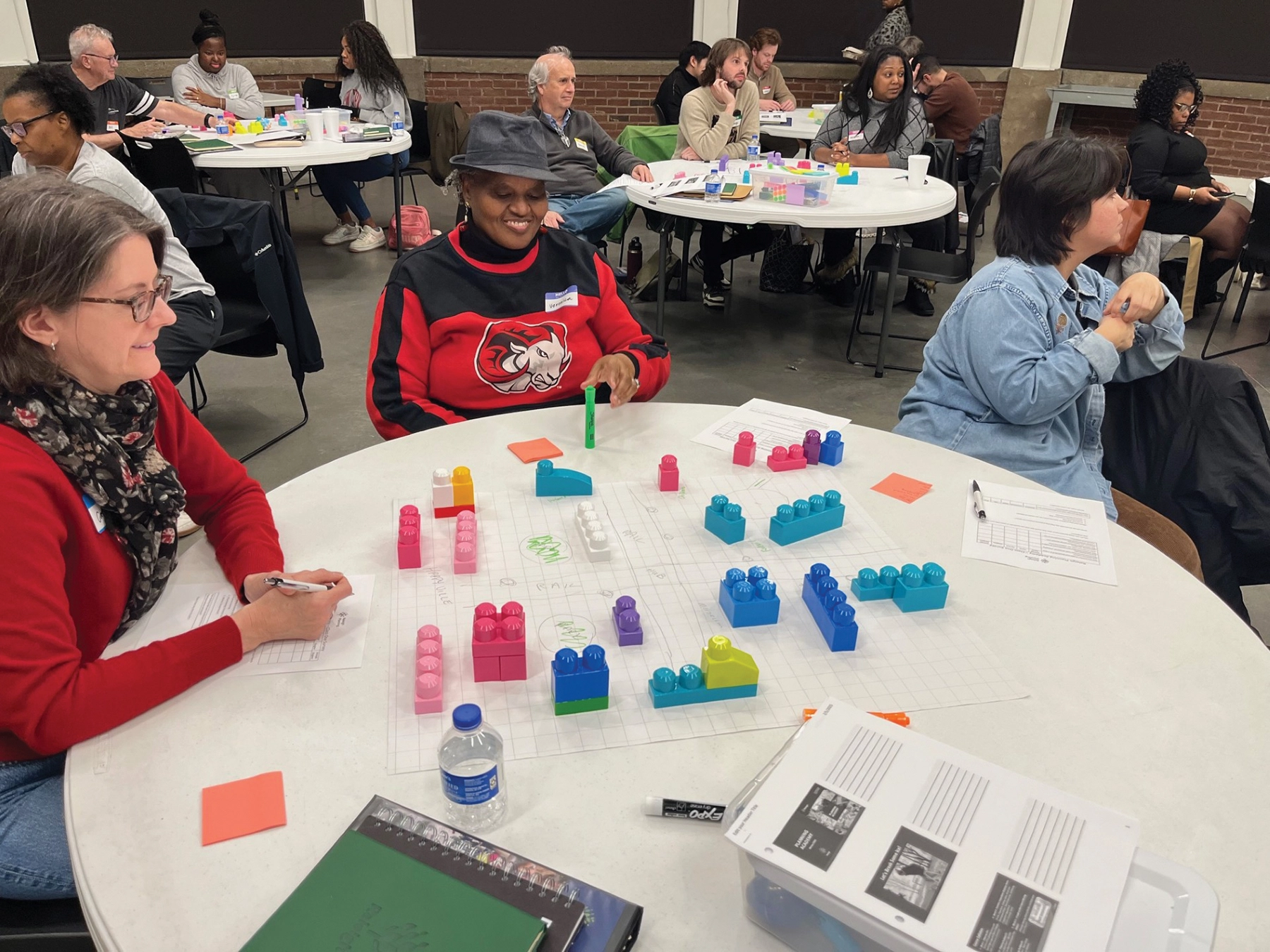
The Academy brings together 30 diverse residents from all across the city. I sat next to individuals from southeast Raleigh, North Hills, Oakwood, South Park, and Brier Creek, many of whom I would have never run into. There were auditors, parents, loan officers, and nonprofit directors—everyone was one of one.
Patrick Young, Raleigh’s Planning and Development director and one of the key Academy speakers, admits these topics are complicated. “City planning rules are complex and intimidating. We understand that, and we want to demystify it.”
It seems to be working. Out of the 325 graduates so far, Young has seen many express more confidence and familiarity with city processes, making them more likely to voice their points of view. He has even seen some apply for city boards and commissions.
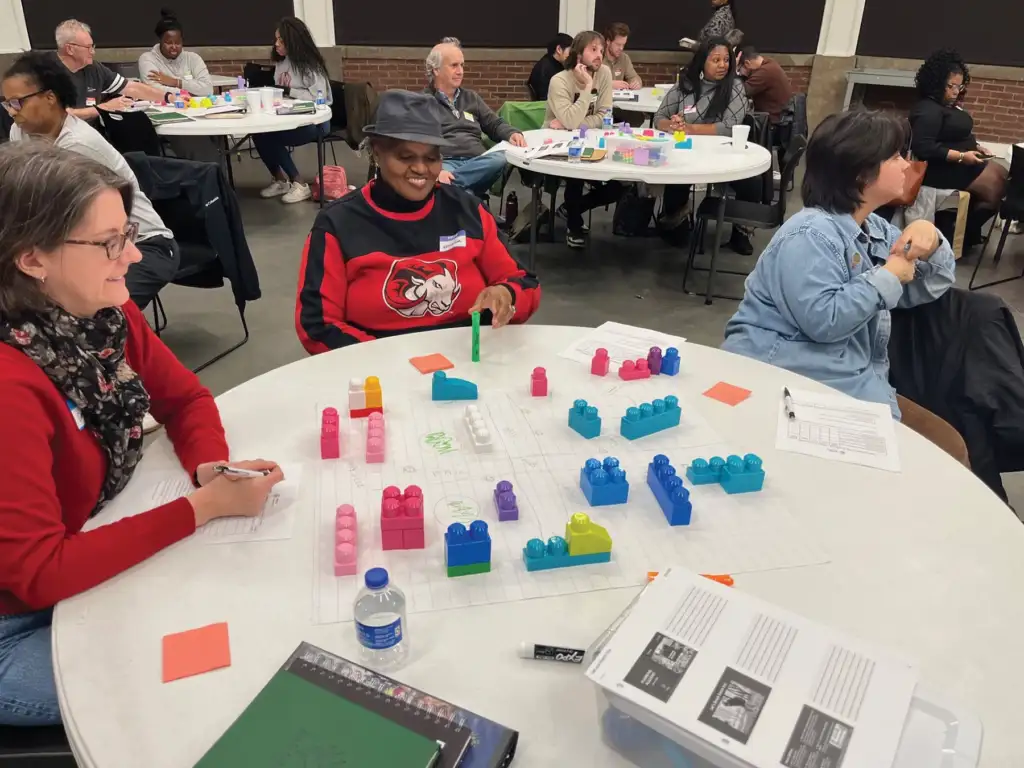
Ultimately, the Academy’s goal is to empower and educate our fellow citizens and encourage collaboration on future growth plans. The curriculum includes interactive elements where leaders break participants into teams to design their own city, review build case studies, participate in a mock city council session, and review the city’s strategic debates.
Speaking of debates, I would be remiss if I failed to mention one of the more intense debates I witnessed: housing. More specifically, affordable housing and the “missing middle.”
Some stats to give you the full picture:
• Raleigh has a high share of renters (50%), whereas for cities nationwide, that average is about 35%.
• Raleigh is the third-fastest-growing metro area after Orlando and Houston. Further, many of these new residents are coming for Raleigh’s competitive job market, and their high salaries are pushing up the value of land
and housing.
• Older homes are generally more affordable, but less than 6% of Raleigh’s housing units predate 1960, compared with 25% nationwide.
• Young and the city estimate that by 2050, there will be an additional 250,000 Raleigh residents, more than
a 50% increase on our current population total.
All of the above creates a complex milieu in the city’s aim toward equitable housing, or what Young refers to as “hybrid growth.” Traditionally, Raleigh places new housing on the fringe of the city, but Young also says we have to build up, not just out.
Participant and resident Fiona Matthews learned that historic districts like Oakwood, with their mixed housing, may be a model to replicate.
“Something that really surprised me was that the historic districts were actually some of the best examples of housing density because they had more types of housing (e.g. quadplexes, triplexes, and ADUs) that were made illegal after World War II, and those are now just becoming legal again,” says Matthews.
Affordable housing is the lifeline of cities; it is what will keep people in Raleigh long-term, and its connotations have to be consistently evaluated and reevaluated. Participant and resident Adam Martin, known to make his voice heard, echoed the need for balance.
“The future of Raleigh should continue to focus on increased density in the core of the city, but simultaneously, we need to preserve our natural environment and open spaces,” Martin says. “We are the City of Oaks, and we can’t just try and be New York City.”
Through many side conversations, I also noticed the less-than-vague feelings of disarray among participants, many referencing the chaotic news around the country and world—but I was still reassured. The decorum between participants was evident. Even when perspectives differed, people heard each other out, tested assumptions,
and trusted each other’s intentions.
As for the future of the program, Young and the Planning team want to continue to empower residents to get involved.
Especially now, as Raleigh’s next Comprehensive Plan is in draft development until May 2026 (slated to be adopted by late 2027).
“My favorite thing is meeting residents and talking about their dreams and visions for the future, and helping them understand how they can influence that,” says Young.