Skip to content Skip to sidebar Skip to footer

Trugalug Chocolates Brings Bean-to-Bar Flavor to Raleigh

By Dathan Kazsuk

Inside Trugalug Chocolates, Jeanette Gretsch is not simply making candy. She is roasting cacao, grinding beans, polishing molds, tempering cocoa butter, and trying to get people to think of chocolate as more than a quick sugar fix grabbed from a grocery store shelf in a moment of weakness.

This is chocolate with a point of view.

Located at 2116 C New Bern Avenue in Raleigh, near Alamo Drafthouse, Trugalug Chocolates is Gretsch’s new bean-to-bar chocolate shop built around sustainable sourcing, ethical cacao, natural ingredients, and flavor that actually tastes like where it came from. The shop offers bonbons, chocolate bars, candy, coffee, and workshops.

“I want to introduce people to the taste of the bean,” Gretsch says. “You get the experience of chocolate—the mouthfeel, the melt, all the wonderful things about chocolate—but some of it is just not chocolatey in the way people expect.”

Her History

Gretsch did not stumble into chocolate because she was bored one afternoon and thought bonbons looked cute on Instagram. Her path to Trugalug came after a major life reset during the Covid era—one that forced her to ask what she actually wanted to do next.

She had spent years in family businesses, including solar thermal manufacturing and real estate. She later tried teaching middle school math, a demanding chapter that pulled on her chemistry background but also made clear that her next move needed to be something more personal. “My degree is in chemistry,” Gretsch says. “But my application of chemistry was in the kitchen.”

That kitchen experience went back decades. Gretsch had been baking, cooking, and working with ganaches, cakes, and desserts for more than 30 years. Her aunt had attended the Peter Kump’s New York Cooking School and would send Gretsch course materials, which she worked through on her own.

“I knew I didn’t want to use couverture,” she says. “I knew I didn’t want to use Cargill or a lot of those chocolates that are not in line with what I believe. So I kind of knew early on that I wanted to go bean to bar.”

That decision sent her into a two-year deep dive. She studied the chemistry of sugar, took online classes, attended tasting classes, and traveled to places including Chicago, Seattle, and New Jersey to learn from other chocolate makers and chefs.
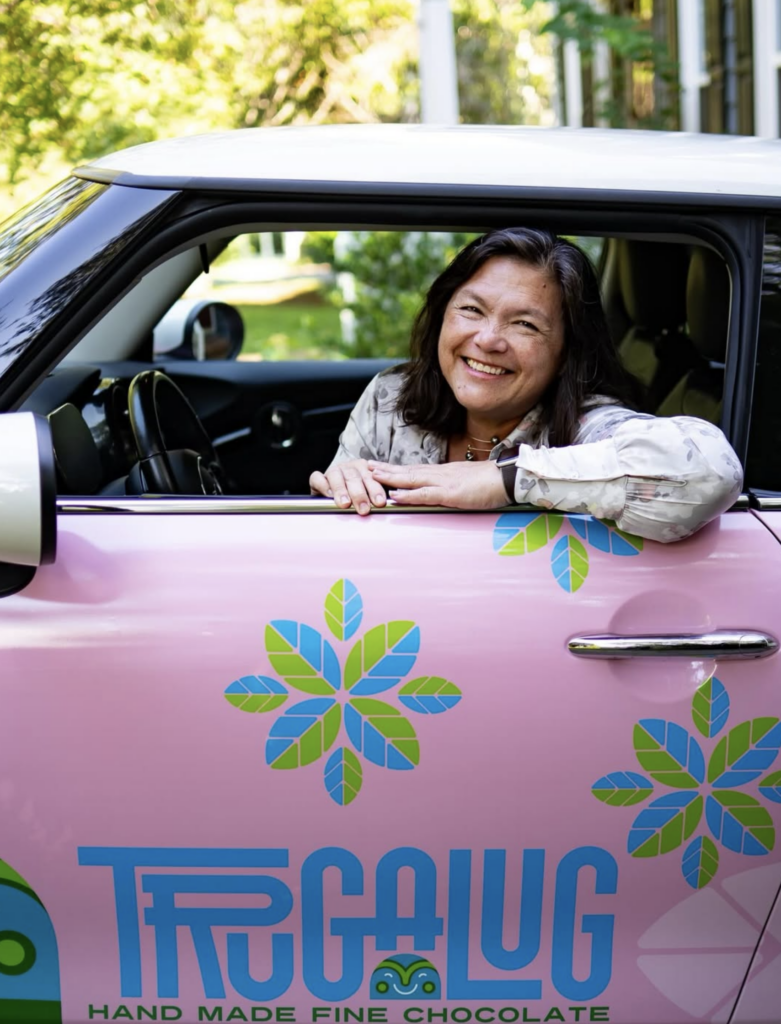
Jeanette Gretsch opened Trugalug Chocolates in Raleigh. Photo by Trugalug.
Her Mission Statement

The mission behind Trugalug is rooted in sourcing. Gretsch wants cacao she can feel good about using. “One of the problems with commercial chocolate is the lack of transparency,” she says. “So that’s why we did this.”
For Gretsch, transparency means paying attention to where cacao comes from, how it is grown, how farmers and workers are treated, and the impact the product has on the world before it ever becomes a glossy bonbon in Raleigh.

She points to ethical sourcing as the center of the business. Sustainability matters, too—especially for someone who once worked in solar thermal manufacturing—but the labor side is what she comes back to again and again. “The ethicalism is most important to me,” she says.

Gretsch says fine cacao accounts for only a small portion of the global cacao market, and that quality depends on variety, terroir, fermentation, and drying. Commodity chocolate, she says, is built around consistency and scale, which often means heavy roasting and additives that reduce the bean to one familiar chocolate flavor. “What we’re trying to do that’s different is we’re trying to introduce people to the taste of the bean,” she says.
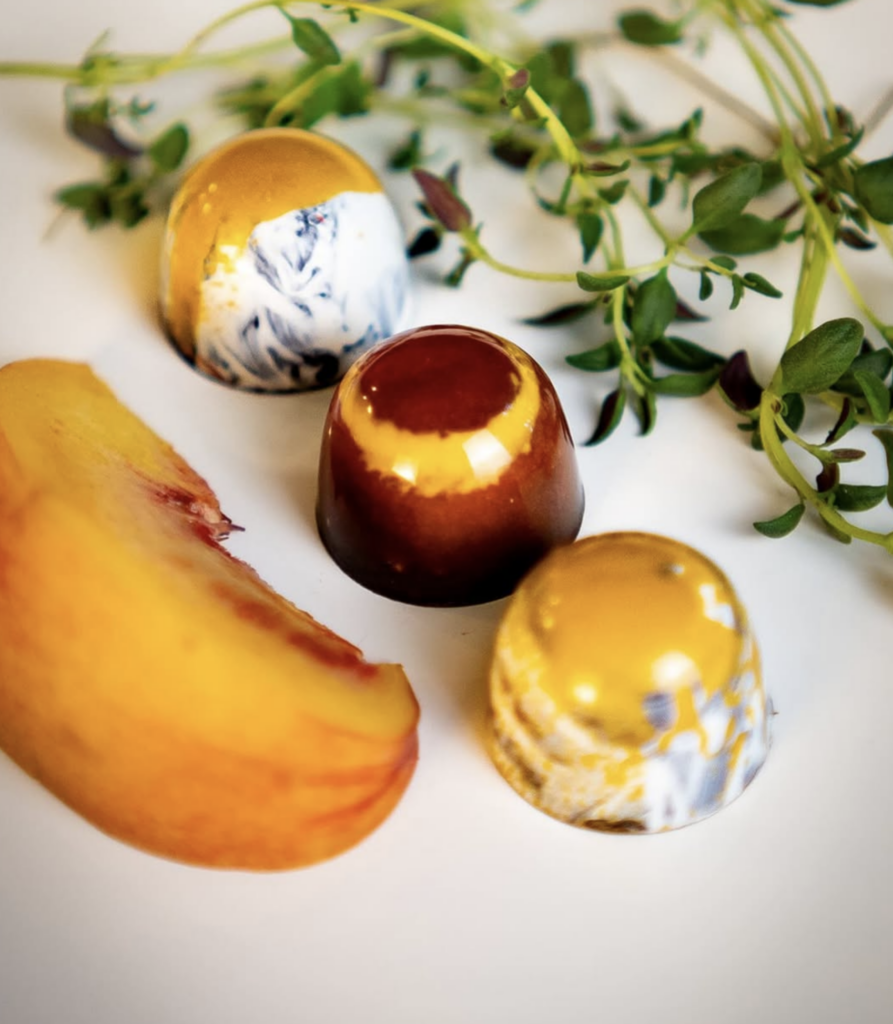
Photo by Trugalug Chocolates.
Her Background and Chocolates

At Trugalug, the process begins with cacao beans, which Gretsch roasts on a small coffee roaster. She works in careful batches, using a low to medium roast to preserve the aromatics and volatile compounds that give the chocolate its flavor.

From there, the cacao is cracked, winnowed, and ground with sugar for days in stone grinders. Most of her chocolates are currently 70% cacao, made with cacao nibs, cocoa butter, and raw organic sugar. Her milk chocolate contains milk powder, but even that leans darker than the candy-aisle standard. “I like dark milk chocolate because I love the taste of milk and the creaminess of it, but I really want a chocolatey taste,” she says.

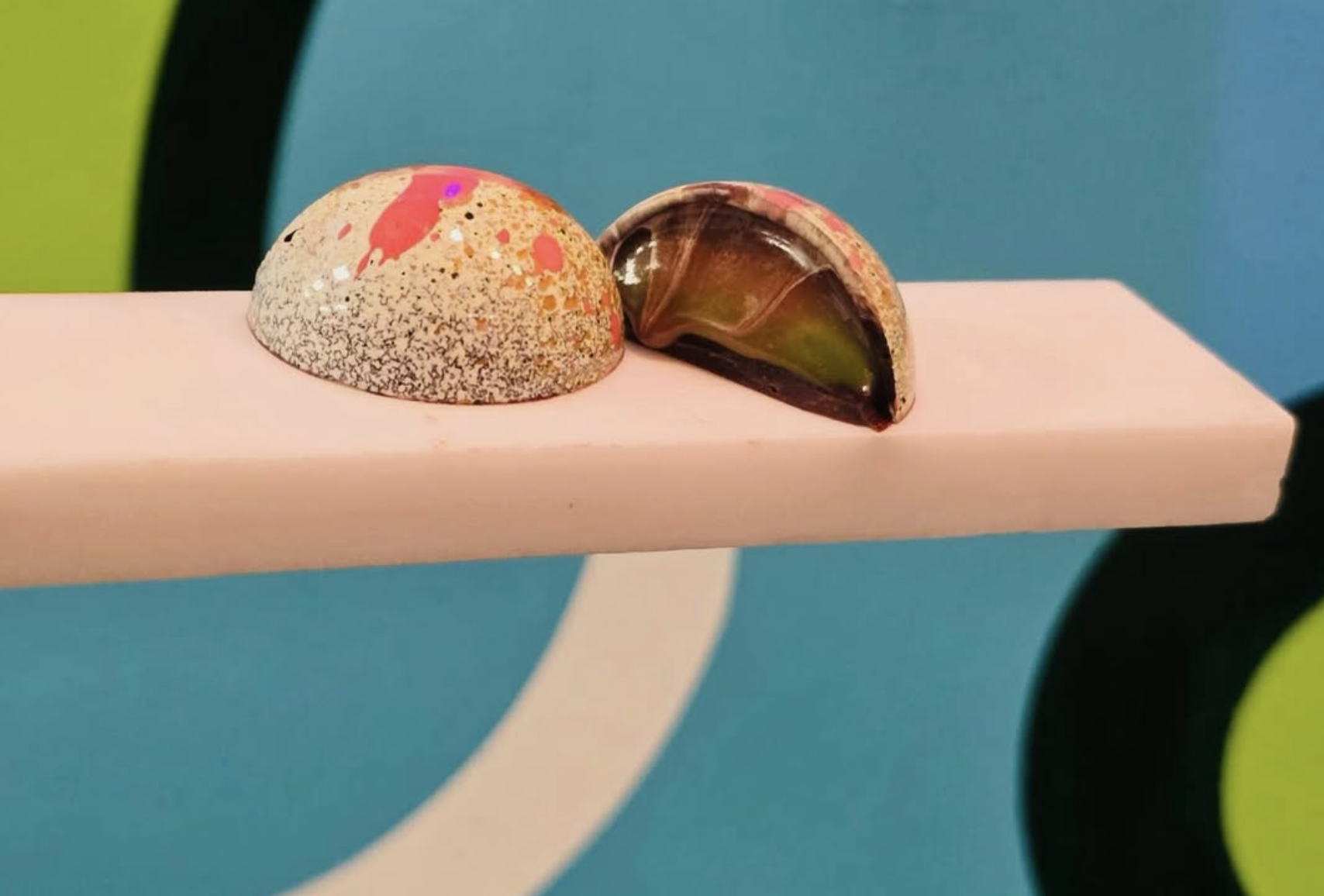
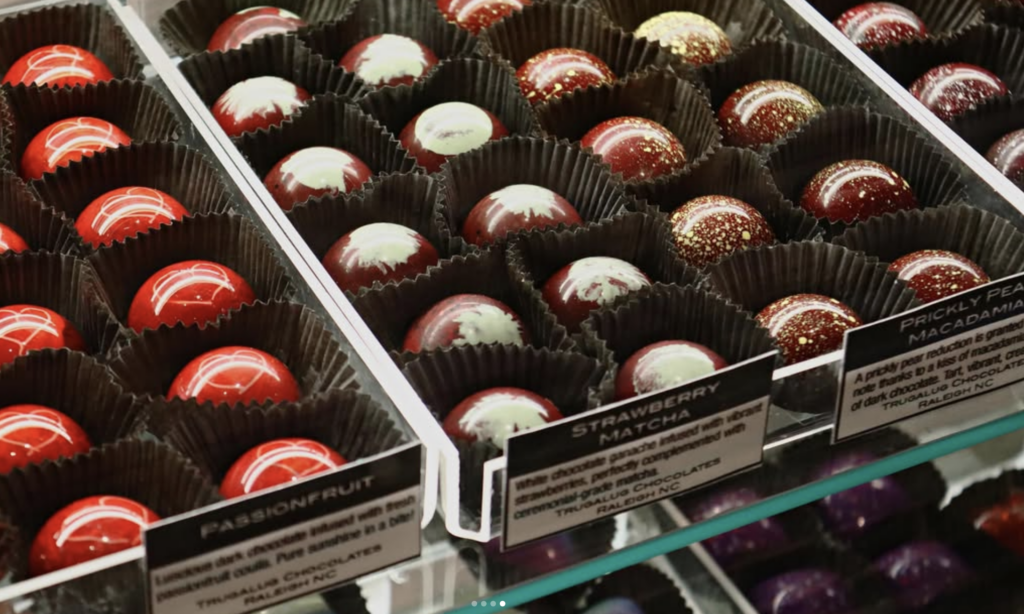
Trugalug’s lineup includes milk chocolate truffles, Bailey’s Irish Cream, passion fruit, prickly pear with chipotle ganache, yuzu with shortbread crust, blackberry gel over black sesame ganache, and playful creations like pigs filled with peanut butter and cookie. Gretsch also makes bars with inclusions such as candied orange peel and toasted almonds, as well as Dubai-style bars and seasonal pieces.

“To me, food is art,” she says. “I get a little bit of imposter syndrome when I call myself an artist, but to me, food is art.”
What’s in Store

Gretsch is still building the business, its systems, and its audience. Trugalug has already started offering workshops, and Gretsch hopes to build more tasting experiences around chocolate education. The shop’s website currently lists offerings such as a chocolate tasting experience and a bean-to-bar class.

She is also working on wine-and-chocolate pairing experiences, which feel like the kind of civilized Raleigh evening we should all support immediately. “Every maker’s going to bring their own twist,” Gretsch says. “We don’t need just one experience.” That belief also ties back to the name.

A Trugalug, Gretsch explains, comes from stories her father made up when she was a child. The tiny creature would ride a bee and use a booming voice to protect the forest, tricking people into thinking a giant was behind them. Her father told those stories to Gretsch and her sisters, then to her children. Now Gretsch tells Trugalug stories to her grandchildren. “A Trugalug is a teeny tiny thing with a big voice,” she says. “And every teeny tiny taste of chocolate has a really big taste.”

That might be the best way to understand Trugalug Chocolates. It is small, new, and still finding its rhythm, but it has a very big voice.

Gretsch wants customers to slow down, taste the difference, and think a little more about where chocolate comes from. She wants them to see craft chocolate the way they might see a great restaurant, a small winery, or a local bakery with flour on the counter and a stubborn belief that ingredients matter.

“If we can bring people more into craft chocolate rather than commercial chocolate, I believe it’s going to be better for the planet and better for humanity,” Gretsch says. “It does cost more, but the quality difference allows you to consume less because you can savor it longer and more.

Check out more features from Midtown’s Sip & Savor

© 2008-2025 Midtown magazine, LLC. All rights reserved. Copyright applies to all pages on this website. | Privacy Policy

By Dathan Kazsuk

Inside Trugalug Chocolates, Jeanette Gretsch is not simply making candy. She is roasting cacao, grinding beans, polishing molds, tempering cocoa butter, and trying to get people to think of chocolate as more than a quick sugar fix grabbed from a grocery store shelf in a moment of weakness.

This is chocolate with a point of view.

Located at 2116 C New Bern Avenue in Raleigh, near Alamo Drafthouse, Trugalug Chocolates is Gretsch’s new bean-to-bar chocolate shop built around sustainable sourcing, ethical cacao, natural ingredients, and flavor that actually tastes like where it came from. The shop offers bonbons, chocolate bars, candy, coffee, and workshops.

“I want to introduce people to the taste of the bean,” Gretsch says. “You get the experience of chocolate—the mouthfeel, the melt, all the wonderful things about chocolate—but some of it is just not chocolatey in the way people expect.”

Her History

Gretsch did not stumble into chocolate because she was bored one afternoon and thought bonbons looked cute on Instagram. Her path to Trugalug came after a major life reset during the Covid era—one that forced her to ask what she actually wanted to do next.

She had spent years in family businesses, including solar thermal manufacturing and real estate. She later tried teaching middle school math, a demanding chapter that pulled on her chemistry background but also made clear that her next move needed to be something more personal. “My degree is in chemistry,” Gretsch says. “But my application of chemistry was in the kitchen.”

That kitchen experience went back decades. Gretsch had been baking, cooking, and working with ganaches, cakes, and desserts for more than 30 years. Her aunt had attended the Peter Kump’s New York Cooking School and would send Gretsch course materials, which she worked through on her own.

“I knew I didn’t want to use couverture,” she says. “I knew I didn’t want to use Cargill or a lot of those chocolates that are not in line with what I believe. So I kind of knew early on that I wanted to go bean to bar.”

That decision sent her into a two-year deep dive. She studied the chemistry of sugar, took online classes, attended tasting classes, and traveled to places including Chicago, Seattle, and New Jersey to learn from other chocolate makers and chefs.

Jeanette Gretsch opened Trugalug Chocolates in Raleigh. Photo by Trugalug.
Her Mission Statement

The mission behind Trugalug is rooted in sourcing. Gretsch wants cacao she can feel good about using. “One of the problems with commercial chocolate is the lack of transparency,” she says. “So that’s why we did this.”
For Gretsch, transparency means paying attention to where cacao comes from, how it is grown, how farmers and workers are treated, and the impact the product has on the world before it ever becomes a glossy bonbon in Raleigh.

She points to ethical sourcing as the center of the business. Sustainability matters, too—especially for someone who once worked in solar thermal manufacturing—but the labor side is what she comes back to again and again. “The ethicalism is most important to me,” she says.

Gretsch says fine cacao accounts for only a small portion of the global cacao market, and that quality depends on variety, terroir, fermentation, and drying. Commodity chocolate, she says, is built around consistency and scale, which often means heavy roasting and additives that reduce the bean to one familiar chocolate flavor. “What we’re trying to do that’s different is we’re trying to introduce people to the taste of the bean,” she says.

Photo by Trugalug Chocolates.
Her Background and Chocolates

At Trugalug, the process begins with cacao beans, which Gretsch roasts on a small coffee roaster. She works in careful batches, using a low to medium roast to preserve the aromatics and volatile compounds that give the chocolate its flavor.

From there, the cacao is cracked, winnowed, and ground with sugar for days in stone grinders. Most of her chocolates are currently 70% cacao, made with cacao nibs, cocoa butter, and raw organic sugar. Her milk chocolate contains milk powder, but even that leans darker than the candy-aisle standard. “I like dark milk chocolate because I love the taste of milk and the creaminess of it, but I really want a chocolatey taste,” she says.

Trugalug’s lineup includes milk chocolate truffles, Bailey’s Irish Cream, passion fruit, prickly pear with chipotle ganache, yuzu with shortbread crust, blackberry gel over black sesame ganache, and playful creations like pigs filled with peanut butter and cookie. Gretsch also makes bars with inclusions such as candied orange peel and toasted almonds, as well as Dubai-style bars and seasonal pieces.

“To me, food is art,” she says. “I get a little bit of imposter syndrome when I call myself an artist, but to me, food is art.”

What’s in Store

Gretsch is still building the business, its systems, and its audience. Trugalug has already started offering workshops, and Gretsch hopes to build more tasting experiences around chocolate education. The shop’s website currently lists offerings such as a chocolate tasting experience and a bean-to-bar class.

She is also working on wine-and-chocolate pairing experiences, which feel like the kind of civilized Raleigh evening we should all support immediately. “Every maker’s going to bring their own twist,” Gretsch says. “We don’t need just one experience.” That belief also ties back to the name.

A Trugalug, Gretsch explains, comes from stories her father made up when she was a child. The tiny creature would ride a bee and use a booming voice to protect the forest, tricking people into thinking a giant was behind them. Her father told those stories to Gretsch and her sisters, then to her children. Now Gretsch tells Trugalug stories to her grandchildren. “A Trugalug is a teeny tiny thing with a big voice,” she says. “And every teeny tiny taste of chocolate has a really big taste.”

That might be the best way to understand Trugalug Chocolates. It is small, new, and still finding its rhythm, but it has a very big voice.

Gretsch wants customers to slow down, taste the difference, and think a little more about where chocolate comes from. She wants them to see craft chocolate the way they might see a great restaurant, a small winery, or a local bakery with flour on the counter and a stubborn belief that ingredients matter.

“If we can bring people more into craft chocolate rather than commercial chocolate, I believe it’s going to be better for the planet and better for humanity,” Gretsch says. “It does cost more, but the quality difference allows you to consume less because you can savor it longer and more.

Check out more features from Midtown’s Sip & Savor

This Pop-up Is Included in the Theme
Best Choice for Creatives
Purchase Now