Skip to content Skip to sidebar Skip to footer

Stay Gold: The Outsiders Take the Stage in Durham

By Dathan Kazsuk  |  

From the pages to the screen, and now the stage, The Outsiders has remained one of America’s most defining coming-of-age stories. I still remember the first time I saw the movie—I was hooked. The leather jackets, the loyalty, the heart. I wanted to be a Greaser myself—Dathy Boy, running with Johnny, and the gang through the backstreets of my hometown of Atwater, California. Now, that timeless tale once again comes to life as The Outsiders launches its highly anticipated U.S. national tour—kicking off in Tulsa, Oklahoma, where the story was first born.

The Angelina Jolie–backed musical, based on S.E. Hinton’s beloved 1967 novel and Francis Ford Coppola’s 1983 film, has been praised for its powerful performances and emotional storytelling. And fans will soon get their chance to see The Outsiders when it hits the Durham Performing Arts Center December 2–7. Ahead of its arrival, I caught up with Danny Boy O’Connor, founder of The Outsiders House Museum in Tulsa, to talk about preserving the legacy of this story, what it means to see it reimagined on stage, and why this world of Greasers and Socs still resonates generations later.

When you first encountered the house at 731 N. St. Louis Avenue in Tulsa (the “Curtis Brothers House” from the film), how did you envision its role in preserving the story’s legacy? When I first stumbled on 731 N. St. Louis Avenue, I didn’t just see a beat-up old house; I saw the anchor for a living archive. The plan early on was to save it, restore it to screen accuracy, and turn it into a community museum that keeps the story alive for families, students, and die-hard fans alike.
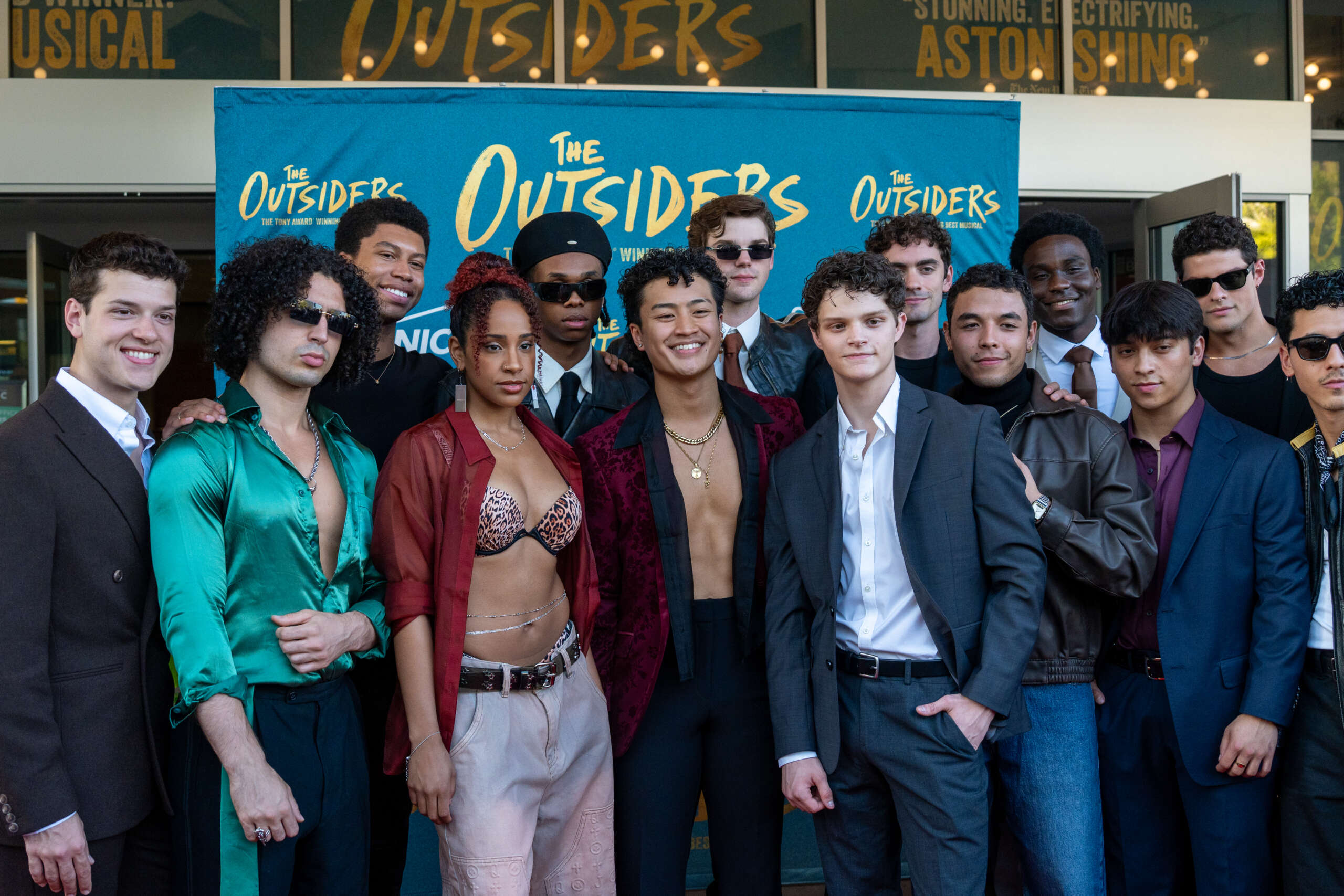
Cast members from The Outsiders: The Musical bring the acclaimed Broadway production to Durham Performing Arts Center as part of its upcoming national tour. Photo by Mike Creef Productions.

The novel, the play adaptations, and the film all have slightly different emphases on themes (class conflict, identity, brotherhood). How do you decide what dimension of the story to highlight when designing exhibits at the museum? The book, play, and film stress different facets of class, identity, and brotherhood. When we build exhibits, I start with the human stuff that crosses all versions: empathy for kids who feel on the outside. Then I layer in context, book pages, production ephemera, and on-set photography, so you can literally “walk” from Hinton’s words to Coppola’s frames. We use tours and student visits to ground those themes in real life. We now even have The Outsiders musical stage-worn wardrobe displayed at the museum!

In the film version, many of the actors portraying the Greasers became well-known (for example, C. Thomas Howell as Ponyboy). How has the celebrity legacy of the film influenced your presentation of the museum narrative? The film’s cast became icons, and that celebrity history helps us bring new visitors through the door. We honor it, but we use it as a bridge back to the story. You’ll see artifacts, set-accurate rooms, and nods to the actors’ journeys, plus special events with folks like C. Thomas Howell that support programming and restoration.

Has your renovation/restoration of the house revealed any surprises about the original film-set design, props, or location usage that challenged commonly held assumptions about the making of the movie? Restoration always reveals surprises. One cool discovery tied to the house’s age came out during renovation (we traced construction back to around 1920 via Tulsa World newspapers found in the walls). And because very little original furniture survived, we had to research and recreate details like wallpaper and set dressing to match what’s on screen, right down to playful touches like the chocolate cake gag setup fans love to pose with.

Cast members from The Outsiders: The Musical bring the acclaimed Broadway production to Durham Performing Arts Center as part of its upcoming national tour. Photo by Mike Creef Productions.

The phrase “Stay Gold” is iconic for fans of the story. In your view, how does the museum help new generations (who may not have seen the film or read the book when it came out) to “stay gold” in their own lives? “Stay Gold” isn’t just a quote on our wall; it’s the mission. We introduce first-timers (including kids who meet this story for the very first time on our porch) to courage, loyalty, and empathy. The way families and school groups respond—everyone from ages 8 to 80, as I like to say—tells me the museum helps people carry those values home.

The play version of The Outsiders (and stage adaptations) often focuses more on the intimacy of the characters, whereas the film uses broader visual storytelling. If you were to stage an exhibit inside the museum, similar to a live theatre moment, how would you integrate a theatrical sensibility into a film set space? Suppose I staged a live theatre moment inside the house. In that case, I’d keep the film set accuracy but build a guided, intimate scene: lights dim, ambient city sound, a brief live reading in the living room, then a synchronized projection that dissolves from the actors on our couch to the same shot in Coppola’s film, so you feel the text, performance, and cinema overlap in one breath. (This one’s my creative riff.)

Cast members from The Outsiders: The Musical bring the acclaimed Broadway production to Durham Performing Arts Center as part of its upcoming national tour. Photo by Mike Creef Productions.

There are strong parallels in the story between the Socs vs. Greasers division and real social divides. How does the museum address both the 1983 film’s era and the novel’s time era in giving historical/social context? The Socs vs. Greasers divide maps onto real social lines. We address both eras—the 1960s setting and the 1983 film—by providing historical context (Tulsa locations, Will Rogers High School roots, production backdrop) and then inviting conversations on class and belonging during tours and talks.

From a curator’s perspective: If you could bring any cast member or crew member from the film back to the house for a special event, who would you pick (and what would you ask them) and why? Dream guest? I’ve been lucky to host many friends of the film, but I’d love a deep dive at the house with Francis Ford Coppola—to walk room to room and ask how he translated Hinton’s intimacy into blocking, lighting, and lens choices in a real Tulsa home. (On the ground, we also do cast events. Tommy Howell’s nights at the museum are a fan favorite.

Cast members from The Outsiders: The Musical bring the acclaimed Broadway production to Durham Performing Arts Center as part of its upcoming national tour. Photo by Mike Creef Productions.

Considering that the house is a physical space tied to a fictional narrative (from the novel), how do you balance the authenticity of the house as a historical artifact with the myth/legend of the story of The Outsiders? Balancing artifact and myth is the job. The house is authentic; you’re standing where they shot it. But we’re honest: Much of the interior had to be meticulously recreated from references, stills, and research, so it feels like stepping into the frame without pretending every object is original. That transparency keeps the magic and the museum ethics in balance.

Looking ahead: What is your vision for the next 5–10 years for the museum—do you plan to integrate more immersive/interactive theatre or film-experience elements (for example, live readings of the play, screening the film on-site, actor talk-backs) to further connect visitors with both the play and movie versions of The Outsiders? Next 5–10 years: more immersion, more education. Think seasonal outdoor screenings on the lawn, regular live readings, and behind-the-scenes talks with artists and crew; expanding student programs; and tying big community moments (like our Stay Gold Gala) directly back to the house with weekend experiences that mix film, literature, and performance. That blending of book to film to live moment is where we’re headed. The end goal is to build another museum featuring all of S. E. Hinton’s work, but for now, that’s all I can say about that.

For O’Connor, The Outsiders isn’t just a story—it’s a movement. From his restoration of the Curtis brothers’ home in Tulsa to the museum that now draws fans from around the world, his work bridges nostalgia and cultural history. The stage musical carries that same spirit, reminding audiences why this story of brotherhood, struggle, and staying gold has never faded.

Whether you grew up reading S.E. Hinton’s words under the covers, memorized every line of Coppola’s film, or are discovering the story for the first time, The Outsiders at DPAC promises a powerful, emotional night that proves some stories never grow old—they just find new ways to shine.
© 2008-2025 Midtown magazine, LLC. All rights reserved. Copyright applies to all pages on this website. | Privacy Policy

By Dathan Kazsuk  |  

From the pages to the screen, and now the stage, The Outsiders has remained one of America’s most defining coming-of-age stories. I still remember the first time I saw the movie—I was hooked. The leather jackets, the loyalty, the heart. I wanted to be a Greaser myself—Dathy Boy, running with Johnny, and the gang through the backstreets of my hometown of Atwater, California. Now, that timeless tale once again comes to life as The Outsiders launches its highly anticipated U.S. national tour—kicking off in Tulsa, Oklahoma, where the story was first born.

The Angelina Jolie–backed musical, based on S.E. Hinton’s beloved 1967 novel and Francis Ford Coppola’s 1983 film, has been praised for its powerful performances and emotional storytelling. And fans will soon get their chance to see The Outsiders when it hits the Durham Performing Arts Center December 2–7. Ahead of its arrival, I caught up with Danny Boy O’Connor, founder of The Outsiders House Museum in Tulsa, to talk about preserving the legacy of this story, what it means to see it reimagined on stage, and why this world of Greasers and Socs still resonates generations later.

When you first encountered the house at 731 N. St. Louis Avenue in Tulsa (the “Curtis Brothers House” from the film), how did you envision its role in preserving the story’s legacy? When I first stumbled on 731 N. St. Louis Avenue, I didn’t just see a beat-up old house; I saw the anchor for a living archive. The plan early on was to save it, restore it to screen accuracy, and turn it into a community museum that keeps the story alive for families, students, and die-hard fans alike.

Cast members from The Outsiders: The Musical bring the acclaimed Broadway production to Durham Performing Arts Center as part of its upcoming national tour. Photo by Mike Creef Productions.

The novel, the play adaptations, and the film all have slightly different emphases on themes (class conflict, identity, brotherhood). How do you decide what dimension of the story to highlight when designing exhibits at the museum? The book, play, and film stress different facets of class, identity, and brotherhood. When we build exhibits, I start with the human stuff that crosses all versions: empathy for kids who feel on the outside. Then I layer in context, book pages, production ephemera, and on-set photography, so you can literally “walk” from Hinton’s words to Coppola’s frames. We use tours and student visits to ground those themes in real life. We now even have The Outsiders musical stage-worn wardrobe displayed at the museum!

In the film version, many of the actors portraying the Greasers became well-known (for example, C. Thomas Howell as Ponyboy). How has the celebrity legacy of the film influenced your presentation of the museum narrative? The film’s cast became icons, and that celebrity history helps us bring new visitors through the door. We honor it, but we use it as a bridge back to the story. You’ll see artifacts, set-accurate rooms, and nods to the actors’ journeys, plus special events with folks like C. Thomas Howell that support programming and restoration.

Has your renovation/restoration of the house revealed any surprises about the original film-set design, props, or location usage that challenged commonly held assumptions about the making of the movie? Restoration always reveals surprises. One cool discovery tied to the house’s age came out during renovation (we traced construction back to around 1920 via Tulsa World newspapers found in the walls). And because very little original furniture survived, we had to research and recreate details like wallpaper and set dressing to match what’s on screen, right down to playful touches like the chocolate cake gag setup fans love to pose with.

Cast members from The Outsiders: The Musical bring the acclaimed Broadway production to Durham Performing Arts Center as part of its upcoming national tour. Photo by Mike Creef Productions.

The phrase “Stay Gold” is iconic for fans of the story. In your view, how does the museum help new generations (who may not have seen the film or read the book when it came out) to “stay gold” in their own lives? “Stay Gold” isn’t just a quote on our wall; it’s the mission. We introduce first-timers (including kids who meet this story for the very first time on our porch) to courage, loyalty, and empathy. The way families and school groups respond—everyone from ages 8 to 80, as I like to say—tells me the museum helps people carry those values home.

The play version of The Outsiders (and stage adaptations) often focuses more on the intimacy of the characters, whereas the film uses broader visual storytelling. If you were to stage an exhibit inside the museum, similar to a live theatre moment, how would you integrate a theatrical sensibility into a film set space? Suppose I staged a live theatre moment inside the house. In that case, I’d keep the film set accuracy but build a guided, intimate scene: lights dim, ambient city sound, a brief live reading in the living room, then a synchronized projection that dissolves from the actors on our couch to the same shot in Coppola’s film, so you feel the text, performance, and cinema overlap in one breath. (This one’s my creative riff.)

Cast members from The Outsiders: The Musical bring the acclaimed Broadway production to Durham Performing Arts Center as part of its upcoming national tour. Photo by Mike Creef Productions.

There are strong parallels in the story between the Socs vs. Greasers division and real social divides. How does the museum address both the 1983 film’s era and the novel’s time era in giving historical/social context? The Socs vs. Greasers divide maps onto real social lines. We address both eras—the 1960s setting and the 1983 film—by providing historical context (Tulsa locations, Will Rogers High School roots, production backdrop) and then inviting conversations on class and belonging during tours and talks.

From a curator’s perspective: If you could bring any cast member or crew member from the film back to the house for a special event, who would you pick (and what would you ask them) and why? Dream guest? I’ve been lucky to host many friends of the film, but I’d love a deep dive at the house with Francis Ford Coppola—to walk room to room and ask how he translated Hinton’s intimacy into blocking, lighting, and lens choices in a real Tulsa home. (On the ground, we also do cast events. Tommy Howell’s nights at the museum are a fan favorite.

Cast members from The Outsiders: The Musical bring the acclaimed Broadway production to Durham Performing Arts Center as part of its upcoming national tour. Photo by Mike Creef Productions.

Considering that the house is a physical space tied to a fictional narrative (from the novel), how do you balance the authenticity of the house as a historical artifact with the myth/legend of the story of The Outsiders? Balancing artifact and myth is the job. The house is authentic; you’re standing where they shot it. But we’re honest: Much of the interior had to be meticulously recreated from references, stills, and research, so it feels like stepping into the frame without pretending every object is original. That transparency keeps the magic and the museum ethics in balance.

Looking ahead: What is your vision for the next 5–10 years for the museum—do you plan to integrate more immersive/interactive theatre or film-experience elements (for example, live readings of the play, screening the film on-site, actor talk-backs) to further connect visitors with both the play and movie versions of The Outsiders? Next 5–10 years: more immersion, more education. Think seasonal outdoor screenings on the lawn, regular live readings, and behind-the-scenes talks with artists and crew; expanding student programs; and tying big community moments (like our Stay Gold Gala) directly back to the house with weekend experiences that mix film, literature, and performance. That blending of book to film to live moment is where we’re headed. The end goal is to build another museum featuring all of S. E. Hinton’s work, but for now, that’s all I can say about that.

For O’Connor, The Outsiders isn’t just a story—it’s a movement. From his restoration of the Curtis brothers’ home in Tulsa to the museum that now draws fans from around the world, his work bridges nostalgia and cultural history. The stage musical carries that same spirit, reminding audiences why this story of brotherhood, struggle, and staying gold has never faded.

Whether you grew up reading S.E. Hinton’s words under the covers, memorized every line of Coppola’s film, or are discovering the story for the first time, The Outsiders at DPAC promises a powerful, emotional night that proves some stories never grow old—they just find new ways to shine.
This Pop-up Is Included in the Theme
Best Choice for Creatives
Purchase Now