

By Autumn Coleman
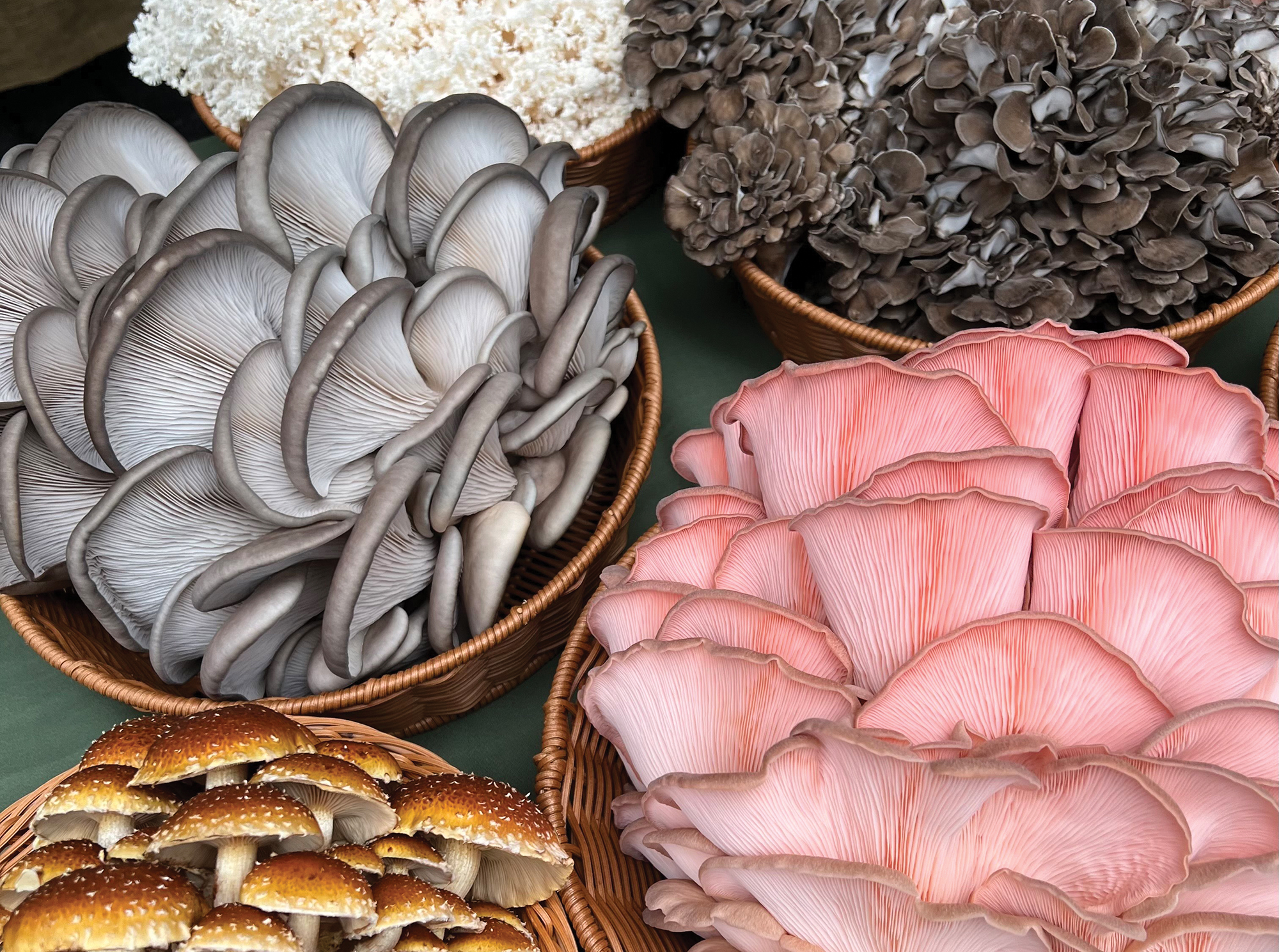
To the untrained eye, mushrooms are the randomly occurring and potentially dangerous fruit of the forest. But to foragers and farmers, they are ferocious fungi with unlimited benefits. All over North Carolina, people are trading their day jobs for foraging licenses and turning their mushroom madness into burgeoning businesses.
The Appalachian–Blue Ridge Forests are among the most biodiverse in the world. The humid subtropical climate during the summer breeds around 14,000 different species of mushrooms.
“It’s pretty cool that we have [this] very specific climate where we live in North Carolina,” says Anthony Montoya, a foraging hobbyist. “I think that would be the number one reason why people are doing it the most in this area, is because we just have a super abundant fungi selection.”
Since the global pandemic, local mushroom cultivation and foraging has bloomed in popularity. Fungi hunters often turn into mushroom wholesalers. Avery Hughes, owner of High Country Fungi in western North Carolina, started foraging for the immense health benefits that mushroom consumption offers. He noticed positive changes in his life after foraging for fungi that boosted immune support and reduced stress. “I was seeking different mushrooms for some health issues and was foraging my own reishi [mushrooms]. I noticed that helped quite a bit with my issues, so that definitely got me more curious.”
Hughes and his wife, Miika Greenwood, started their cultivation business in 2020. Today they sell gourmet mushrooms to restaurants and farmers markets, like Appalachian State University’s campus dining program and the Watauga County Farmers Market. “We do everything from casual places to super high-ends. We can see our mushrooms being transformed in just about every way,” Hughes says. “I’ve eaten our mushrooms on numerous occasions, prepared by chefs. I just need to get better at my cooking skills.”

Clarence and Tanya Dubois own Gabor Farms in Rockingham. The fungi farmers, who champion mushroom education and accessible foods, have crafted their own mycelium recipes since starting their business after the pandemic. “As we move away from total trust in the food industry or in the agriculture industrial complex, people are taking health into their [own] hands and seeing mushrooms as one of the main sources of food that help bring those health aspects to our diet,” says Clarence Dubois, who sells at North Carolina’s Black Farmers Market and beyond.
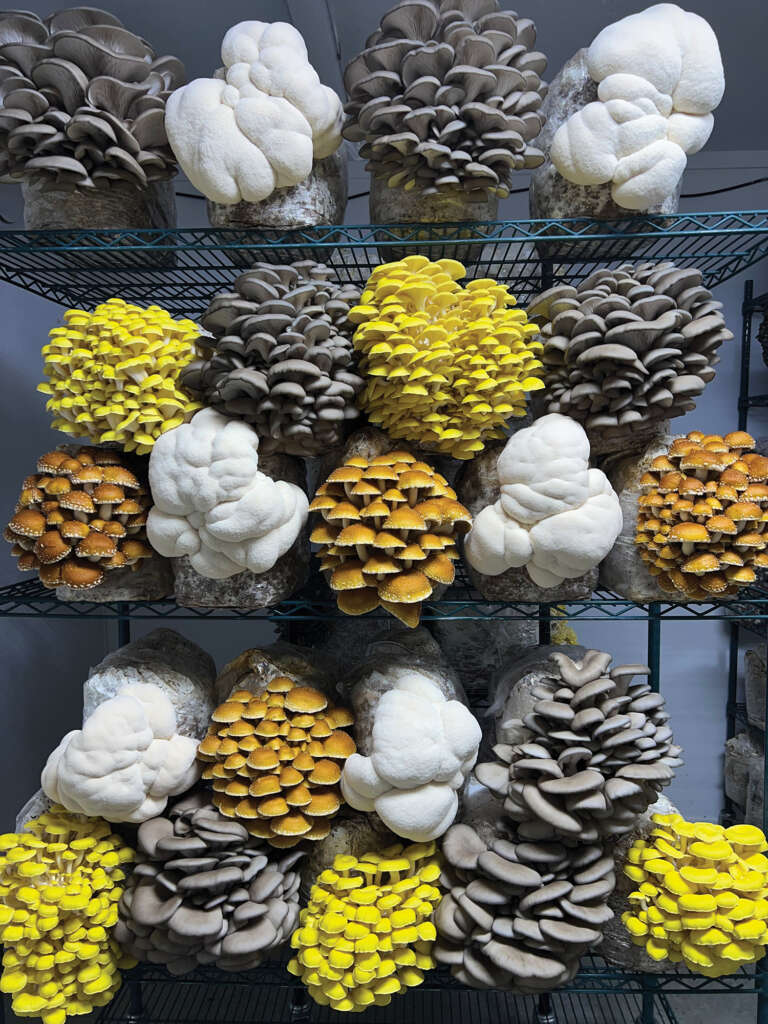
An avid mushroom lover since childhood, Amy Fox is the owner of Fox Farm & Forage in Apex. Fox grows over 1,000 pounds of mushrooms a week. After starting as a forager, she realized that the only way her business could pay her bills was by growing her own mushrooms and selling them in 10–12 pound bags. She grows and supplies grey oyster, king oyster, maitake, lion’s mane, and beech year-round.
Fox’s mushrooms sprout up in Raleigh, Durham, and Cary on a weekly basis. She supplies Colletta Italian Food & Wine at Fenton and Oak Steakhouse in Raleigh, both of which are owned by The Indigo Road Hospitality Group—a collective that owns hotels, bars, restaurants, cafés, and venues across the South. Additionally, she sells to Barcelona Wine Bar, Madre, and Il Falò in Raleigh; Sfiizio Pizzeria, Seraphine, and GoccioLina in Durham; and once a month at the Holly Springs Farmers Market.
“I celebrated 10 years in July,” Fox says. “We’ve been through a number of chefs and I’m still here, believe it or not.”
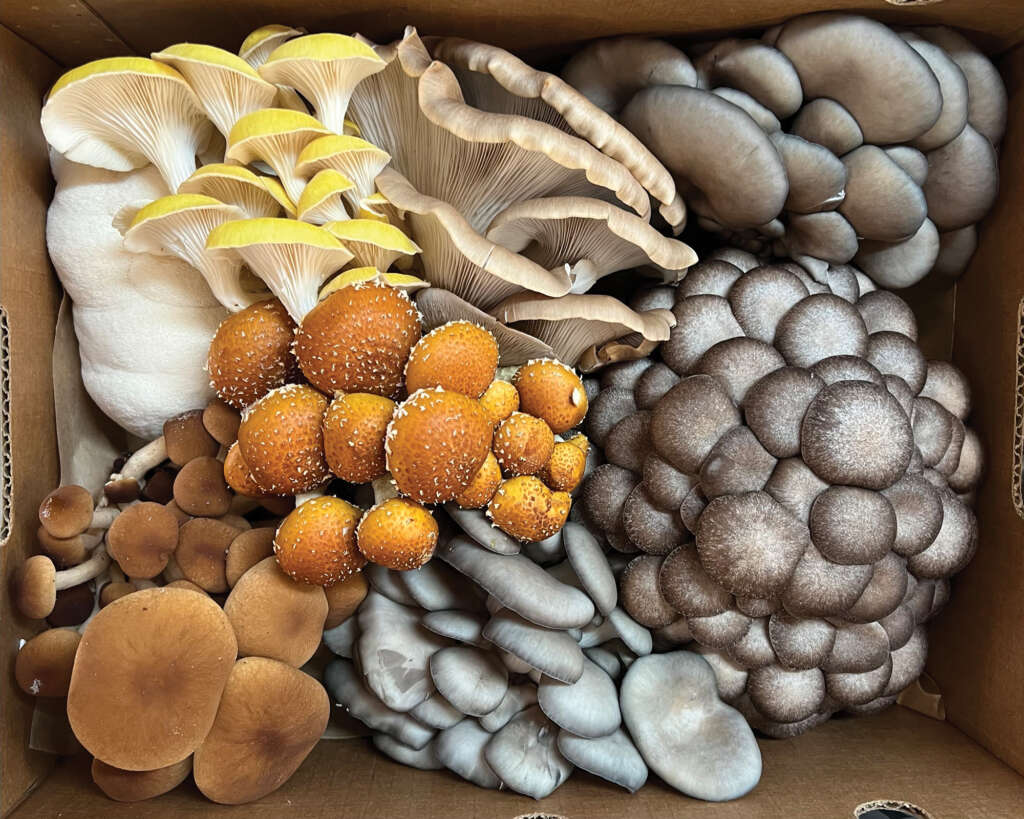
Mushrooms grow in different places across the country. Each region is known for specific mushrooms, and local mushrooms provide the most benefits. “There are some varieties you can find here that you can’t really find in California.
I believe it’s harder to find chicken of the woods [mushrooms] out west,” Hughes says. “For morels, we have a really short window at the end of April, high up in the mountains, and it’s a week or two.”
Researchers continue to uncover how mushrooms can ward off chronic disease and improve everyday health. Cultivators and growers keep an internal list of the benefits associated with different kinds of fungi. Lion’s mane is known for its positive effects on cognitive function. Morel, chanterelle, and maitake mushrooms can be great sources of vitamin D after significant time spent in the sun. On their own, chanterelles contain polysaccharides that reduce inflammation and boost the immune system.
Reishi mushrooms are also known for their influence on the immune system. A 2024 study found that taking reishi products, such as oils and extracts, leads to lessened anxiety, depression, and fatigue. Other studies show links to better managed heart health and blood sugar levels.
The health-boosting abilities of fungi have spawned enterprising enjoyers and loyal fans. Montoya started foraging five years ago as a hobby while he lived in Boone. His scenic hikes became consumed with searching the floor of the woods to identify species of fungi with his Seek app. Montoya started taking his found edible mushrooms home and incorporating them into his meals. Based in Apex, he now forages at William B. Umstead and Eno River State Parks. Montoya’s origin story with mushrooms has parallels with many other growers and foragers in North Carolina.
“When I’m foraging and I see a mushroom that I don’t recognize,” he says, “I’m even more excited than seeing a mushroom that I do recognize.