

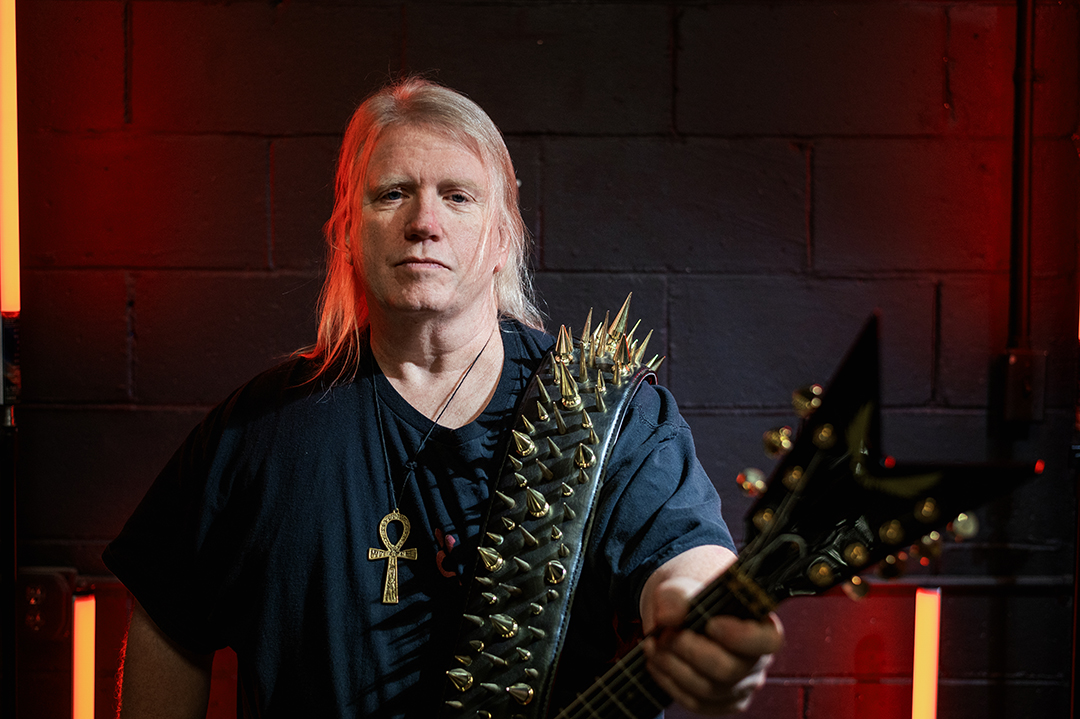
By Dathan Kazsuk | .
Death metal is not for the faint of heart. It’s loud. It’s unrelenting. It’s the kind of music that rattles your bones and leaves your ears ringing long after the final chord fades. And few bands do it better—or with more sinister precision—than Nile, a band that’s been melting faces and blowing minds for over three decades.
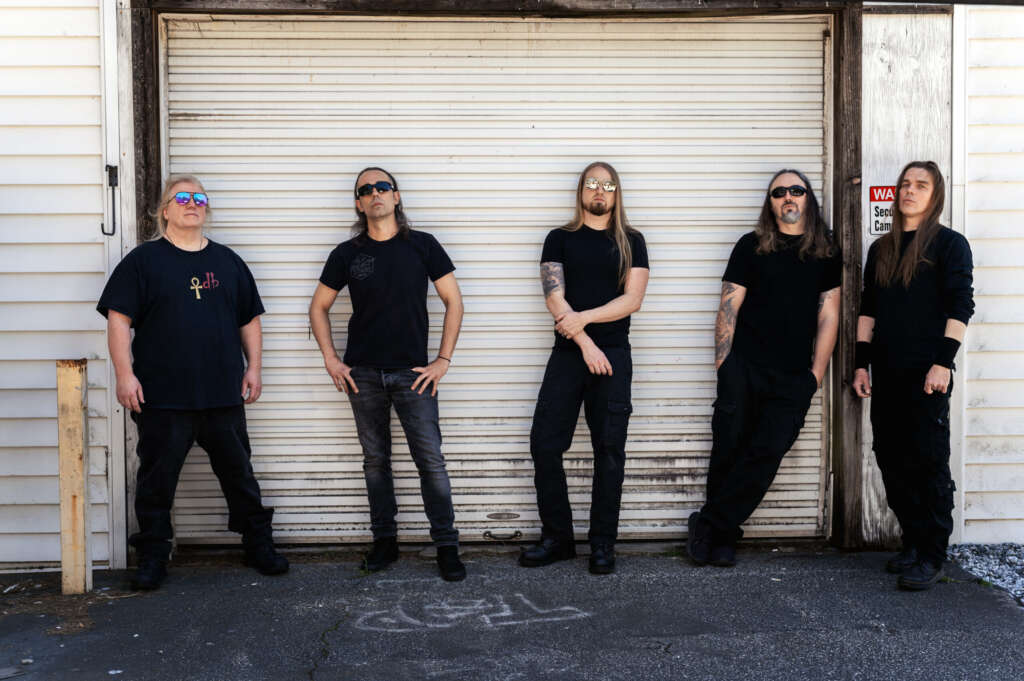
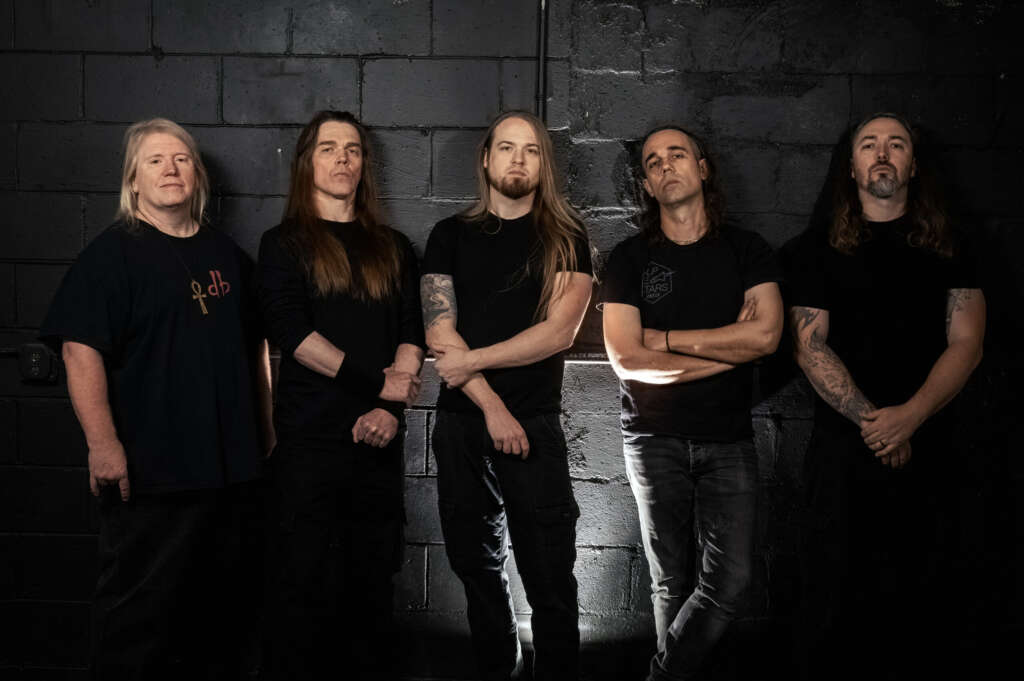
Hailing from Greenville, South Carolina, Nile isn’t just another extreme metal band—they’ve carved out their own blood-soaked corner of the genre, mixing brutal riffs with ancient Egyptian themes and a level of technical skill that borders on the inhuman. Fronted by guitarist and vocalist Karl Sanders, the band has been grinding away since the early ’90s, touring the globe, releasing critically acclaimed albums, and steadily building a cult-like following that spans continents.
These guys have been at it for more than 30 years, and somehow, they just keep getting heavier. Their live shows are as intense as their studio recordings—controlled chaos delivered with surgical precision. Before Nile storms into Chapel of Bones this Friday night here in Raleigh, I had the chance to pick Karl’s brain about the band’s journey, their inspirations, and what fans can expect when they take the stage.
Check out my story on the Chapel of Bones HERE!
The new album has been described as some of Nile’s most ambitious work yet—what was your vision going into writing and recording it?
Karl Sanders: We knew that we wanted to up the ante. Metal has a long tradition of “Harder Faster Louder,” so, really, I think what we are really doing is just carrying on the “Metal Spirit” in pushing ourselves to make The Underworld Awaits Us All the best it could be.
Nile is known for its blend of technical ferocity and historical themes. Did you experiment with any new sounds, instruments, or recording techniques on this record?
Sanders: Not really. Underworld is stripped down, lean and mean for maximum lethality. One might say that we experimented with making more effective use of LESS extraneous elements.

Lyrically, what stories or texts inspired the new songs, and how do you balance historical accuracy with creative interpretation?
Sanders: I try to remember that we are not writing history books, or participating in a cultural preservation society. We are writing death metal songs; and as such, focusing on the darker and grimmer aspects of ancient Egypt. So while on the one hand I have a great respect for legitimate historical study, I don’t necessarily feel overly constrained by it either. I mostly don’t even worry about it, because a great deal of the song lyrics come straight out of the ancient texts anyway.
After so many albums, how do you keep the music both fresh for yourselves and brutal enough to satisfy the fans?
Sanders: By writing new songs! Yes, it’s more or less that simple. Of course, there is a price to pay; as many metal fans can’t help but expect each new album to sound like their particular favorite. It’s nigh impossible to satisfy everyone and their expectations. First one has to genuinely answer the question, “OK, what do we as a band want to do NOW?” I find the better records are where everyone involved is on the same page as to that fundamental question.
Nile has been channeling ancient history, mythology, and brutal death metal since the early ’90s. Looking back, what do you remember most about those first days when Nile was just getting started?
Sanders: What I remember is how enthused we were just to be getting the chance to bring to metal fans the music we had worked so hard on those first years. That primal fire is the driving force of a band, and it was burning fiercely with us in those early days.
You’ve often drawn on Egyptian history and mythology. What first pulled you toward that theme, and why do you think it continues to resonate with fans today?
Sanders: I got involved in it simply because I enjoyed it. It’s timeless and thought-provoking, and an endless well of inspiration.
Death metal has gone through countless shifts since Nile’s debut. How do you think the genre has changed for better—or worse—since you began?
Sanders: Well, it’s a different ball game for sure. I do appreciate the evolution of the genre; both in the quality of musicianship these days, and the modern recording technology to actually record this kind of music and have it hearable. When we started, it was very primitive, the science hadn’t evolved yet, and a lot of stuff seemed like voodoo. So yeah, nowadays, death metal records are way easier to make. But what I find lacking in a lot of bands these days is the absence of heartfelt conviction and passion, and the disposable cookie-cutter-ism is prevalent nowadays.
Was there a specific band, album, or even a single riff that made you say: “This is it, this is what I want to do with my life”?
Sanders: Probably any number of classic arena metal bands when I was in high school. I remember seeing the Sabbath Heaven and Hell tour when it came through my hometown in 1981, with RJD (Ronnie James Dio) singing. That show was so monumental as to be life-changing.
Nile’s music is extremely technical and demanding—what does your rehearsal and writing process look like to keep everything so tight?
Sanders: I play guitar every waking moment that I possibly can. That gets tougher as one takes on more adult responsibilities in life—and some days I can carve out more time than others.
What’s life like for you guys on the road these days? Has touring gotten easier or harder as the years go by?
Sanders: The financial realities of touring for a band our size have become exponentially more challenging. So, in that sense, it’s tougher every year. But it’s what I love doing, and I try to focus on the music and the fans, cause that’s why we are there in the first place.
Are there particular places around the world where the fans’ reaction surprises you, or feels especially intense?
Sanders: South and Central America are the most intense metal audiences of anywhere on earth. Every time I play shows there, I am continually amazed and heartwarmed, and reminded exactly why those South American shows are absolutely worth the long plane flights to get there. But every country is special in its own way. I particularly appreciate the Japanese audiences as well. When I think about it, though, I love playing wherever fans want to hear us play. That’s what matters.
What keeps you motivated to keep pushing boundaries after decades in such a physically and mentally intense genre?
Sanders: It’s a fair question that I don’t really know the answer to. It’s just what I love doing and am passionate about. I think there is something about death metal that is gladiatorial in nature. One keeps fighting, for the sheer love of the fight, until one is struck down and can fight no more. I’m pretty sure there was no such thing as retirement pensions for old gladiators.
If you could go back and give advice to yourself in the early Nile days, what would it be?
Sanders: Don’t read reviews or people’s comments. It’s too easy to let them sabotage one’s mind. Allowed to run amok, the quest for objective constructive feedback can and will just eat your brain like a parasite. Maybe even more important, learn to recognize and eliminate toxic people and their influence.
Outside of Nile, what music or art inspires you these days that fans might not expect?
Sanders: I like quiet music. Calm soothing music on acoustic instruments that helps me unwind , refresh and reset, so I can come back to making brutal death metal with a clear mind and soul.