


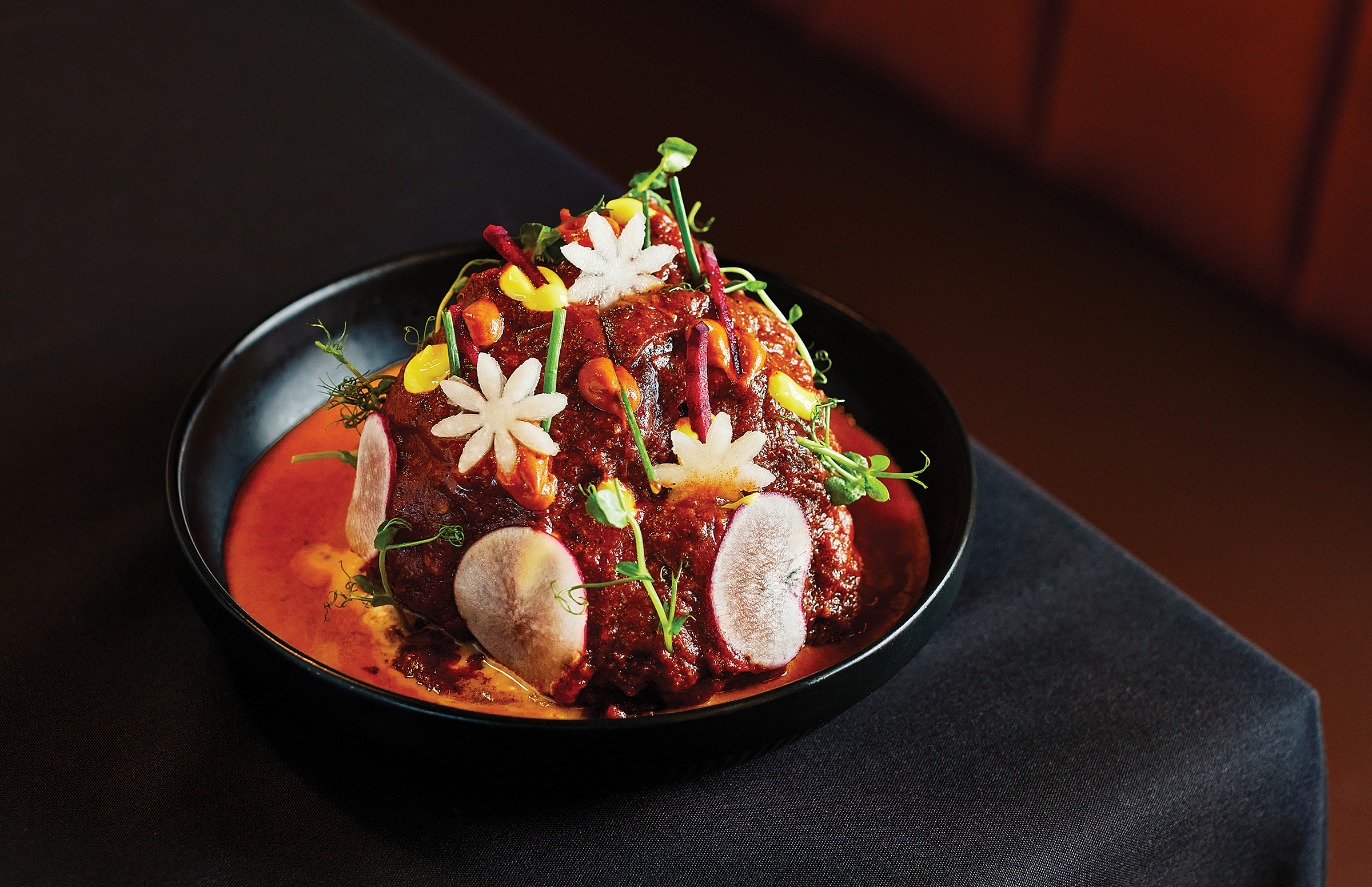
TRIANGLE’S DEEP ROOTS
By Jennifer Primrose
Winter in North Carolina can bring its fair share of gray skies and chilly nights, but it also ushers in one of the most rewarding times to cook. The season’s bounty—think butternut squash, sweet potatoes, beets, turnips, and hearty greens—offers the kind of comfort that only slow, soulful cooking can deliver. It’s the time for cozy kitchens, simmering pots, and those earthy aromas that remind you warmth doesn’t just come from the fireplace—it comes from the food you share.
These recipes aren’t about fuss or flash—they’re about connection. About finding flavor in what the soil gives us this time of year and discovering that a turnip, beet, or head of cabbage can taste like pure comfort when cooked with care. So grab your Dutch oven, crank up the oven, and let North Carolina’s winter harvest warm up your table.

Kyle Teears
Executive Chef, Whiskey Kitchen
Chef Kyle Teears has never been one to simply cook a meal—he builds stories on the plate. Now at the helm of Whiskey Kitchen in downtown Raleigh, Teears draws on his Appalachian roots and refined Southern sensibilities, weaving together a style that feels both deeply familiar and refreshingly modern. It’s a homecoming of sorts. His name has long carried weight in the Raleigh dining scene, thanks to his work at The Willard and the acclaimed Saint Jacques, where he sharpened not only his technique, but also his belief in community-driven cuisine.
Across the state, Teears has become known for his inventive interpretations of Southern fare, a chef who honors the classics while confidently pushing them forward. He’s a regular presence at culinary festivals, competitions, and collaborative events—always the chef who shows up with equal parts creativity, hospitality, and that unmistakable respect for local ingredients.
With his return to Whiskey Kitchen, Teears steps into a new chapter, bringing soulful tradition and sleek Southern flair under the same roof. It’s a fresh take for a Raleigh favorite—one guided by a chef who knows exactly how to make the familiar feel exciting again.
When the weather turns cold, how do you bring that cozy, comforting feeling into your dishes using winter vegetables?
Most of the produce available during late fall and winter naturally has warming properties. Think of pumpkin pie, butternut squash bisque, and sweet potato biscuits. Slow-simmered collards or stewed mustard greens with apples. A beef stew with wheat berries or a lovely chicken and dumplings just sets the tone for a night in with a fire going, a good dog, and a glass of bourbon. Using root vegetables this time of year is ideal. Using root vegetables adds a lovely earthy flavour.
Which North Carolina winter veggies do you love working with, and what makes them stand out on your menu?
I love beets. I honestly wish I had them more on my menu. We currently have the autumn salad, which has butternut squash and beets as well as pumpkin seeds. We also have beets in our grain bowl. I like keeping them simple and still tasting like a vegetable. Roasted with a little salt and pepper is the way to go. A nice caramelization of the natural sugars in a beet with just enough seasoning to bring the flavors forward.
Do you have any favorite local farms or markets you rely on for winter produce?
Go to the [North Carolina State] Farmers Market! Seriously. If you live here and have never been … you’re an idiot. Tons of pumpkins, squashes, beets, turnips, apples, and meat. Coastal Plains Produce is who we use for our lettuce. Wise Farms for butternut. Scott Farms for sweet potato, sweet pea for our micros, and don’t forget about Ran-Lew [Dairy] and their incredible buttermilk.
Winter dishes tend to be hearty and soul-warming—how do seasonal vegetables help you build that kind of depth and richness?
The heartiness of winter food lends itself to being cooked for a longer amount of time. This creates a rich depth of flavor. And the earthiness adds to this comforting warmth.
Do you see winter as a challenge, or a chance to get more creative in the kitchen?
As far as cooking, fall and winter dishes are easy. Low and slow, baby. Stews, soups, casseroles, savory and sweet pies, chilis, are all easy dishes to cook at home.
What’s one underrated winter veggie—or cooking trick—you wish more people at home would try?
Watercress. Seriously, people need to eat more of this stuff. It has a nice peppery taste with a mild horseradish bite. Add it to your salad mix or to a roast beef sandwich.
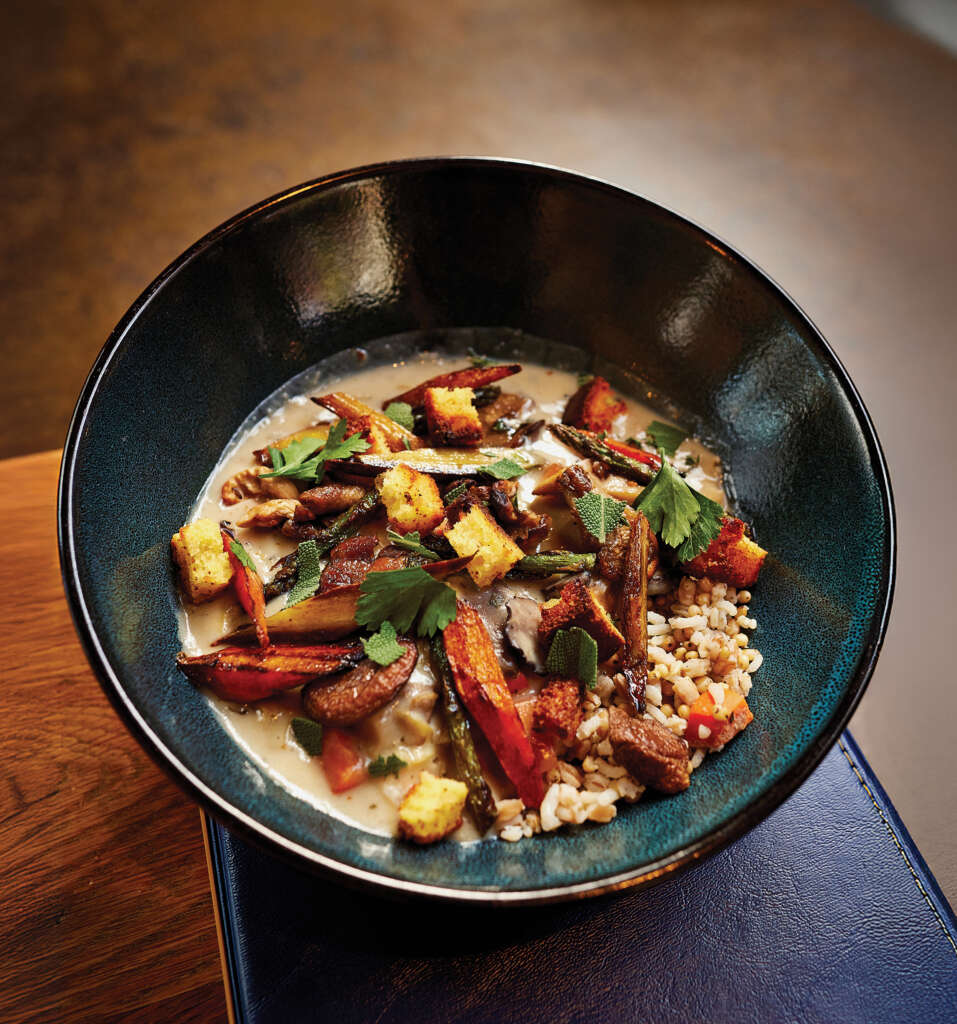
Photo by Jessica Bratton.
Chef Teears’s Pottage Recipe
This is a great recipe for a Dutch oven. Or start it in a pot and transfer everything to a crockpot. Fresh herbs are preferred, but dry herbs will work. You will just need to increase the measurement since they have less flavor than fresh.
INGREDIENTS
For the pottage:
- 8 oz butter
- ½ cup flour
- 4 oz garlic, sliced
- 3–4 sage leaves, minced
- 1 oz parsley, minced
- 1 sprig rosemary
- A few sprigs of thyme
- 1 oz salt
- 1 tsp black pepper
- 1 pint heavy cream
- 2 quarts vegetable stock, unsalted
- 1 pint milk
- 1 tbsp maple syrup (not pancake syrup)
For the vegetables:
- 1 lb leeks, leaves removed and small dice
- 8–12 oz mushrooms, medium slices
- 1 lb carrots, medium dice
- 8 oz celery, medium dice
- 8 oz turnip, medium dice
- 8 oz butternut squash, medium dice
INSTRUCTIONS
- Melt butter over medium/high heat. Whisk in the flour, then reduce heat to medium-low.
- Add all of the spices and herbs. Cook for 5 minutes, whisking periodically.
- Slowly add in the heavy cream, vegetable stock, milk, and maple syrup, whisking constantly to make sure no flour clumps form.
- Reduce the heat to low and cook for an additional 20 minutes or until the pottage thickens, stirring with your favorite wooden spoon periodically. (At this point, you could also add it to your crockpot on the lowest setting.)
- Toss the vegetables in a bowl with oil, a pinch of salt, and pepper. Spread onto a sheet pan and roast at 450° for 8 minutes. (You’re trying to get some nice color without turning the vegetables to mush.)
- Serve over Tidewater Grain Co. Carolina Gold rice or your favorite local grains.

Mukesh Gautam
Executive Chef, Jalwa Indian Bistro
Chef Mukesh Gautam brings more than 27 years of culinary experience to Jalwa Indian Bistro, where he blends classical Indian training with a fresh, modern approach. His career began at India’s esteemed ITC Hotels and later flourished in California as executive chef at Shosha—a restaurant celebrated for pushing the boundaries of contemporary Indian cuisine.
Rooted in generations of family recipes, Gautam has a gift for balancing spices and flavors with both precision and artistry. His dishes reflect a deep respect for ingredients, innovation, and sustainability, including his dedication to operating a zero‑waste kitchen.
At Jalwa, Chef Gautam continues to redefine modern Indian dining, offering a vibrant, thoughtful menu that showcases the full depth and creativity of Indian cuisine.
When the weather turns cold, how do you bring that cozy, comforting feeling into your dishes using winter vegetables?
Tandoori Malai Broccoli. We infuse this dish with white pepper and mace—spices revered for their exceptional heat-retaining and body-warming properties. Together, they make this delicacy not just a culinary indulgence but also a comforting winter favorite, perfect for savoring warmth in every bite.
Which North Carolina winter veggies do you love working with, and what makes them stand out on your menu?
Broccoli—the star of the plate. Once known mainly as a side or garnish for its crunch and vibrant hue, broccoli takes the spotlight in this creation [Tandoori Malai Broccoli]. Enhanced with bold, globally inspired flavors and a creamy tandoori twist, it evolves into a hearty, irresistible appetizer that redefines how we experience this humble vegetable.
Do you have any favorite local farms or markets you rely on for winter produce?
While winter offers an array of seasonal vegetables and fruits, I chose to experiment with broccoli—transforming it into a delightful delicacy infused with an Indian spice blend that surprises and satisfies the palate.
Winter dishes tend to be hearty and soul-warming—how do seasonal vegetables help you build that kind of depth and richness?
We incorporate spices known for their natural warming properties, creating a balance of gentle heat and rich flavor that keeps the body cozy and the palate delighted.
Do you see winter as a challenge, or a chance to get more creative in the kitchen?
As a chef, I see winter as a perfect canvas for culinary creativity. The season brings a bounty of fresh produce, inspiring me to experiment and design innovative dishes for our guests. Moreover, winter’s festive spirit draws more diners to the restaurant, turning every meal into a shared celebration of flavors.
What’s one underrated winter veggie—or cooking trick—you wish more people at home would try?
Winter brings an abundance of produce—broccoli, kale, pumpkin, sweet potatoes, taro, and jicama roots among them. For instance, root vegetables can be transformed into wholesome baked wedges, kale can shine in a refreshing salad with sour cream and mustard dressing, and pumpkin can be reimagined into a flavorful rasam, soup, or shorba.
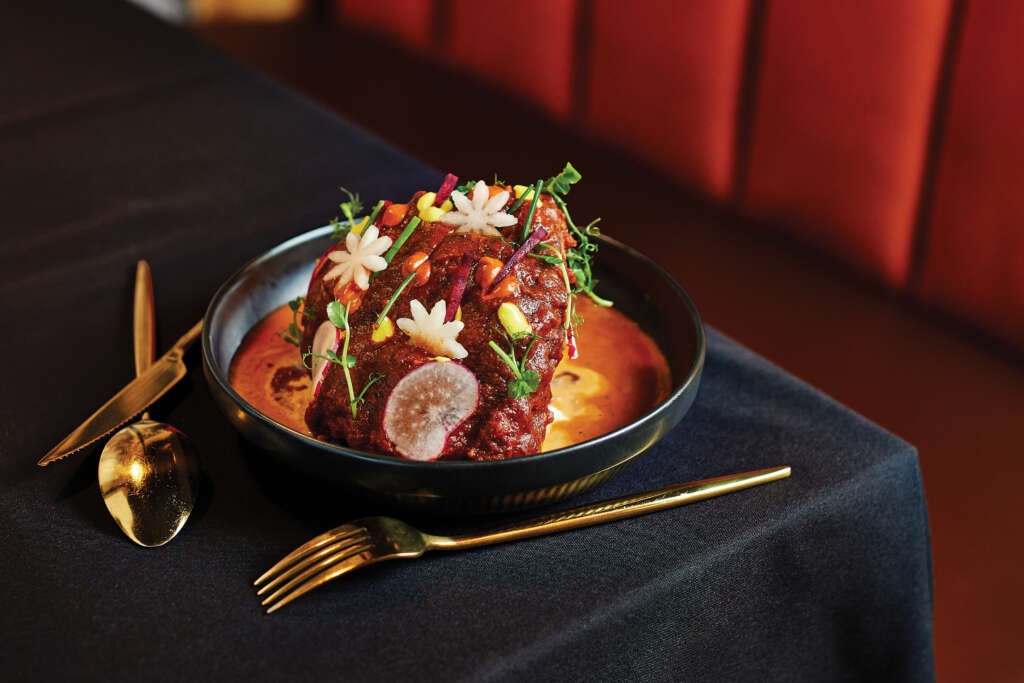
Chef Gautam’s Tandoori Malai Broccoli (Air Fryer–Friendly)
This recipe works well in an air fryer if you do not have a tandoor oven and serves nicely with mint chutney or raspberry chutney for a refreshing contrast.
INGREDIENTS
- 2–4 young broccoli florets, extra stems and leaves trimmed
- 1 lb Hung curd or Greek yogurt
- 1 ladle of vegetable oil
- 1 cup Parmesan cheese powder
- 1 tbsp chopped green chili
- ½ tsp green cardamom powder
- ½ tsp mace powder
- Salt to taste (approx. 1 tbsp)
- ½ tsp black salt (optional)
- 1 cup cashew‑nut paste (or 1 cup boiled garbanzo paste for nut‑free option)
- ½ tbsp white pepper powder
- 1 tbsp lemon juice
- 1 tsp garam masala powder
- 1 tbsp coriander powder
- 1 tsp cumin powder
- 1 tbsp ginger‑garlic paste
INSTRUCTIONS
- Blanch the broccoli and immediately place in ice water to retain green color.
- Mix all remaining ingredients thoroughly, ensuring there are no lumps.
- Rub the marinade generously over the blanched broccoli.
- Cook in a tandoor or air fryer until lightly charred and fully cooked.
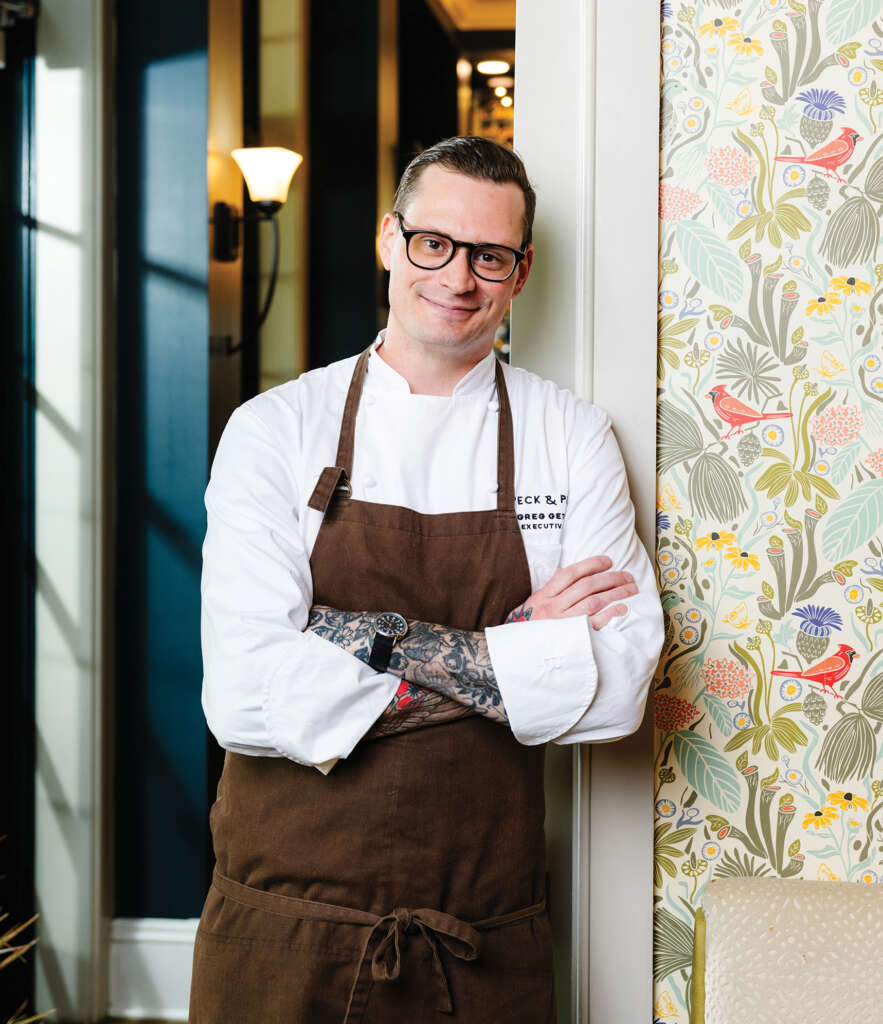
Greg Gettles
Executive Chef, Peck & Plume
Greg Gettles is a Triangle-born chef whose journey through some of the South’s most respected kitchens has shaped his ingredient-forward, modern Southern sensibility.
He’s cooked at high-end, acclaimed kitchens including Magnolia Grill, Herons at The Umstead Hotel and Spa, and Piedmont Restaurant, refining skills that balance technical expertise with local, seasonal produce. Now helming the kitchen at The Mayton—through its restaurant Peck & Plume—Gettles brings that depth of experience to a menu rooted in Southern tradition but open to creative flourish.
Whether he’s turning out a refined brunch or a thoughtful dinner plate, Gettles’ story is one of local roots, regional pedigree, and a commitment to making Southern-inspired, ingredient-driven food feel both elevated and familiar.
When the weather turns cold, how do you bring that cozy, comforting feeling into your dishes using winter vegetables?
I think about braising, different kinds of fats to really fill you up, warming spices that can hit that mark. I lean pretty hard into winter squashes, like Hubbard squash and heirloom pumpkins, but really leaning on the root vegetables.
Which North Carolina winter veggies do you love working with, and what makes them stand out on your menu?
I love the different varieties of pumpkins. I like to reach for those ingredients that people aren’t terribly familiar with. Kabocha squash is more popular these days and is definitely an ingredient we have all over our menu right now. I found that Japanese and Chinese flavors amp up the flavor of kabocha squash. For our dinner menu, we make a carrot dashi, and we poach the kabocha squash in that. We add kombu (Japanese kelp), and it adds the umami depth and is very exciting.
Do you have any favorite local farms or markets you rely on for winter produce?
The Durham Farmers Market will always have my heart. Lil’ Farm and Bluebird Meadows are the big ones for me. I need to check out the Western Wake Farmers Market. I’m on the hunt for growers around the Holly Springs, Fuquay-Varina, Cary, and Apex areas.
Winter dishes tend to be hearty and soul-warming—how do seasonal vegetables help you build that kind of depth and richness?
I think there’s something about familiarity. The whole goal of cooking, from my perspective, is to evoke memories and create memories. One of my favorite dishes is braised escarole with prosciutto and legitimately old, stale bread. A former boss’s mom, who was a first‑generation Sicilian, made that dish for me. To this day, it is one of the most remarkable dishes I’ve ever had.
Do you see winter as a challenge, or a chance to get more creative in the kitchen?
Fall and winter are the most exciting times for me because that’s the most challenging time to create a different flavor.
Whereas in the summer and spring, you’re relying on the ingredient to really carry it. In the winter and fall, you’re relying on the seasoning to elevate the available produce to the next level.
What’s one underrated winter veggie—or cooking trick—you wish more people at home would try?
Rutabaga mixed with carrot and butter is one of the most beautiful things you can ever make. Celtuce is another ingredient that you don’t see that much, but [it] is one of the coolest ingredients. It looks like bamboo. All you have to do is peel the outside fibers, salt it, and then it tastes like toasted oats.
Chef Gettles’s Honeynut Squash Fondue
This fondue is served with sunchoke chips, black garlic puree, and curried lentils at Peck & Plume, but a crusty bread is a solid choice as well.
INGREDIENTS
- 2 honeynut squashes
- 1 tbsp olive oil
- 1 tbsp unsalted butter
- 1 large shallot, minced (or ½ small yellow onion, finely diced
- 1 clove garlic, minced
- ¼ cup white wine
- ½ cup vegetable or chicken stock
- 2 tbsp sour cream
- ¼ cup cheddar cheese, grated
- ¼ cup Gruyère or Swiss cheese, grated
- 1 tbsp whole-grain mustard (Chef Gettles recommends Lusty Monk Mustard from Asheville)
- Salt to taste
INSTRUCTIONS
- Preheat oven to 350 degrees.
- After washing the honeynut squash, slice the top and bottom stems and cut just above the curve at the base of the squash. Using a spoon, carefully scoop out the seeds from the bottom of the squash without cutting all the way through. Coat the squash in olive oil and roast for 12 to 14 minutes. Peel the top part of the squash and dice it.
- In a medium saucepot over medium heat, sauté the shallot and garlic in butter until the vegetables turn translucent.
- Add the squash, then the white wine, and reduce by half.
- Add the stock and continue simmering until the squash has been cooked through.
- Transfer the ingredients from the saucepot to a food processor, then add sour cream, cheeses, and mustard and blend until smooth.
- Transfer to a separate container and gently spoon the fondue into the roasted squash cup.

Saif Rahman
Owner/Chef, Peregrine
Chef Saif Rahman brings a singular culinary voice shaped by immigration, classical training, and a deep respect for regional ingredients. Born in Bangladesh and raised in Queens, New York, he carried his grandmother’s kitchen traditions with him when he settled in North Carolina. As owner-chef of Peregrine in Raleigh, Rahman calls the restaurant “a love letter” to the destinations and cultures that have defined his journey—from South Asia to the American South—inviting diners to experience what first-generation immigrant food means to him, modernized and refined.
Named NCRLA’s 2021 Chef of the Year after winning the statewide Chef Showdown, Rahman also served as a culinary ambassador for the Got to Be NC program, celebrating North Carolina’s food and farmland heritage. His menu reflects this dual vision: rooted in his Bangladeshi upbringing and classical training, grounded in Southern ingredients, and always looking toward new horizons.
When the weather turns cold, how do you bring that cozy, comforting feeling into your dishes using winter vegetables?
When the weather turns cold, I’m reminded of my childhood in Sylhet, Bangladesh, cooking alongside my mother and grandmother. During the winter months, they would prepare hearty braised vegetables infused with warm spices, always served with sticky rice—a meal that truly nourished the soul. At my restaurant, I carry on that tradition by using seasonal root vegetables, roasted with comforting spices like cinnamon, allspice, cloves, cardamom, and chilis to capture that same feeling of warmth and nostalgia.
Which North Carolina winter veggies do you love working with, and what makes them stand out on your menu?
At Peregrine, we really try to cook with what’s in season. This time of year, that means a lot of squash acorn, pumpkin, or whatever the farmers bring to the market, plus plenty of hearty greens and sweet potatoes. If I spot hispi cabbage, it almost always ends up on the menu. When vegetables are at their peak, people get excited about them. It’s kind of like when watermelon hits in the summer; everyone wants a taste of what’s fresh and in season.
Do you have any favorite local farms or markets you rely on for winter produce?
I love working with anyone from our farmers market who brings in the best of what they grow. I love Ronnie Moore’s [Fruits & Veggies], Blue Sky Farms, and Beth Moore’s Produce. These are my go-tos for produce at Raleigh’s State Farmers Market. And I also love Huanong Eco-organic Farm in Durham for some specific Asian vegetables.
Winter dishes tend to be hearty and soul-warming—how do seasonal vegetables help you build that kind of depth and richness?
Seasonal winter vegetables are perfect for building hearty, soul-warming dishes because of the way their flavors and textures develop in colder weather. Many winter crops—like root vegetables, brassicas, and squashes—grow slowly in the chill, which concentrates their natural sugars and deepens their flavor.
Do you see winter as a challenge, or a chance to get more creative in the kitchen?
I feel really lucky to live in a state that gets all four seasons, because it means a completely different selection of produce throughout the year. I don’t see that as a challenge at all; if anything, it keeps things exciting. I’m always looking forward to what each new season brings.
What’s one underrated winter veggie—or cooking trick—you wish more people at home would try?
One of the most underrated winter vegetables, in my opinion, is cabbage. It’s actually one of my favorites, especially when I roast it in ghee with roasted garlic and a squeeze of lemon, then pair it with a spicy pepper jam. I wish more people appreciated cabbage; it’s incredible how well it absorbs whatever flavors you cook it with.
Chef Rahman’s Roasted Acorn Squash with Spiced Honey and Thyme
INGREDIENTS
- 2 lbs acorn squash (trim both ends, halve lengthwise, and scoop out the seeds)
¼ cup local honey - ¼ tsp sweet paprika
- ⅕ tsp toasted ground cumin
- ⅕ tsp toasted ground black pepper
- ⅕ tsp toasted nigella seeds
- 2 tbsp olive oil
- Zest and juice of 1 lemon
- ¼ tsp sea salt (adjust to taste—use less if you prefer it lighter on salt)
INSTRUCTIONS
- Preheat your oven to 400°F.
- Slice the cleaned squash into even wedges or half-moons.
- In a small bowl, whisk together the honey, olive oil, lemon zest, lemon juice, paprika, cumin, black pepper, nigella seeds, and sea salt.
- Toss the squash with the spiced honey mixture until well coated.
- Arrange the pieces on a parchment-lined baking sheet, making sure they’re not too crowded.
- Roast for 25–35 minutes, flipping halfway through, until the squash is tender and caramelized around the edges.
- Serve warm and drizzle with any remaining spiced honey from the pan.