Skip to content Skip to sidebar Skip to footer

Kitchen Confidential – Smash Social Club

By Dathan Kazsuk

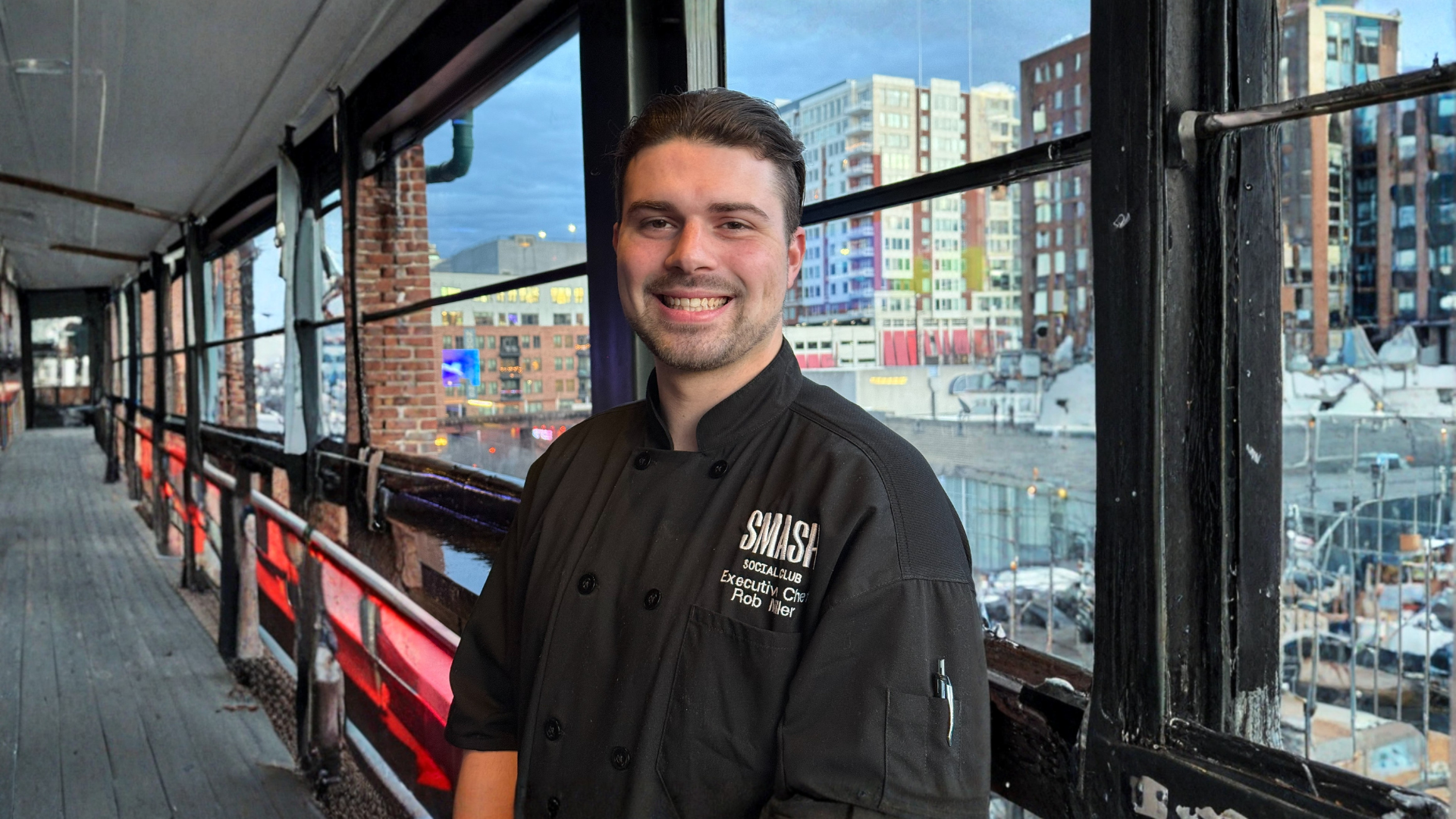
There are chefs who come up through culinary school, and then there are chefs who come up through the restaurant itself—learning every station, every stress point, and every way a service can go sideways. Rob Miller is firmly in that second camp. Before he ever ran a kitchen, he ran food, bussed tables, worked the bar, and learned the rhythm of a dining room the hard way—one shift at a time.

Now the executive chef at Smash Social Club in Raleigh, Miller brings that all-hands-on-deck mindset to a menu that leans playful but cooks with intention. From Korean-inspired wing sauces (which I’ve tried and can vouch for) to elevated comfort food, his cooking reflects a chef who thinks about flavor first and trends second. We caught up with him for our Kitchen Confidential series to talk ingredients, Raleigh’s fast-moving food scene, and the moments that shaped how he runs a kitchen today.

What ingredient are you obsessed with right now, and how are you using it on the menu?

My new kick is probably white shoyu and gochujang. We use gochujang and white shoyu to create a really lovely Korean-style wing sauce. We also make gochujang aioli that complements our shrimp tacos, and it’s one of our most popular tacos.

What’s a food trend you wish Raleigh would embrace—and one you wish would disappear?

I almost have to use Smash as a great example. Social gaming is a very new concept, but I’ve noticed a couple of similar venues that embrace a la carte, family-style dining. It’s a really cool way for people to have a great time together while still sharing a drink and a meal.

My least favorite food scene is the buffet, and I wouldn’t mind if it disappeared.

How has Raleigh’s dining scene changed since you first started cooking here?

I’ve been here for just over four years. Raleigh’s dining scene is constantly growing. I see new restaurants by the dozen every year. You turn any corner in downtown Raleigh, and you’ll find a cool restaurant. It’s a really cool, diverse food scene that is constantly evolving.
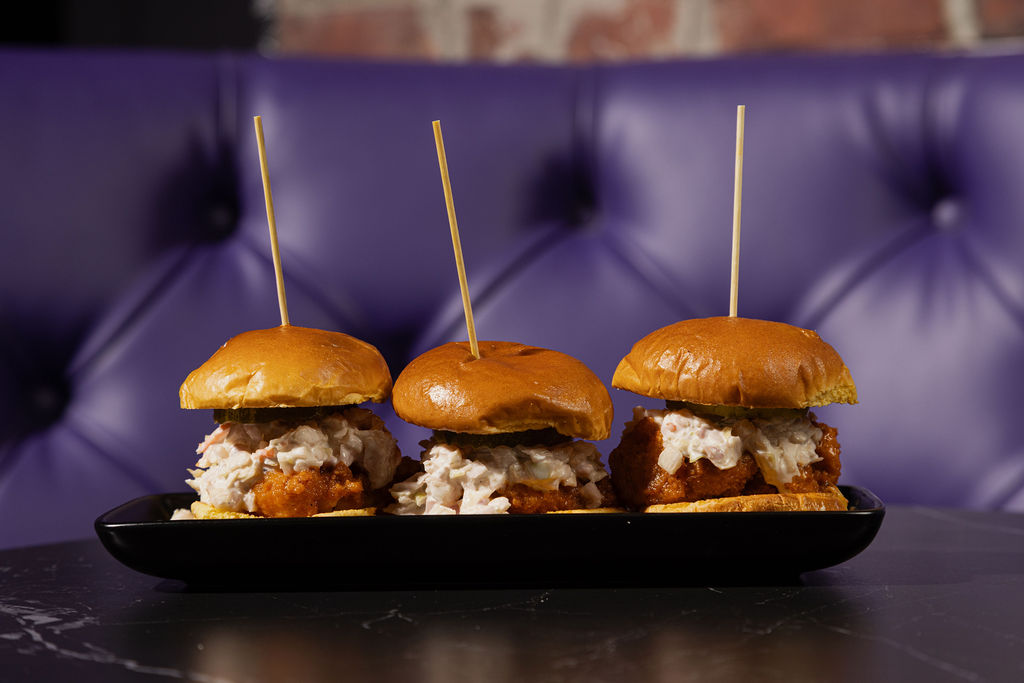
Photo courtesy of Smash Social Club.
Which dish on your current menu best reflects your culinary philosophy?

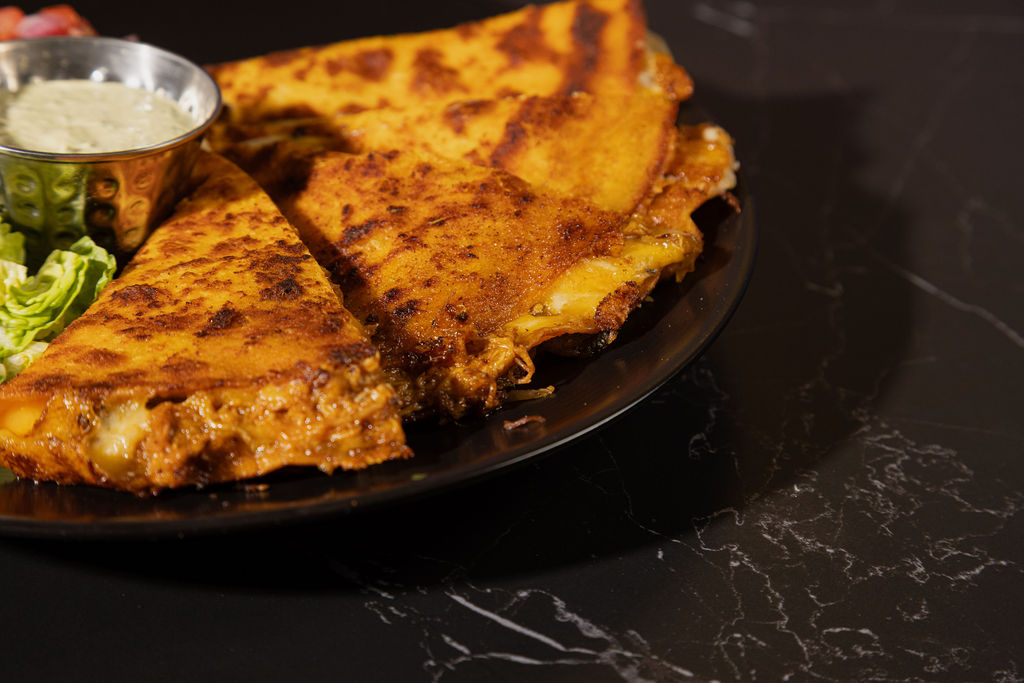
I would say it could be something as simple as our Buffalo chicken quesadilla. I was taught to look at a dish and say, “Okay, how can we take this and elevate it?” We make a homemade Buffalo sauce with a high fat content. We sear the tortilla in the Buffalo sauce on the flat top to develop flavor. We use beer-braised chicken, poblano peppers, and caramelized onions. We add a side of poblano cream to round out the poblano in the dish.

It’s just kind of looking at everything holistically. I was taught to look at each ingredient and make sure each ingredient by itself tastes proper. And then when you pull everything together, you try it again, and then you can really hone in on how to finalize the dish. That’s a big thing with LM Restaurants: making sure every ingredient involved is fresh, vibrant, and flavorful.

What’s the biggest risk you’ve taken on a menu—and did it pay off?

Being a young chef at 27, there’s a lot I still have to learn, but there’s also a lot of insight I can bring to the table. Being able to drop some fun dishes at Vidrio was probably my biggest risk. LM Restaurants brought in a consultant chef that I got to work with on redeveloping the menu [there]. I made a white wine–braised lamb shank with cranberries, harissa, and figs. It embodies Mediterranean cuisine, but it also has a little new flair. It was something I wanted to try, and I spitballed it one day. It came out great. It sells. People love it. It was probably my biggest risk, especially coming after some pretty amazing braised lamb dishes before at Vidrio. I’m happy to say, and I feel confident that it competes.
What was the single hardest moment or biggest “failure” in your career, and what did you learn from it that you still use today?

We had a Mother’s Day brunch, and it did not go as planned. Unfortunately, staff called out, leaving us shorthanded, which happens in life. We were overbooked. We had about 400 reservations. We had two buffets that we pulled off the wall, and we could not keep up with demand. It was about five staff members, including me, running around like crazy to stay afloat. It was a pretty tough service.

Now I know never to pull buffets off a wall to make them double-sided. It’s those small details that I now look more closely at in operations. It taught me a lot. It was a day I know not just I, but many others, remember very vividly. We brought a lot of those diners back in to roll out the red carpet for them. We really made up for it. It was my toughest time in a restaurant, and it taught me a lot.

Miller’s answers make one thing clear—his cooking isn’t about chasing the next big thing. It’s about taking familiar food and asking better questions of it. What if a quesadilla worked harder? What if a wing sauce had more depth? What if every ingredient had a job instead of just showing up for the photo?

At Smash Social Club, that philosophy plays out in food meant to be shared, played over, and talked about long after the plates are cleared. 

© 2008-2025 Midtown magazine, LLC. All rights reserved. Copyright applies to all pages on this website. | Privacy Policy

By Dathan Kazsuk

There are chefs who come up through culinary school, and then there are chefs who come up through the restaurant itself—learning every station, every stress point, and every way a service can go sideways. Rob Miller is firmly in that second camp. Before he ever ran a kitchen, he ran food, bussed tables, worked the bar, and learned the rhythm of a dining room the hard way—one shift at a time.

Now the executive chef at Smash Social Club in Raleigh, Miller brings that all-hands-on-deck mindset to a menu that leans playful but cooks with intention. From Korean-inspired wing sauces (which I’ve tried and can vouch for) to elevated comfort food, his cooking reflects a chef who thinks about flavor first and trends second. We caught up with him for our Kitchen Confidential series to talk ingredients, Raleigh’s fast-moving food scene, and the moments that shaped how he runs a kitchen today.

What ingredient are you obsessed with right now, and how are you using it on the menu?

My new kick is probably white shoyu and gochujang. We use gochujang and white shoyu to create a really lovely Korean-style wing sauce. We also make gochujang aioli that complements our shrimp tacos, and it’s one of our most popular tacos.

What’s a food trend you wish Raleigh would embrace—and one you wish would disappear?

I almost have to use Smash as a great example. Social gaming is a very new concept, but I’ve noticed a couple of similar venues that embrace a la carte, family-style dining. It’s a really cool way for people to have a great time together while still sharing a drink and a meal.

My least favorite food scene is the buffet, and I wouldn’t mind if it disappeared.

How has Raleigh’s dining scene changed since you first started cooking here?

I’ve been here for just over four years. Raleigh’s dining scene is constantly growing. I see new restaurants by the dozen every year. You turn any corner in downtown Raleigh, and you’ll find a cool restaurant. It’s a really cool, diverse food scene that is constantly evolving.

Photo courtesy of Smash Social Club.
Which dish on your current menu best reflects your culinary philosophy?

I would say it could be something as simple as our Buffalo chicken quesadilla. I was taught to look at a dish and say, “Okay, how can we take this and elevate it?” We make a homemade Buffalo sauce with a high fat content. We sear the tortilla in the Buffalo sauce on the flat top to develop flavor. We use beer-braised chicken, poblano peppers, and caramelized onions. We add a side of poblano cream to round out the poblano in the dish.

It’s just kind of looking at everything holistically. I was taught to look at each ingredient and make sure each ingredient by itself tastes proper. And then when you pull everything together, you try it again, and then you can really hone in on how to finalize the dish. That’s a big thing with LM Restaurants: making sure every ingredient involved is fresh, vibrant, and flavorful.

What’s the biggest risk you’ve taken on a menu—and did it pay off?

Being a young chef at 27, there’s a lot I still have to learn, but there’s also a lot of insight I can bring to the table. Being able to drop some fun dishes at Vidrio was probably my biggest risk. LM Restaurants brought in a consultant chef that I got to work with on redeveloping the menu [there]. I made a white wine–braised lamb shank with cranberries, harissa, and figs. It embodies Mediterranean cuisine, but it also has a little new flair. It was something I wanted to try, and I spitballed it one day. It came out great. It sells. People love it. It was probably my biggest risk, especially coming after some pretty amazing braised lamb dishes before at Vidrio. I’m happy to say, and I feel confident that it competes.

What was the single hardest moment or biggest “failure” in your career, and what did you learn from it that you still use today?

We had a Mother’s Day brunch, and it did not go as planned. Unfortunately, staff called out, leaving us shorthanded, which happens in life. We were overbooked. We had about 400 reservations. We had two buffets that we pulled off the wall, and we could not keep up with demand. It was about five staff members, including me, running around like crazy to stay afloat. It was a pretty tough service.

Now I know never to pull buffets off a wall to make them double-sided. It’s those small details that I now look more closely at in operations. It taught me a lot. It was a day I know not just I, but many others, remember very vividly. We brought a lot of those diners back in to roll out the red carpet for them. We really made up for it. It was my toughest time in a restaurant, and it taught me a lot.

Miller’s answers make one thing clear—his cooking isn’t about chasing the next big thing. It’s about taking familiar food and asking better questions of it. What if a quesadilla worked harder? What if a wing sauce had more depth? What if every ingredient had a job instead of just showing up for the photo?

At Smash Social Club, that philosophy plays out in food meant to be shared, played over, and talked about long after the plates are cleared. 

This Pop-up Is Included in the Theme
Best Choice for Creatives
Purchase Now