Skip to content Skip to sidebar Skip to footer

Americans Are Trading Booze for THC and Mocktails

With NA cocktails booming and THC seltzers going mainstream, Dry January is no longer a fad, but the front line of a cultural shift in how we unwind

By Dathan Kazsuk

If January 1st is the annual “do I still own a liver?” audit, then 2026 is the year we start reading the fine print. More folks are cutting back, swapping out that IPA for a THC spritz, or getting suspiciously excited about a martini that never met vodka. Dry January isn’t a stunt anymore—it’s the warm-up lap for the rest of the year.

The numbers back it up. Nationally, 22% of US adults participated in Dry January last year, up from 21% in 2024, according to Morning Consult Pro. Damp drinkers—those alternating alcoholic and nonalcoholic drinks—are growing even faster. And the broader trend is impossible to ignore: Americans’ alcohol use just hit a near 90-year low.

Only 54% say they drink at all, and a record share now believes even moderate drinking isn’t healthy, per Gallup. After decades of being told a nightly glass of red was good for the heart, people are reevaluating what “healthy” looks like.
This shift isn’t driven by abstinence as much as substitution. The no- and low-alcohol category is booming. The NielsenIQ, or NIQ, puts US off-premise NA sales near the $1 billion mark, with 22% year-over-year growth.

International Wine & Spirits Research projects annual volume growth of around 18% through 2028, bringing the category to roughly $5 billion in value. Beer still drives volume, but zero-proof aperitivos, NA wines, and ready-to-drink (RTD) mocktails are where the category is getting ambitious.

And perhaps no one captures that evolution better than Kevin Barrett, co-owner of Dram & Draught, which has local locations here in Raleigh, Durham, and Cary’s Fenton. “We put just as much time into our spirit-free cocktails as any of our drinks,” Barrett explains.

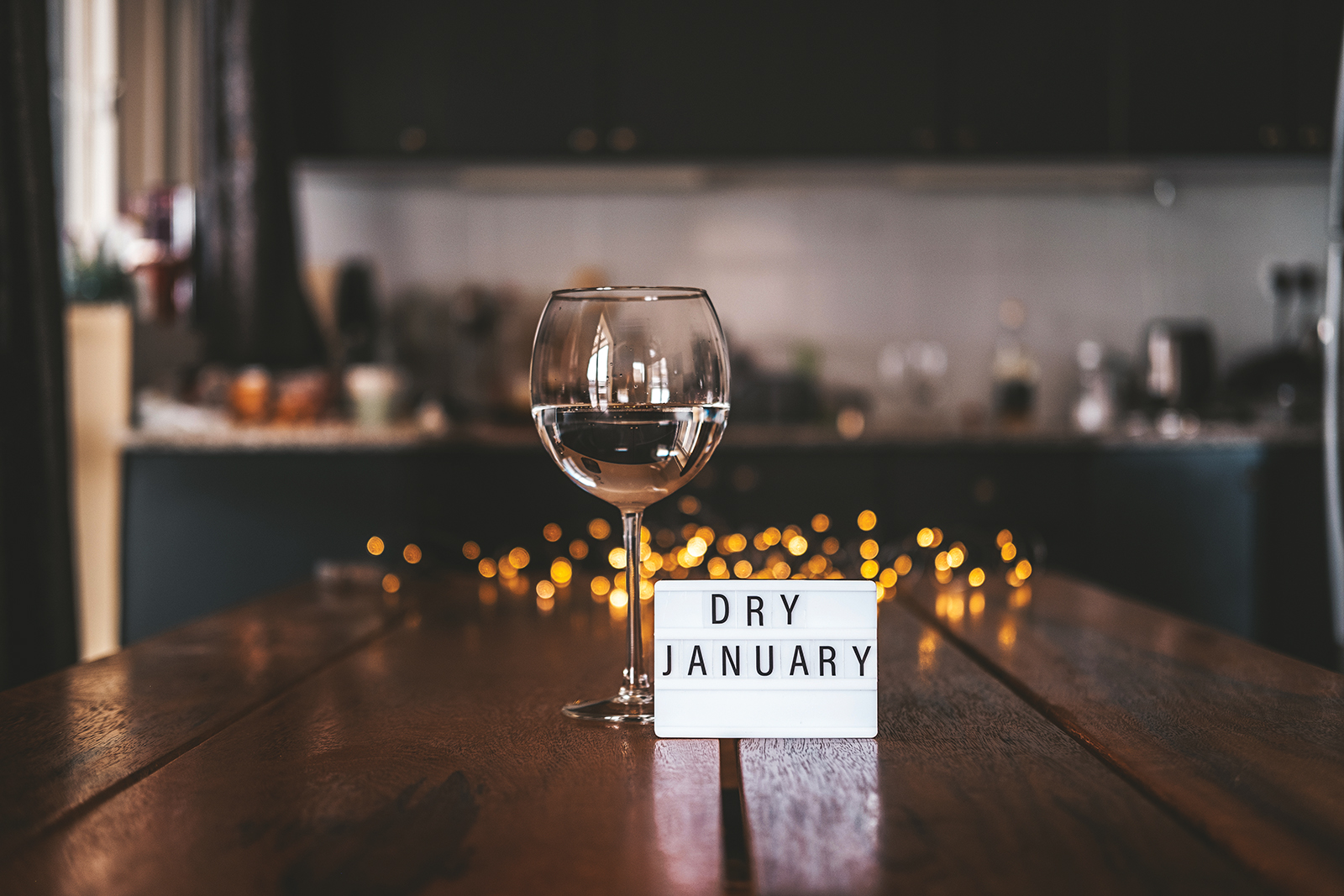
Zero Proof wines have been invading the market for people who are cutting back on alcohol. Photo by Dathan Kazsuk.

“Our staff submit recipes from all locations, and we all meet to compare them and vote on the winner. These are more than just ‘mocktails.’ They’re well-thought-out spirit-free drinks. We always see a spike in January for these drinks. Well, at least the first week in January—then some people come back to the strong stuff.”

That blend of seriousness and humor perfectly mirrors where Dry January sits now: respected, evolving—and still human. Meanwhile, another fizzy disruptor is crowding the cooler: hemp-derived THC beverages.

US THC drink sales hit $1 billion in 2024, with analysts projecting enormous upside as more drinkers swap ABV for milligrams. In the Triangle, that looks like microdosed spritzes, crisp Delta-9 seltzers, and bar programs offering THC alongside NA wines. The surprise isn’t that people are drinking them—it’s how quickly they’ve become part of the mainstream beverage conversation.

Few places feel the shift more directly than LouElla Wine, Beer & Beverage in Durham. Owner Campbell “Cam” Davis has watched the NA and THC worlds grow rapidly—and with real staying power.
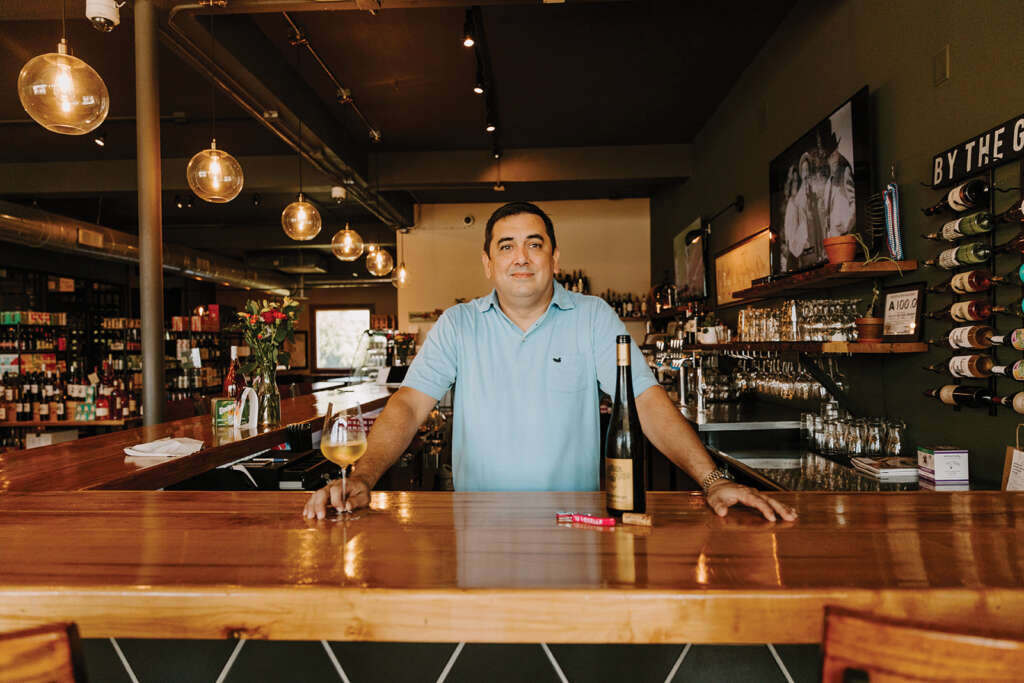
Campbell “Cam” Davis, Owner; LouElla Wine, Beer & Beverage in Durham. Photo courtesy of LouElla Wine.

“We started out and still are very much in the wine and beer alcohol business,” Davis says. “So I’m not the biggest fan of Dry January. But in almost seven years of business, you learn you have to adapt to the trends and challenges you’re faced with.”

Adaptation is increasingly nonnegotiable. The crowd coming through the door today is different from the one he served a decade ago. “This seems like a new generation of drinkers and nondrinkers coming out,” he says. Some want full abstinence, some moderation, some THC, and many simply want to be social without the next-day fog.

To keep up, LouElla treats NA selection with the same level of intention as its traditional wine list. “We taste everything we bring in so we can honestly tell customers what to expect,” Davis says. And the improvement is undeniable.

“There are a lot more great producers than when all we had was [Welch’s] Sparkling Grape Juice and Sharp’s NA beer. The market is growing, and these people are adapting to what the market is asking for.”

One of the most common early-January questions is simple: I want something that feels like wine—what do I get? Davis doesn’t hesitate. “I generally go for the Leitz NA wines from Germany. Johannes is a leader not only in the alcoholic wine world, but also in the NA wine world.”

Still, he remains realistic about the limits of nonalcoholic alternatives. “We’re not quite there yet,” he says.
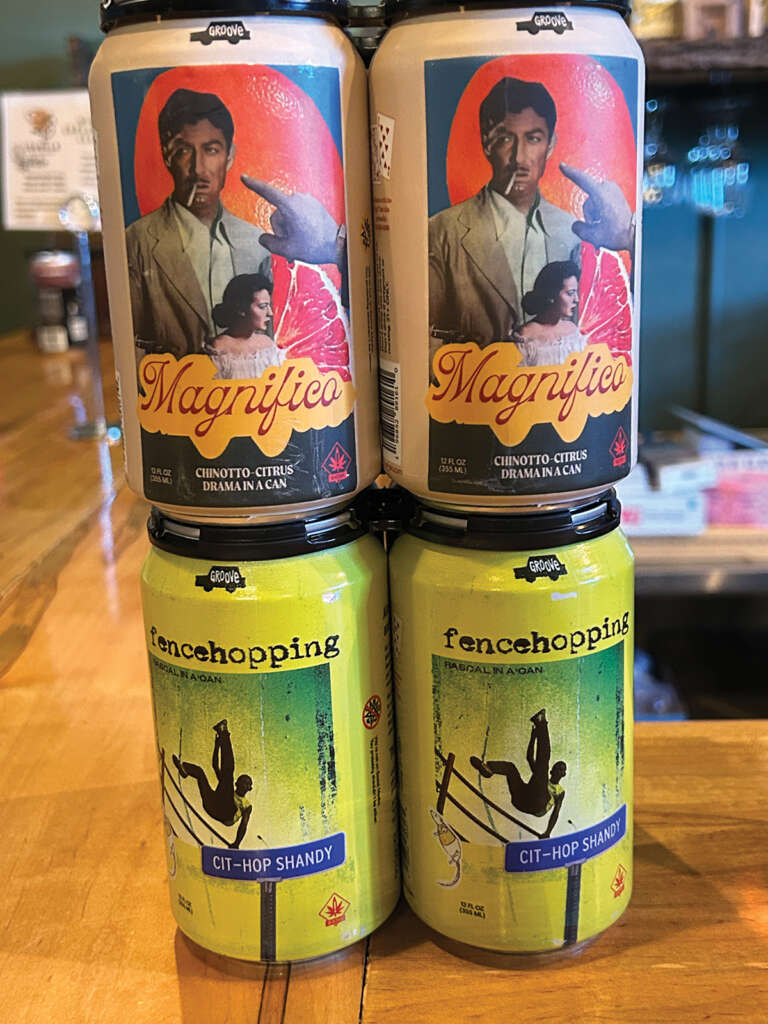
Zero-proof wines from across the globe and THC seltzers from producers like Raleigh’s Groovewagon are gaining serious traction—not just in North Carolina, but nationwide. Photo by Dathan Kazsuk.

“I don’t think there will ever be a true substitute for a nice glass of wine or cold beer after a long day. But the THC drinks, gummies, or flowers are definitely a worthy addition.”

NA might never fully replace wine, but it’s claiming its own territory. Of course, Dry January still lands hard in the beverage world.

“January is already a slow month for all of us in food and beverage,” Davis says. “Add Dry January and it makes the impact sting a bit more.” LouElla combats that slump by creating events and features for the NA crowd while still serving traditional drinkers. “It’s do what you have to do to survive and plan ahead.”

LouElla in Durham offers zero proof, low alcohol and THC drinks. Photo courtesy of LouElla.

He even has a personal favorite he’s excited about introducing to customers. “The newly released Eric Bordelet Perlant Ciders—these are some of the best ciders in the market and taste almost exactly like the alcoholic selections because they use the same juice. Some of my friends’ kids are loving these.”

And where does he think the NA category is heading? “Probably a new normal for everyone—and I’m okay with it. There will always be alcoholic wine and beer drinkers.” 

But now there’s space for everyone else, too: the sober-curious, the THC-sipping, the damp-all-year crowd. Dry January may be the gateway. But the rest of the year is where the real shift is happening.


© 2008-2025 Midtown magazine, LLC. All rights reserved. Copyright applies to all pages on this website. | Privacy Policy

With NA cocktails booming and THC seltzers going mainstream, Dry January is no longer a fad, but the front line of a cultural shift in how we unwind

By Dathan Kazsuk

If January 1st is the annual “do I still own a liver?” audit, then 2026 is the year we start reading the fine print. More folks are cutting back, swapping out that IPA for a THC spritz, or getting suspiciously excited about a martini that never met vodka. Dry January isn’t a stunt anymore—it’s the warm-up lap for the rest of the year.

The numbers back it up. Nationally, 22% of US adults participated in Dry January last year, up from 21% in 2024, according to Morning Consult Pro. Damp drinkers—those alternating alcoholic and nonalcoholic drinks—are growing even faster. And the broader trend is impossible to ignore: Americans’ alcohol use just hit a near 90-year low.

Only 54% say they drink at all, and a record share now believes even moderate drinking isn’t healthy, per Gallup. After decades of being told a nightly glass of red was good for the heart, people are reevaluating what “healthy” looks like.
This shift isn’t driven by abstinence as much as substitution. The no- and low-alcohol category is booming. The NielsenIQ, or NIQ, puts US off-premise NA sales near the $1 billion mark, with 22% year-over-year growth.

International Wine & Spirits Research projects annual volume growth of around 18% through 2028, bringing the category to roughly $5 billion in value. Beer still drives volume, but zero-proof aperitivos, NA wines, and ready-to-drink (RTD) mocktails are where the category is getting ambitious.

And perhaps no one captures that evolution better than Kevin Barrett, co-owner of Dram & Draught, which has local locations here in Raleigh, Durham, and Cary’s Fenton. “We put just as much time into our spirit-free cocktails as any of our drinks,” Barrett explains.

Zero Proof wines have been invading the market for people who are cutting back on alcohol. Photo by Dathan Kazsuk.

“Our staff submit recipes from all locations, and we all meet to compare them and vote on the winner. These are more than just ‘mocktails.’ They’re well-thought-out spirit-free drinks. We always see a spike in January for these drinks. Well, at least the first week in January—then some people come back to the strong stuff.”

That blend of seriousness and humor perfectly mirrors where Dry January sits now: respected, evolving—and still human. Meanwhile, another fizzy disruptor is crowding the cooler: hemp-derived THC beverages.

US THC drink sales hit $1 billion in 2024, with analysts projecting enormous upside as more drinkers swap ABV for milligrams. In the Triangle, that looks like microdosed spritzes, crisp Delta-9 seltzers, and bar programs offering THC alongside NA wines. The surprise isn’t that people are drinking them—it’s how quickly they’ve become part of the mainstream beverage conversation.

Few places feel the shift more directly than LouElla Wine, Beer & Beverage in Durham. Owner Campbell “Cam” Davis has watched the NA and THC worlds grow rapidly—and with real staying power.

Campbell “Cam” Davis, Owner; LouElla Wine, Beer & Beverage in Durham. Photo courtesy of LouElla Wine.

“We started out and still are very much in the wine and beer alcohol business,” Davis says. “So I’m not the biggest fan of Dry January. But in almost seven years of business, you learn you have to adapt to the trends and challenges you’re faced with.”

Adaptation is increasingly nonnegotiable. The crowd coming through the door today is different from the one he served a decade ago. “This seems like a new generation of drinkers and nondrinkers coming out,” he says. Some want full abstinence, some moderation, some THC, and many simply want to be social without the next-day fog.

To keep up, LouElla treats NA selection with the same level of intention as its traditional wine list. “We taste everything we bring in so we can honestly tell customers what to expect,” Davis says. And the improvement is undeniable.

“There are a lot more great producers than when all we had was [Welch’s] Sparkling Grape Juice and Sharp’s NA beer. The market is growing, and these people are adapting to what the market is asking for.”

One of the most common early-January questions is simple: I want something that feels like wine—what do I get? Davis doesn’t hesitate. “I generally go for the Leitz NA wines from Germany. Johannes is a leader not only in the alcoholic wine world, but also in the NA wine world.”

Still, he remains realistic about the limits of nonalcoholic alternatives. “We’re not quite there yet,” he says.

Zero-proof wines from across the globe and THC seltzers from producers like Raleigh’s Groovewagon are gaining serious traction—not just in North Carolina, but nationwide. Photo by Dathan Kazsuk.

“I don’t think there will ever be a true substitute for a nice glass of wine or cold beer after a long day. But the THC drinks, gummies, or flowers are definitely a worthy addition.”

NA might never fully replace wine, but it’s claiming its own territory. Of course, Dry January still lands hard in the beverage world.

“January is already a slow month for all of us in food and beverage,” Davis says. “Add Dry January and it makes the impact sting a bit more.” LouElla combats that slump by creating events and features for the NA crowd while still serving traditional drinkers. “It’s do what you have to do to survive and plan ahead.”

LouElla in Durham offers zero proof, low alcohol and THC drinks. Photo courtesy of LouElla.

He even has a personal favorite he’s excited about introducing to customers. “The newly released Eric Bordelet Perlant Ciders—these are some of the best ciders in the market and taste almost exactly like the alcoholic selections because they use the same juice. Some of my friends’ kids are loving these.”

And where does he think the NA category is heading? “Probably a new normal for everyone—and I’m okay with it. There will always be alcoholic wine and beer drinkers.” 

But now there’s space for everyone else, too: the sober-curious, the THC-sipping, the damp-all-year crowd. Dry January may be the gateway. But the rest of the year is where the real shift is happening.

This Pop-up Is Included in the Theme
Best Choice for Creatives
Purchase Now