

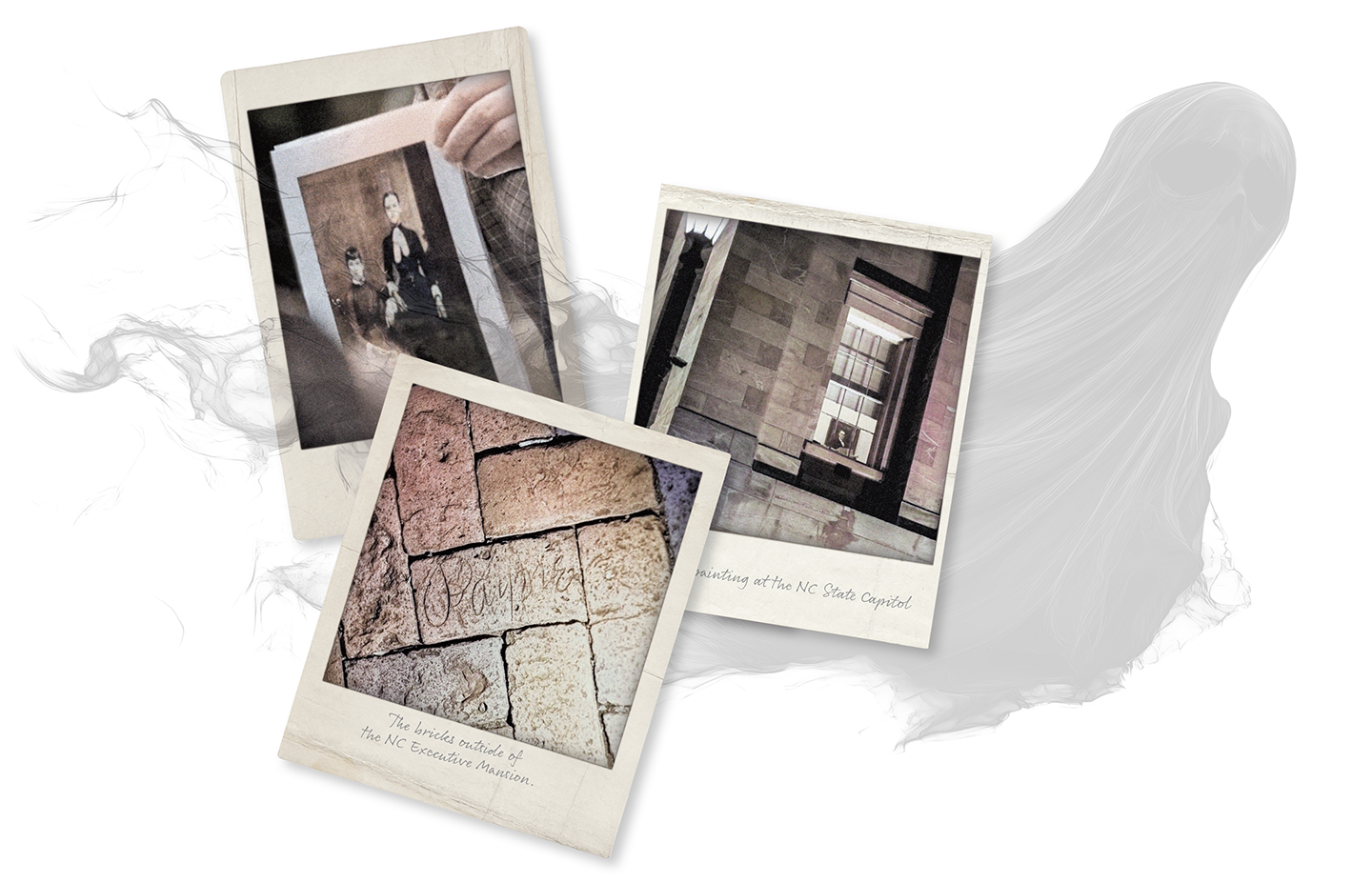
Story by Dathan Kazsuk. Photos by Jessica Bratton.
Raleigh might be all rooftop bars and luxury apartments these days, but underneath that shiny new veneer is a city with some serious mileage. And with that age comes history. And with that history? Well, let’s say things tend to hang around long after last call.
I’ve never really bought into ghost stories. Those paranormal reality shows where someone screams about cold spots or picks up a crackly “Get out” on a $19 voice recorder? Come on. I always chalked it up to overactive imaginations or bad audio mixing. But recently, that smug skepticism of mine took a bit of a hit—all thanks to a cloudy afternoon walk through Oakwood Cemetery when my trusty iPhone picked up not one, not two, but three EVP (electronic voice phenomena) responses that made the hairs on my arms stand up.
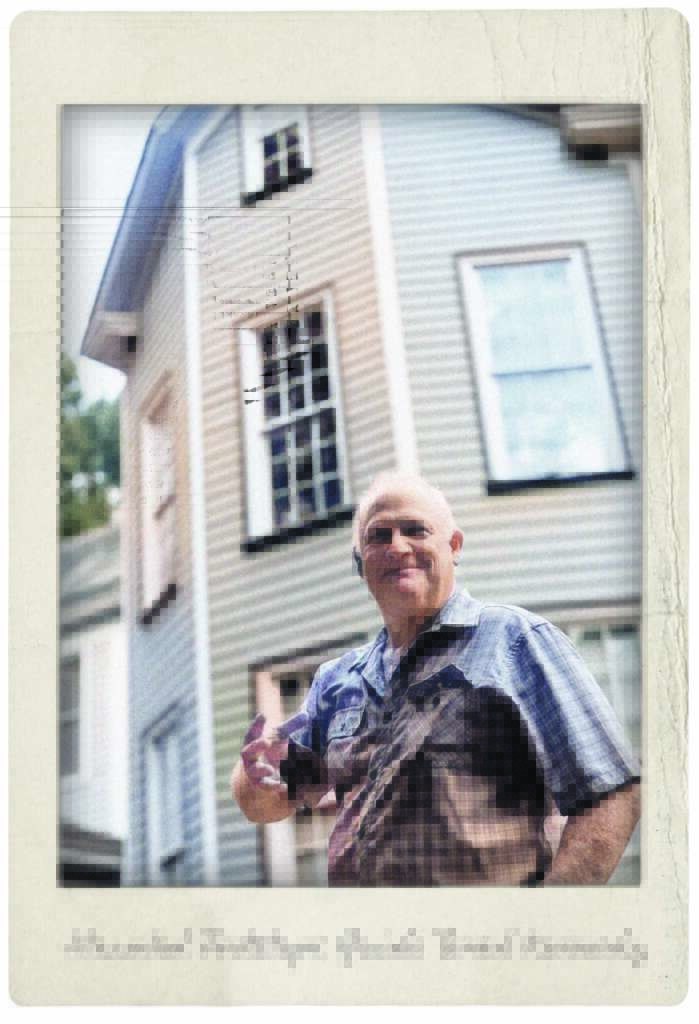
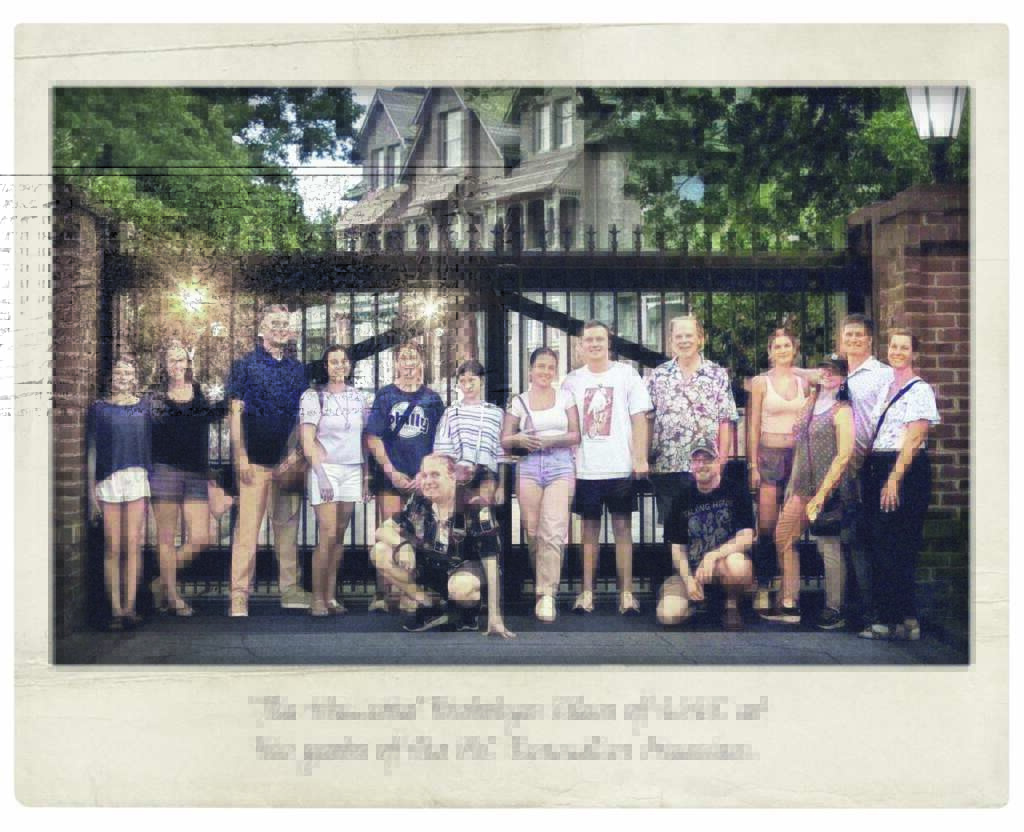
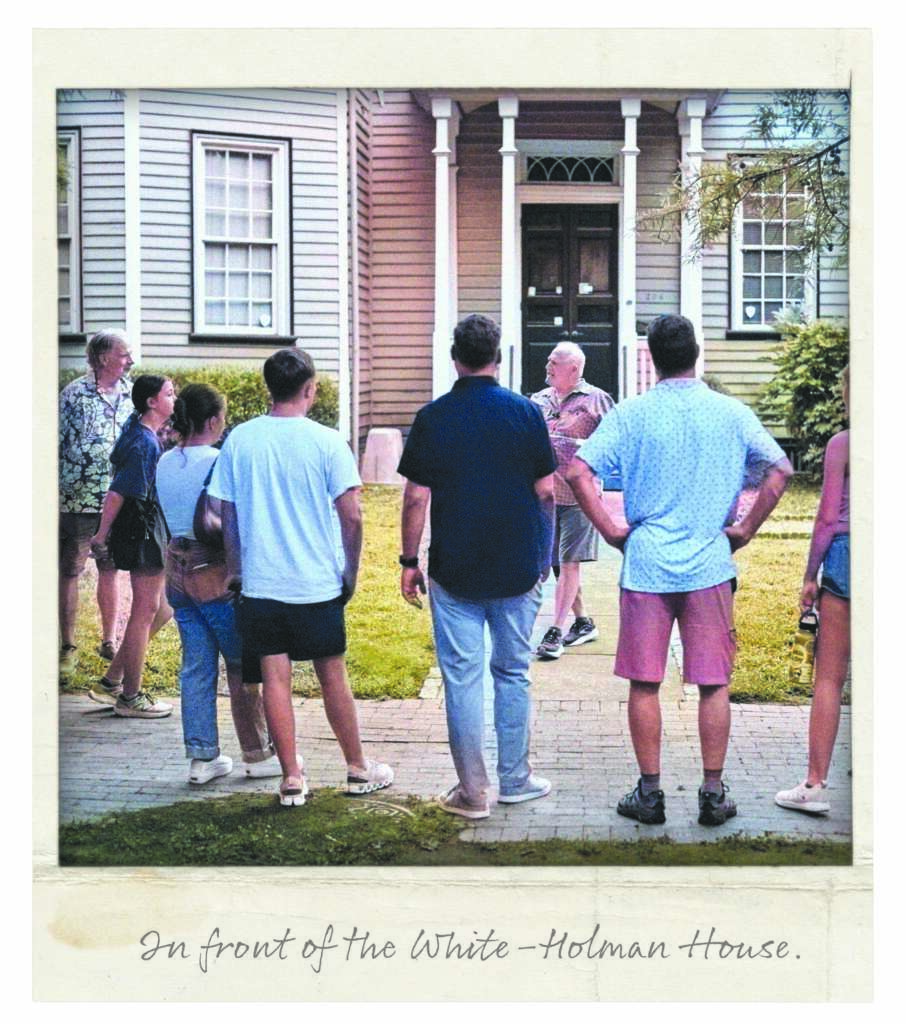
That unexpected brush with Raleigh’s spiritual side sent me down a rabbit hole of local legends, haunted histories, and supposedly cursed corners of downtown. To dig a little deeper, I reached out to Brad Kennedy, owner of Tobacco Road Tours, which offers historical ghost walks in both Raleigh and Durham. With a group of curious friends and a few brave souls from the Midtown team, we tagged along for a private Haunted Footsteps tour of downtown’s most spirited spaces.
Brad had stories. And I’ve got a few of my own up my sleeve. What follows is a ghostly guide to Raleigh’s creepiest corners—a mix of fact, folklore, and the kind of things that go bump in the night. Let’s go ghost hunting.
The Yarborough Hotel
If Raleigh’s ghosts had a social calendar, the old Yarborough Hotel would’ve been the hottest haunt in town. Back in its heyday—from 1865 to 1891—the Yarborough wasn’t just a place to crash. It was the political and social nucleus of downtown. Presidents stayed there. Governors plotted there. And according to Kennedy, who’s been running ghost tours in the Triangle for nearly two decades, “People traveled hundreds of miles just to be seen in its lobby.” But its glamorous reputation didn’t go quietly.
On July 3, 1928, the Yarborough caught fire and burned beyond repair. What rose in its place—now known as The Hudson—may be modern condos, but some say the old energy never left. Kennedy discussed Room 219 with our small crew of skeptics. A woman staying there—after a spat with her husband—noticed a strange, dark pool on the floor.
Curious, she touched it. “It started to crawl up her arm,” he says, “and as it did, it turned red—like it was oxygenating.” She ran screaming down the hallway and never returned. Kennedy’s voice was steady, like a man who’s told the tale a hundred times, but that just made it worse. “It’s not just the creaks and moans,” he adds. “There’s something about that place … like it still wants to be remembered.” And maybe that’s exactly what these ghosts are doing.
The North Carolina Executive Mansion
The North Carolina Executive Mansion may be a Queen Anne showpiece with sweeping staircases and handcrafted trim, but some say it still echoes with unfinished business from the very first man who ever lived—and died—inside. Governor Daniel G. Fowle moved into the grand home in 1891 with his four children.
A widower, Fowle commissioned a custom-made bed large enough to share with his youngest son. It was designed for comfort, but would quickly become something else entirely. Fowle died in that very bed just three months later—the first (and only) sitting governor to die inside the mansion. Some say he never left.
Years later, in 1969, Governor Bob Scott replaced Fowle’s original bed, claiming it was too short for his feet. But soon after the swap, something strange began to happen. “At the right hour of 10 o’clock,” Kennedy told our group, “Scott and his wife would hear a knock—just one, a deep boom—from behind the headboard.”
It wasn’t plumbing. It wasn’t the wind. It happened night after night. Not violent, not threatening—just persistent. Scott eventually named it the knock of Governor Fowle. The only theory that made sense? Fowle wanted his bed back.
And apparently, he got it. Fast-forward to Governor Roy Cooper’s administration. Aware of the legend, Cooper had Fowle’s original bed frame tracked down, restored, and returned to the mansion. Since then, the knocking has stopped. For now, at least. But as Kennedy put it during our tour, “You never really leave the building if you never wanted to.” Especially when your unfinished business is framed in oak, covered in linens, and waiting on the second floor.
The State Capitol
In 1996, a young woman—likely a graduate or law student—was working late in the historic North Carolina State Capitol when she began hearing voices down the hall. It was just after 5 p.m. in February, already dark outside. She assumed it was a late group of tourists getting one last look.
But the voices weren’t casual—they were shouting, arguing. Heated.
She stepped into the hallway and saw them: five men, dressed in 1800s clothing—top hats, beards, long coats—engaged in a full-blown political fight. Their gestures were aggressive, their voices loud, and they were debating something related to the Civil War. She stood frozen, trying to make sense of what she was seeing. As she turned to leave, her bag bumped the door. The arguing stopped.
The men slowly turned toward her—all five of them. Even the three with their backs to her, their heads twisted around 180 degrees, locking eyes with her in dead silence.
She ran. Out the door. Into the night.
Too shaken to return, she contacted the North Carolina State Capitol Police the next morning and agreed to give a full report—under one condition: They record every word. That recording still exists, capturing one of Raleigh’s most unsettling and credible ghost encounters.
Oakwood Cemetery
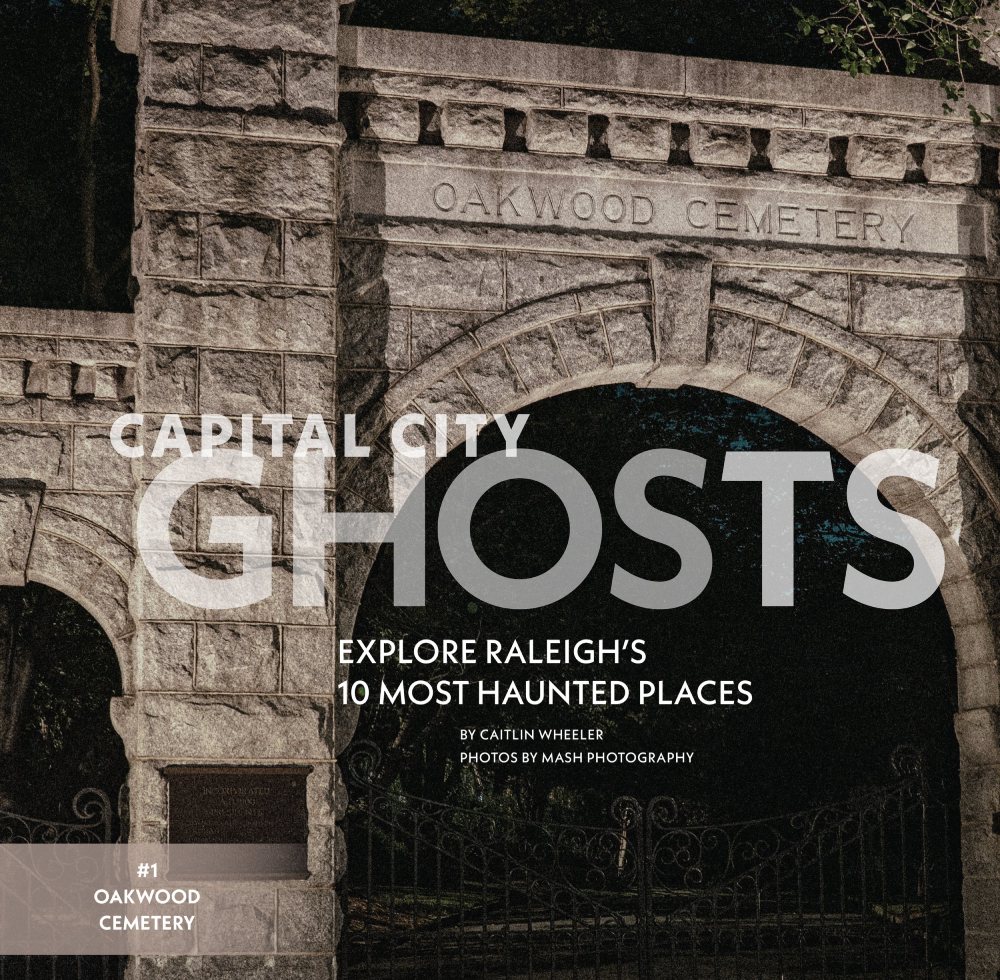
Tucked behind the wrought iron gates at 701 Oakwood Avenue, this 19th century burial ground is one of Raleigh’s most hauntingly beautiful spaces—and, by many accounts, haunted in more than just appearance. Founded in 1869, Historic Oakwood Cemetery was initially established as a final resting place for Confederate soldiers. Over time, it grew into a sprawling 102-acre garden cemetery where many of North Carolina’s most notable figures now rest. Among them: Governor Charles Brantley Aycock, U.S. Senator Jesse Helms, and North Carolina State University basketball coach Jim Valvano.
Visitors love to talk about the strange things they’ve seen or felt at Oakwood Cemetery—cold spots, whispers in the wind, shadowy figures darting between tombstones. Paranormal investigators have captured their share of odd photos and EVP recordings. And now? I’ve got a few of my own.
It was a chilly February afternoon—the kind of day when the fog clings low, making everything seem a little more sinister. My wife, Jen, and I were walking the grounds filming for our YouTube channel, not expecting much more than scenic B-roll. But the real surprise didn’t hit until we got home and started editing the footage.
While panning across the bars of a locked mausoleum, Jen joked, “We should get one of these.” And right there, on the audio track, a man’s voice answered back: “If you want to.” No one was around. No one else spoke. And just like that, the hair on our arms stood straight up.
But it didn’t stop there.
Later, while filming near a child’s grave adorned with Batman figures, we captured a small voice—clear as day—telling me to “Stop.” And just a few moments after that, the camera picked up what sounded like two distinct voices speaking to each other … but in a language we couldn’t place. I even sent the clip to a paranormal group in Durham. Their verdict? Definitely something. And even they couldn’t identify the dialect.
I used to be a skeptic. Chalked it all up to dust particles, lens flares, maybe a creaky squirrel.
But after that day? Let’s just say I’m a little more open-minded than I used to be.
Do you believe? Because now … I just might.