

By Dathan Kazsuk
Walk into almost any bottle shop or bar in Raleigh right now, and you’ll see it—THC drinks tucked into coolers beside beer, cider, and NA cocktails. What started as a fringe curiosity has quietly become one of the fastest-growing beverage categories in the country. People aren’t just doing Dry January anymore. They’re doing Dry Tuesday. Or just … dry-ish.
That shift is what pulled Adrian Larrea back into the beverage business.
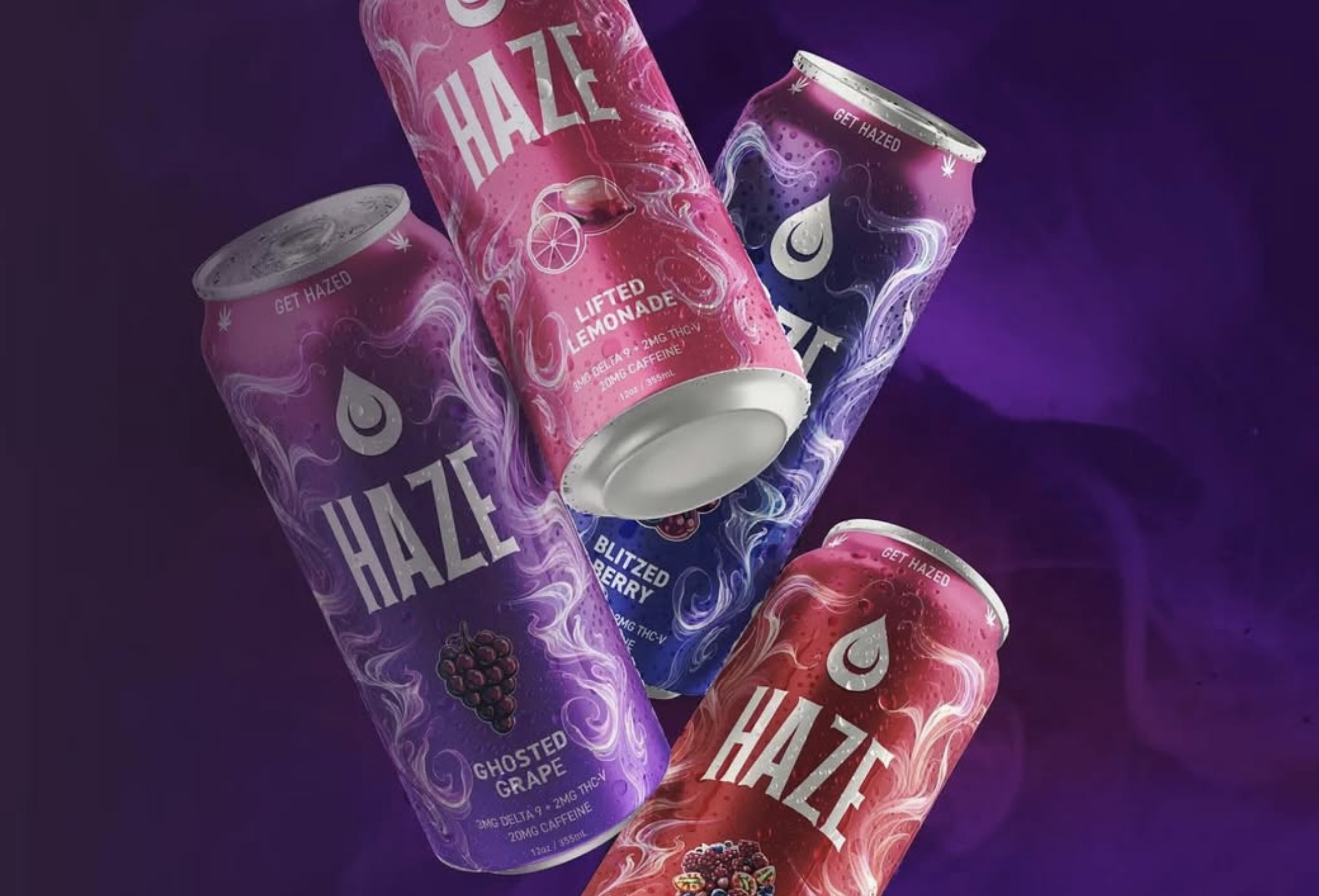
Larrea is the cofounder of HAZE, a Raleigh-based THC drink brand that launched in 2024. Before that, he spent a decade building Tribucha, a local kombucha company that rode the first wave of fermented drinks in the Triangle. When Tribucha shut down in 2024, he was ready to walk away from beverages altogether. “I poured heart and soul into that company,” Larrea says. “The kombucha world changed. Compliance got harder. Shelf space disappeared. I thought I was done.”
Then he started watching what was happening with hemp-derived THC. Changes in the federal Farm Bill created a narrow but legal window allowing delta-9 THC derived from hemp to be sold, as long as it stays under a certain percentage by dry weight. Liquids, being heavy, turned out to be the perfect carrier. At the same time, Larrea noticed something else: Raleigh didn’t really have a THC beverage brand trying to build a lifestyle identity.
“I wasn’t interested in delta-8,” he said. “But once delta-9 was allowed at low percentages, I thought—this could be real.”
Enter HAZE. Larrea teamed up with cofounder Matt Kinner, who comes from Raleigh’s nightlife and hospitality scene. Kinner was already seeing younger drinkers change habits—less alcohol, more alternatives, more intention about what they consumed.
“We wanted to build something local,” Larrea says. “Not just a product, but a legacy brand.” HAZE sources hemp from North Carolina and uses Foothills Brewing Company in Winston-Salem for contract manufacturing. The company, headquartered in Raleigh, was heavily focused on downtown and Glenwood South when it launched. Instead of chasing grocery shelves first, they chased bars, bottle shops, and events.
They’ve poured at festivals, sponsored local artists, and worked with nightlife spots like Clockwork and Milk Bar, where bartenders turn HAZE into THC mocktails. It’s sold as a ready-to-drink product, but also works as a base for low-dose cocktails—letting bars control dosage by the ounce.
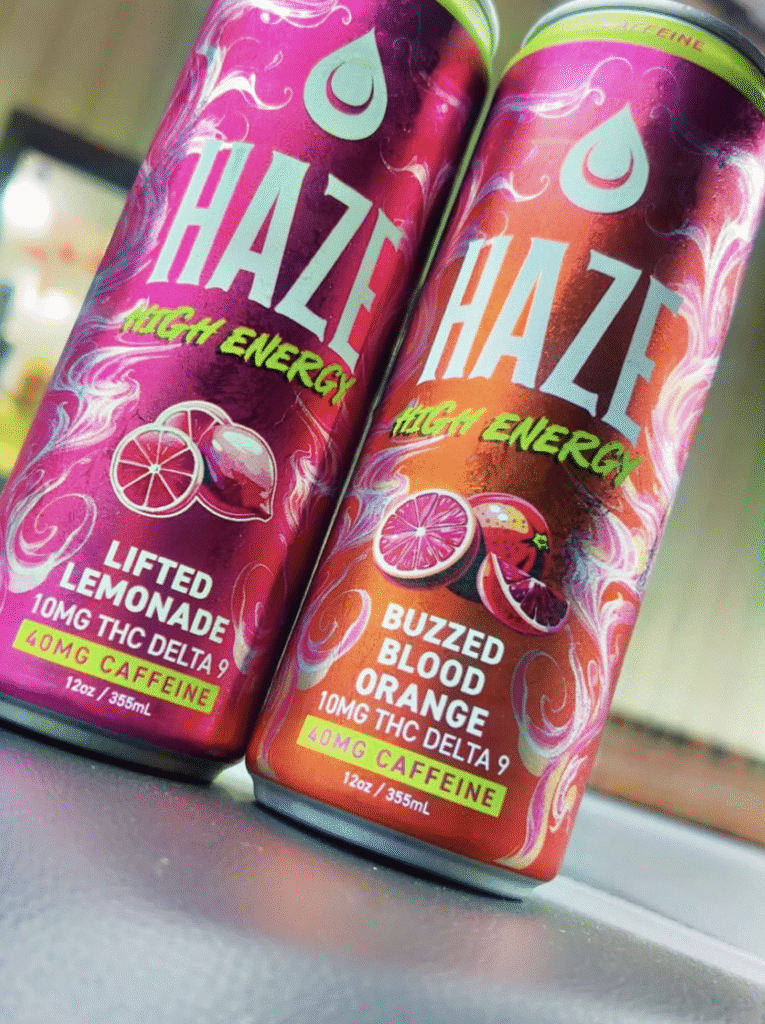
Their core cans sit at 10 milligrams of delta-9 THC. Some versions include 40 milligrams of caffeine. Larrea deliberately keeps the dosage moderate. “We want people to session it,” he says. “Share it. Not end up on the couch wondering what happened.”
That’s also where HAZE’s appeal widens. The audience isn’t just twentysomethings. Larrea sees customers from their early 20s into their 80s. Some are longtime cannabis users. Others are brand-new and would never have touched an illegal product—but feel comfortable ordering something that looks like a soda and sits on a bar menu.
HAZE also behaves differently from gummies or smoking. Drinks tend to kick in faster and fade faster, making the experience closer to alcohol in timing and social rhythm. You sip. You feel it. You stop, and it wears off.
Which brings me to why I started drinking them.
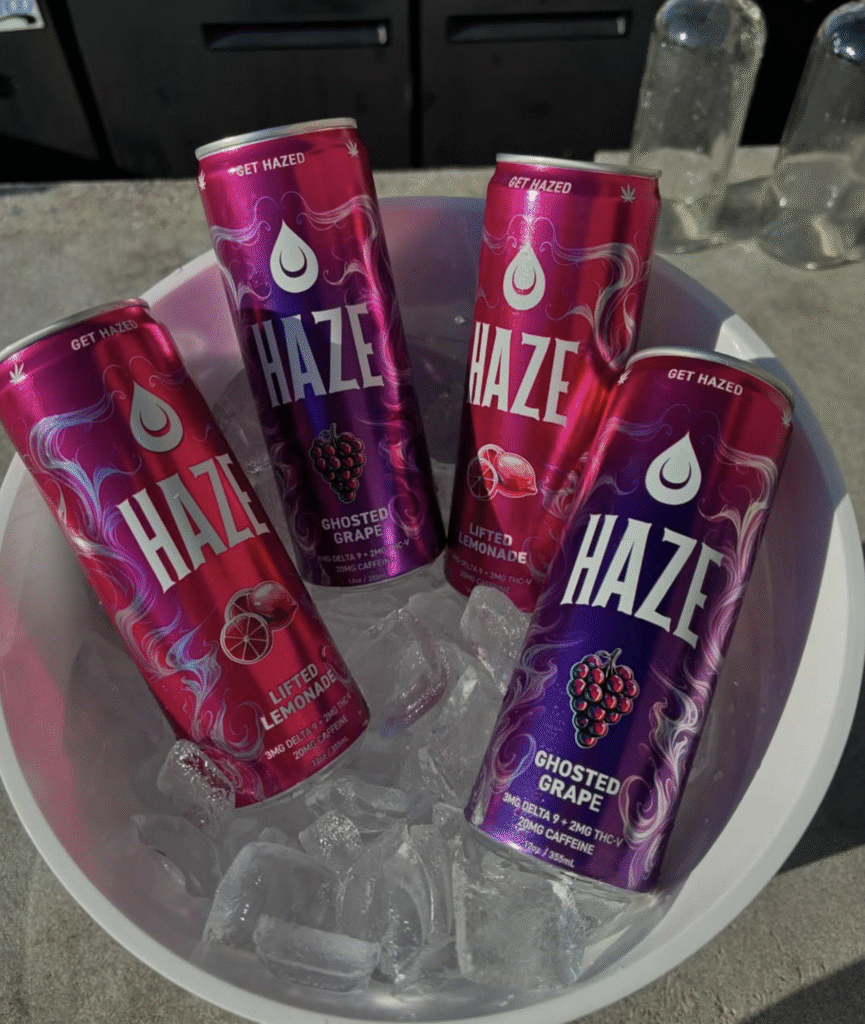
I’ve cut way back on booze. Not in a dramatic way—just in a tired-of-feeling-foggy way. A THC drink about 90 minutes before bed works better for me than wine ever did. I sleep. I don’t wake up at 2 a.m. staring at the ceiling. For me, it’s a cleaner off-switch.
But that doesn’t mean it’s harmless. Larrea is blunt about that part. “You don’t drink these and drive. You don’t use them and operate heavy machinery. It’s no different than alcohol in that way.”
HAZE and many other brands are actively pushing for regulation—age limits, milligram caps, and clearer rules. Right now, hemp-derived THC exists in a gray zone. A proposed federal ban tied to hemp products could take effect in late 2026 unless lawmakers revise it. Larrea believes clarity will come sooner, likely within the next year or so. “We want this regulated,” he says. “We want it safe. We want it mainstream.”
And the stakes are bigger than cans in coolers. Hemp farmers, distributors, retailers, and hospitality workers are now tied into this supply chain. In North Carolina alone, thousands of jobs are connected to hemp products.
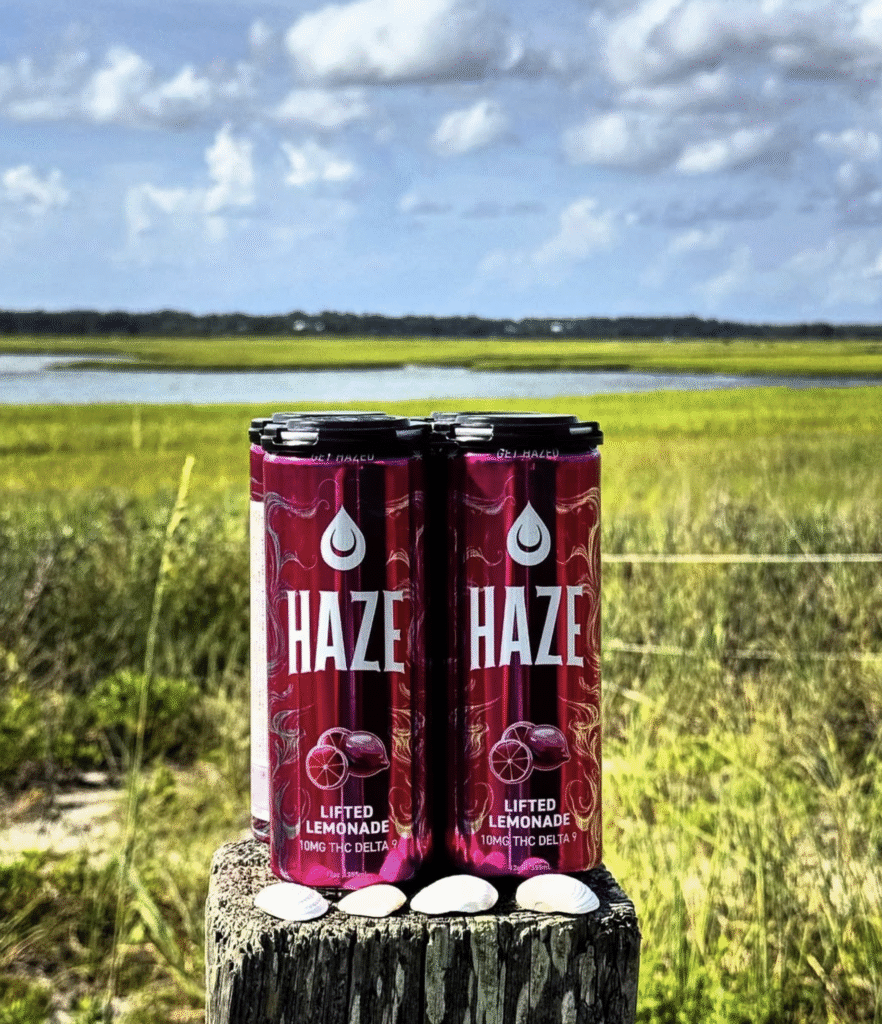
HAZE currently works with about 200 locations in North Carolina and has begun expanding into South Carolina. Grocery and big-box stores are the next step, but the brand still wants to stay rooted in nightlife and community events. You’re as likely to find HAZE at a DJ yoga day party as at a Glenwood bar. Wellness crowds like it because it’s lighter than alcohol. Party crowds like it because it still feels social.
That dual identity—sleep aid and social drink—is what makes THC beverages feel different from past cannabis products. They’re not asking you to retreat from your friends. They’re asking you to stay out and sip something else.
Just … sip responsibly.
Whether it’s wine, beer, or a blood-orange THC can, the rule still applies—don’t drive on it. Don’t work heavy equipment on it. And don’t pretend it’s just soda.
It’s not.
And that’s kind of the point.